
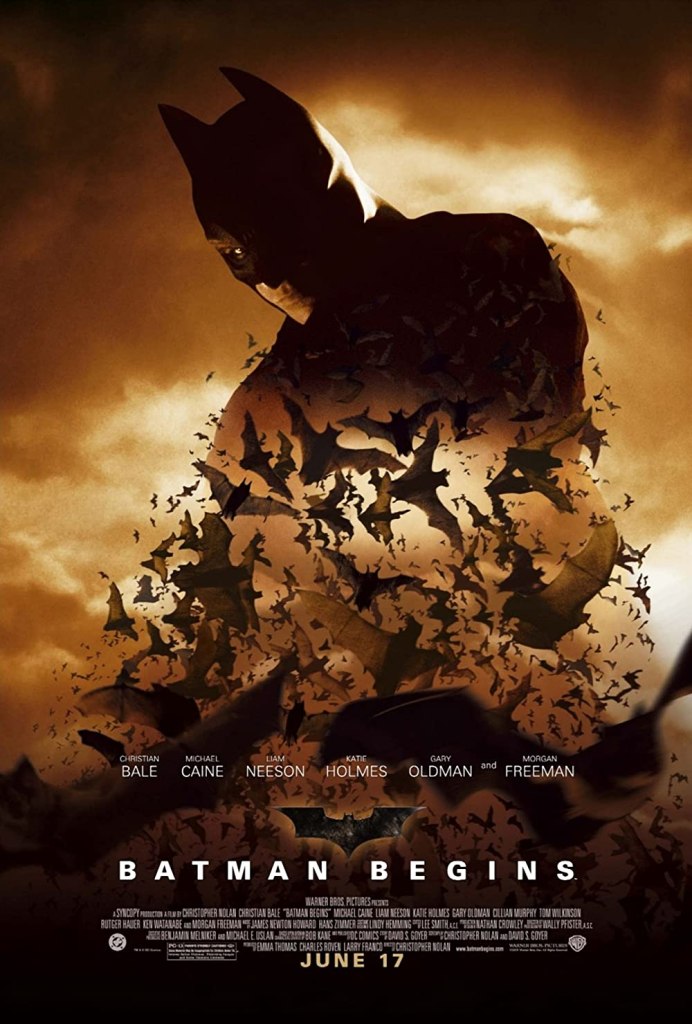
Let me start out by stating that Batman Begins is a good film, and I truly love it. I didn’t see Batman Begins when it first came out. To be quite honest, Batman was never my favorite character from DC. Despite his backstory and place in the DC pantheon, I considered him overrated and uninteresting.
Perhaps, in much the same way that I found Spider-Man annoying, it was because they were the obvious superheroes to love. Practically everybody loved them, which meant that nobody stopped talking about them. Ever. As somebody who could talk to death about the subjects I loved, it prompted me to give Batman Begins another go in the weeks leading up to The Dark Knight. I set aside any preconceived notions of the character that I had and settled in so that I could enjoy the movie. By the time the credits rolled, I understood the love. Seeing the world of Batman Begins realized in a realistic, grounded fashion was quite different from the flamboyant, often darkly comedic rendition that we are used to.
Christian Bale, aside from his voice acting credits (this was before I was a diehard fan of voice acting), was an actor that I was aware of because of American Psycho. Obviously, the differences in his role as Patrick Bateman and Bruce Wayne are manifest. Chief among them, Batman is notorious for his “no killing” rule, while Patrick Bateman, depending on how you interpret the film, is a serial killer of the highest order. Like most iterations of Batman, the story begins when Bruce Wayne is a child, played here by Gus Lewis.

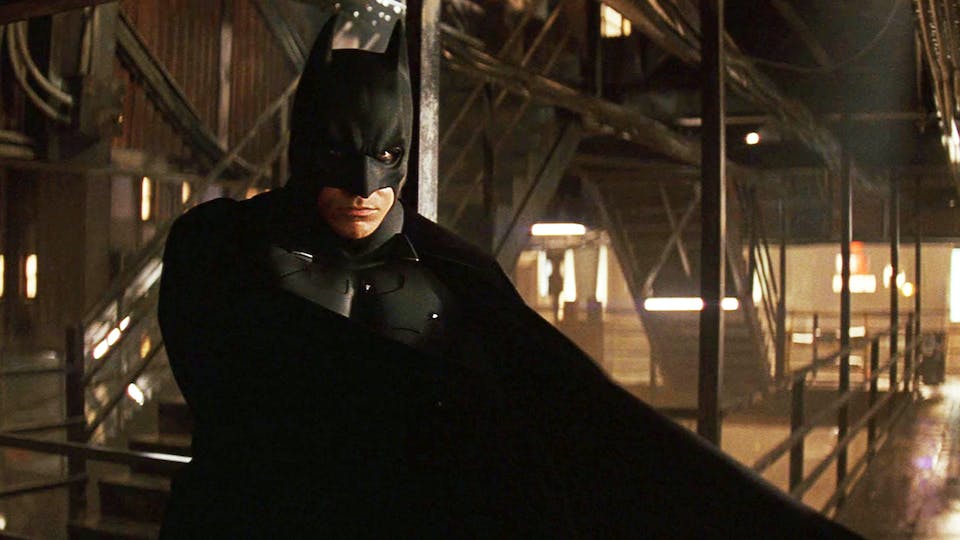
The murder of Thomas and Martha Wayne (played by Linus Roache and Sara Stewart, respectively) is as definitive as the death of Uncle Ben. Its sheer, brutal simplicity works to shape Bruce Wayne into the lothario he is known for in his early days before he became Batman. Alfred Pennyworth (Michael Caine), for all his poise, grace, and no-nonsense attitude, raised him to be a proper young man, but what’s a young, billionaire playboy to do except be who they were born to be in a world that is handed to them on a silver platter? But this is all par for the course for a Batman story. The evolution of Bruce Wayne into Batman is not an overnight process but a slow burn that unfolds throughout his life. Batman was not born; he was made, and Batman Begins was not afraid to get down into the mud to claw out a gritty character arc was a phenomenal choice on the part of Christopher Nolan.
Batman Begins is a journey, and, at over two hours, it’s a long one. I’ve always felt that superhero films should be on the longer end. While there is usually a wealth of source material to pull from, invariably, there is a lot of it to wade through. Most comic book characters have been in publication for over 60 years, some less, and some more. Batman has been in publication for over 80 years. There have been countless retcons, outfits, themes, and characters, and everybody has their opinions on which slate is the definitive version. Taking all of that and boiling it down into a ninety-minute film is… ill-advised. It is also renowned for its supporting cast of well-known characters, all of whom have left an indelible mark on the mythos of Batman.
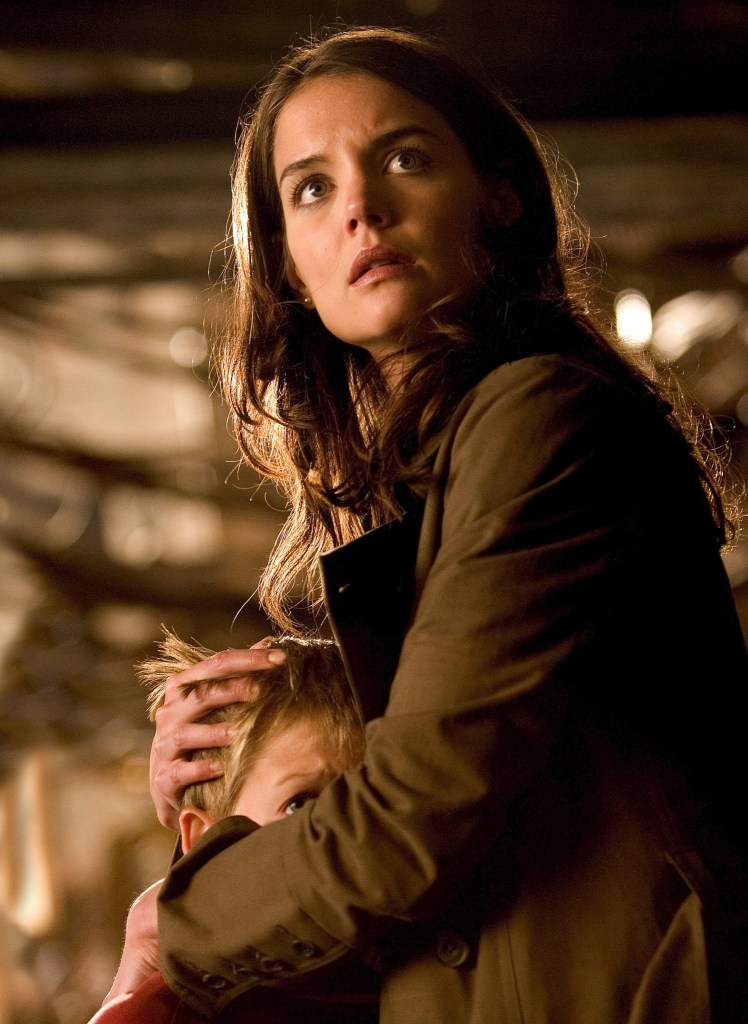
Katie Holmes plays Rachel Dawes, the only main character not adapted from a comic book character. Rachel is a district attorney and childhood friend of Bruce Wayne’s. Her sweetness is honed by a razor-sharp wit and a rather strong constitution, and she has no issues calling Bruce out on his privileged ignorance. One thing that Batman stories feature is the vast difference in class that plagues Gotham.
Despite most main characters seemingly being middle class, the rest of the city seems staunchly divided between the upper wealthy and the ruinously poor and downtrodden. The police are wholly incompetent when they aren’t engaging in corruption right alongside the politicians. And it seems that nobody cares enough to try and do anything about it.
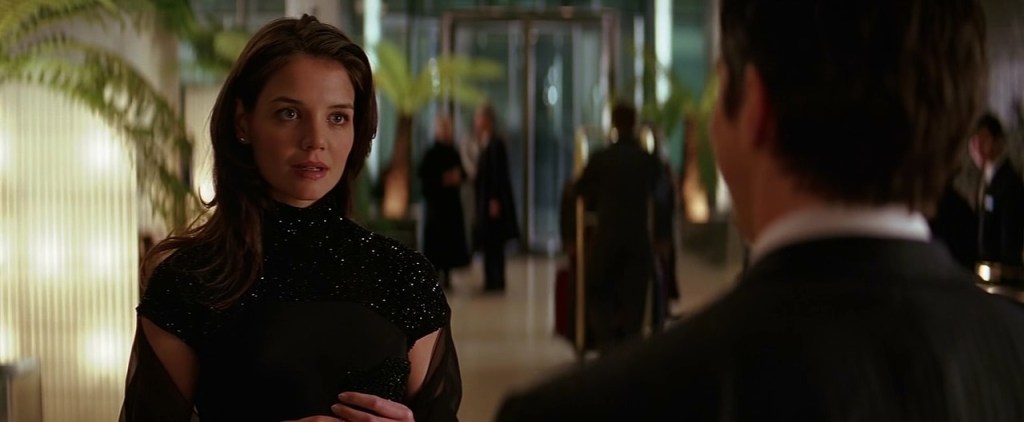
That is what Rachel Dawes embodies – a person who refuses to be cowed, manipulated, or corrupted by anybody for any reason. With the relationship between Rachel and Bruce being so integral to the plot and her chemistry so enticing, it is disheartening that this was the only film she was in.
Morgan Freeman plays Lucius Fox, who is a high-ranking member of Wayne Enterprises who has been demoted to oversee the Applied Science Division simply to get him, and his questions, out of the way.
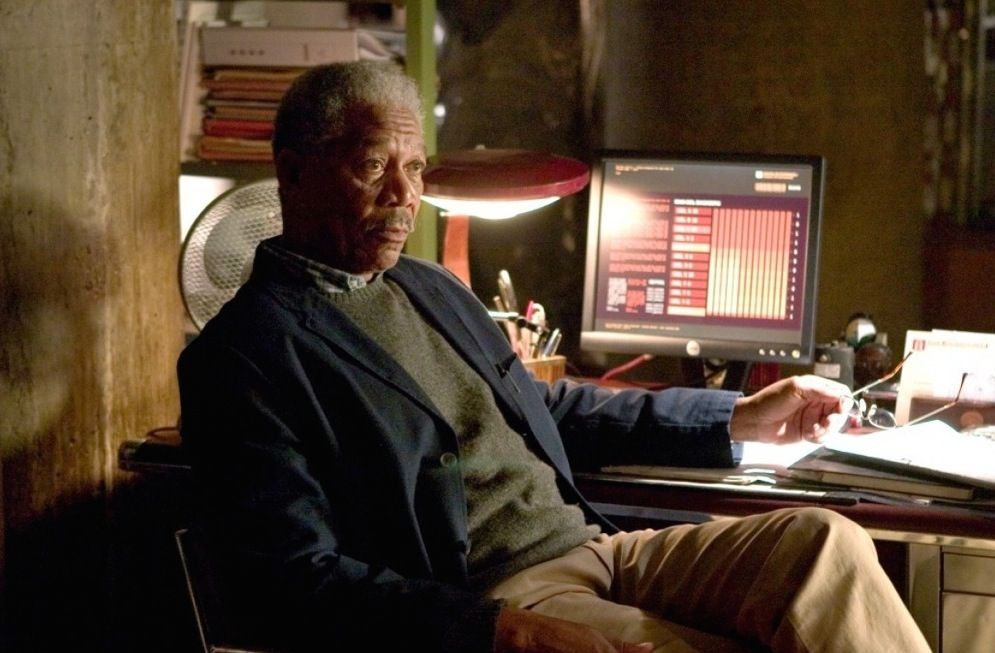

You may or may not have heard of the Magical Negro, a stereotypical character archetype that assists a white character through their expertise or advice.
Despite numerous characters offering their expertise and advice to Bruce Wayne, it is impossible to ignore how much of Lucius’ expertise and abilities are what allows Bruce Wayne to become Batman. Morgan Freeman’s role and importance in the story increases with each film, and Bruce is more than aware of this – as the end of the first film shows.
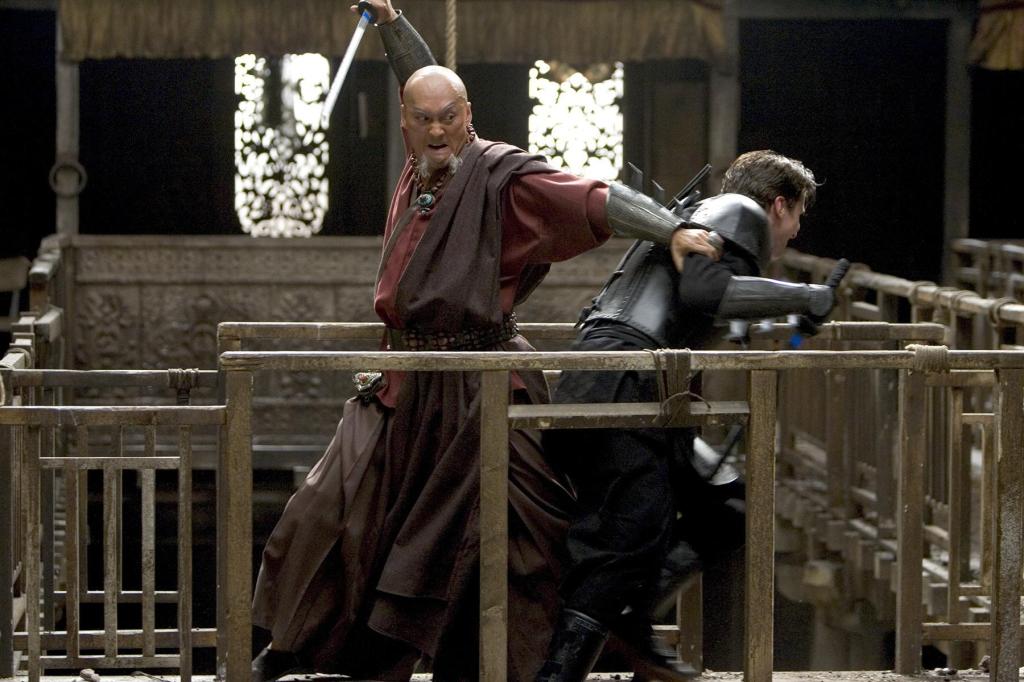
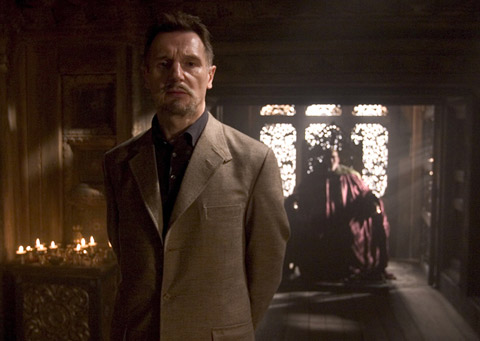
In the first of his two appearances in Christopher Nolan’s films (to date), Ken Watanabe plays the decoy Ra’s Al Ghul. It’s not a spoiler at this point. The film has been out since 2005, and the controversy surrounding Liam Neeson’s casting, despite his interesting portrayal, is something that cannot be ignored. Quite simply, the character is Arabic in the comics, and this is not the first (nor the last) that a character of Asiatic descent was adapted into a white person. Look no further than the Ancient One in Doctor Strange. Regardless, Ra’s Al Ghul is the head of the League of Shadows, an elite, secret organization that specializes in espionage, assassination, and political disruption, which allows them to topple cities and decapitate entire governments. Gotham’s rot is visible to everybody, which makes it a magnet for crime, and cleansing it is their goal. They go so far as to actively sabotage efforts to make Gotham better.
Gary Oldman plays James “Jim” Gordon, the staunch ally of Batman, who is trying to be a beacon of light in the cesspool that is Gotham. As Batman Begins is essentially an adaptation of Batman’s first year, their relationship is not established. While the police view Batman with suspicion and rightfully decry him as a vigilante, Gordon is quick to come to the conclusion that Batman is not the villain he is being made out to be.
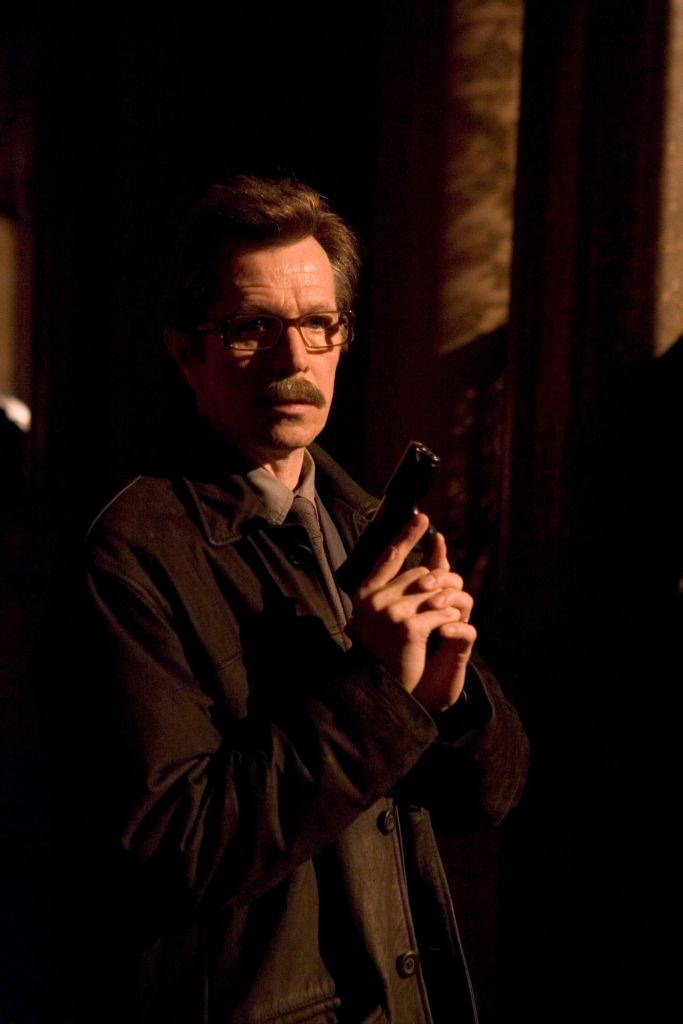
As a man of the law still trying to make the law actually mean something, he is no friend to Batman at first. He can’t be, after all – for all intents and purposes, Batman is breaking the law. But, by the end, he comes to view Batman as the symbol of hope that Gotham has always needed and the idol that can inspire them to change for the better.
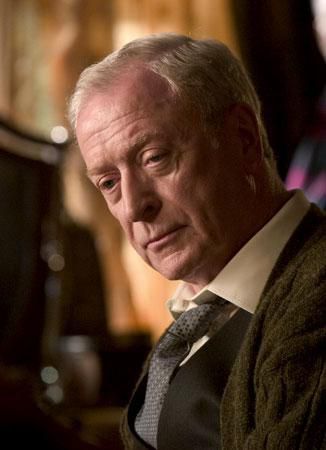
Michael Caine portrays Alfred Pennyworth, Bruce Wayne’s most loyal supporter, and partly why he is able to get away with being Batman. As in almost every continuity, Alfred raised Bruce Wayne in the wake of the murder of Bruce’s parents.
This relationship, a cross between butler and master and father and son, is the crux of Bruce Wayne’s identity as a person. While he was beginning to learn specific values from his parents, it would be Alfred who instilled them to completion. It is also this closeness that makes Alfred feel he must protect Bruce at all costs. Even if it’s from himself.
Finally, another constant collaborator with Christoph Nolan is Cillian Murphy, who plays Dr. Jonathan Crane, AKA the Scarecrow. The marketing put his character front and center as the primary antagonist.
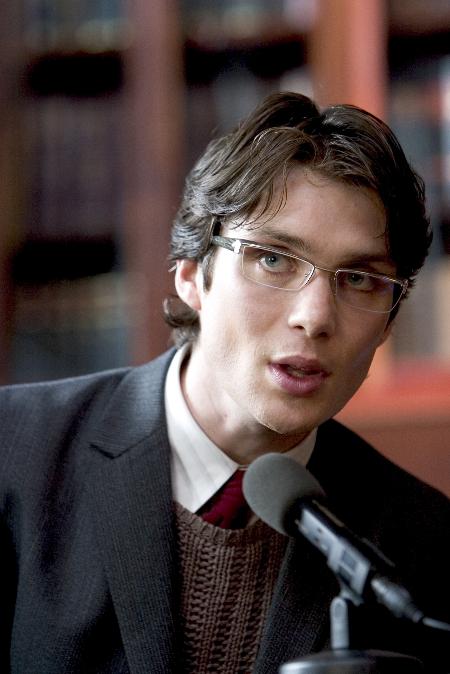
But hindsight makes it clear who the real villain was always going to be. A psychopharmacologist, he is the architect of a fear-inducing toxin that he uses in his work to get criminals sent to Arkham Asylum. It is this creation that the other villains plan on using in order to wreak havoc across Gotham.
Each member of the ensemble was played by some of the most well-known actors of the early 2000s. Their performances laid a foundation for the rest of the trilogy and allowed Christopher Nolan to really build up his retinue of actors. How the characters play off one another is integral to the world-building of Batman Begins. Across two groups, their goals are often mutually exclusive, which ratchets up the tension considerably. One half wants to save Gotham, and the other half wants to damn it.
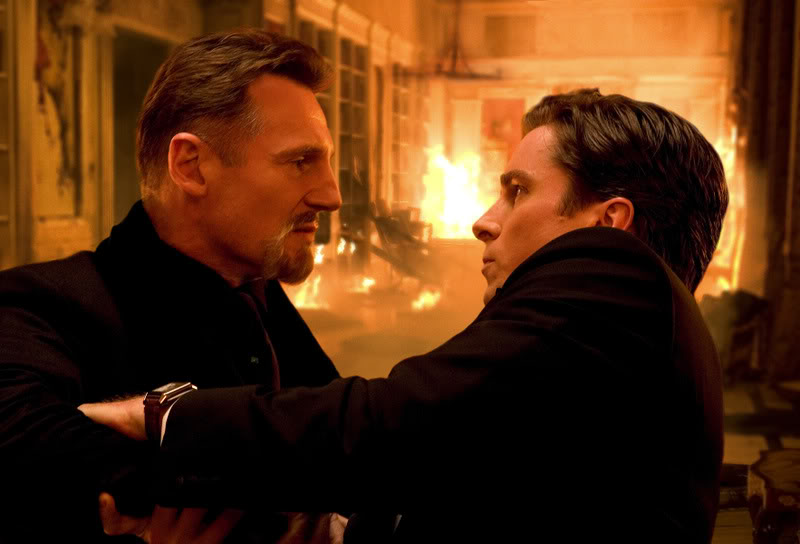
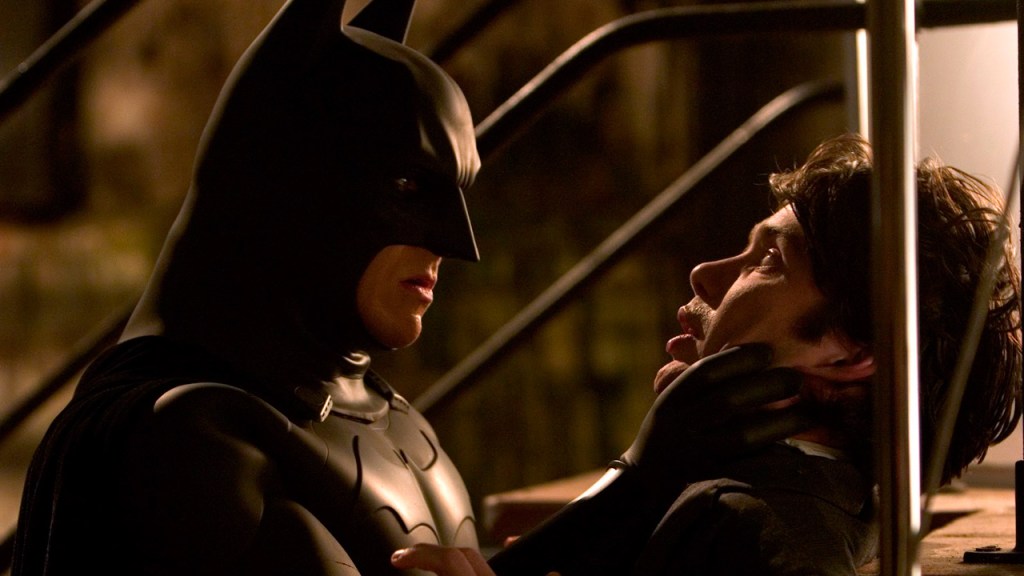
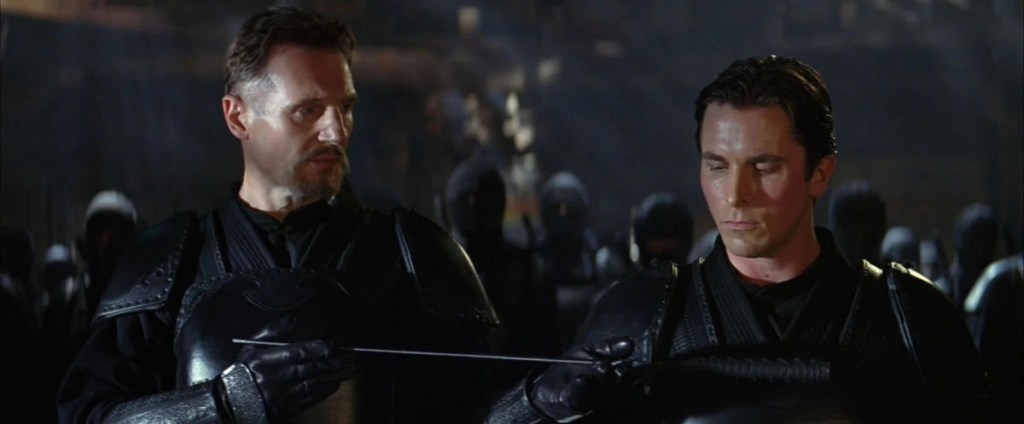
Batman Begins is not afraid to get into the muck, and its visceral fight scenes allow us to view a Batman still learning his way. This may be an aspect that The Batman plays up better, though Batman Begins is certainly no slouch. We watch as Bruce Wayne goes from wayward incompetence to a capable combatant under the tutelage of the League of Shadows. He forms a bond with Henri Ducard (the assumed name of Liam Neeson’s character), but it’s clear from the outset that Bruce does not share their ideology. Villains often have this issue, but Ra’s Al Ghul especially has this strange sort of myopia when it comes to choosing successors – whether it be here or in Arrow, with Oliver Queen.

There is no getting around the fact that Batman Begins and its two follow-ups set the stage for the latter half of the 2000s adaptations of superhero films. While they toyed with darker themes before, the true darkness of films like The Amazing Spider-Man 2 and X-Men: Days of Future Past owe something to Batman Begins. That’s not to say that these projects occurred because of Batman Begins. They were two successful attempts next to what DC attempted with Man of Steel – a film I quite enjoy, too. It was rare to see a hero fail as spectacularly as superheroes did in films that came after Batman Begins, but especially The Dark Knight. Batman Begins challenged superhero adaptations to be more than light-hearted popcorn fare.
It just wasn’t the superhero trend that the others would successfully follow.
 Lloydd Marshall Books