
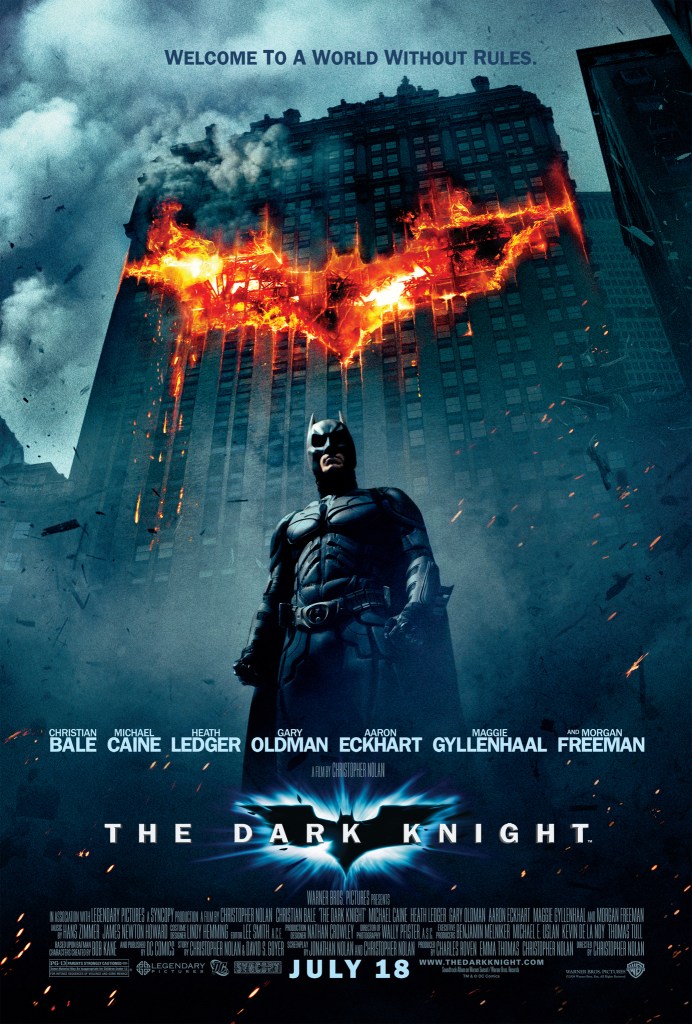
The Dark Knight is the second entry in Christopher Nolan’s Dark Knight Trilogy. And, much like book covers which change the entire art style three books in, this film series alters the naming convention to create a dissonance that can be a bit grating on a movie shelf. Batman Begins, The Dark Knight, and The Dark Knight Rises… they may as well have called one of them electric boogaloo.
Regardless of how the films are named, there is no ignoring that they are the definitive superhero films of the early 21st century and paved the path for a slew of follow-ons. Granted, the same could be said for every superhero film – of which there were several in this period and beyond.
Christian Bale returns as Bruce Wayne and Batman three years after he first portrayed the character in a film that embraced the darker, grittier aspects of the character. Much like Batman Begins, The Dark Knight is grounded in realism rather than the bombastic fantasy that Batman stories can get. This was reflected most notably in its choice of villains for each installment. Those characters whose abilities could be explained by science or training were kept, such as Catwoman and Bane in the follow-up and Scarecrow and Ra’s Al Ghul in its predecessor. Who needs resurrective immortality when you can make an idea immortal? I remember all the criticism that followed this decision – with arguments and debates about what makes a Batman story cropping up. Unlike comic book movies that followed, Batman is one that everybody has some kind of knowledge about. Like Superman and Spider-Man, the basics of their stories are engraved in our memories, for better or worse.
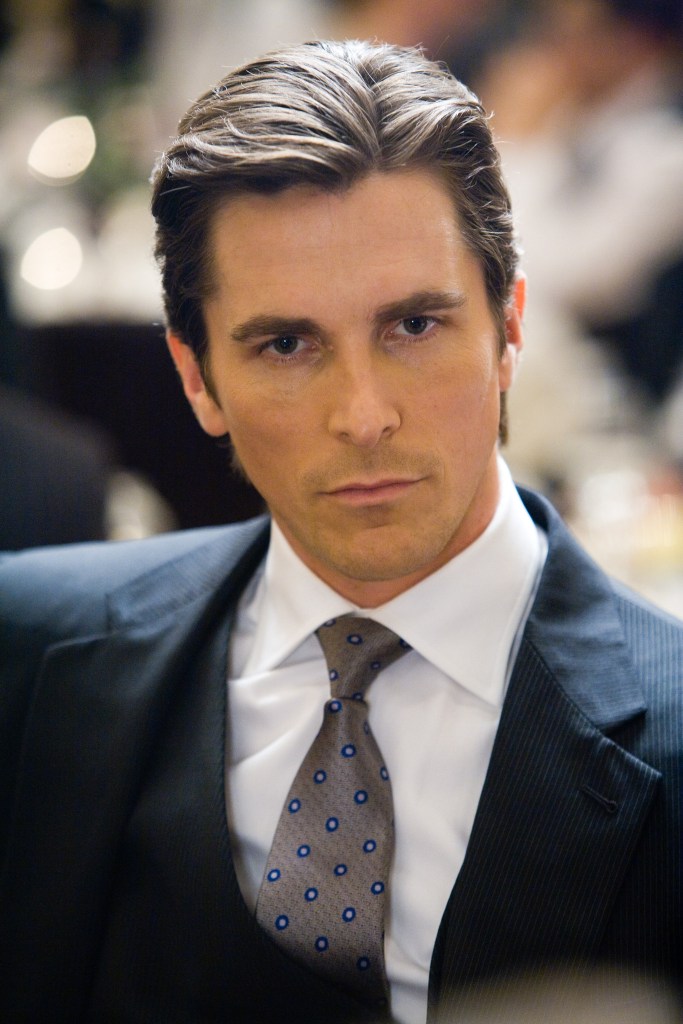
When it comes to Christian Bale, his performance as Batman is top-notch, as always. The duality of the role is always something that an actor must find when playing a superhero. This is especially true with the character of Bruce Wayne and his superhero identity, Batman. Debates have continued regarding which of the identities is the ‘real’ one. Batman is notable because he is considered the true persona, while Bruce Wayne is merely a mask he wears to operate more effectively.
Opinions are divided on the explanation. As the billionaire playboy, Bruce is capable of blending in effectively. We see this when he crashes Rachel and Harvey’s date and uses his own date’s less-than-kind remarks about Batman to gauge how Harvey truly feels about Batman. Obviously, this is something he can’t do as Batman.
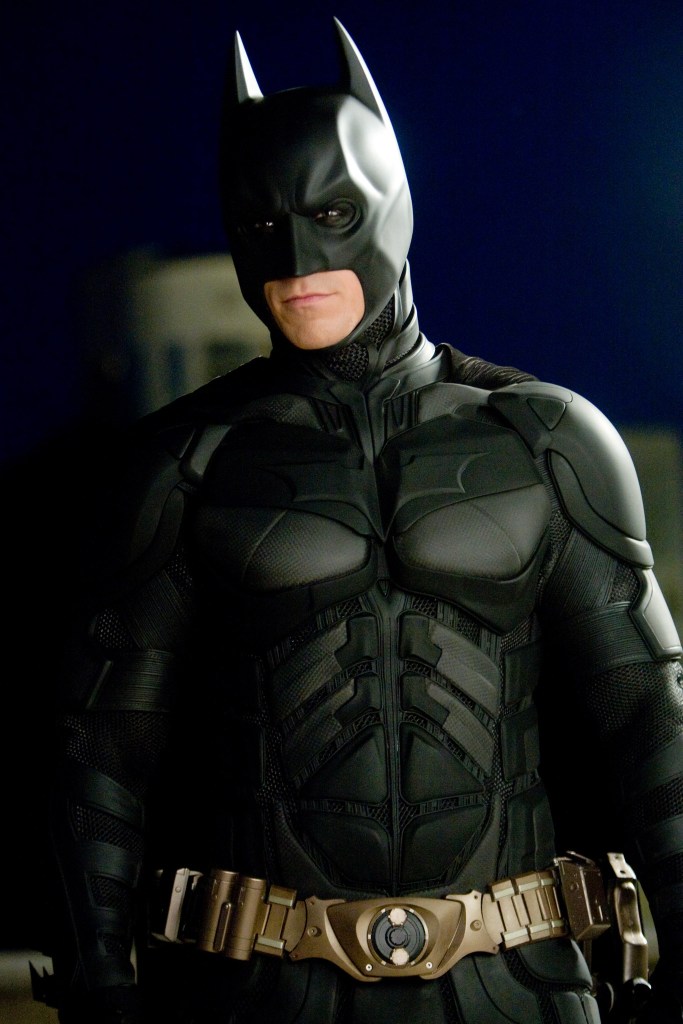
For Batman as a character, he is cool, calculating, and direct. He doesn’t hesitate to dispatch those who have tried to don his identity and use it to take down criminals. He views himself differently from them, which is not an answer that pleases them. Batman is brutal in combat, but he takes care not to kill his opponents – though physical combat is generally unreliable in that regard. Just look at Batman from later installments.
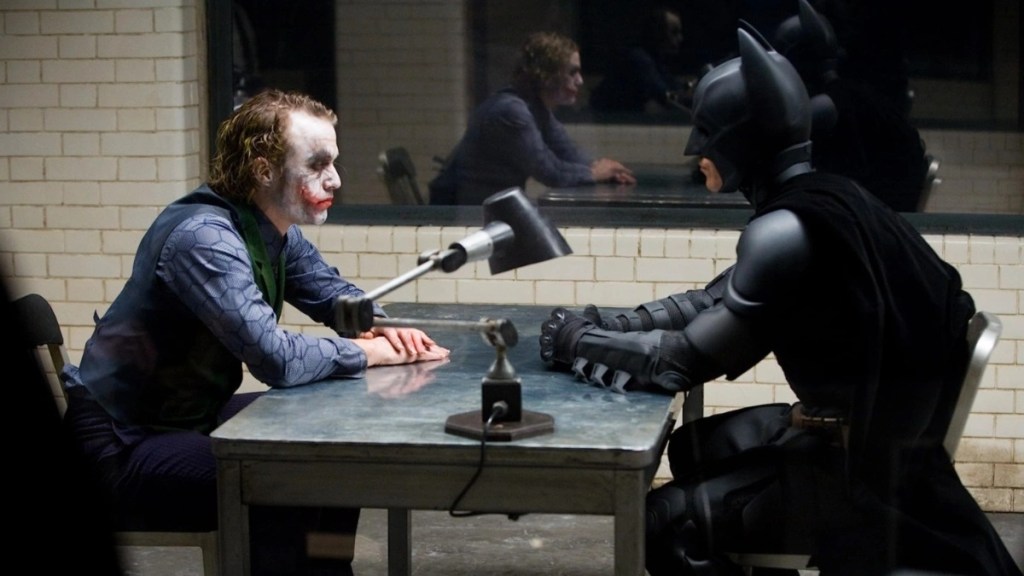
As a director, Christopher Nolan is renowned for his epic storytelling. Only a handful of his films fall below the two-hour mark, and most are well in excess of it. The Dark Knight is no different, clocking in at a cool two hours and thirty-two minutes, and he makes good use of each and every one of them to weave a complex, comprehensive tale of two figures who are on opposite sides of the same coin. Heath Ledger’s The Joker, played here by Heath Ledger in a role-defining iteration that netted him a posthumous Academy Award for Best Supporting Actor, exists solely because of Batman, believing they are ultimately the same. Many comparisons are drawn between the two characters, but Batman truly proves himself to be the better man and is dismissive of the Joker’s belief that man, by his very nature, is selfish in the dark. Their war is physically manifested in Harvey Dent (Aaron Eckhart), the District Attorney destined to become Two-Face.
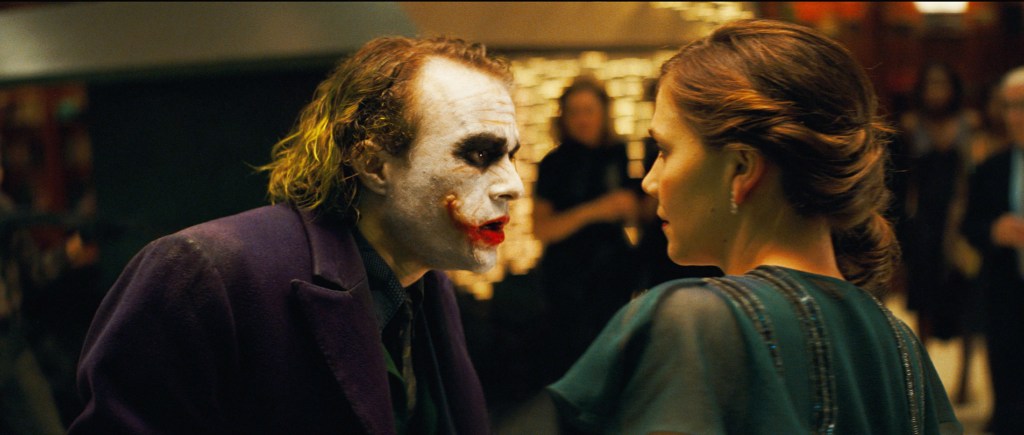
As a villain, Two-Face is remarkable for his inconsistency. Will he follow the will of his coin? Or will he discard it when it provides a path he doesn’t want? In this film, he cheats a bit by flipping a coin for two different people in order to get the result that he wants, proving that his ideology is little more than window dressing. Much like his performance as a DA. Long before his beauty was tarnished, it was obvious that he was vain, prideful, and arrogant. He was capable of putting on a good face, though, which masked the rather damning fragility his ideals actually had to him as a person. In the end, he couldn’t put his stated beliefs ahead of his personal vendetta, proving that he never deserved the praise and recognition that was showered with.

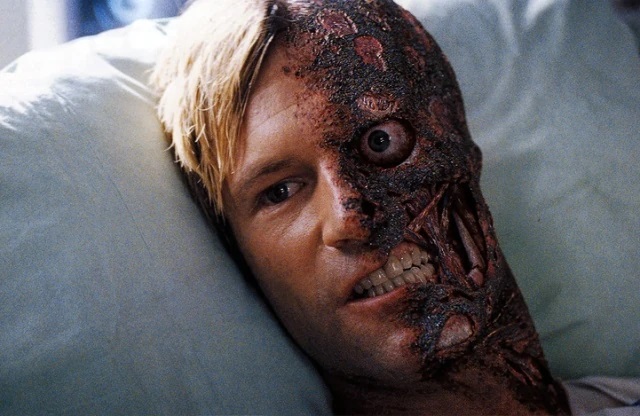
In the years since Bruce Wayne donned his cowl and became the masked vigilante that criminals fear, police officers despise, and citizens critique, he has sought to make Gotham City a better place one punch at a time. Yet, his appearance has had the opposite effect, with crime seemingly rising. However, other figures have risen up, hoping to build off of the ideals Batman can evoke – which includes Harvey Dent, who idolizes Batman’s willingness to fight against forces that others seem loathed to even confront. Aaron Eckhart brings the noble Harvey Dent to life, whose war for justice is presented as self-sacrificing, yet in time, proves to be self-serving when he is personally victimized due to the actions of others. At the beginning of the film, we also witness several people have taken to using the visage of Batman to try and do what he does – but they lack the ability to back it up.
Maggie Gyllenhaal replaces Katie Holmes as Rachel Dawes, the childhood friend, former love interest, and Gwen Stacy of this version of Batman. By now, everybody knows what happens to her character, and it is annoying that this trope is still in use today. Most of Rachel’s character arc is tied exclusively to Bruce or Harvey, with very little time spent on her character. Even her agency is stolen post-death when her decision to choose Harvey is hidden from the world in order to preserve a broken man’s ego. As a character, Rachel Dawes has immense potential, not just in her career as an ADA but also in her role as one of the few people who knows that Bruce Wayne is also Batman. With several characters having fake-out deaths, which set the stage for others’ developments, it’s really annoying that yet another female character is diminished to this to the point where it has happened again in a recent blockbuster franchise in 2023.
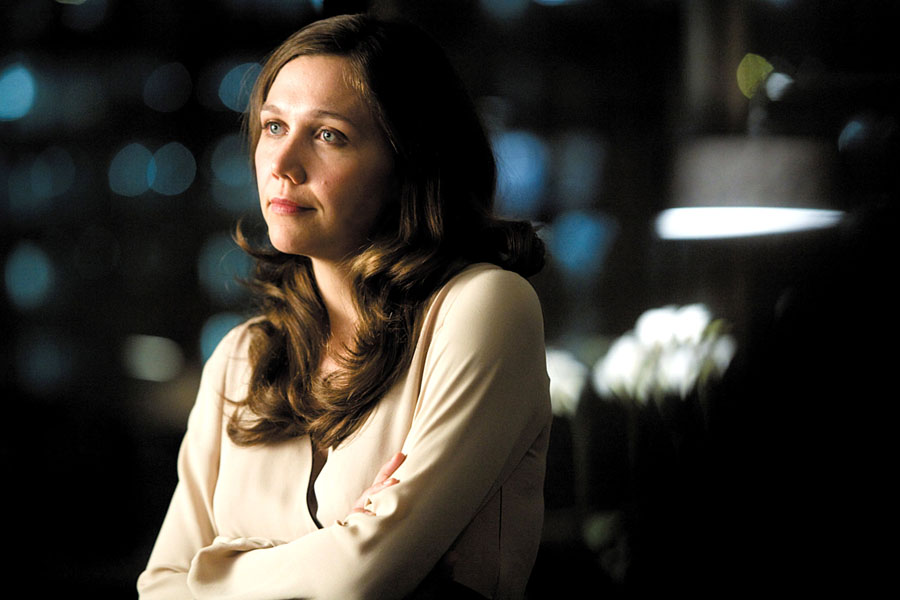
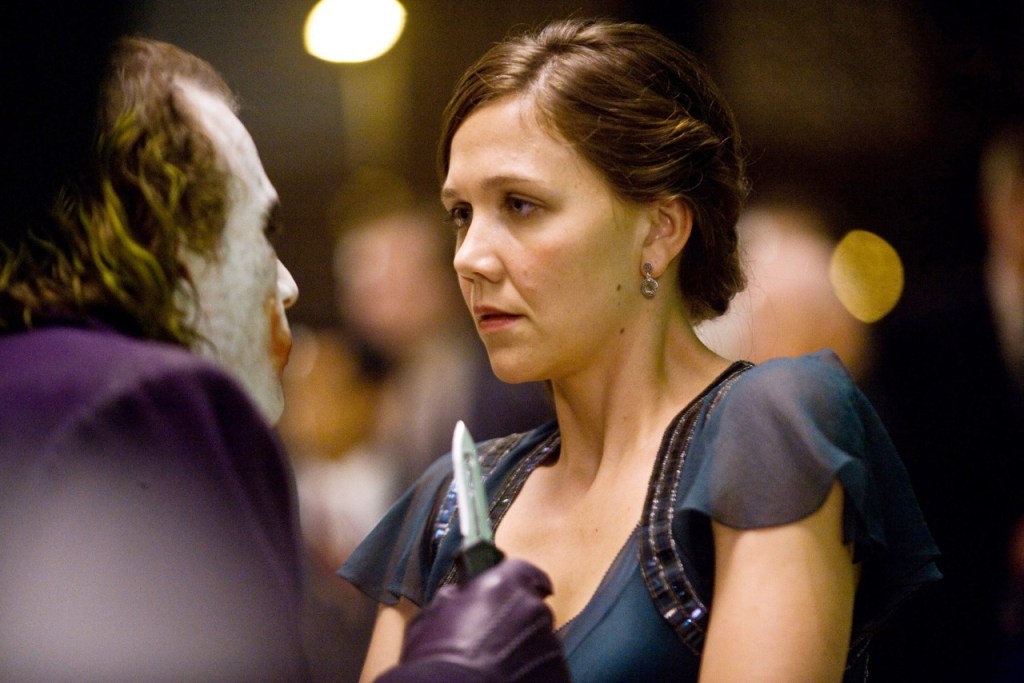
Still, with what she was given to work with, Maggie Gyllenhaal makes the character her own. This was inevitable, as both Holmes and Gyllenhaal have a different kind of screen presence, neither of which is bad nor lacking in any way. Still, as the only major character to appear in more than one film played by two different actors, the disposability of the character can barely be argued.
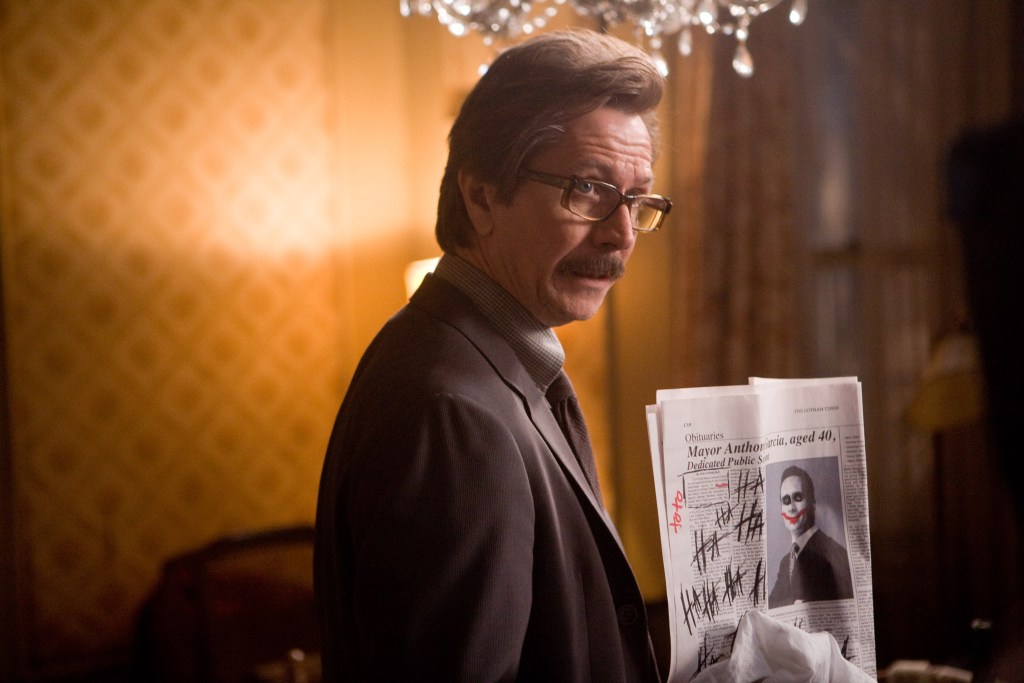
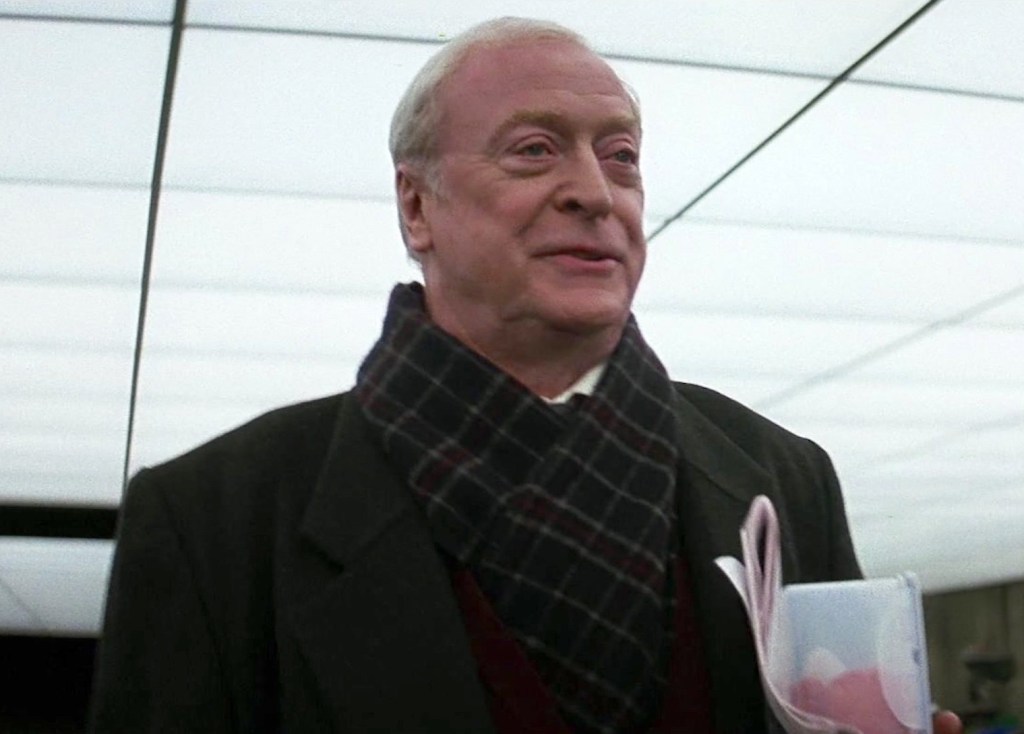
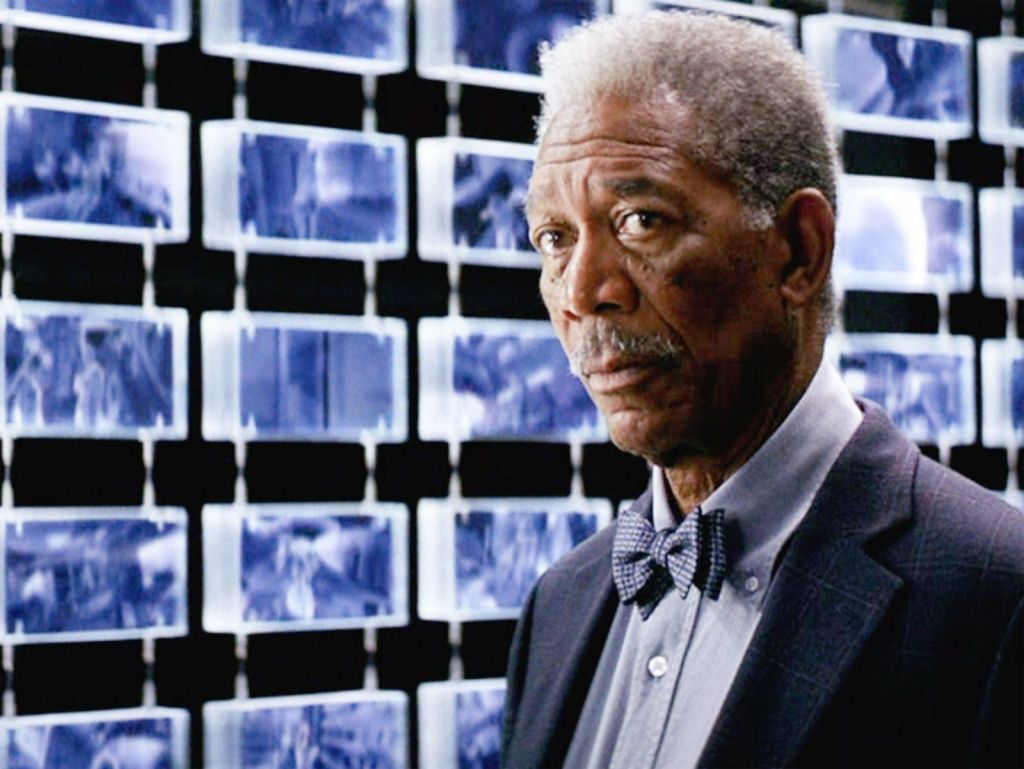
The returning supporting characters of James Gordon, Alfred Pennyworth, and Lucius Fox, played by Gary Oldman, Michael Caine, and Morgan Freeman, respectively, are a welcome sight. Both Lieutenant Gordon and CEO Fox are chief allies of Batman, though only the latter is aware of the masked vigilante’s true identity. It is with immense irony that how they relate to Batman is part of the crux of the story. James Gordon is wary of Batman taking the blame for all of Harvey Dent’s crimes at the end, while Lucius is critical of Batman for turning every citizen of Gotham City into a listening device. By the end, they are still firmly on his side for these reasons, with the added benefit that Batman left control of the device that he used in the hands of the one person who would never abuse it, with the self-destruct mechanism already activated. Alfred, as always, is Bruce’s loyal butler, medic, and therapist – whom he dutifully ignores when he needs to but whose words always have an impact on him.
There was a slew of other supporting characters, including Lau (Chin Han), an “accountant” for the Gotham mob from Hong Kong. Unlike other criminals faced with the threat of arrest, Lau succeeded in escaping the realm of jurisdiction of the Gotham police department, only to find that Batman has no jurisdiction. All of which ends up with him strapped to a mountain of cash, courtesy of the Joker, and left to a rather… painful fate. Cillian Murphy briefly reprises his role as the Scarecrow, having recovered from his fear toxin, only to promptly be defeated alongside the impersonators.


Other standouts include numerous members of the Gotham City Police Department, such as returning Police Commissioner Gillian B. Loeb (Colin McFarlane), whose death opens the position up to a certain character. Others include the litany of corrupt officers, Anna Ramirez (Monique Gabriela Curnen) and Michael Wuertz (Ron Dean). Then there are the ones who mean well but whose actions further the Joker’s goals – Gerard Stephens (Keith Szarabajka) and Murphy (Philip Bulcock). That the four major police characters come in pairs, whose actions and demeanors are similar, yet their impact has a cascading effect in different ways, is a clever parallel to Two-Face. It seems that most characters act as shadows of one another.
The Dark Knight has several themes that play out across the film and how they can be utilized to play off our preconceived notions of these character archetypes. Self-sacrifice versus self-serving ideology, the use and abuse of power, and perception are chief among these themes for the film. What is corruption? Is it as simple as a police officer on the take in a crime-infested city? When it comes to the world of storytelling, the definition of right and wrong becomes more muddled because none of it is real – unless, of course, it is an accurate retelling of real events, but I digress. How certain characters perceive others’ corruption determines their fate in this film. How characters perceive Batman determines their reactions to his choices – with him being venerated in the beginning and vilified in the end, all because of the perception of his character. Christopher Nolan explains that, for his purposes, the film’s main theme is ‘escalation,’ which certainly gives that in spades.
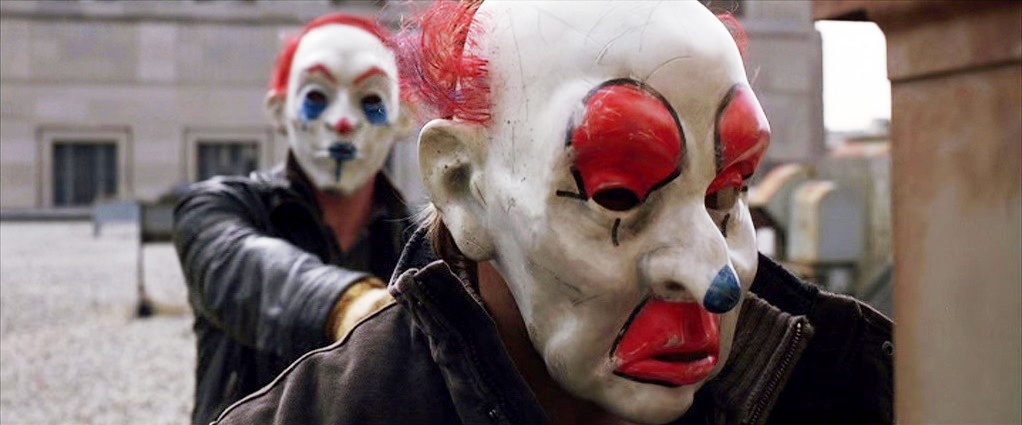

In multiple instances, the Joker gives individuals and groups the choice to do something heinous in anticipation of some greater reward – usually the ability to live. This is played for all its worth at the beginning of the film, during the bank robbery, which sets off the series of catastrophic events which leads to the finale, where a group of convicted felons and average citizens are on two ferries after the Joker threatens that the city will soon be his to control led to a mass evacuation. In the former incident, each robber willingly killed the other until it was down to the Joker himself. They did so for various reasons, with the primary motivator being greed and the latter being self-preservation, when it became clear that they had all been given similar instructions.
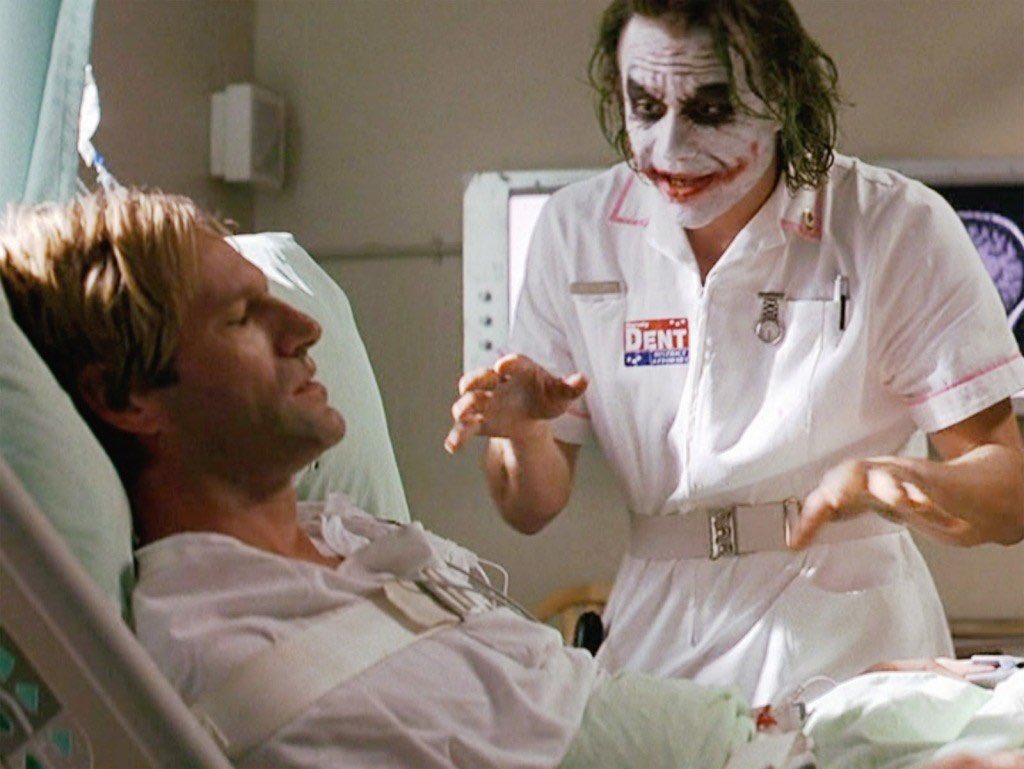
The Joker carefully gaslights Harvey Dent throughout the film to execute this personally, all in anticipation of making his great social experiment go off without a hitch. Yet, when the time came, neither side was willing to budge, even as they spent much of their time fretting over the other side.
There are many theories on this scene, too. Because neither side presses the button, it is up in the air whether or not the reality of the scene is as it was presented. The Joker often gave people false choices that would not necessarily grant them the answer they had been promised. We see this clearly when he gives the police and Batman a chance to save Harvey Dent and Rachel Dawes, who are being held hostage in opposite directions.
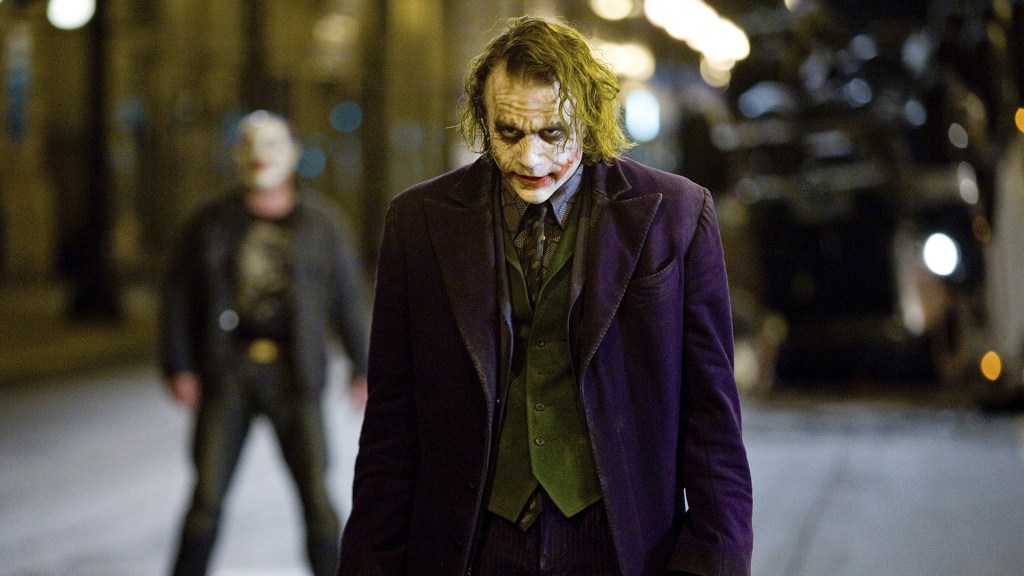
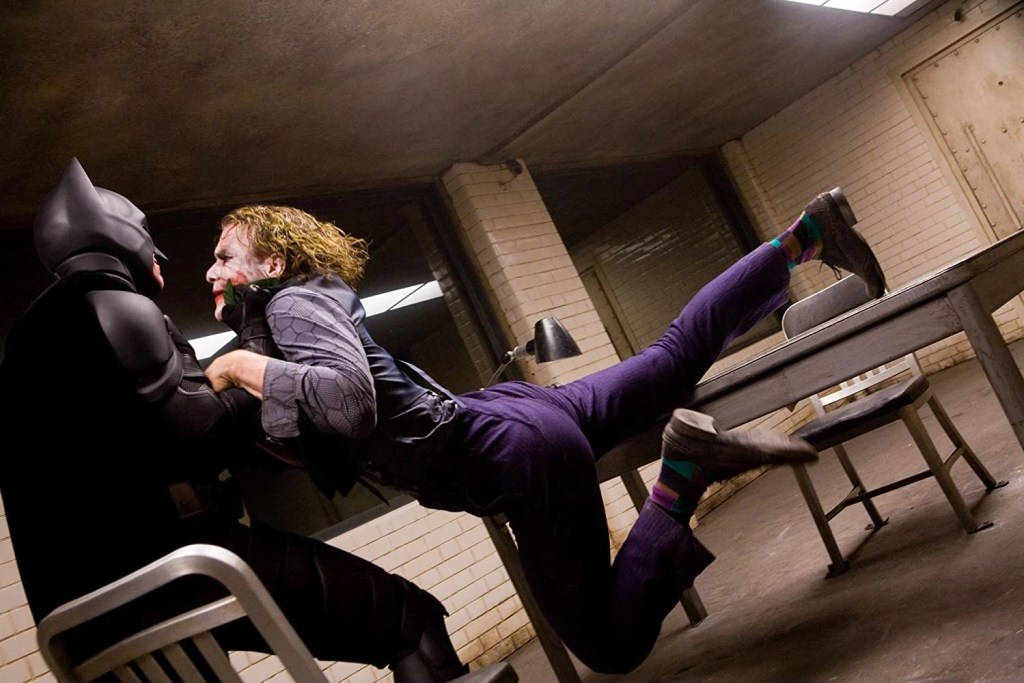
The Joker knows that Batman would go for Rachel after he earlier leaped out of a building to save her from dying, so he switched the locations, certain that Batman would reach his destination faster. This results in the death of Rachel, with Harvey firmly believing that Batman saved him because he was more important than Rachel. All of this spirals into the self-destruction of Harvey as a person, but it also shows that, if given a choice, Batman would save a person he cared about more than he would another person. For this reason, Batman fights against his instincts later in the film to beat the Joker while having faith that the people on the ferry won’t make the same choice that he did.
They don’t, and the Joker’s social experiment fails.
The Dark Knight did not pull any punches. It is critical of police corruption, taking the easy way out, and making rash decisions without considering the consequences. While it seems to give an indictment on humanity in general, it is careful to emphasize that humanity is our greatest virtue and most powerful asset. As long as we listen to it. Humanity can be easy to lose when nobody is looking, making fighting for it all the more necessary. This is something that Rachel Dawes and the characters on the ferry learned well. It is, unfortunately, a lesson that Harvey Dent failed to internalize.
 Lloydd Marshall Books