

Salt was one of two movies starring Angelina Jolie, the other being the previously reviewed The Tourist, and was also one of several films to follow in the wake of Lara Croft: Tomb Raider and Mr. and Mrs. Smith. A vehicle built off of her capable star power and reinforcement of her place amongst high-stakes, fast-paced action films.
While she may have played the secondary lead in The Tourist, here, it’s Angelina Jolie’s show, and she shines in the role of a deep-cover Russian sleeper agent under the guise of Evelyn Salt.
Rarely does Angelina Jolie play what could even be construed as a villainous character. Like her later role as Maleficent in Disney’s perspective-flipped adaptation of Sleeping Beauty, Evelyn Salt is not a tried-and-true villain here. Rather, because of certain edits to the film – resulting in three different versions– she is primarily a misunderstood force, clinging to the story of her life that was never meant to become real in the first place.


Director Philip Noyce is on record regarding the amount of footage that was crafted for the film, with numerous flashback sequences still on the cutting room floor. There are three released versions of the film – the original theatrical cut, an extended cut that uses alternate scenes but only increases the runtime by a minute, and a director’s cut that is four minutes longer and has a downright devastating implied ending. It’s not Cursed-levels of alternate versions, but all available cuts provide a deep, interesting take on the story. This plays into the main themes surrounding trust, perception, faith, and how one views Evelyn Salt.
Evelyn Salt is introduced as a CIA operative being held captive in North Korea, though her status is not known to her boyfriend, archaeologist Mike Krause (August Diehl), at the time he made his case. During this process, she reveals the truth about her status as a member of the CIA, and his only response is to propose to her. We then skip forward two years, and Evelyn is tasked with interrogating a defector from Russia, Oleg Vasilyevich Orlov (Daniel Olbrychski). A notorious spymaster, he plays mind games with those around him. He informs them that the Russian President will be assassinated when he attends the funeral of the US Vice President and convinces the CIA that Evelyn is a sleeper agent from Russia who will be tasked with the assassination. Her attempts at defending her good name fall apart when she realizes that, even if they believe her rather than Orlov, they aren’t going to let her leave freely. What’s a gal to do besides escape from the CIA’s headquarters?

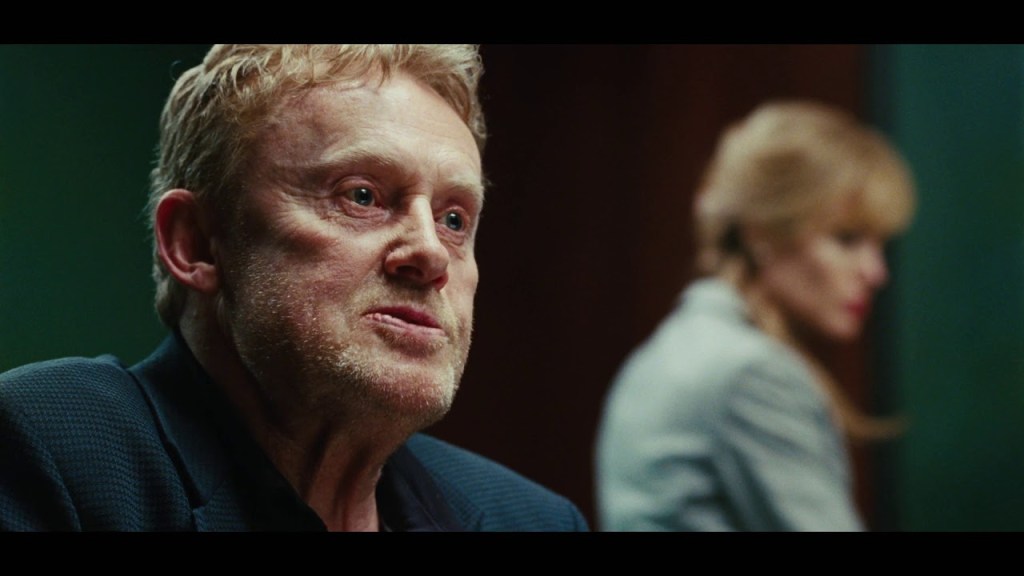
The film’s first half is a brilliant subversion of audience expectations and perceptions. With her husband captured and taken to parts unknown, the world on the lookout as she is exposed as a potential spy wanted for questioning, and the funeral growing closer by the day, we are certain who is right and who is wrong. We can tell the difference between good and evil, light and dark. As a conspiracy thriller, that is the goal of the genre. It weaves a web of deception and calls itself truth, and we, as the audience, have no choice but to trust the story that is fed to us. By the halfway mark, when Evelyn’s true role in the story is revealed, shock and awe are intermixed with unrelenting chase and gratifying fight scenes to keep you on the edge of your seat. This is the mark of a good conspiracy, and why I find it incredibly appealing that there are three versions of the story.


Certain plot points are the same – even a good pick-and-choose-your-own adventure requires the same skeleton to make the story sense. But that did not prevent them from reframing the context or giving a wildly different ending. The character presented as the main villain is killed differently in two different versions of the film at vastly different points in their stories. Few films can make this claim, and only because they rarely get a director’s cut to begin with.

Liev Schreiber plays Ted Winter, head of the CIA’s Russia House, a fictional entity within the spy organization which focuses its efforts on Russia. The reveal regarding his character couldn’t have been more obvious if they had hit us over the head with it. Much like every parent, writers agonize over the naming of their characters. I should know. I do it all of the time.
For this reason, Ted’s name was a major giveaway when I first saw the film. Liev plays his role to great effect, though by this point, one of his most famous roles was in the original Scream trilogy. There, he played a character framed for a crime he didn’t commit and portrayed in a dark and threatening manner. Typecasting aside, audiences have ascribed past performances to new ones.

Long before he joined the MCU as Karl Mordo, Chiwetel Ejiofor would play opposite Angelina Jolie for the first time in this film as the primary antagonistic force to her exploits.
They would later share the silver screen again in Maleficent: Mistress of Evil, where they would have a far more intimate story arc between them. It ended… far more tragically than this one. Here, as Darryl Peabody, his duty is to catch a supposed escaped Russian spy hidden amongst the CIA’s rank and file. Is it any wonder that he is an antagonist to Evelyn Salt? But, like many characters in his position across this genre, he quickly realizes that there is more going on than he has been privy to. This forces him into a moral and ethical dilemma late in the film, where his decision drastically alters the course of the final act.
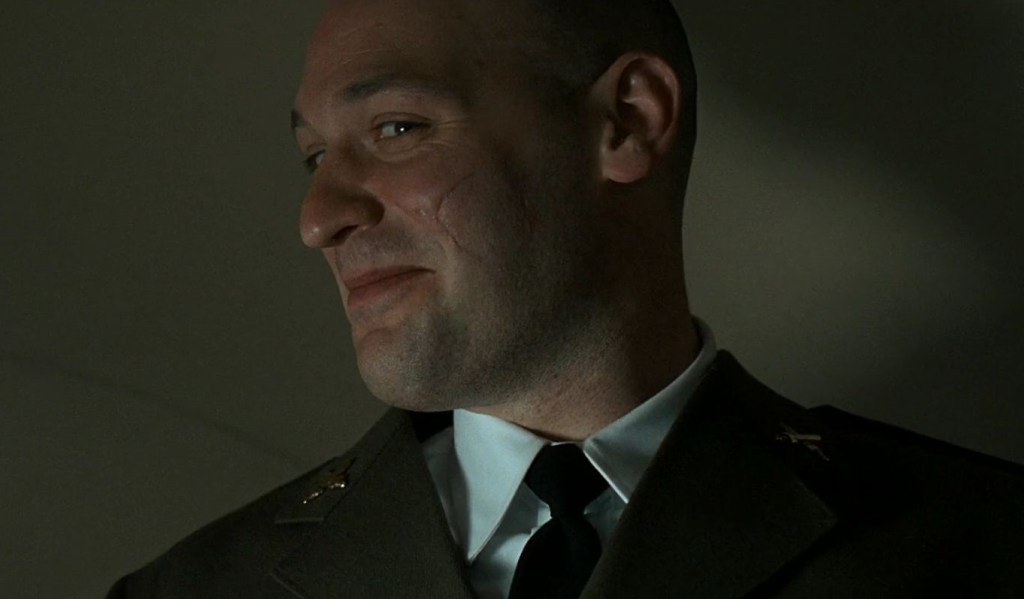
Another actor in this film, long before he joined the MCU, is Corey Stoll, who plays Shnaider, a KA sleeper agent who is sent on a suicide mission, alongside Evelyn, halfway through the film. Keep in mind that this mission is inside the White House.
Corey Stoll’s role is brief but memorable, leading to one of the most enjoyable escapes I have witnessed in film. Secret Service is never more idiotic than when they are portrayed on film. While we hear about a few mishaps and painful screwups, in the news, in the world of fiction, they make decisions that often leave me scratching my head. Watching a team of them shoot at a potential threat in the chest, rather than the head, made for an explosive mistake.


Salt is filled to the brim with intense action sequences, daring espionage escapades, and fraught scenes laced with tension. Conspiracy thrillers rely on these elements to be successful. It requires a careful balance of them, too. If the plot becomes overly convoluted, the audience can be lost – even if they are hanging on every little detail. With three different films in existence, that the story can be cohesive and understandable in each iteration is a testament to the skills and efforts of all those involved. What few questions may be left when the credits roll are entirely intentional from a creative standpoint, something that even well-put-together films with only a single cut can’t boast.
 Lloydd Marshall Books