
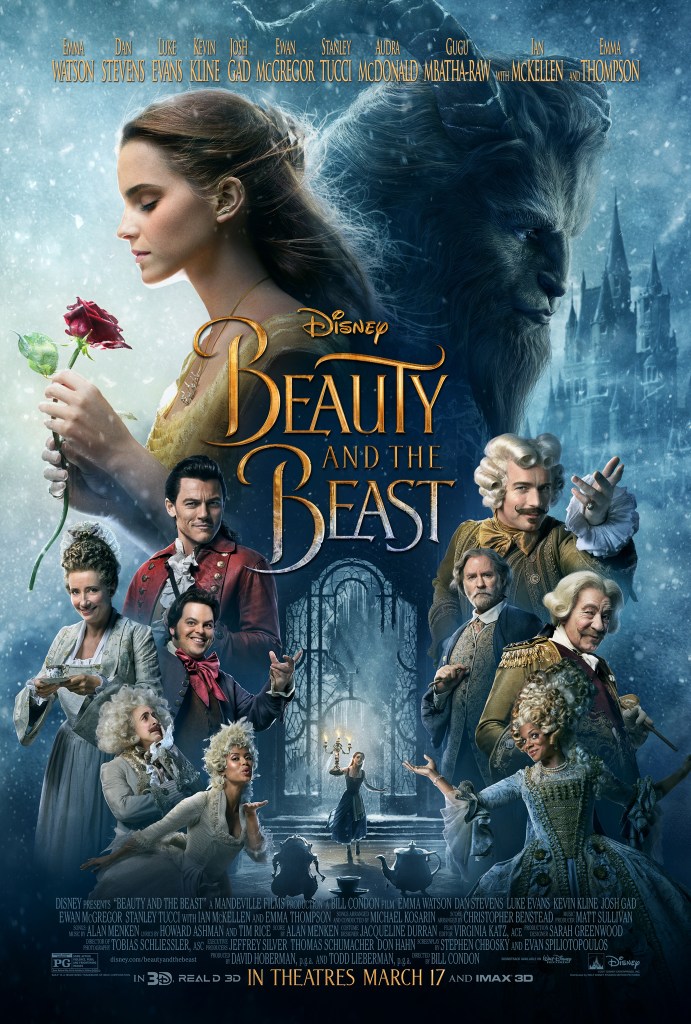
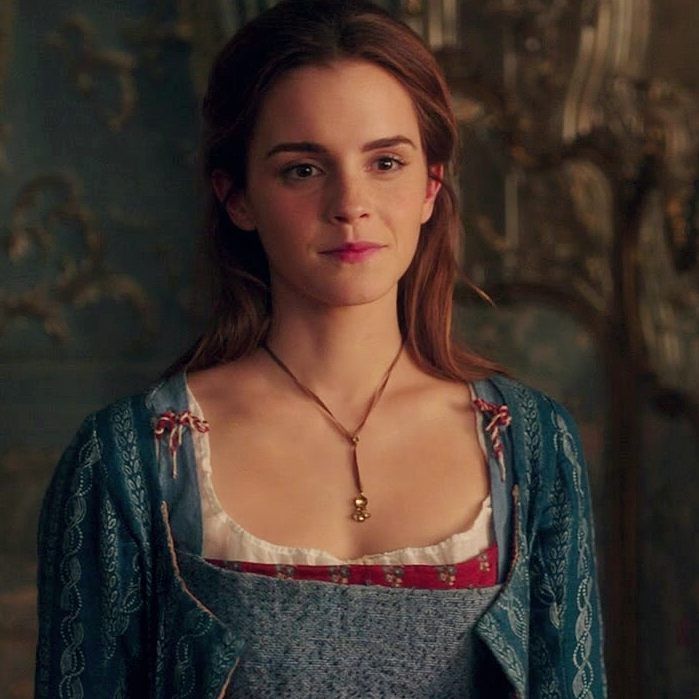
Beauty and the Beast was always going to get a live-action remake/adaptation once the ball truly got rolling. A beloved classic, this story is one of those films that are Disney’s bread and butter – a rags-to-riches story involving all manner of magic. Belle (Emma Watson) is the daughter of Maurice (Kevin Kline), a craftsman who sells his wares (music boxes) to support himself and Belle.
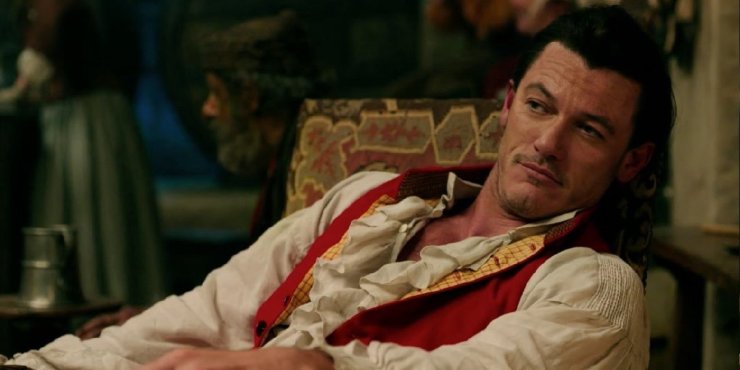
Few people are unaware of the story of Beauty and the Beast, so Disney took a page from Cinderella and expanded on the material they already had. This involved brand new characters filling out the world, providing new explanations for why certain events occurred, and even developing brand new subplots to add depth to each character. Some of them, such as the war mentioned as a part of Gaston’s back story, are left vague, but their effect is still felt. For example, Gaston (Luke Evans) is implied to have PTSD due to what he saw and did during the war. It certainly doesn’t excuse his villainous actions, but in the real world, there are countless stories of veterans having similar problems and, unfortunately, similar ends, even without magically talking Wardrobes. Even the animated film was a darker story compared to other Disney fare, even if not as bleak as The Black Cauldron.
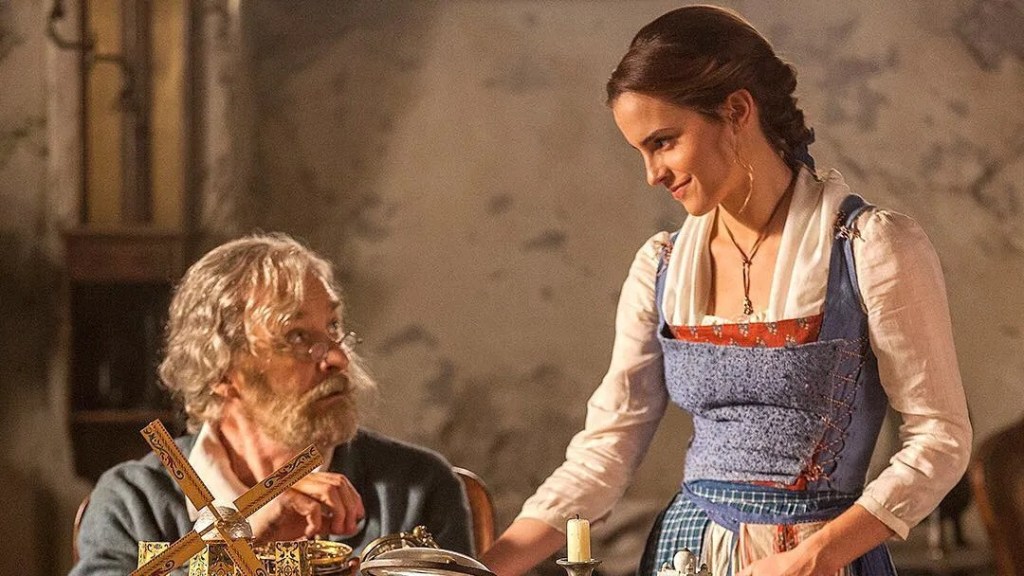
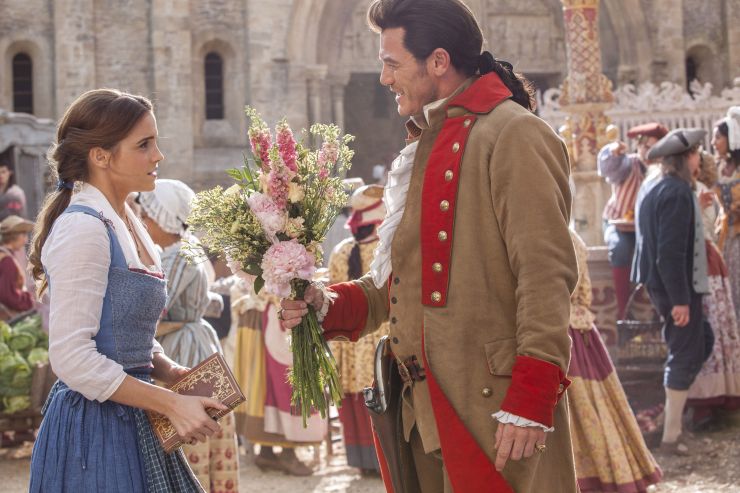
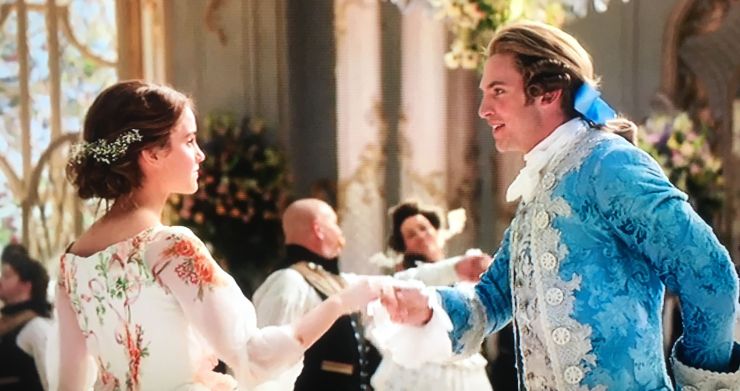
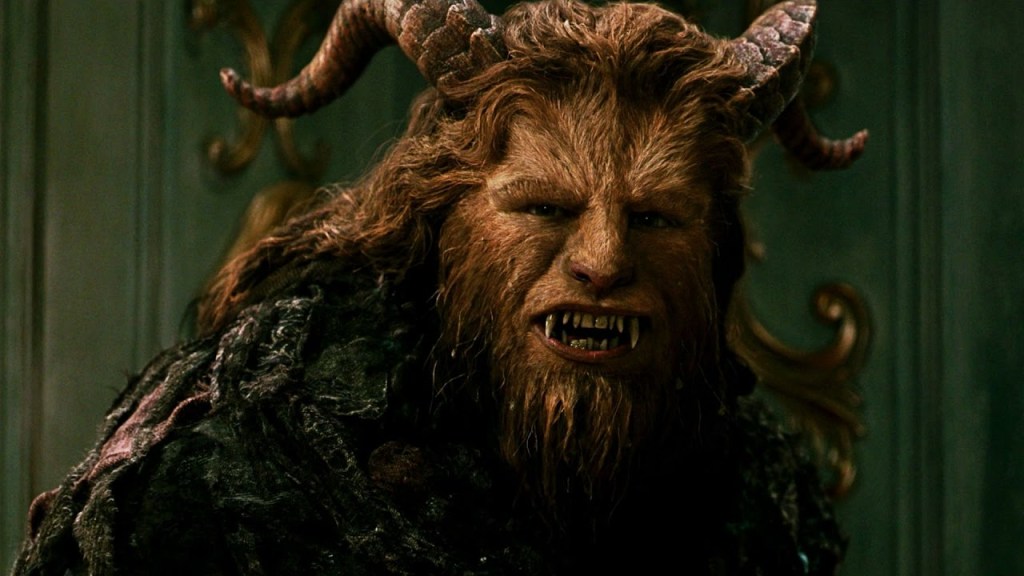
When he crosses paths with a monstrous Beast (played by Dan Stevens) in a seemingly abandoned castle in woods long since forgotten about, the story unfolds similarly to the animated version Disney adapted in 1991.
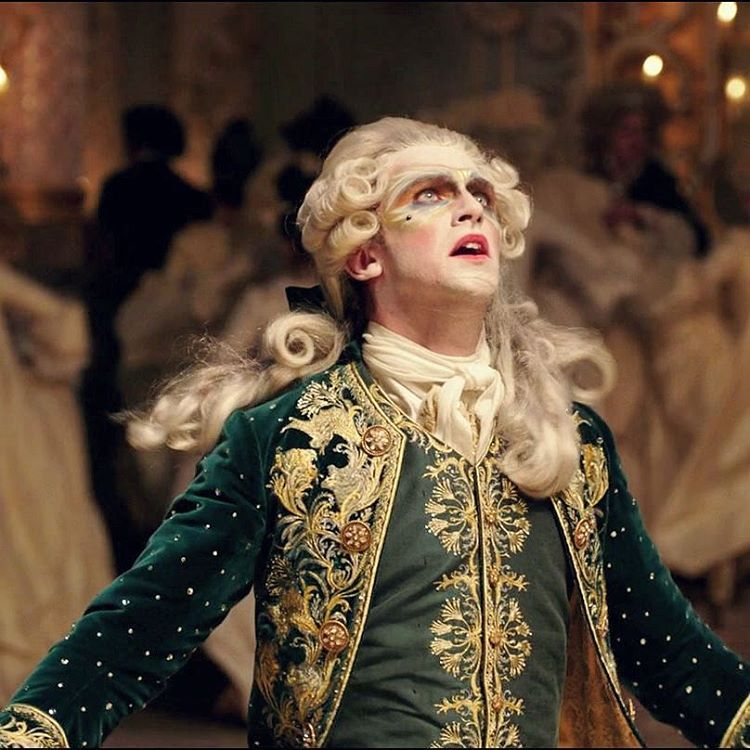

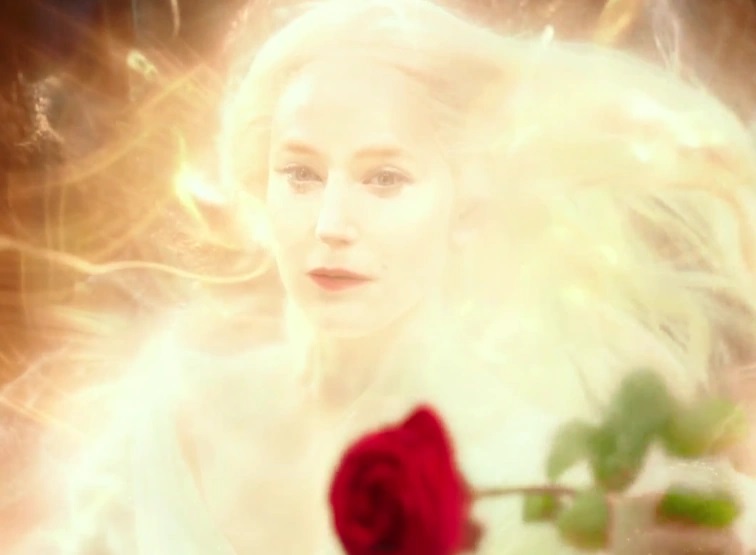
In an effort to step away from the implications of cursing a child abandoned by his parents into being a hideous creature for, well, being a brat, the Prince is older and more capable of being held responsible for his poor choices. Here, because the servants who waited on their Prince hand and foot did nothing to stop his casual cruelty, they were cursed to be objects that related to their duties in his palace by a beautiful witch (Hattie Morahan) who provided all the clues and assistance needed to end the curse for the better. The servants have no choice but to watch as the Beast becomes more and more his namesake, incapable of doing anything to mitigate their own circumstances. It is the peak of irony and provides more of a compelling reason for their desperate efforts at cultivating a relationship between their master and Belle when she finally arrives.
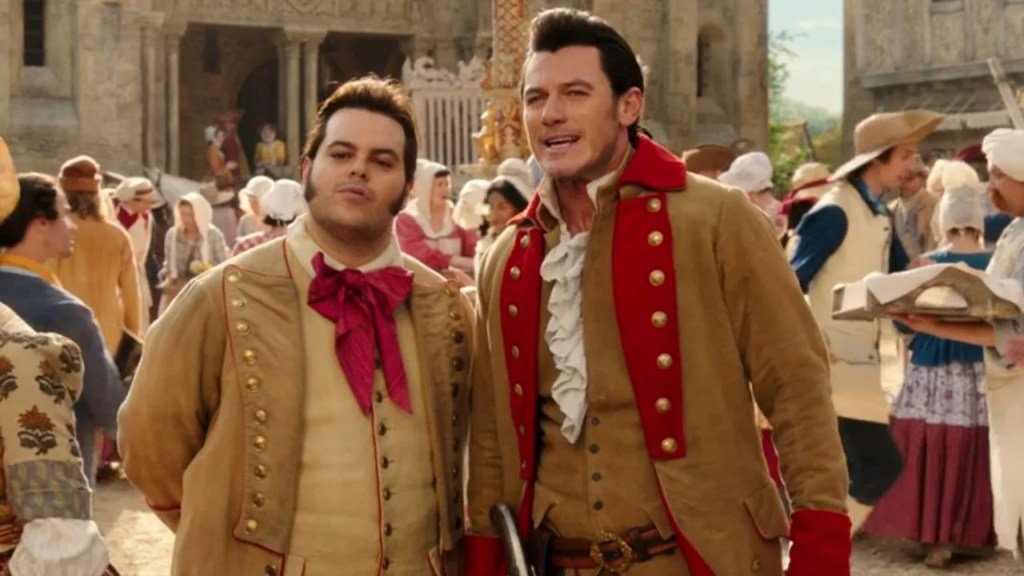

Like Gaston, we are treated to a more nuanced version of LeFou (Josh Gad). As Disney’s tenth first gay character (I can’t recall what number he actually was, but that’s unimportant), his inclusion caused a firestorm amongst a certain group of people – all of which felt hilariously unnecessary when his ‘moment’ turned out to be a shared look during a brief dance near the end of the film. As a person, though, his loyalty to Gaston is implied to be because he has romantic feelings for him. This makes his efforts at pushing the Bimbettes (Sophie Reid, Rafaëlle Cohen, and Carla Nella) based on jealousy more than anything else. We watch his blind loyalty to Gaston flounder and fail as Gaston does one horrible thing after the other – though he can’t bring himself to stand up to him when Maurice attempts to bring him down after being abandoned in the woods. It is simply one step in the right direction.
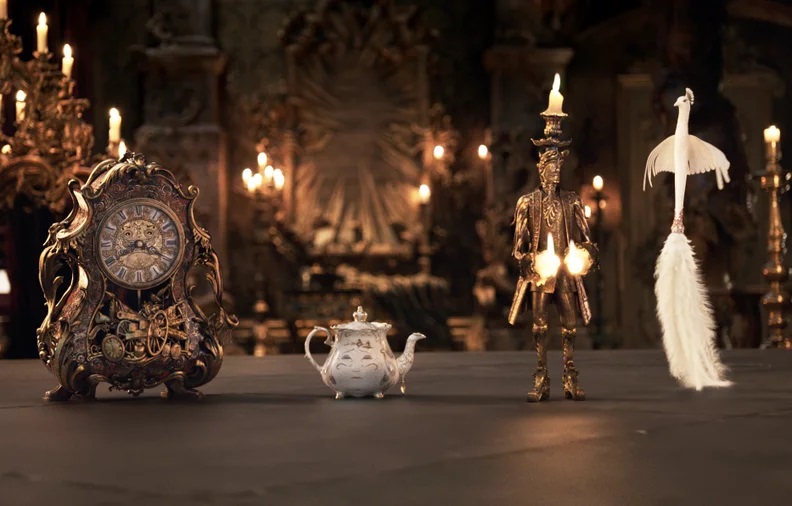
Ewan McGregor, Ian McKellen, and Emma Thompson play Lumiere, Cogsworth, and Mrs. Potts, the most notable of the human-turned-objects servants, having the largest roles in the film as they work to build a rapport between the two leads. Chip (played by Nathan Mack) is adorable, especially when he slides across the table toward Maurice, having promised not to do anything out of the ordinary but wanting to be of service. Stanley Tucci and Audra McDonald played Cadenza and Madame de Garderobe, the former a harpsichord and the latter a wardrobe, though they are married and provided musical entertainment at the Prince’s parties. Lastly, Gugu Mbatha-Raw, who famously played another Belle in Belle, takes on the flirtatious role of Plumette, the Feather Duster and Lumiere’s love interest.
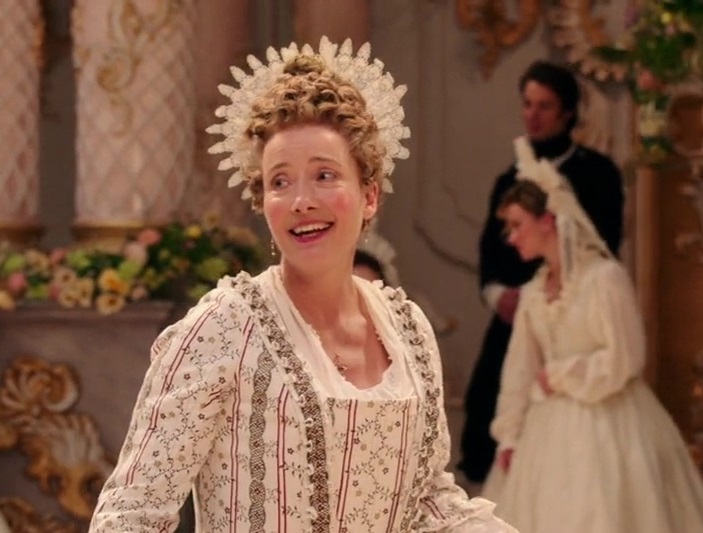
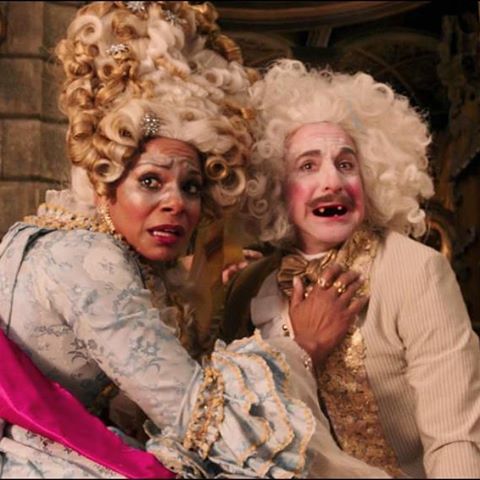

Each of them is allowed to acknowledge the horror of the situation that they are in, which is made so much worse when you discover that they had an intimate connection with the village that Belle is from. Nobody remembers them, the castle, or even the fact that there was a Prince they paid homage to only a handful of years ago. The fact that the town never changes is also magically connected to the curse placed on the castle, as they cannot change without those they love but can no longer remember and are trapped. It is a terrible situation to be in, and it comes down to the burgeoning love of two people who vehemently dislike one another from the outset.
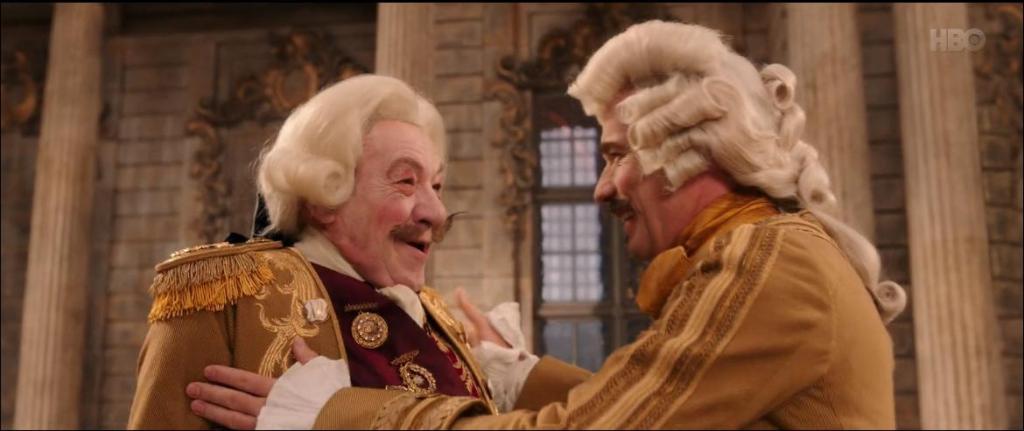

Unlike Maleficent and Cinderella, Beauty and the Beast utilized the music that earned the original two Academy Awards. I have made the argument before that Disney is careful when deciding which of their adaptations retains their music and which doesn’t. This entry certainly benefited from its impressive musical numbers. Be Our Guest and the title song are so renowned that people know of them even if they haven’t seen the film. That is how iconic some of Disney’s songs are; each film usually has one or two. And those two are them.
This adaptation has nearly an hour of additional runtime compared to the 1991 original animated film and uses that time well. We are given more insight into who Belle and the Prince (still unnamed, though Dan Stevens and Paige O’Hara, the original Belle, both stand by Adam as his name) as people. The circumstances surrounding why Belle and her father, Maurice, live in the village are laid bare, with her mother being a victim of the plague that ravaged Paris some years back. The Prince’s abuse at the hands of his father and his kind mother’s early death lead to him becoming closed off emotionally and vain, and selfish. With both of them having lost their mothers too soon, the pair bond emotionally and grow closer – though romance doesn’t bloom instantly because of the circumstances.
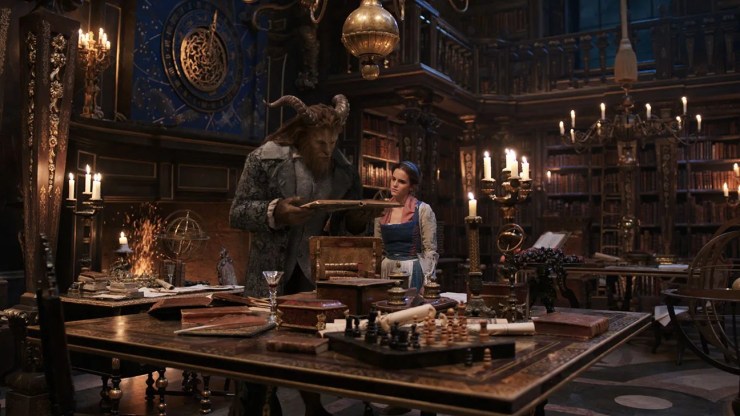
It is often said that Belle is a victim of Stockholm’s syndrome, which completely ignores the parameters of the syndrome and the actions that Belle takes as a person.
She does not sit idly by, waiting to be rescued, or even become resigned to her fate. She is determined to escape, only changing her mind after the Beast risks his life to save hers. This is all before she knows the extent of the situation with the cursed servants or the Prince’s circumstances. She does not fall over herself to be with the Beast, either. It isn’t until it becomes clear that she’s not a prisoner that she allows her feelings for him to truly bloom. Belle consciously decides to go back and save him from the villager’s attack because it is right. That she is rewarded for her kindness, compassion, and bravery is more of an afterthought to her, really.

The Prince and Gaston continue to be opposing forces – in every facet imaginable. Handsome on the outside and ugly on the inside, Gaston was one of the many men in Disney films that proved that beauty does not always equal goodness. One could view him as a precursor to Hans from Frozen, despite Gaston clearly being pegged as the villain almost from the outset. On the other hand, the Beast is not (supposed to be) handsome on the outside, but he is beautiful on the inside. His heart is wrapped in thorns to protect himself from a world he views as cruel due to his father’s machinations. Belle helps him to open up, but his growth is all on him. The Beast succeeded where Gaston failed.
Disney is not lacking material to adapt to a live-action format. Only recently, Moana was announced to be in the works, having only been released eight years prior, though its adaptation is due in 2025. Beauty and the Beast was the first since their Alice in Wonderland live-action continuation to hit a billion dollars, with only Aladdin and The Lion King following in its successful wake. Despite some of the criticism leveled at it, much of which was aimed at Emma Watson, this version was a fun adaptation, and the expanded material truly enriched the story for me. There’s a reason I’m always in the theater for each one of these.
 Lloydd Marshall Books