
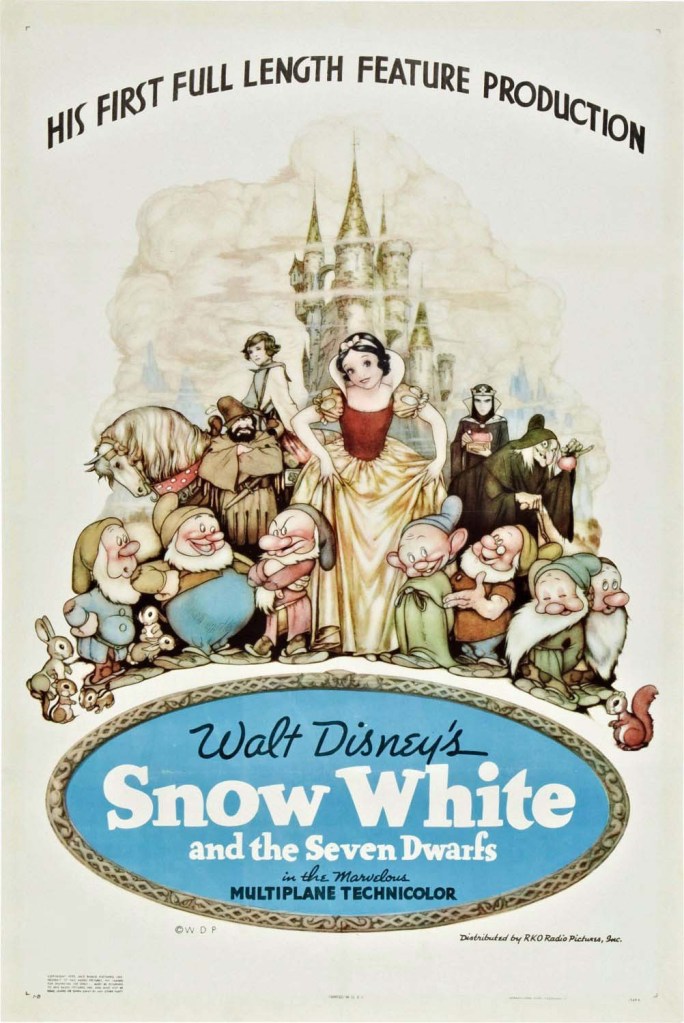
We are rapidly approaching the release of Disney’s live-action remake of Snow White and the Seven Dwarfs, which will adapt Walt Disney’s first animated classic in 1937. This is the film that Disney bet all of its money and its reputation on, to the point where it was known as Disney’s folly during its production. Animation was a costly venture (it still is to this day) and a work-intensive one (ditto), so it’s understandable why his critics would have been skeptical about such a film.
Yet, Snow White proved capable of pushing boundaries and breaking stereotypes, and it received a standing ovation after its initial premiere.
Legitimate, modern-day criticisms aside, Snow White and the Seven Dwarfs was a compelling piece of storytelling upon its release. With a limited cast of twelve characters, it weaved a powerful tale to life with beautiful animation, ethereal musical pieces, and an elegant approach to its world-building. Many of Disney’s earliest fairy tales eschewed context and answered questions to enmesh us in the world of their stories. This may have left certain characters lacking in modern viewing, but each character laid the foundation of an archetype. As Disney approached its golden age, it began to flesh out these archetypes and build out its plots without sacrificing its animation techniques’ beauty. But everybody has to start somewhere.
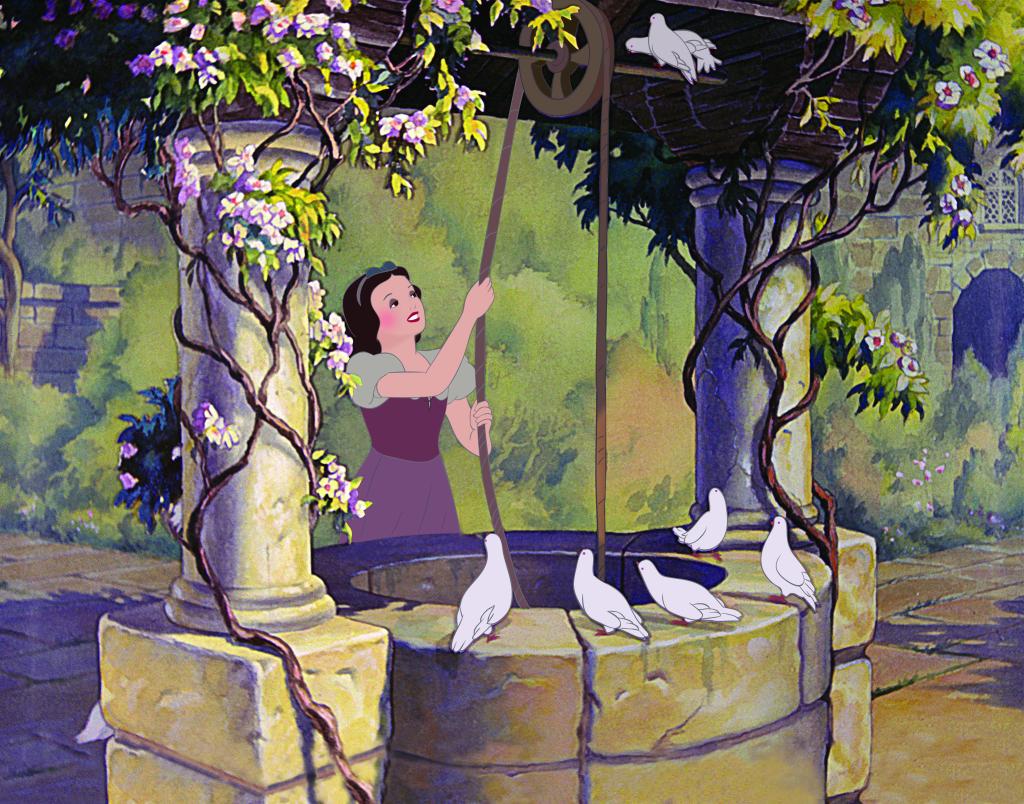
Adriana Caselotti voiced the title role, though you wouldn’t know it from the credits. Her voice and design are iconic, and, to this day, she is one of the most recognizable characters in film. Snow White’s beauty is a plot point, though it is ultimately her inner goodness that makes her the fairest of them all (in my humble opinion), as her stepmother, the Queen, is drop-dead gorgeous before she uses her potion. The complexities of this are not explored in the original film, but it has long become a part of our society that outer beauty is trumped by inner ugliness time and time again. Snow White is young, believed to be around 14, and innocent, but she is not ignorant of the threats posed to her. She is simply a child and a trusting one at that. If one can break past her initial defenses with kindness, she is more than willing to reciprocate with her own kindness. As heroes go, this is her fatal flaw.
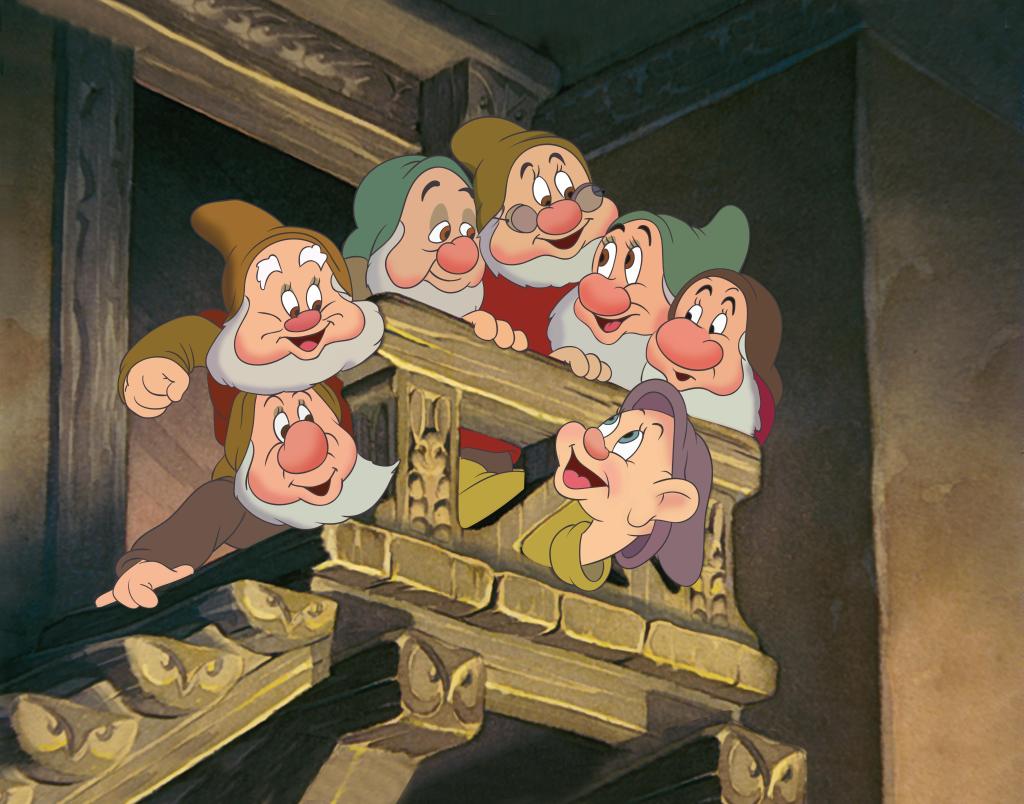
There were twelve characters in Snow White and the Seven Dwarfs, eight of whom are accounted for in the title. The titular dwarves are Doc (Roy Atwell), Grumpy (Pinto Colvig), Sleepy (also Colvig), Happy (Otis Harlan), Bashful (Scotty Mattraw), Sneezy (Billy Gilbert), and Dopey (Eddie Collins).
Each of the dwarf’s base personalities are extrapolations of their respective names – something Once Upon a Time ran with when it adapted them, showing that there is true power in a name. While Snow White initially believes they are simply orphaned children due to the size of everything in their house, she understands the situation perfectly upon meeting them for the first time. She is kind and respectful to them, especially as she has stolen away into their home for safety and security, and hopes to repay that with cleaning, cooking, and general caring.
The dwarves spend their days mining perfectly cut precious gemstones in a nearby mine. Despite their initial mistrusting nature of Snow White, especially once they learn that she is the stepdaughter of the Queen, it’s hilarious to see that they lock up their precious work product and leave the key on a hook by the vault door. More recent material, including the aforementioned Once Upon a Time and Snow White’s adaptation in A Twisted Tale series, Mirror, Mirror, that the mining of gemstones is far more important than a simple pastime. In the former, they are mining diamonds, turning them into fairy dust. In the latter, they mine the gemstones on the order of the Queen, who demands the precious stones as tribute.
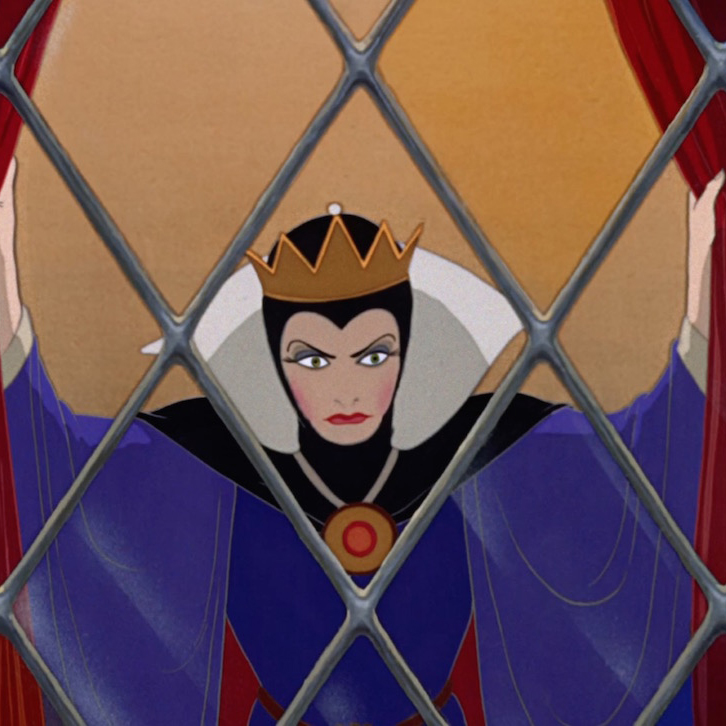
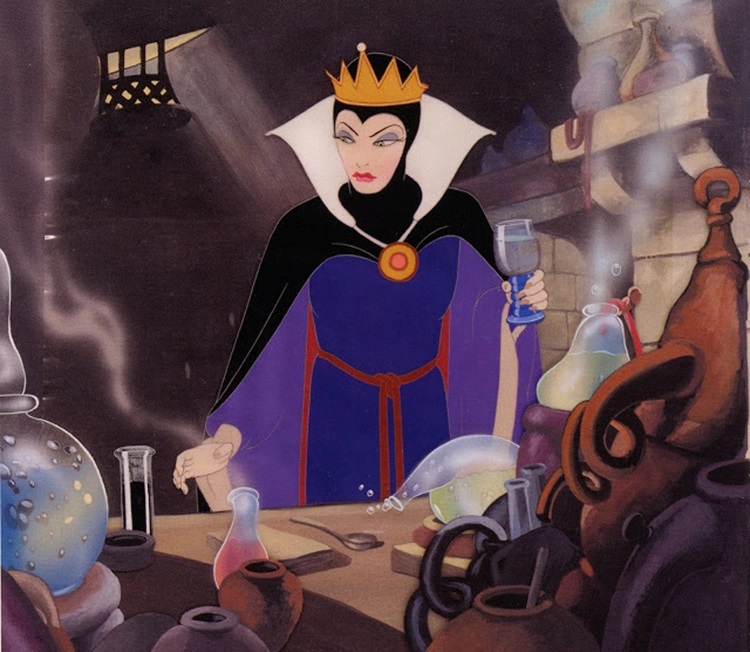
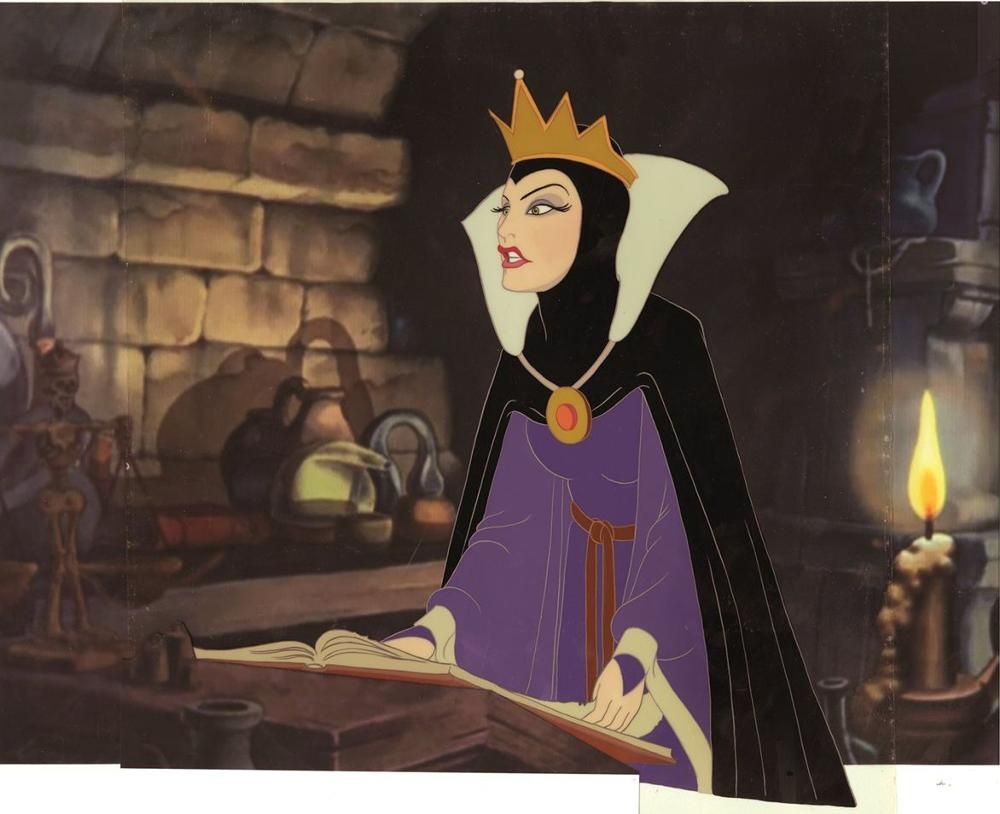
The Queen (Lucille La Verne), who would take on the moniker of Evil Queen outside of the film itself, is the film’s primary antagonist. Her character is so iconic that she is often viewed as one of the most influential villains in film. Across the Disney Animated Canon, she is almost always included in any cabal solely for being introduced first. Other villains that followed may have been flashier or more menacing, but the Evil Queen takes the later characters of Lady Tremaine and Maleficent (both voiced by Eleanor Audley) and combines them. She is a wicked stepmother and Witch determined to curse a young princess for petty reasons. Her vanity and pettiness are her fatal flaws, prompting her to take drastic measures to defeat a fourteen-year-old girl.

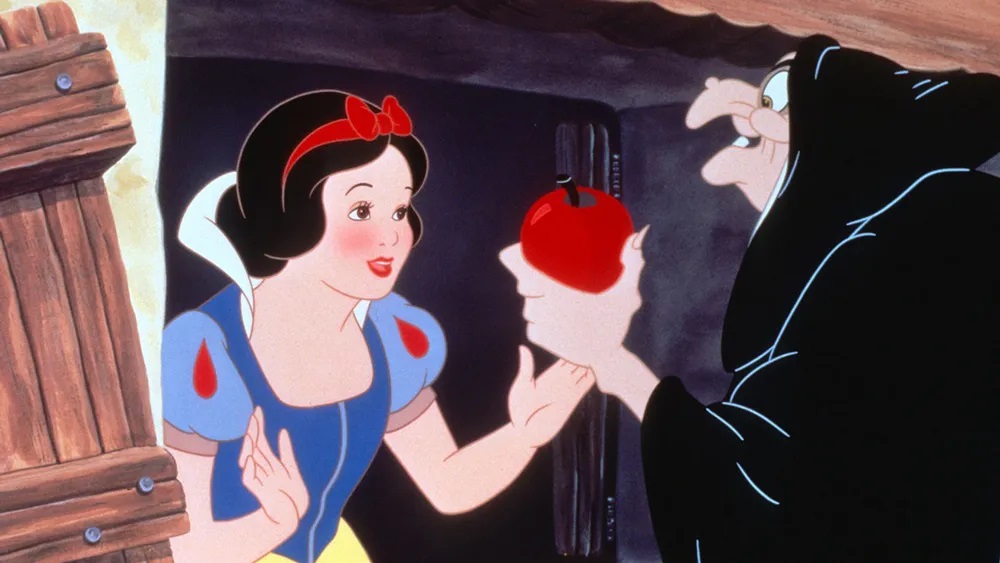
La Verne also voices the Queen’s alter ego, the Witch – an old and decrepit crone who lacks magic and physical strength to disarm Snow White. Her appearance simply screams untrustworthy, but as mentioned earlier, Snow White is prone to trust those who show outward kindness towards her. The Witch is everything that the Queen is not, frail and powerless. It boggles the mind why she felt she needed to don a disguise when she could simply cast a lightning bolt and burn the dwarf’s cottage to the ground, victims and all, and get her way.
The Huntsman (Stuart Buchanan), who only appears briefly in the film, is tasked with taking Snow White out into the woods and killing her for the Queen. He is presented as a noble person who is clearly against killing the innocent young girl, but he clearly takes his oath to the Queen to heart and attempts to carry out the task given to him.

Yet, when the time comes, her beauty, innocence, and kindness cause him to back off from killing her and, instead, sending her deep into the woods to flee her wicked stepmother’s murderous agenda. He is last mentioned as presenting what would prove to be a pig’s heart to the Queen to convince her that Snow White is dead. One must wonder what happened to him after the fact, considering the state of the Queen’s dungeon.
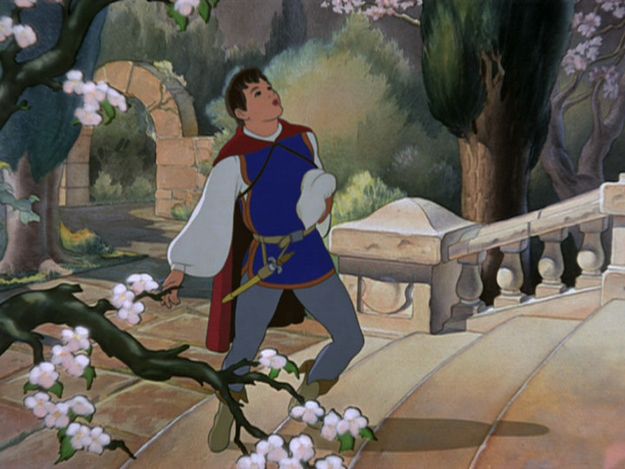
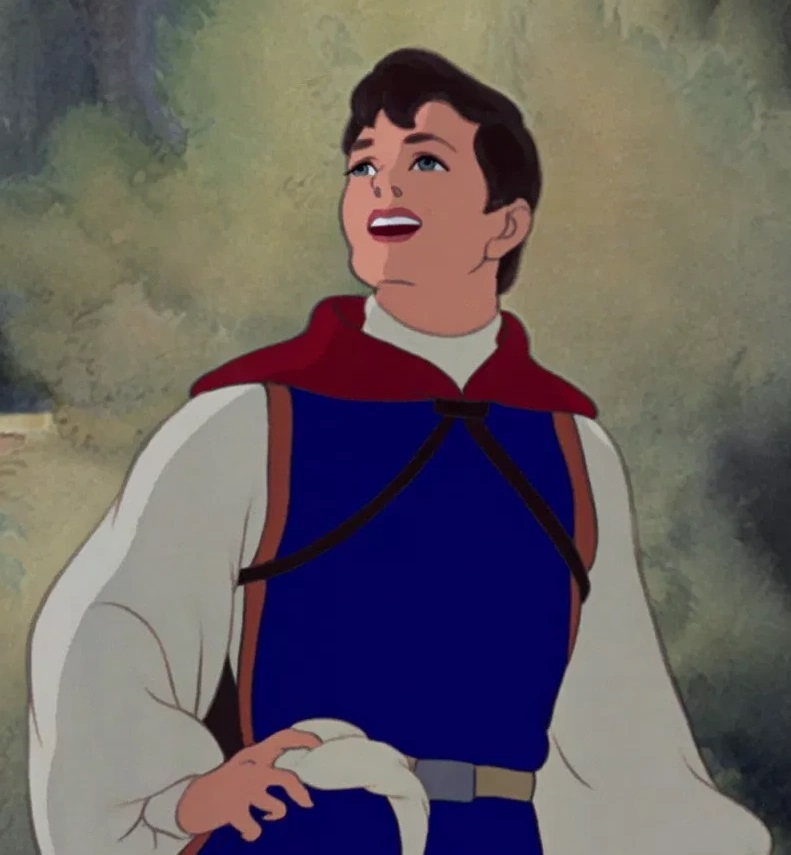
Next, we have the Prince (Harry Stockwell), who appears twice in the entire film in what amounts to an extended cameo. He has a song that he serenades Snow White with, and his main reason for being in the film is to break the sleeping curse on Snow White with true love’s kiss.
Walt Disney had more plans for the Prince, including him being captured by the Queen to prevent him from finding his true love and breaking the spell. This was eventually utilized in Sleeping Beauty with Prince Philip. It was cut because Disney’s animators couldn’t accurately animate a man, or so the story goes. Similar issues would plague them with Cinderella in 1950. Despite his limited presence, his interactions with Snow White are typical of a fairy tale romance – and isn’t that the point? We didn’t always have Elsa informing us that you simply cannot marry a person you met fifteen minutes ago, after all.

The final character in the film is the Magic Mirror (Moroni Olsen), who seems to be the source of the Queen’s information circuit. As a magical object capable of omniscience, the Mirror can answer any question posed to it, with flowery purple prose being an option that cannot be turned off.
For years, the Queen has asked the Mirror every day who the fairest in the land was, and until the film begins, the answer has always been her. On the day that answer changes, murder is her first solution. Perhaps stability was never on the table.
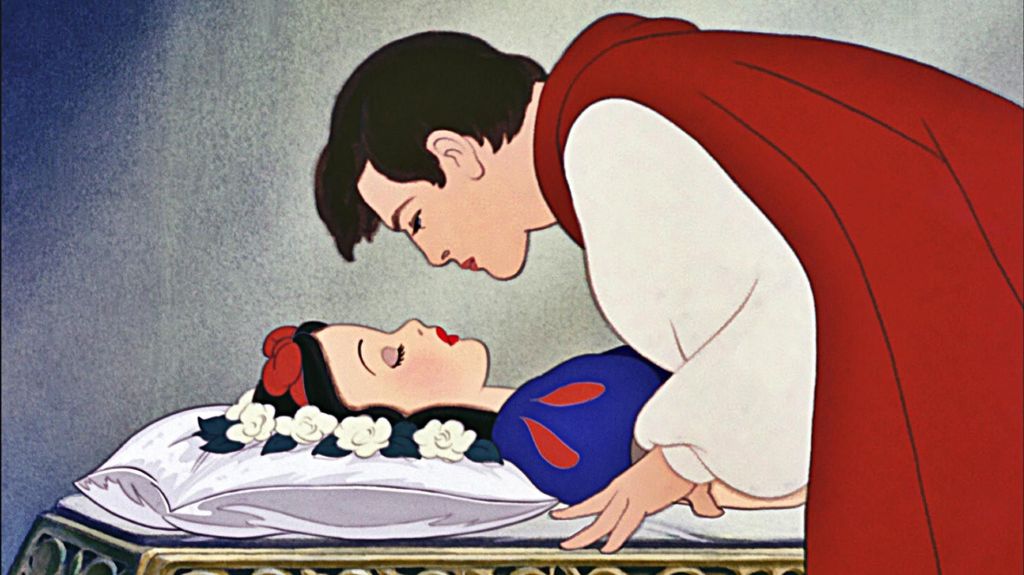

With seven musical numbers, most of them are sung by Snow White herself. The film is second to Beauty and the Beast (with its one additional song in rereleases), Pocahontas, The Princess and the Frog, and Moana in this area. Most of Disney’s films follow a similar structure with their music in that it’s rare for a film to have a song after its second half. Generally, the music stops when the plot kicks in. Because Snow White was such an ambitious project, it relied heavily on music throughout its first hour. Someday My Prince Will Come is such a renowned music piece that it has become a jazz standard. However, every single I Want Song in Disney’s canon can trace itself to I’m Wishing, a brief piece that Snow White sings over a wishing well in the film’s opening minutes. Also, unlike Prince Charming, whose role was equally scarce, the Prince here has an entire song devoted to himself – One Song, which he sings to Snow White to express his unyielding love for her.
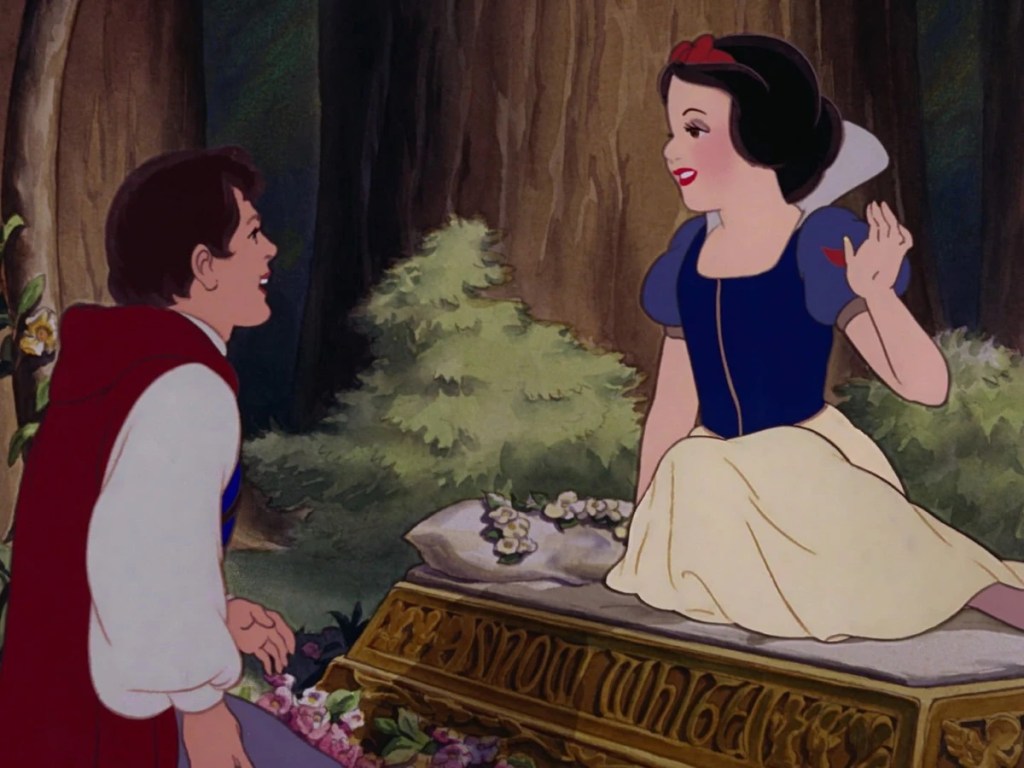
Snow White and the Seven Dwarfs is a film that defines animation as a serious medium for storytelling. It may not have been the first feature-length film, but it is by far the most remembered one. Without Snow 6White and Disney himself paving the path, animation may not have had as much of a presence in film and entertainment as it does today. While film studios have moved further and further away from traditional animation in favor of CGI, there is an unmistakable beauty to Disney’s animated features. I also love to watch Disney take its stories and modernize them in their live-action adaptations. This has allowed the studio to expand on every aspect of their stories, from the plot to the characters and, in certain films, the musical set pieces. Opinions may be divided, but as long as Disney keeps making them, I’ll keep watching them.
 Lloydd Marshall Books