
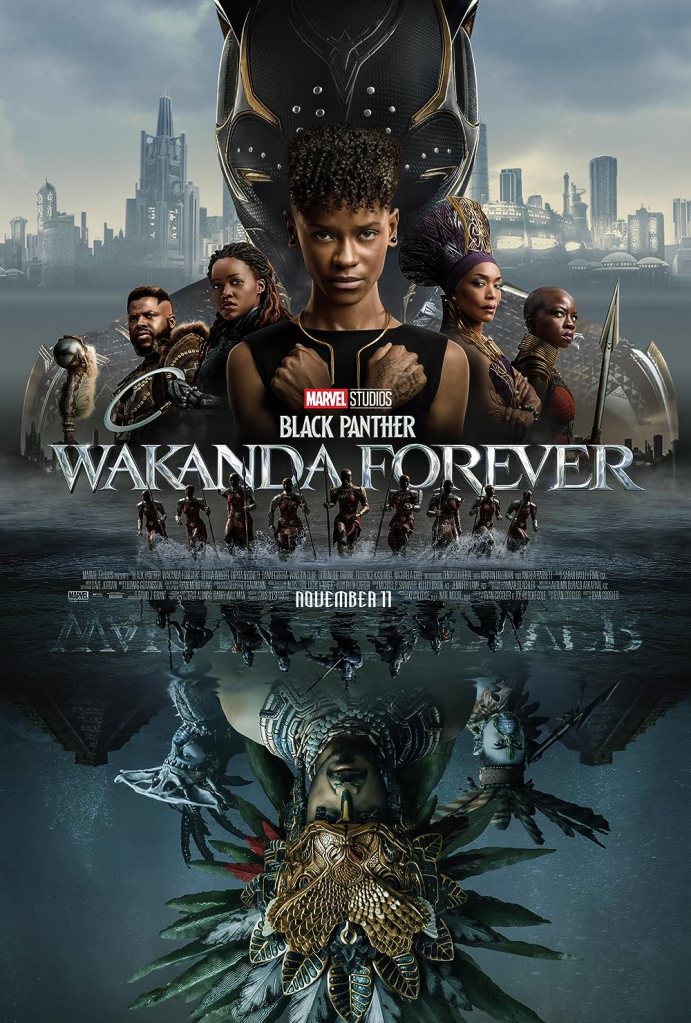
As each title character receives a sequel from a previous comic book adaptation into the world of live-action filmography, it becomes increasingly apparent that each installment is a mere piece of a larger puzzle. Traditional sequel rules and tropes may not apply since characters can develop within a slew of projects between the first, second, or even third installments that bear the same name.
This can, unfortunately, result in real-world events impacting a film’s overall story. With the death of Chadwick Boseman, the titular character’s actor was no longer available – with his final on-screen appearance being at the end of Avengers: Endgame. Alive, happy, and ready to commit to the plans and policies he announced at the end of Black Panther. The struggle to decide how to move forward made headlines again and again throughout 2021, as the COVID-19 pandemic impacted Chadwick’s wishes to have Wakanda Forever be his final outing as the character. Questions abounded while the cast, crew, family, and friends sought a way through their darkest hour. Ultimately, the film was rebuilt from the ground up, and the biggest question became…
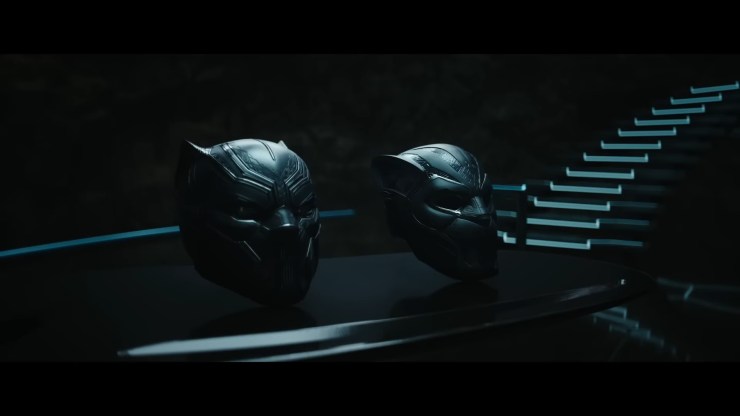
Who will be the new Black Panther? Many correctly guessed that it would be Shuri, but the film’s marketing played coy and laid out several candidates. In the end, the world continued to feel as if it were a living, breathing entity all its own.

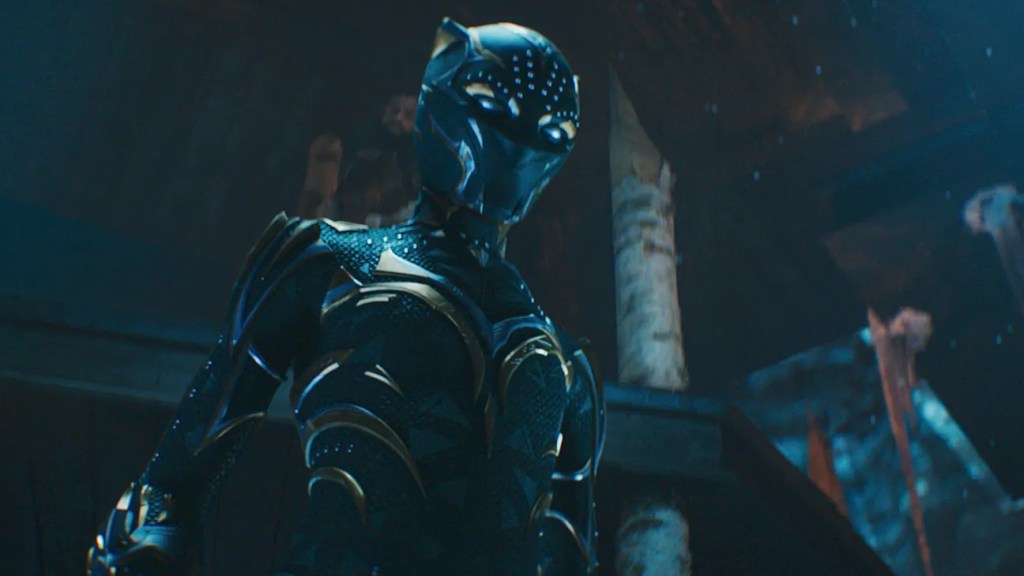
Black Panther: Wakanda Forever was released in November of 2022, with a leading cast of women of color – and it sought to move forward the world of Wakanda as a whole as it dealt with its own grief regarding the shockingly swift decline in its King, T’Challa’s, health in the opening minutes of the film. Shuri (Letitia Wright) pushed all of her intellect and power into overdrive to recreate the heart-shaped herb, the source of the Black Panther’s power, which was callously destroyed by Killmonger (Michael B. Jordan) in the climax of the preceding entry. With its healing powers, Shuri hoped that it would save her brother’s life, yet, in the end, T’Challa died before she could complete her experiments. Shuri and her mother, Queen Ramonda (Angela Basset), were left heartbroken and grieving and were forced to shoulder the burden of the throne alone in an ever-changing landscape. Angela Basset, in particular, played her part to perfection, though I will never question Letitia Wright’s acting ability, as the range of emotions she displayed through Shuri was phenomenal and heartbreaking.

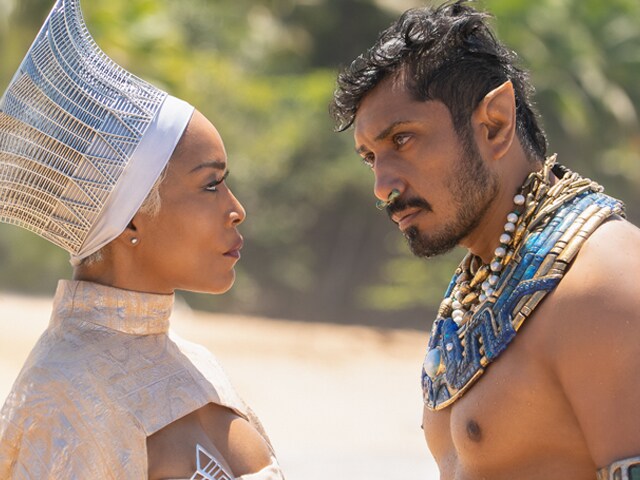
With Phase Four in high gear at this point, despite having been upended by the pandemic, this entry acted as the final part and laid the groundwork for a massive change in the MCU when it introduced Namor (Tenoch Huerta Mejía), his kingdom of Talokan, and his people who live beneath the ocean’s surface far away from prying eyes. Blessed with rich deposits of Vibranium, the same ore that has made Wakanda vastly outpace the world in terms of technological, scientific, and cultural advancement. The world at large wants to get its hands on Vibranium for its unending applicability, with a government of the U.N. launching a secret attack on a Wakandan research outpost to steal some, setting off a chain of events that drags Wakanda and Talokan into open conflict. It is during this scene that Angela Basset shines as she viciously but politely tears the national diplomats to shreds.
Despite massive rewrites changing several key elements, namely the infamous rivalry between T’Challa and Namor, the story’s core comes to life as Shuri and Namor interact. Their desire to protect their people and their differing approaches in how they do so, as well as their shared emotional trauma from the impact of the outside world on their sheltered homelands, brings the two together. Despite the massive age gap between the two, somebody must not have told them their chemistry was off the charts. It reminded me of the days of old when political marriages were the norm, but alas – events conspire to put that possibility to bed with brutal speed.

Alongside Namor are two of his chief enforcers, Namora (Mabel Cadena) and Attuma (Alex Livinalli). Despite Namor often taking to the front lines, like the other members of royalty that the MCU has introduced, he does dispatch Namora and Attuma to act in his stead on multiple occasions. The two prove capable combatants, managing to outpace Okoye (Danai Gurira) in battle and nearly bringing her to the end of the line if not for a show of shared honor. Despite their small presence, as is the norm for supporting characters in massive ensembles, they make themselves known quite well. Namor clearly values their input, trusts them to carry out his orders, and they work seamlessly between themselves.
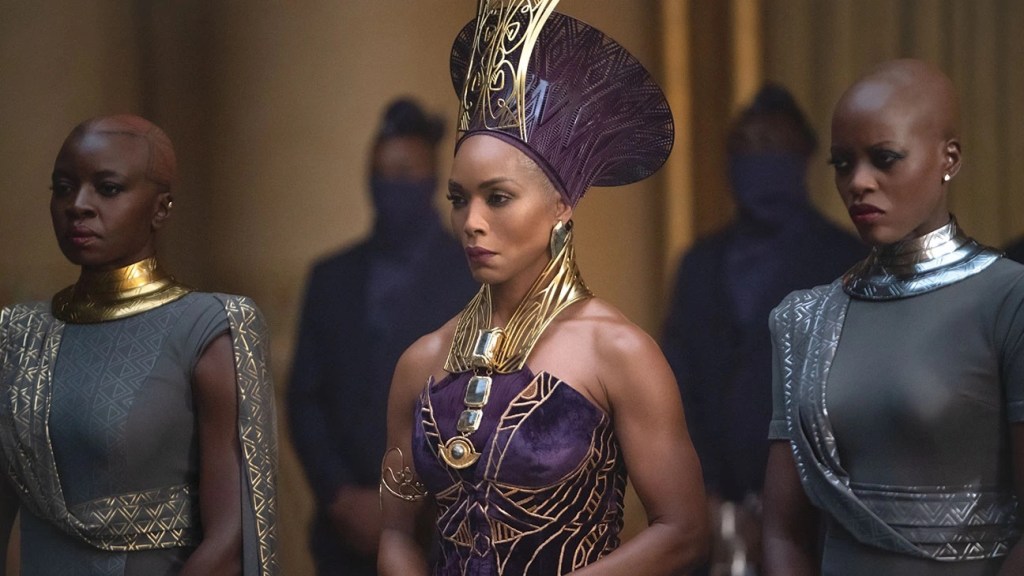
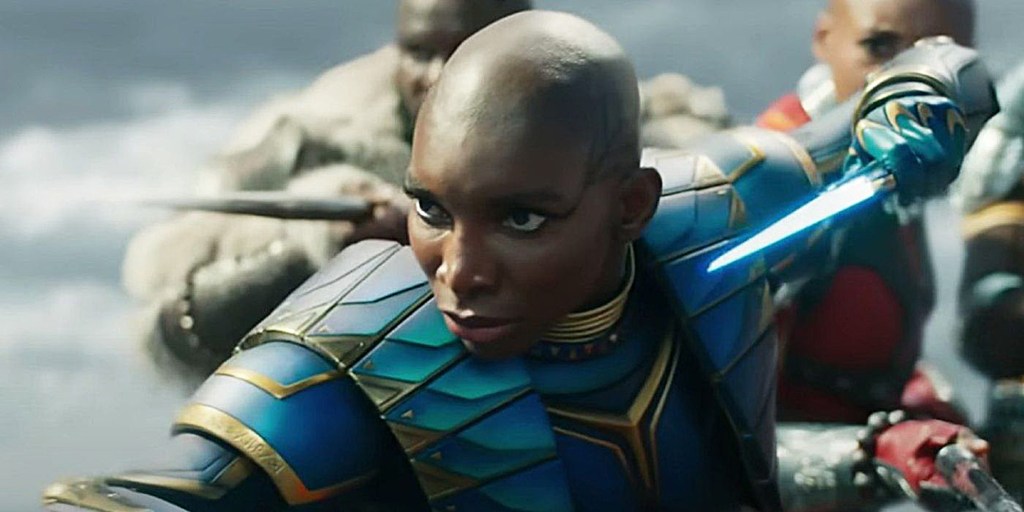
On the Wakandan side, with Aneka (Michaela Coel), a newly introduced member of the Dora Milaje, who is in a romantic relationship with Ayo (Florence Kasumba), who has graced our screens since the introduction of T’Challa all the way back in Captain America: Civil War. While Okoye is more interested in traditional tactics and weapons of the sacred all-female protective formation of the King or Queen of Wakanda, Aneka proves to be a bit more open to exploring new and innovative technologies – despite Ayo’s warnings and chastisements about irking Okoye in the process. Okoye is on a journey, like Shuri, as she attempts to atone for her earlier decision to serve Killmonger when he usurped the throne. This, and her conflict with the Talokanians partway through the film, force Okoye to reexamine her worldview – especially as the consequences of all their choices lead to the unthinkable happening.

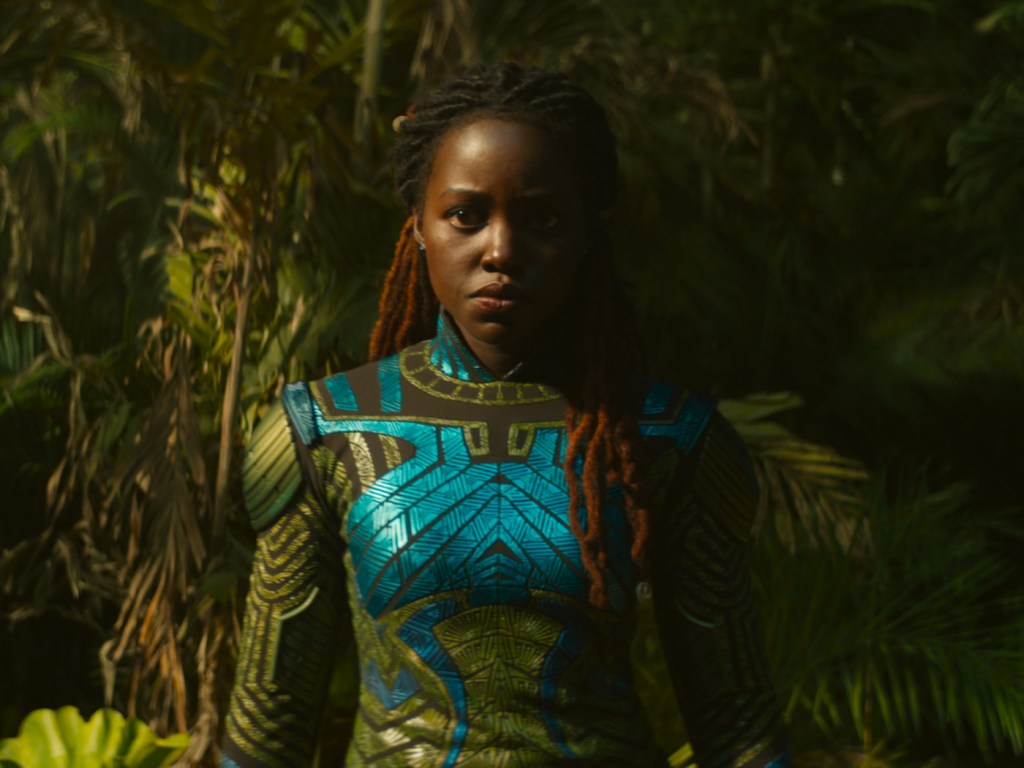
Wakanda Forever also sees the return of M’Baku (Winston Duke) and Nakia (Lupita Nyong’o), as well as members of the Wakandan Council, Isaach de Bankolé, Danny Sapani, and Dorothy Steel as the Wakandan River Tribe, Border Tribe, and Merchant Tribe elders, respectively. Lastly, Connie Chiume appears as Zawavari, who had previously led the Mining Tribe as its Elder but has since become Elder Stateswoman in the wake of Zuri’s death. While the members of the Council seem little more than fair-weather friends for the second time, M’Baku and Nakia continue to prove to be effective warriors, councilors, and allies to the Royal Family. On that note, Trevor Noah also reprises his role as Shuri’s A.I., Griot.

Lake Bell and Robert John Burke briefly appear as Dr. Graham and Smitty, respectively, in charge of a secret mining operation led by the U.S. Government. Richard Schiff plays the current Secretary of State, as Thaddeus Ross has since retired from the position – most likely between administrations, as he prepares to mount his own bid for the position of President come Captain America: Brave New World as it is currently titled.

Okoye and Shuri are able to bond, spending the second act much like T’Challa, Okoye, and Nakia did in the first Black Panther entry, during their trip to the casino, as the duo head out to find Riri Williams.
Phase Four was massively impacted by the pandemic, but each entry has slowly built itself towards a handful of goals. One of those is the introduction of the iconic group of superheroes who were inspired by the Avengers – the Young Avengers. While some members received their own titular entries – or, in the case of Riri Williams (Dominique Thorne), will – others played supporting roles of varying importance throughout the shows or films of other characters. Riri is introduced as an MIT student, who is of a level of intellect that has caught the attention of world governments at large without her being the least bit aware.
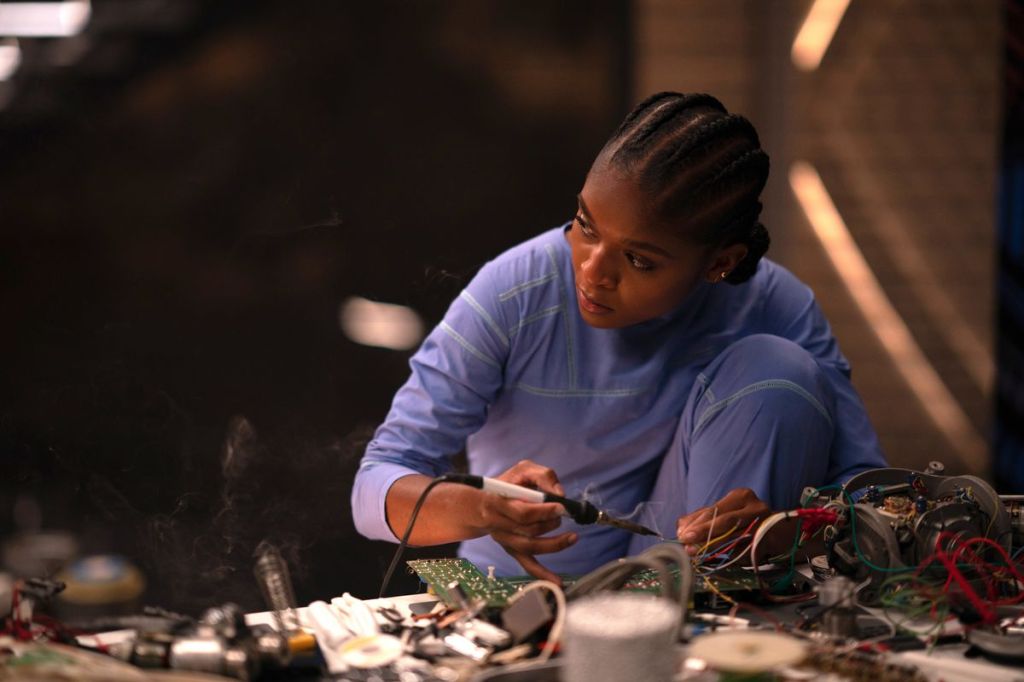
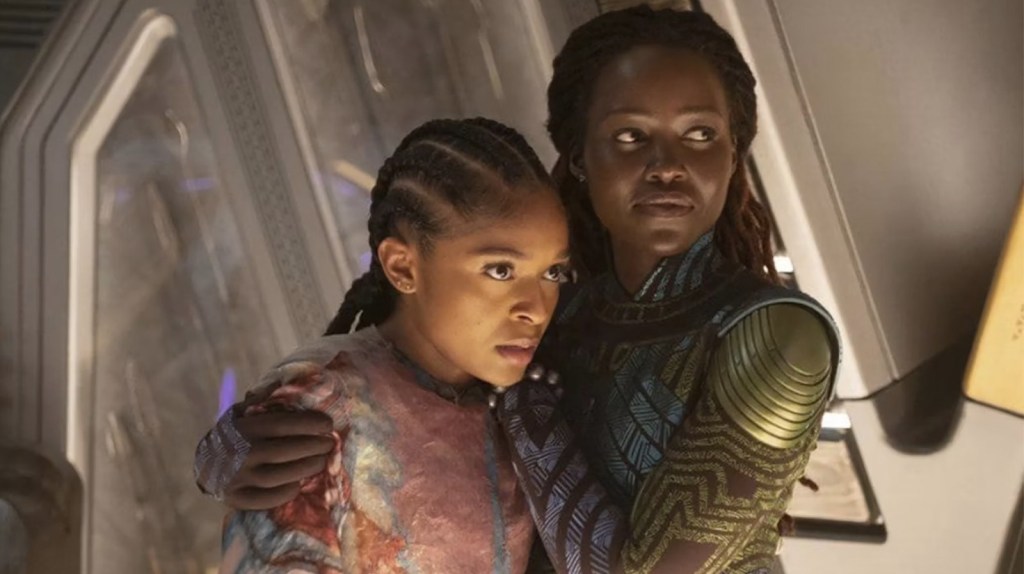
Having invented a device for her class that can detect the previously believed, undetectable Vibranium, its theft by Namor earlier in the film results in the United States Government and members of Wakanda’s inner circle rushing to get to her for one reason or another. Namor wants Riri brought to him so she can be dealt with, Shuri wants to shield her as her brother would have, and the CIA wants a new Vibranium Detector.
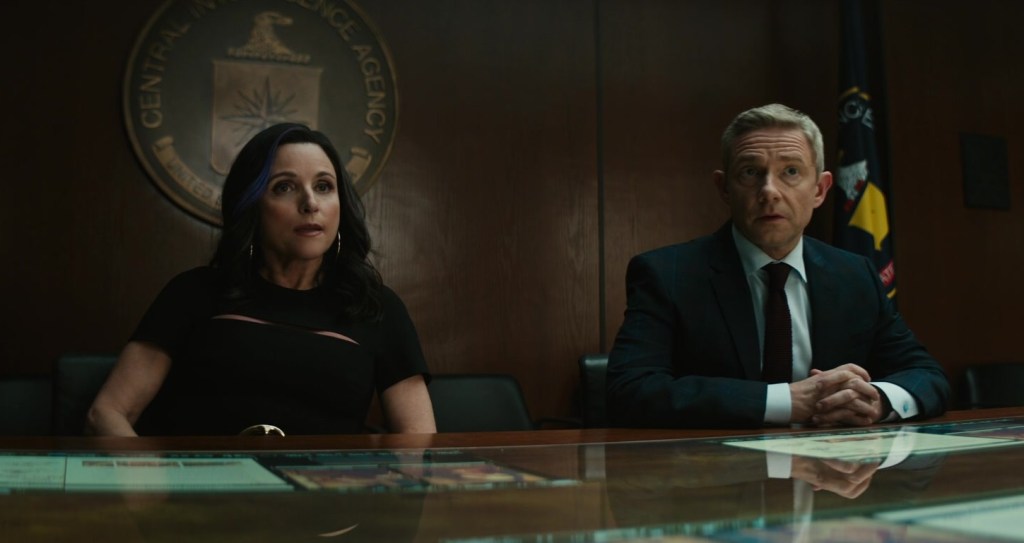
At this point in the world, forces are making their moves, and Earth is without a team to defend it, so the CIA, under the direction of Contessa Valentina Allegra de Fontaine (Julia Louis-Dreyfus), has been making moves of her own. She is gathering people to form her own team, and with her desire to get her hands on Vibranium, one can only imagine what she would do with it. Through her, we also learn more about Everett K. Ross (Martin Freeman), who has been slipping information to Wakanda under cover of darkness since they saved his life and spine. Valentina proves her cunning and awareness and uses her ex-husband towards her own ends. As Wakanda works to exist in a world that is seeking all of their secrets, and that which makes them a prosperous nation in what many around the world viewed as little more than a backwater country until recently, their government struggles to unite until they are driven into a corner by Talokan. Old issues rear their heads and alliances shift like the sand beneath the waves, honing in on the weaknesses as much as the strengths of each respective country – the United States, Wakanda, and Talokan.
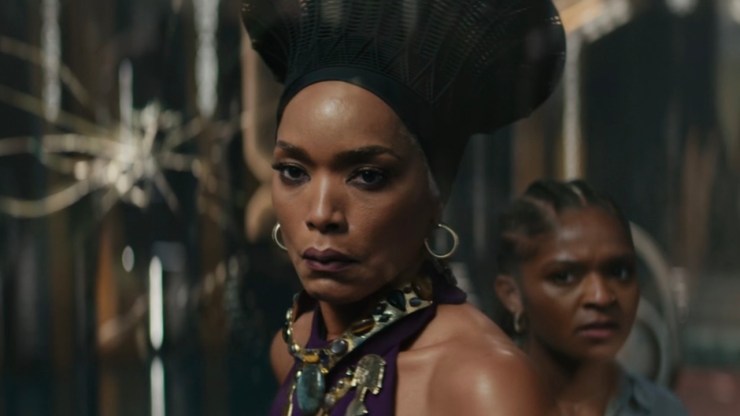
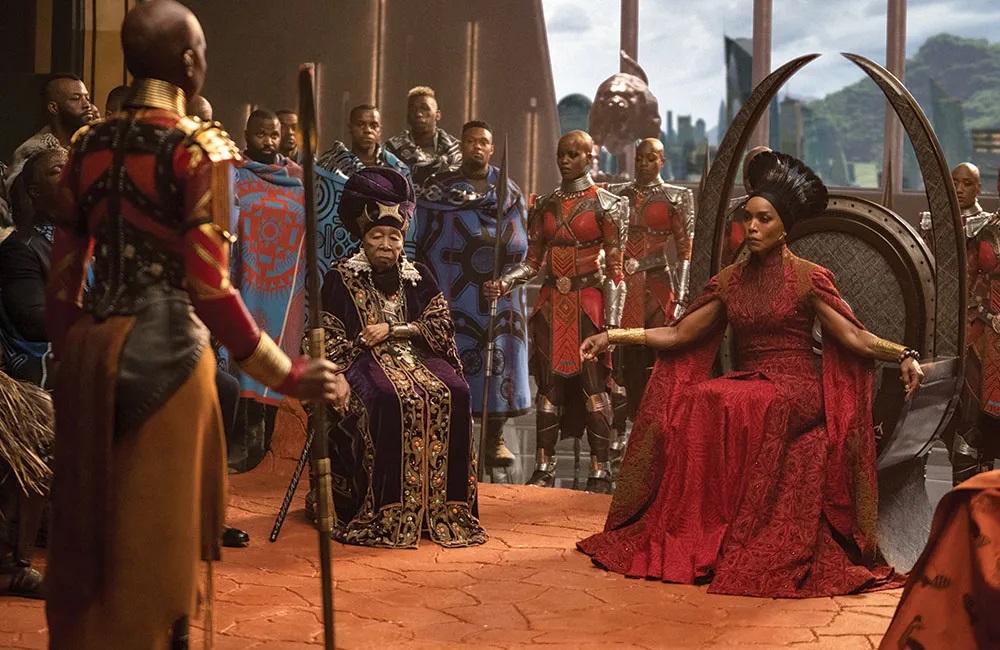
Ramonda plays a massively increased role in this film, where she has since been installed as the Queen Regnant of Wakanda in the wake of T’Challa’s death.
Despite Shuri heavily having been favored as heir, it is clear that the Council, and the people of Wakanda, viewed Ramonda as the force they needed to guide them through this dark and painful period. She acts as a fair and impartial Queen, giving second, and at times even third chances, but as the weight of the situation comes crashing down around her, Ramonda finally allows the emotional turmoil that has encircled her like a vise out on those who have failed her. With the trailer having carefully cut two of her biggest and most dramatic scenes together for marketing purposes, it expertly deflected attention from the climactic close of the second act of Wakanda Forever, and left the audience speechless and emotional – at least in my theater,
The relationship between Namor and Namora is comparable with the relationship between Shuri and Ramonda and Ross and de Fontaine – as they are the only true familial relationships on screen. All six act as high-ranking individuals in the aforementioned political entities, and while their relative importance to the plot, and therefor their respective screen time, is not equitable, they nevertheless paint a broad strokes picture of how these countries operate.
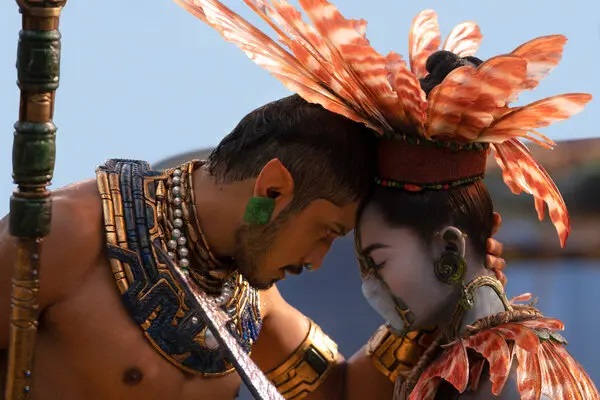
Despite centuries separating them, Namor and Namora are cousins and while Namor does not seek Namora’s council before making his policy decisions, he is not above explaining them to her in an effort to help her understand his thinking.
Their relationship is close, but not too close. This may seem trivial when compared to other films with massive ensembles, but it is a massive step forward for the comic book film adaptation, which has often struggled to make supporting and minor characters feel as real and alive as their main, or generally just titular, characters. Namora may be a minor supporting character, but her presence at Namor’s side imparts a lasting impression on the audience.
In contrast, Ramonda and Shuri are struggling to find their way back to the relationship they had in Black Panther (2018), after so much time was ripped from them by Thanos, and all of the pain and suffering that came as a result of T’Chaka, and then T’Challa’s successive deaths.
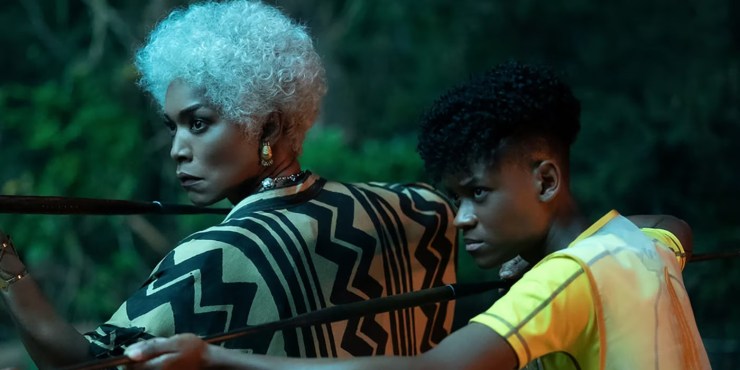
Their relationship is rocky, but the love that they feel for one another is never in question. Ramonda and Shuri have trouble communicating, but they are trying to work through their issues, their grief, and their responsibilities. This film acts as a quiet look into grief and how it can impact a family as well as a nation. Despite their pain, Shuri and Ramonda have no choice but to appear strong and confident in public, all in an effort to keep Wakanda stable.
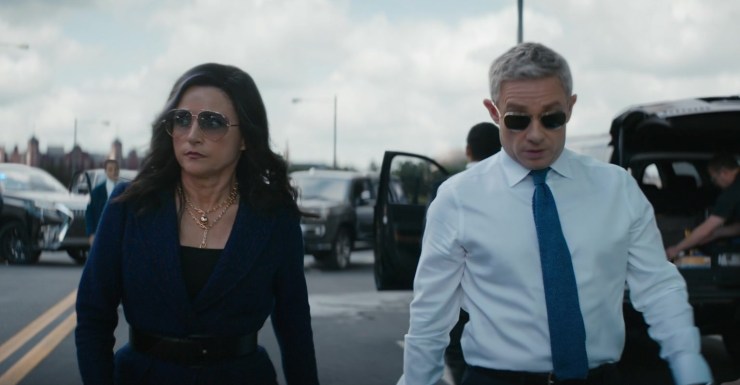
Lastly, de Fontaine and Ross have what appears to be a cordial working relationship in the wake of their marriage ending, yet de Fontaine is callous and dismissive of Ross.
It is to such a degree that she is not above using him to further her aims and gleefully having him arrested when he follows his conscience to try and protect the Wakandans from his own country and its less than morally gray desires.
The primary source of conflict is not one of the heroes and villains in this entry, despite Namor clearly being the antagonist. Unlike the one-note villains of other entries, both previous and the ones that have come since, Namor is not a villain. He is a King, whose every choice and action is in the furtherment of his people and his kingdom. The same can be said of T’Challa, Shuri, and Ramonda or Odin (Anthony Hopkins) and Thor (Chris Hemsworth) or even Thaddeus “Thunderbolt” Ross (previously played by the late William Hurt and soon to be played by Harrison Ford). When decisions of state are in play, what one views as villainy and another views as heroism is a matter of perspective. This conflict is what the Civil War between the Avengers has strived, and in the minds of many, failed to achieve in every iteration.
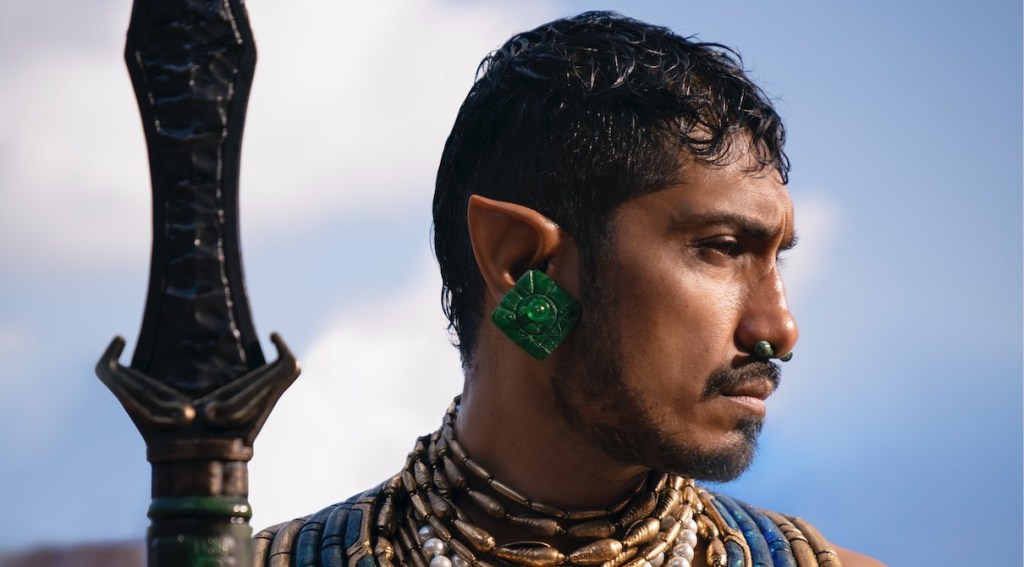

Black Panther: Wakanda Forever had a lot going against it, but it still proved to be the ultimate highlight of Phase Four. With its tightly woven plot, well-developed ensemble, high stakes where shades of gray were the norm, and an amazing score, it proved to be the kind of film that could make movie-goers the world over proud. There is no telling where, precisely, the story will go from here in a prospective Black Panther 3, but with this team in lockstep, one can only imagine that it will be a threepeat of success.
 Lloydd Marshall Books