

The 2010s saw a boon of romantic-comedy action films featuring a litany of stars who either already were or were about to become prominent in either genre that had just been mashed together. This Means War, released in 2012 and starring Reese Witherspoon as Lauren, a woman who is just trying to deal with the fact that her ex is engaged to another woman.
Also leading this film are Tom Hardy and Chris Pine, as Tuck Hansen and Franklin “FDR” Foster, respectively. Both men are in the CIA but are reassigned to desk duty after their latest mission puts them in danger after it goes awry.
This Means War is a film about two best friends who initiate a war against one another (not a literal one, mind you) to earn the affection of a woman that Tuck matches with on an online dating site and whom FDR coincidentally meets the same day. Perhaps it was because they were bored, stuck in the office, and unable to go out on death-defying missions that they were accustomed to after their years in the CIA. Still, it is absolutely hilarious watching the pair use government-issued technology and resources solely to interfere in one another’s efforts to get together with Lauren. In an era where dating culture dominated screens as much as it did our lives, playing the field became the norm. This Means War proffers a brief conversation on this topic.


Trish (Chelsea Handler), Lauren’s best friend, tries to convince Lauren to continue seeing both men. Trish is not even about to hide that she is gleefully living vicariously through Lauren’s experience. Their friendship is hilarious, especially when they are discussing Tuck and FDR. Chelsea Handler clearly ate up the scenery for this role.

Of course, when it begins to fall apart, Trish is unwilling to take credit. However, Trish also clearly points out that Lauren should not choose the better man but the one who will make her a better woman (happier, satisfied, and more complete).
For the longest time, there has been a double standard when it comes to how men and women date, especially when it comes down to sex. Men were allowed to date multiple women, and it was considered inappropriate to call them out on it. At the same time, the reverse was anything but true. Yet, by the new 10s, society had come far. With people living longer, it has become more acceptable to date around before finding “the one.” How I Met Your Mother? anyone? Tuck and FDR are more annoyed at one another for refusing to back down, so they continue to escalate their efforts to forestall the other. This is even though they make it clear that Lauren is the one who should be able to choose.
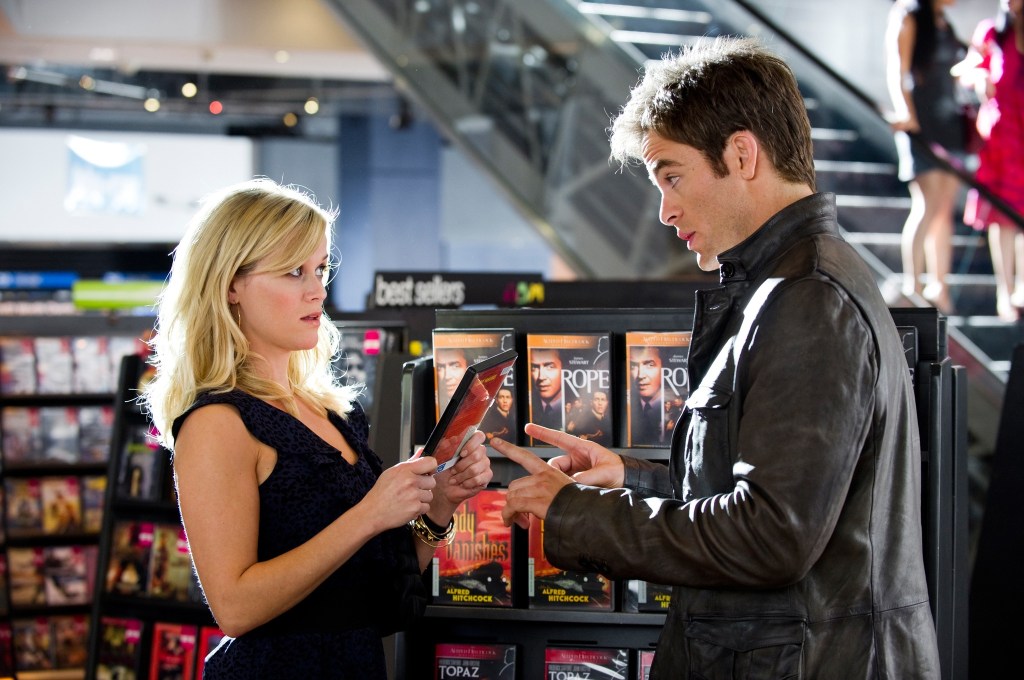

By the time they cross paths intentionally in front of her, she’s freaking out because, obviously, two men she is dating at the same time have just met. She spends the scene in the bathroom trying to determine how to deal with the ensuing conflict. At the same time, Tuck and FDR, the latter of whom has come to warn the former about Heinrich traveling to the U.S. for them, end up in a fight. Now, the reason this is important is tied to why men cannot possibly maintain civility when it comes to liking the same woman (at least according to the plot of this film). Rather than actually letting Lauren indeed find a reason to be with either of them, they spent the whole movie increasingly damaging the other’s efforts. All the while, Lauren was blissfully unaware. For this reason alone, Tuck is unwilling to listen to FDR and insists that FDR only showed up because Tuck was mere moments away from claiming Lauren’s heart. Neither man was truly secure enough in who they were or what they had to offer Lauren to keep their friendship from fracturing (again, for plot reasons).
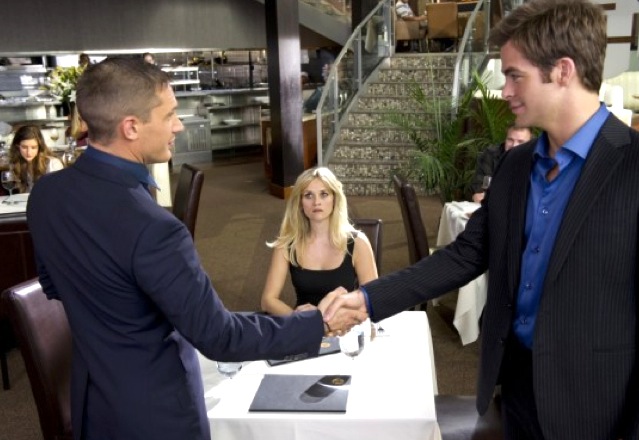

Action-based romcoms became big as films began to capitalize on their PG-13 rating. It could filter all of the choreographed fight scenes, the eroticism-laced intimacy, and the crude humor for a broader, younger audience. This Means War homed in on the comedic side of its concept of two spies using their espionage skills to counter one another’s efforts to get Lauren to like them.


On the other hand, Tuck and FDR truly shine when they actually open up to Lauren. Tuck introduces Lauren to his son, Joe (John Paul Ruttan), although Joe almost outs Tuck and FDR’s friendship then and there. Lauren invites the pair to her office, where she tests products for durability, and they have the best time together. Before that scene, FDR took Lauren to meet his grandmother, the most important person in his life. The fact that after FDR introduced her to his grandmother and Tuck’s son, they were clearly going to have sex. It was never obvious who Lauren was going to choose. Unlike some stories that follow this trope, the love triangle between the three could have gone to either guy. Lauren truly liked both of them and wanted to be with them. It wasn’t until the final act that her choice was solidified. When it comes to the characters in the film, that’s another story entirely. Only one character had another option introduced as a potential rival to Lauren.
While in Hong Kong, Tuck and FDR accidentally caused the death of the brother of the person they were sent to spy on. Karl Heinrich (Til Schweiger), their actual target, swore revenge for the death of his brother Jonas (Clint Carleton). Heinrich spends the vast majority of the film trying to identify and track down the pair. Once he gets to their location, he immediately makes his move on Los Angeles. At that point, he manages to kidnap Lauren and Trish, forcing Tuck and FDR to put aside their differences so that they can rush to her aid. In what would be a fun, engaging, and invigorating car chase, we are also treated to Lauren utilizing her career to assist them in rescuing her when she identifies a weak point in an otherwise bulletproof car.
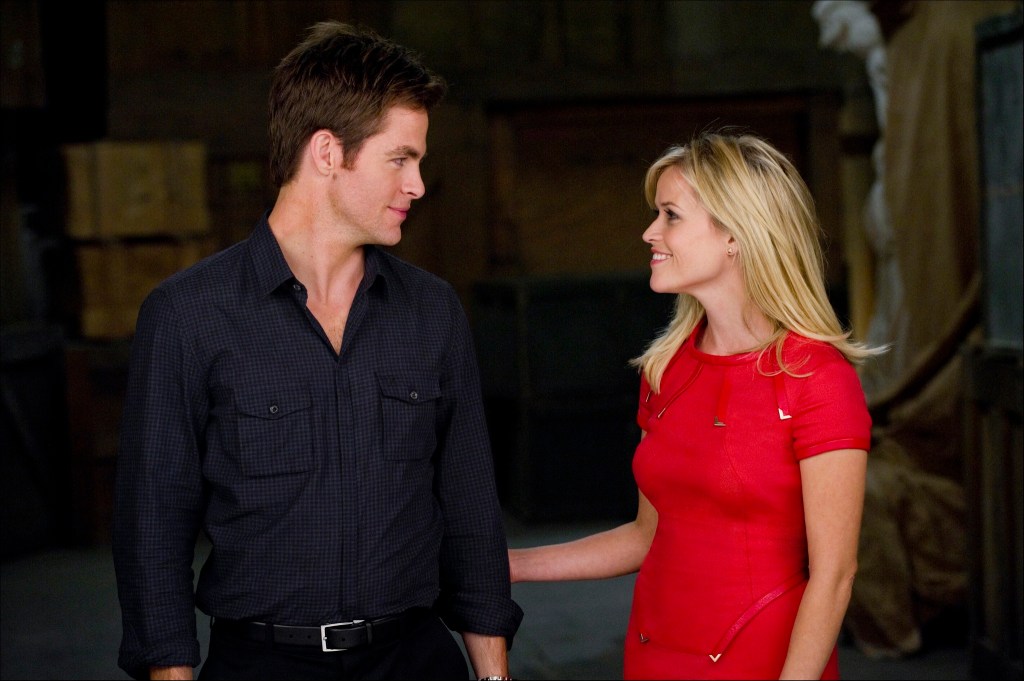

This Means War is a fun story. Where comedy comes and goes, depending on your mood or the times, sometimes they can stay fresh for years. For me, This Means War is one of those films. With a slew of beloved actors, two of whom were on the cusp of rocketing to stardom, This Means War was well-acted, well-choreographed, and well-written. It was self-aware in a world where we were still just getting the hang of the conversations it laid out for us. Sometimes, it’s the little steps that mean the most.
 Lloydd Marshall Books