

I distinctly remember 2005, being in Blockbuster, as my family set our sights on The Incredibles. Released in 2004, The Incredibles was a love letter to superhero films as much as a careful critique of what it meant to be a superhero. It focuses on the Parr family, a superhero family in a relocation program for years as they try to settle back into what it means to be an ordinary, average civilian.
Wacky hijinks aside, The Incredibles vividly depicts how the world would react to superheroes and their absence.
Bob Parr, also known as Mr. Incredible (Craig T. Nelson), was one of the most renowned superheroes with super strength, near invulnerability, and superhuman endurance, alongside many other required gifts to balance him out. We open to him on his way to his wedding to Elastigirl, Helen Truax (Holly Hunter), when he detours to stop a supervillain and save a train from derailing. These actions spiral into a litany of problems for superheroes as the public grows increasingly concerned about their safety as super-powered battles overtake their lives. With lawsuits flying and public criticism at an all-time high, the government will forcibly retire all superheroes. It puts them in hiding to protect their identities. Years go by, and the world has settled into a new normal state, but those who remember the good old days cannot let them go.
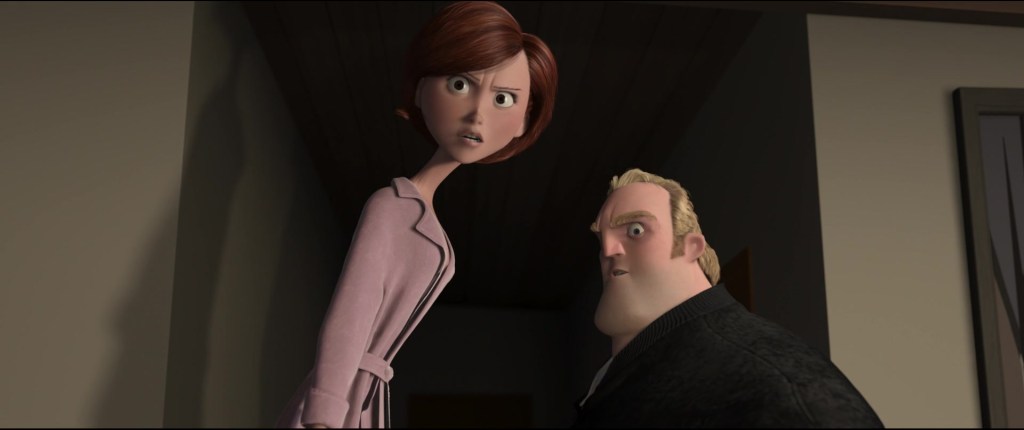
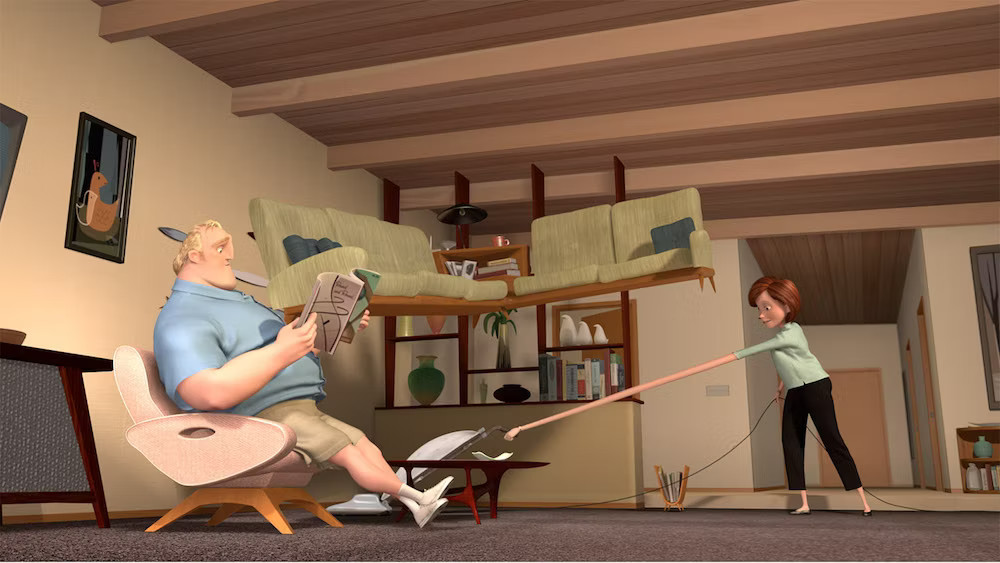
Helen Parr is always her husband’s equal, blessed with the power of elasticity. She is presented as a compassionate person who is mindful of her husband’s predicament and is trying to protect her three children. Helen seems to have settled into the part of a domestic housewife, though even she feels the strain their new lives have put on them. Any hint of their powers or identities results in them being moved from location to location, always to keep them safe. However, she has to hold the fort down for the entire family while Bob bemoans what he has lost and eagerly seeks it out when he can wrap his fingers around it.

That he and his best friend Lucius Best, AKA Frozone (Samuel L. Jackson), never truly gave up being superheroes is another mark against Bob. If not for this, they never would have been discovered.
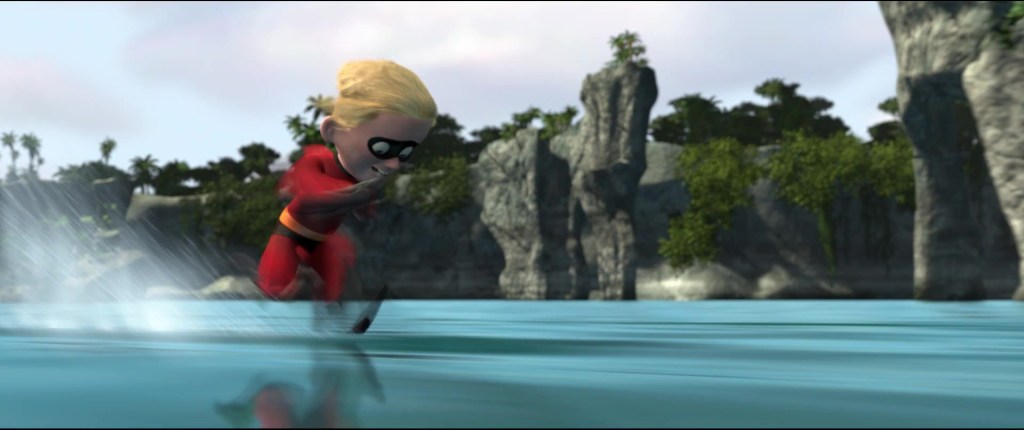
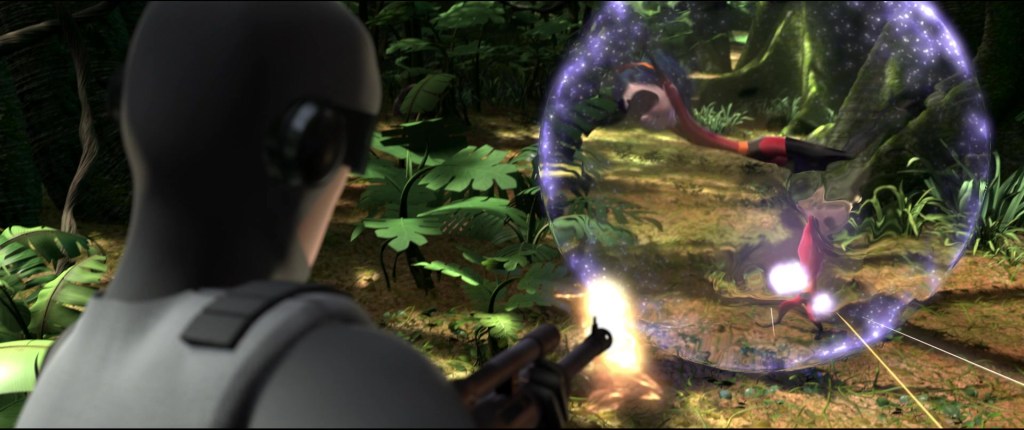
The three Parr children are Violet (Sarah Vowell), who has the dual powers of force field generation and invisibility and is named after the pun Shrinking Violet. Dashiell “Dash” Parr (Spencer Fox) is her younger brother, who has the power of super speed and potentially ADHD. Lastly, Jack (Eli Fucile and Maeve Andrews) still hasn’t come into his powers by the time the film begins. That each of their children’s names corresponds to their abilities is hilarious foresight on their part or just the most extreme of coincidences. Jack’s name comes from the figure of speech: “Jack of all trades, master of none.” As the statement implies, Jack possesses a seemingly never-ending stream of powers and abilities, marking him as potentially the most powerful Super in their universe. Yes, they are all light parodies and homages to the Fantastic Four, right down to little reality-warping Franklin Richards.
In the intervening fifteen years, as mentioned earlier, Bob has not given up being a superhero entirely. He has taken to the streets vigilante-style because the thrill of being a superhero has never left him. Bob resents the everyday life he has been forced into, which has colored his perception of the world and his life. This development parallels his early encounter with a young fan, Incrediboy (Jason Lee), when the young lad attempts, quite poorly, to help Mr. Incredible in the ill-fated battle that would result in the ban of superheroes. Mr. Incredible views himself as a paragon of justice. Still, he carries himself as if only he could save the day or the world. This attitude comes through to those around him, but not necessarily himself.
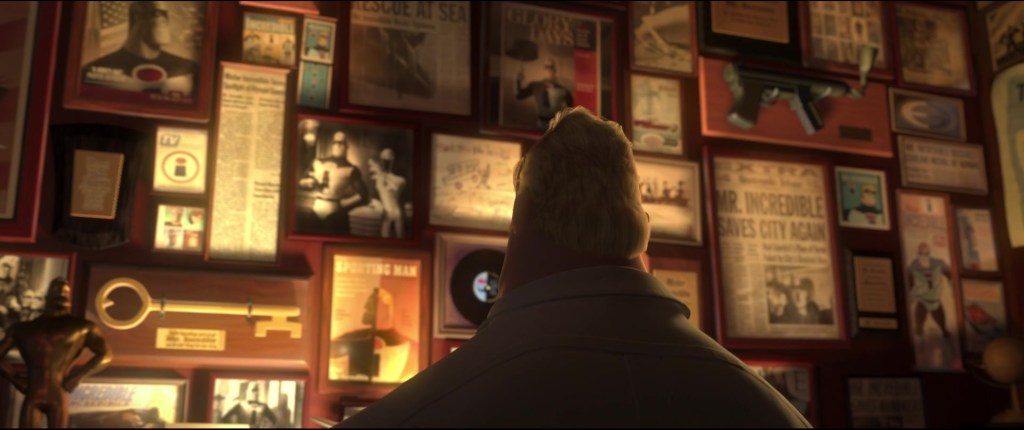
There is no denying that Mr. Incredible is a credible hero and a great guy. Still, he clings to the spotlight as if his life depended on it and shuns and criticizes those who try to share it or, in his mind, take it away from him. His marriage with Helen is partially crumbling because of this mindset. He cannot see things from her perspective, even though Helen spends much of her time seeking compromises, often ones that favor him more than herself. Her discovery of her husband’s continued heroics is portrayed in a downplayed fashion, like a wife discovering her husband cheating on her because of his midlife crisis. The original script leaned into this harder, but the finished product toned it down. Come on, guys, it’s a kids movie.

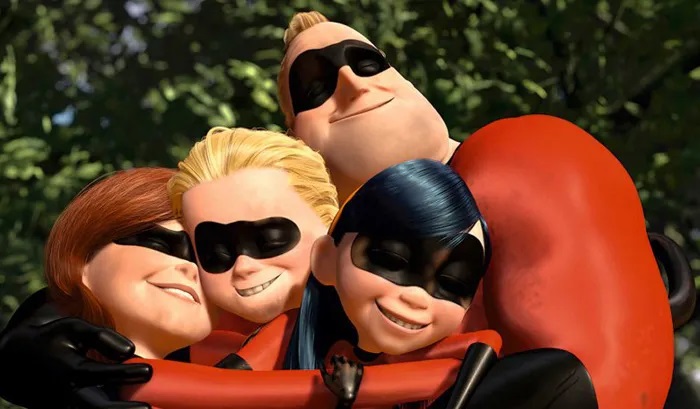
When the chips are down, and Helen finds that she cannot trust her husband, she finds herself rushing to his rescue as any caring partner would. That this ultimately puts her entire family in danger is not her fault – she couldn’t have genuinely anticipated her children stowing away on the plane. Just as she couldn’t have foreseen the island’s defenses launching a missile at her aircraft, she desperately tried to ward them off, informing them that there were children on board. Seeing their interviews, with Bob hoping to settle down and Helen wishing to continue being a heroine, is truly informative – as the exact opposite happens for them both. By the time they all realize Bob is in trouble, the whole family is determined to save him, even if it means exposing their powers to a world that no longer trusts them.


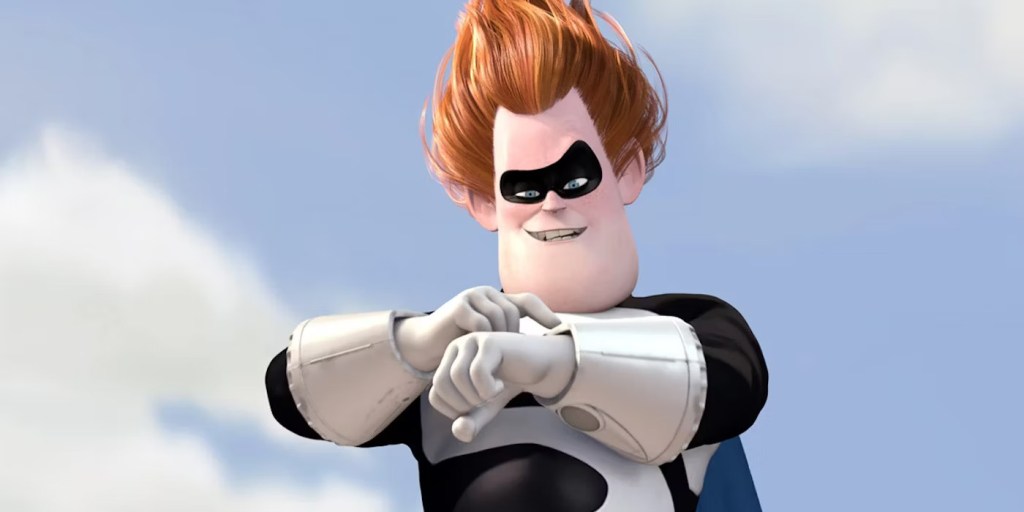
Incrediboy does not stay the obsessed super-powerless fan for long. While the hero community was languishing away, lamenting the loss of their days in the spotlight, Incrediboy evolved into a growing threat as Syndrome. The film takes a darker turn as it reveals that many of those Bob and Helen viewed as friends and coworkers died as a result of his actions. Compounding these deaths with those who were more or less played for laughs because of their capes, the superhero community has been downright decimated. By the time the film began, only five known superheroes were still alive, and one baby was yet to be inducted. This makes dealing with Syndrome a family affair that the Parrs are all too happy to oblige him with.
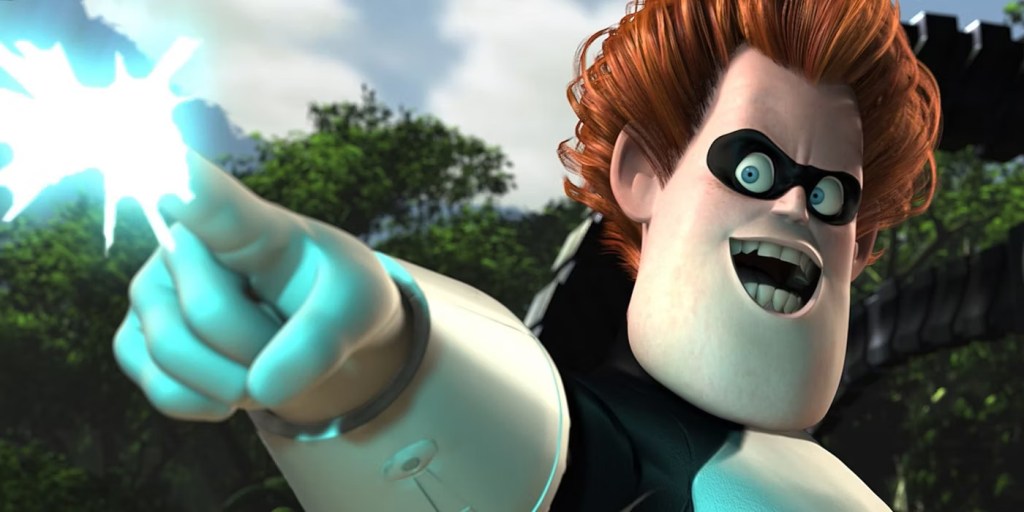
As a villain, Syndrome seeks to crush those who he views as obstacles to his dream of being a superhero. He takes his vendetta to lethal extremes, utterly destroying what he claimed to love in the process.
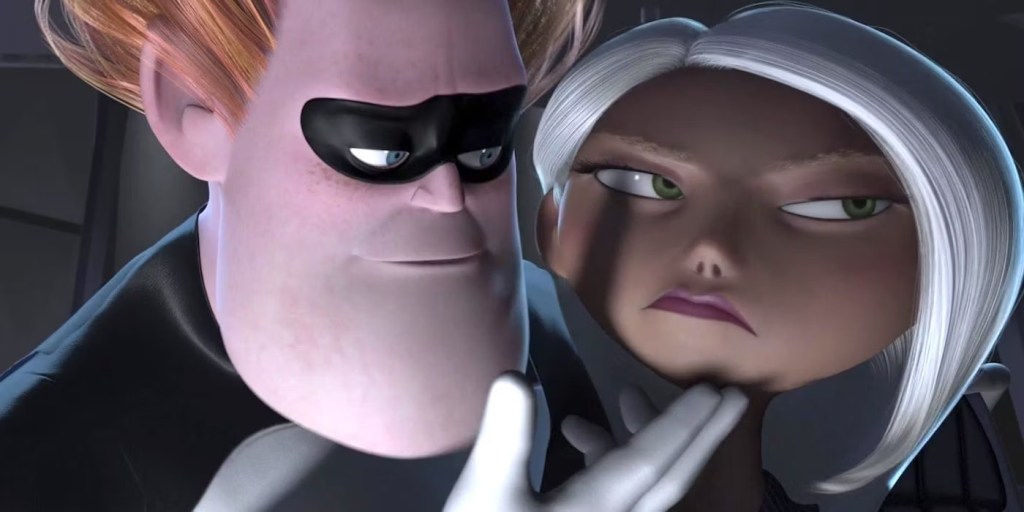
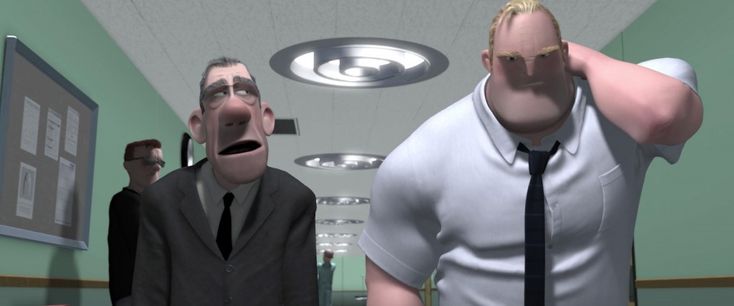
There is a fun bag of supporting characters who fill out the world of The Incredibles. First and foremost, Lucius acts as a sounding board and a voice of reason to his best friend. He understands where Bob is coming from, and while he does participate in Bob’s vigilantism, he is far more cautious about it. We also have Mirage (Elizabeth Peña), Syndrome’s operative, and the one he dispatches to meet with the heroes to lure them in. She deduced Mr. Incredible’s identity while she was tailing Frozone, putting the main plot into gear. Next, we have the famous Edna Mode (Brad Bird), the fashion designer for the superhero elite. An actress was initially cast, and Brad Bird explained how Edna should sound, prompting the actress to suggest that he did it well enough to do the voice for real. Edna is sassy and sarcastic but also intuitive and compassionate. She has immense foresight, even when working in the dark – Jack-Jack’s costume is a testament to that detail. Lastly, we have Rick Dicker (Bud Luckey), the agent who has been tasked with the Parr’s case and is the one who facilitates their moves each time. With their recent one, though, they are running out of places to go and the program is under threat of being shut down.


When it comes to comparing a world with superpowers to one with guns, we often see them compared even though there truly is none. Those born with superhuman abilities cannot indeed be compared to a weapon or even a nuclear warhead. Even if their powers involve those two concepts. Their abilities are inherent. They were born with them, and baring select scenarios in certain mediums, they cannot simply disarm themselves. In a world where heroes exist, they cannot be easily compared to police officers. The world in The Incredibles lapsed into one more akin to our world as if superheroes never existed. In reality, if supervillains were so pervasive that being a superhero was an actual career, the disappearance of superheroes would embolden supervillains. The difference between a hero and a villain is vast. A law or a ban would not prevent a supervillain from continuing to act. It would simply legally bar those who had the power to stop them from doing so. See the Sokovia Accords for more details.
Still, The Incredibles takes a different path for this political subplot. The government isn’t outright banning superheroes, but it strongly encourages them to retire and helps to relocate them should they be exposed. Bob and his family are relocated often because he couldn’t give up being a superhero. Rick Dicker still feels loyalty to the superhero and covers up his efforts so that Bob is not labeled a vigilante. That the film could find a lighter tone on what is often one of the darkest of concepts in superhero literature is truly invigorating.
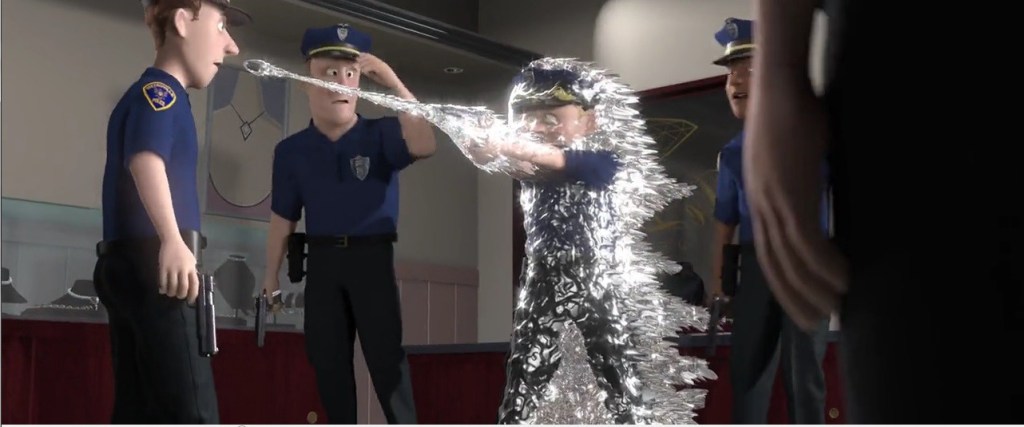
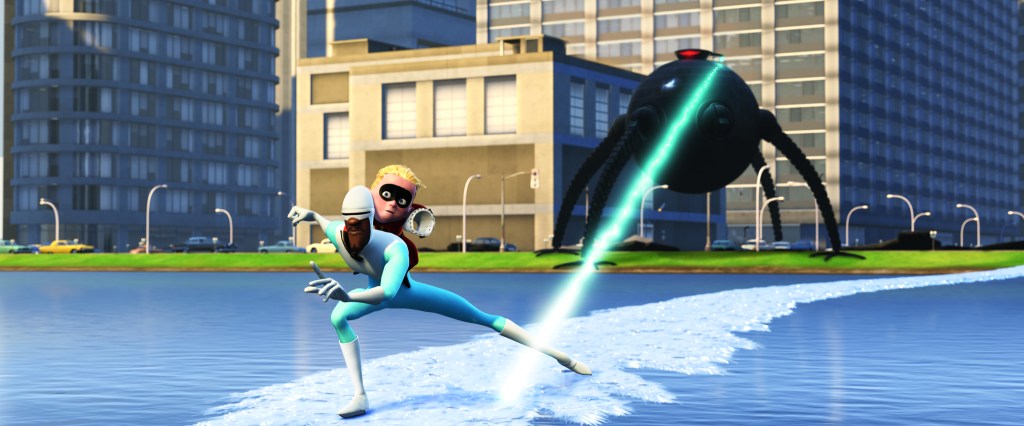
The Incredibles does not stop to address these issues because it has that luxury. Superpowers aren’t real, but guns and nuclear arms are. Rules and regulations for those who would use them for good generally ensure the safety and security of those who don’t have them when dealing with those who do. Those kinds of regulations and laws on superpowers are made similarly. In X-Men, Senator Robert Kelly poses questions regarding mutants and their powers and how to stop a girl who can walk through walls from simply robbing a bank. In all reality, we see those who don’t have powers begin to take measures to protect themselves from those who do. This is the crux of Syndrome’s plan, with him setting out to even the playing field. Yet, to do so, he killed the very people he idolized. This is not a criticism of The Incredibles. The political and ethical complexities of these issues and questions are details that are more thoroughly explored in material geared toward an older audience. Instead, it takes a subtler approach, which arguably works in its favor.
Nearly fifteen years later, a sequel was released. While many criticized it for retreading several plot points, The Incredibles 2 broke new ground in other ways. This is a beloved world, and I hope future entries delve more deeply into its lore, characters, and thematic elements.
 Lloydd Marshall Books