

I always enjoy a good film about a pretty, poor woman who commits a light crime and ends up in a relationship with an incredibly wealthy young man by the time the credits roll. It’s a “rags to riches” style that builds off of the Cinderella archetype with gusto.
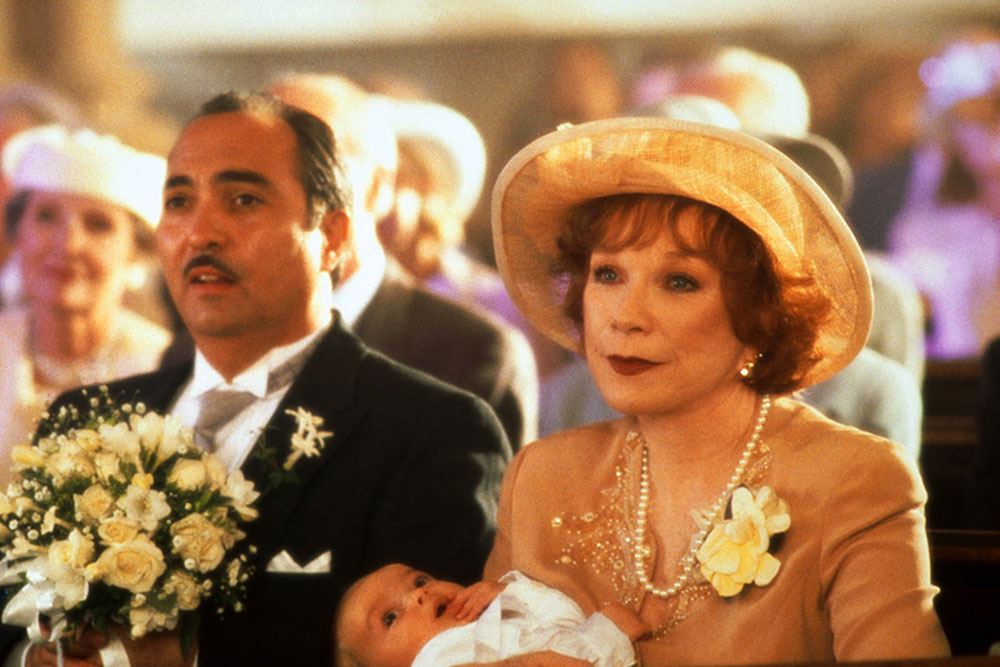
Today, we’re focusing on a film that randomly popped up on my feed the other day and drew me in for four reasons: Ricki Lake, Brendan Fraser, Shirley MacLaine, and Miguel Sandoval. I’ll never know how this film failed at the box office. It was adorable, funny, and charming.

My opening line is important because it is an interesting plotline for several films. From Monte Carlo starring Selena Gomez, Leighton Meester, and Katies Cassidy to the recently released Upgraded and The Other Zoey, the former starring Camilla Mendes and Archie Renaux and the latter starring Josephine Langford, Drew Starkey and… Archie Renaux (dude cannot catch a break with accidental, yet nonetheless beautiful con artists, though no spoilers for how it ends), we see them all start from a sustained misunderstanding. The identity of the pretty, poor woman. Now, let’s be clear: identity fraud is a real problem with real consequences. Countless films delve into this concept, laying out its darker implications and overt dangers. But these are romcoms. So they can get a pass.
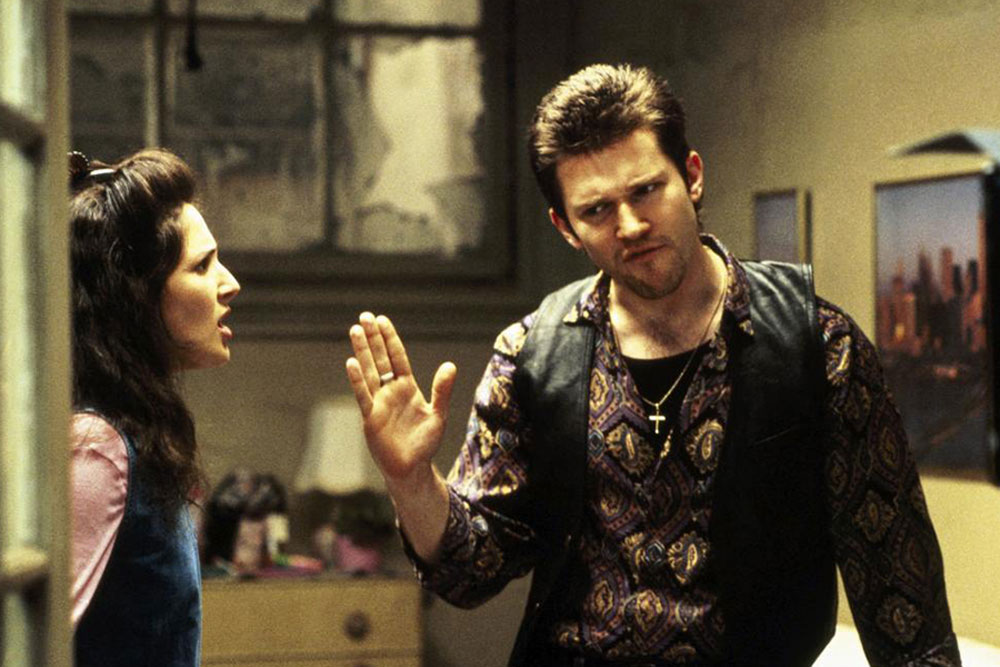

In Mrs. Winterbourne, we are introduced to Connie Doyle (Ricki Lake), who is freshly eighteen and on the outs with her father – her mother died when she was young. She leaves Hoboken behind for New York and never looks back. But, like most newly minted eighteen-year-olds, she has no experience in the real world, let alone the dangers that can come slinking around in borrowed armor, the sheen of which is just an oil stain and a bit of lamplight. Steve DeCunzo (Loren Dean) is already dead by the time the film opens, to Grace Winterbourne (Shirley MacLaine) and Father Brian Kilraine (Peter Gerety) being approached by a pair of police detectives who wish to speak to Patricia Winterbourne mere moments before she is set to get married. Grace instantly confesses to the crime, and the film jumps back in time to weave the story towards Steve’s gruesome end.
Steve lures Connie in, essentially turning her into his personal maidservant and occasional sexual partner. He clearly doesn’t respect her, and he uses her to serve him and all his friends while slowly beating down her confidence. Connie, believing that they are actually in love, puts up with it because she doesn’t know any better. Because of this, when she learns that she is pregnant, she excitedly informs Steve immediately, who then promptly convinces one of his friends to lie about sleeping with Connie – all so he can toss her out to the curb because he won’t be tied down by anything like a child. Connie manages to keep herself afloat throughout her pregnancy, only to lose her job and crawl back to Steve’s apartment – where Steve reiterates he wants nothing to do with her or her child. He’s already moved on with a new woman, Renee (Cathryn de Prume). Renee is all too quick to laugh at Connie’s misfortune, though she demands that Steve not toss her out like he did Connie. His response garners very little enthusiasm.
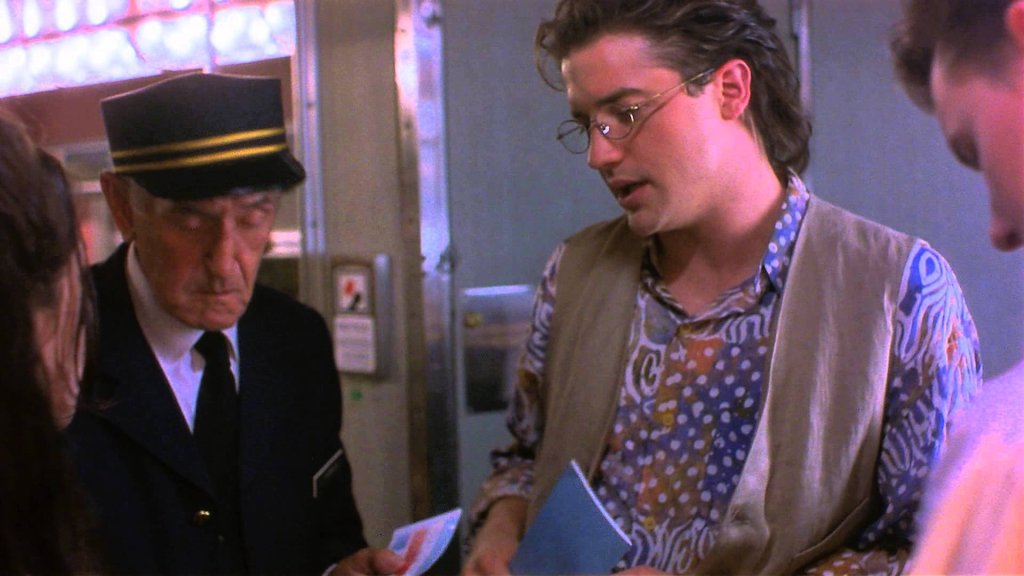
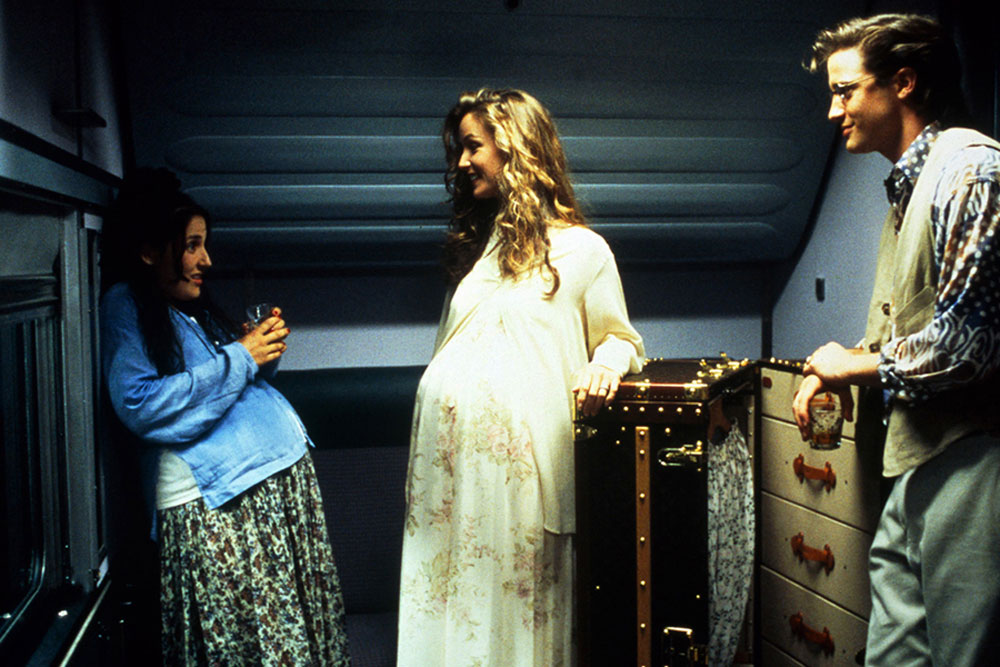
Through a twist of fate or mere coincidence, as Connie resigns herself to sleeping on the streets despite being mere days away from giving birth, she ends up at Grand Central on a train bound for Boston rather than the subway. While trying to escape an overzealous ticket taker, she is rescued by Hugh Winterbourne (Brendan Fraser), who poses as her husband and presents one of his first-class tickets. He then invites her back to his private cabin, proving how naïve Connie still is despite everything she’s gone through with Steve. Luckily, Hugh is nothing like her despicable ex and has no ill intentions. Here, we are introduced to Patricia Winterbourne (Susan Haskell), Hugh’s new, heavily pregnant wife, whom he is taking home to formally introduce to his family.
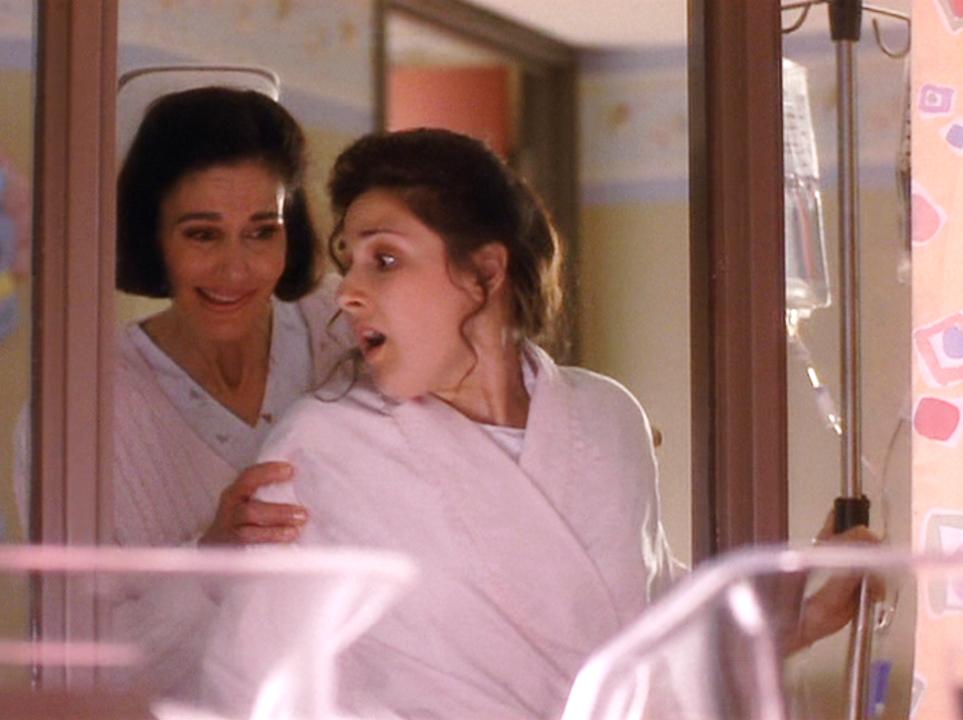
Through a series of coincidences – Hugh heads back to get another drink for Patricia after giving the first one to Connie; Connie then spills said drink on Patricia, who kindly offers Connie a nice maternity outfit to try on; Patricia pulls off her engraved ring and loses it under the seat and then suggests that Connie tries it on. Finally, Patricia grabs Connie’s purse and is about to hand it to her. This is when tragedy strikes, and the train derails, sending Patricia flying out of the cabin and leaving Connie inside. Eight days later, Connie awakens in the hospital. Her baby has been safely delivered despite the tragedy, and the misunderstandings begin to unspool around her.
When people are in traumatic situations, they tend to become undone in the aftermath. The stress of having survived a train derailment, initially believing she has lost her child, and a nurse with a less-than-kind bedside manner all serve to set the stage for the rest of the film. Hugh and Patricia Winterbourne’s final moments of kindness presented an unintentional path for Connie, mistakenly identified as Patricia Winterbourne. After all, she was wearing Patricia’s wedding ring and a fashionable maternity ensemble, while Patricia was discovered holding Connie’s purse. I tie this back to Connie’s naivete and Steve’s desire to control her – Connie must not have had a picture I.D. on hand. Patricia’s situation is a little bit easier to understand. If rescue workers found Connie buried in all that rubble, I highly doubt they sought any of Patricia’s personal belongings in the wreckage. Everybody believes that Connie is Patricia, despite her attempts to explain the situation. They conveniently misconstrue her words and statements, and with the threat of sedation at the hospital and Grace’s bad heart condition, Connie finds it incredibly difficult to clear the air in anything resembling a timely manner.
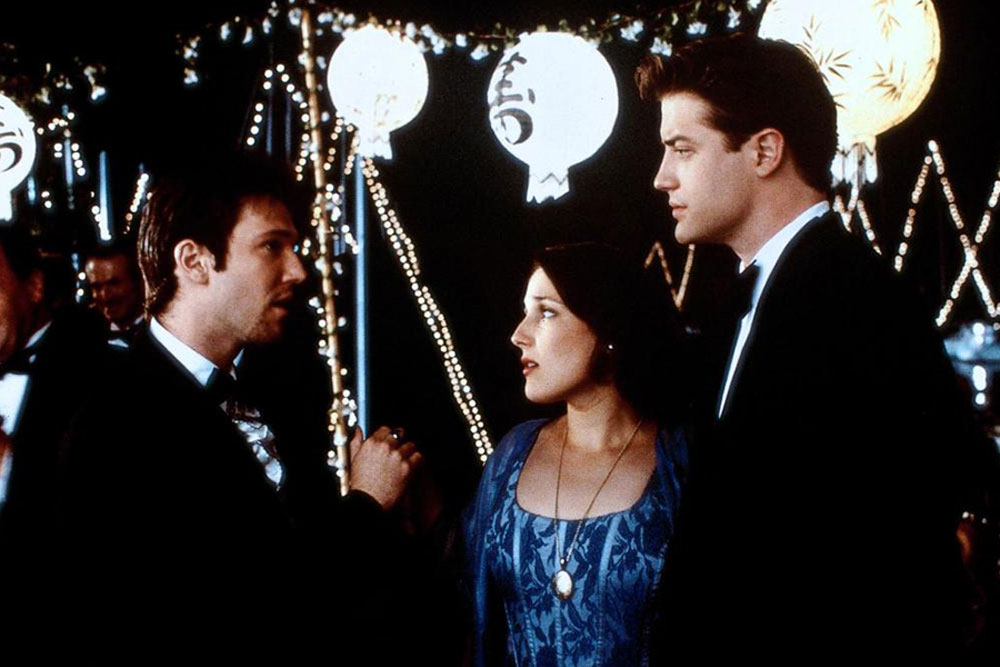
Just as conveniently, Hugh was averse to photographs. So his family has no idea what Patricia looks like, further paving the way for Connie to assume the woman’s position in this grieving family who now believes they have a little piece of Hugh left. But this is a romcom, so there are always curve balls to be thrown. Hugh was an identical twin, and his brother Bill was far less kind to Connie – now Patricia – when they first met. He is instantly wary of her because what little information Hugh shared about Patricia and all they knew about him before he disappeared from the family yearsago marks Connie as an anomaly. Hugh liked them tall, blonde, and pretty – and Connie, while downright beautiful in my eyes, does not fit the mold they expected. She also doesn’t come off as the daughter of a banker or a woman of class and taste. While Grace eagerly welcomes Connie into the family, believing she is Patricia, Bill is rightfully skeptical.
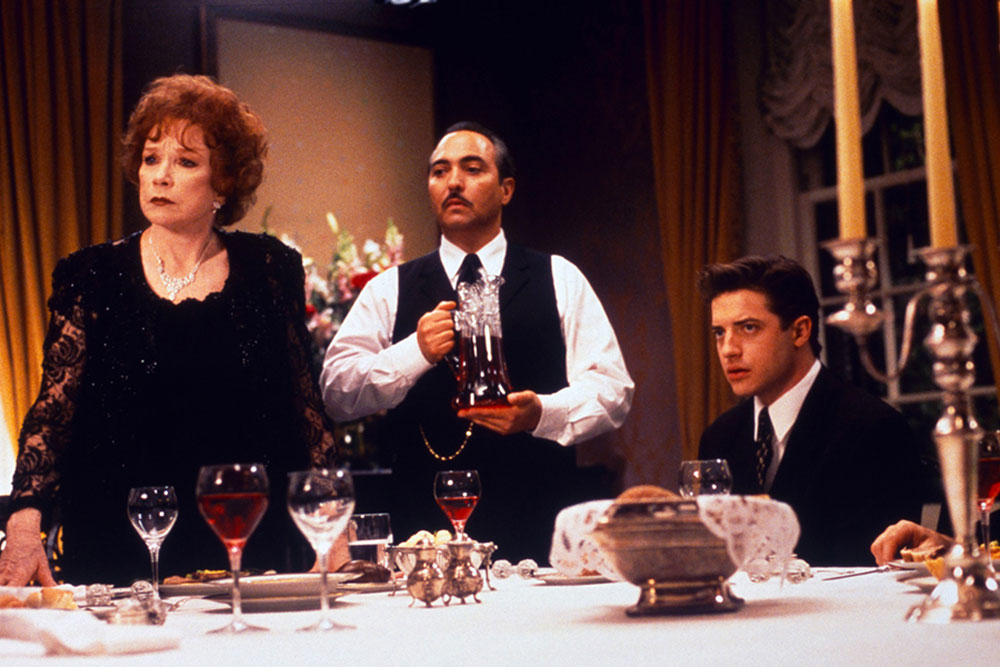
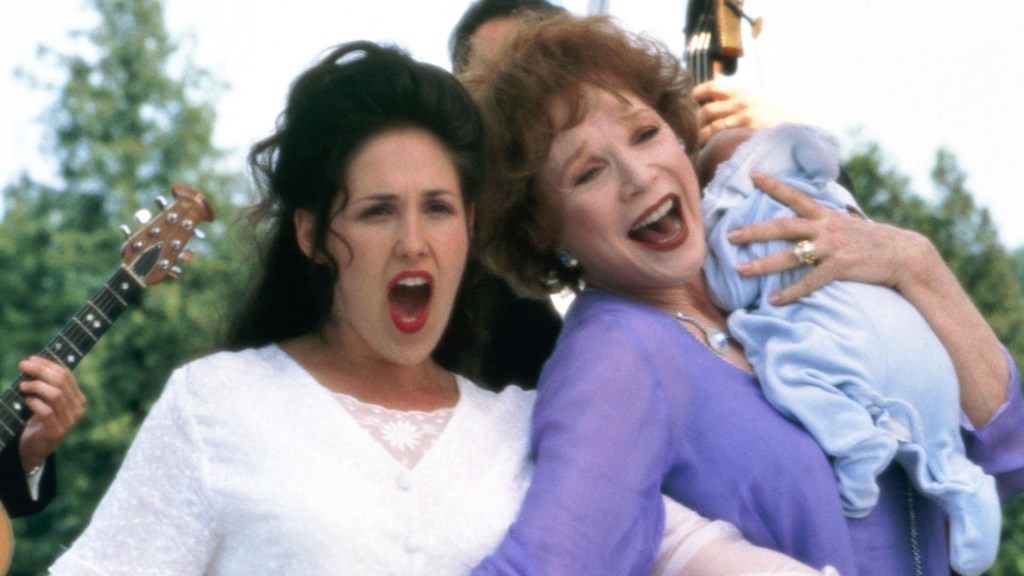
However, as often happens in films that follow this plot line, Connie is a breath of fresh air in the gilded halls of the Winterbourne estate. Her kindness to Paco (Miguel Sandoval), the Winterbourne’s Cuban-born gay personal driver, instantly draws him to her side. Her care and consideration for Grace wins the matriarch over in record time, even without having little baby Hugh on her hip. The true test is, as it should be, Bill. Grace spends the second act trying to bring the two together for various reasons, chief among them being a desire to hold onto any part of her son that she can, but also because she sees how much of an effect “Patricia” is having on Bill. The first day the pair spend together, though, is when things start to roll.

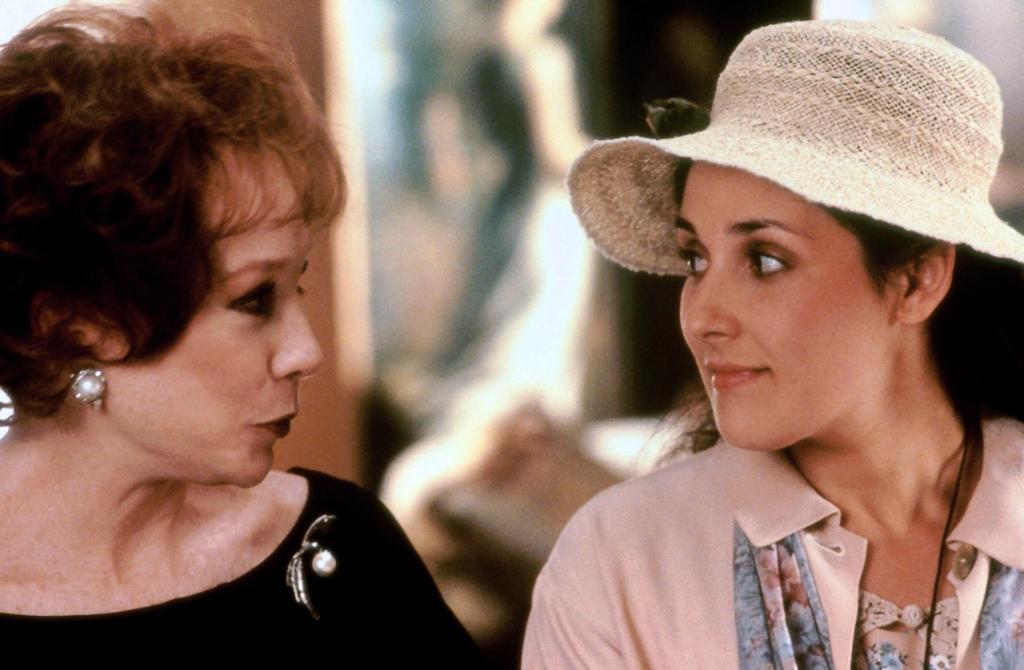
On a day trip after Connie’s makeover from a frumpy young girl to a beautiful, elegant lady, Bill and Connie stop at a jewelry store. Here, we learn that Grace set up an account for her, allowing her to simply write checks and make purchases, but Connie hasn’t dared to touch it. After trying on a pearl necklace, Connie hesitates, but Bill convinces her that it’s alright to buy it. When signing the check, she accidentally writes her real name. While she corrects the mistake before the jeweler can see it, Connie isn’t aware that Bill was looking at it the whole time. His initial response is understandable, especially when he learns that his mother is rewriting her will to include “Patricia” and Hugh. However, Connie doesn’t know that her secret has been exposed to him, and her initial unprompted reaction is to vigorously refuse to be added, even though Grace goes through with it. This moment seals Connie’s place in the family because Bill is now on her side – and he’s already started to fall for her.
Paco is a fantastic supporting character. In a time when gay characters were still finding it hard to appear onscreen, Paco was portrayed with care. He was allowed to be more than just a caricature. In fact, he seems to be more than just their driver if Grace assigning him to investigate Steve is anything like his regular work.
Grace took him in, gave him a job, and helped to build him back up. It was this experience that he used to bond with Connie in her darkest hour, firmly cementing him as one of her allies in the Winterbourne estate.
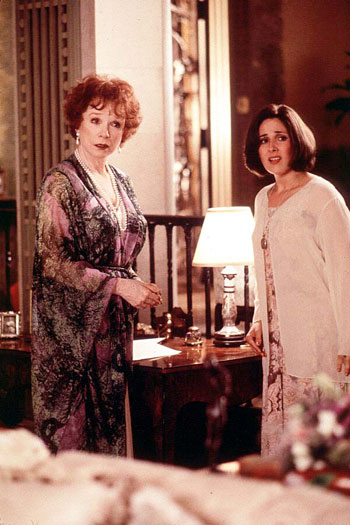
When it comes to Grace, she forms a near-instantaneous bond with Connie. While it is admittedly built off of the belief that Connie was her son’s widow and the mother of her only grandson, their connection soon becomes independent of these details. After Connie attempts to leave, Grace has a mild heart attack. She informs Connie that she didn’t fit in when she first became a Winterbourne, but she made them accept her rather.
Her words “nobody fits in here” are poignant and reveal her genuine kindness. Even earlier, when one of Bill’s snobby friends attempts to ensnare Connie in a public faux pas, Connie confidently tells her off. Grace reiterates Connie’s words, taking her side in the conflict without missing a beat. Some of his backstory is explored, such as how he chose a leaky boat to prison to live his life and be who he indeed was – a proud gay man.
Unlike the other films I listed above, this one does not take its third act in that same direction. There is no third-act breakup. The Winterbourne’s accept Connie. Even as Connie tries to withdraw from the Winterbourne’s as gracefully and unpainfully as possible, they make it impossible in the kindest way long before Steve tries to get his over on Connie.
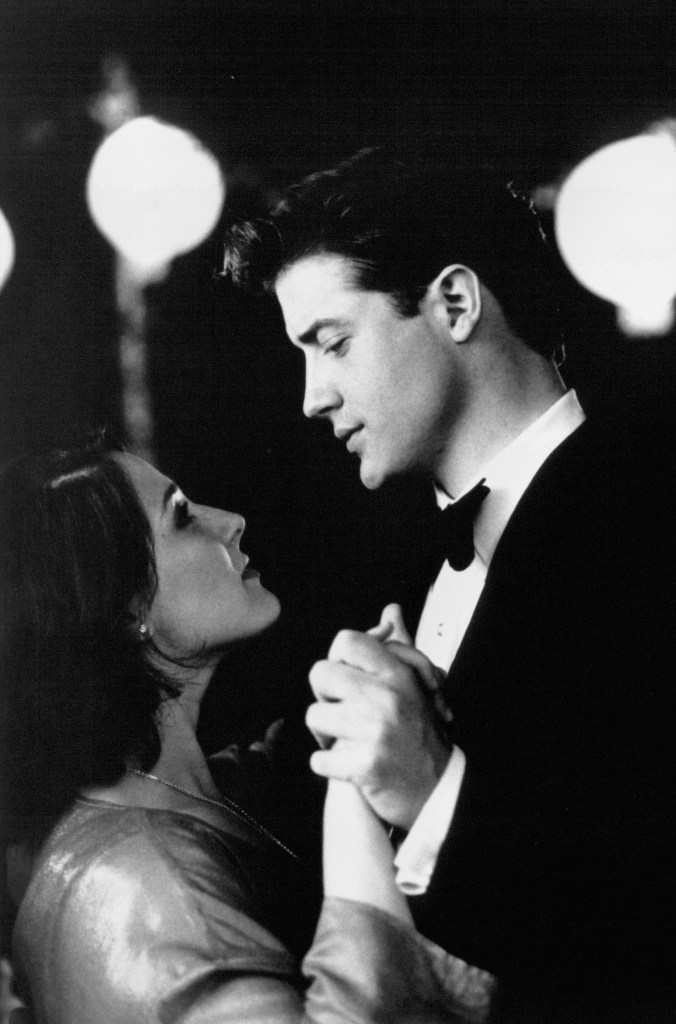
As the oldest film I have mentioned (sans Cinderella, and that depends on the version, I’m looking at you, Prince Henry from Ever After), it was refreshing to see how Connie’s exposure was handled. Throughout the film, she is kind, considerate, and generous; these traits are rewarded rather than punished. A truly lighthearted story, if there ever was one.
 Lloydd Marshall Books