
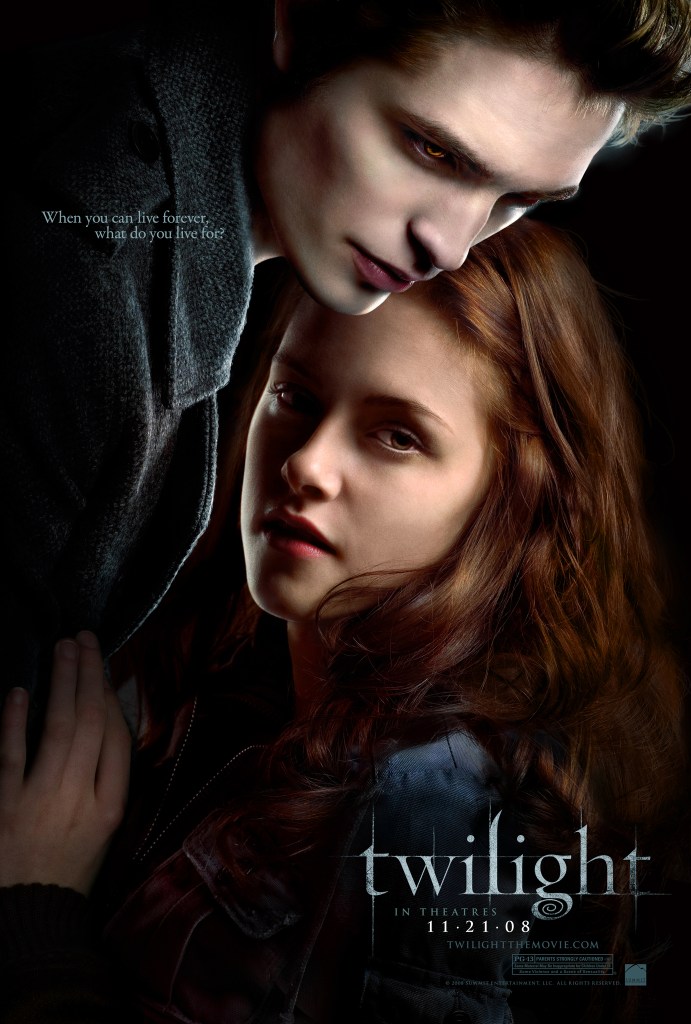
One thing I can appreciate about Twilight is that by the time the first movie was announced, the series was nearing its thrilling conclusion, with the release of Breaking Dawn that same year. In point of fact, the final novel dropped a few months ahead of the film’s dramatic debut in late 2008.
Starring Kristen Stewart as Bella Swan, Robert Pattinson as Edward Cullen, and Taylor Lautner as Jacob Black, a cultural phenomenon was about to explode in popularity. The kind of popularity that, let’s be honest, hadn’t captured the country’s attention since another long-running series of books began the previous decade. The less said about that, the better.
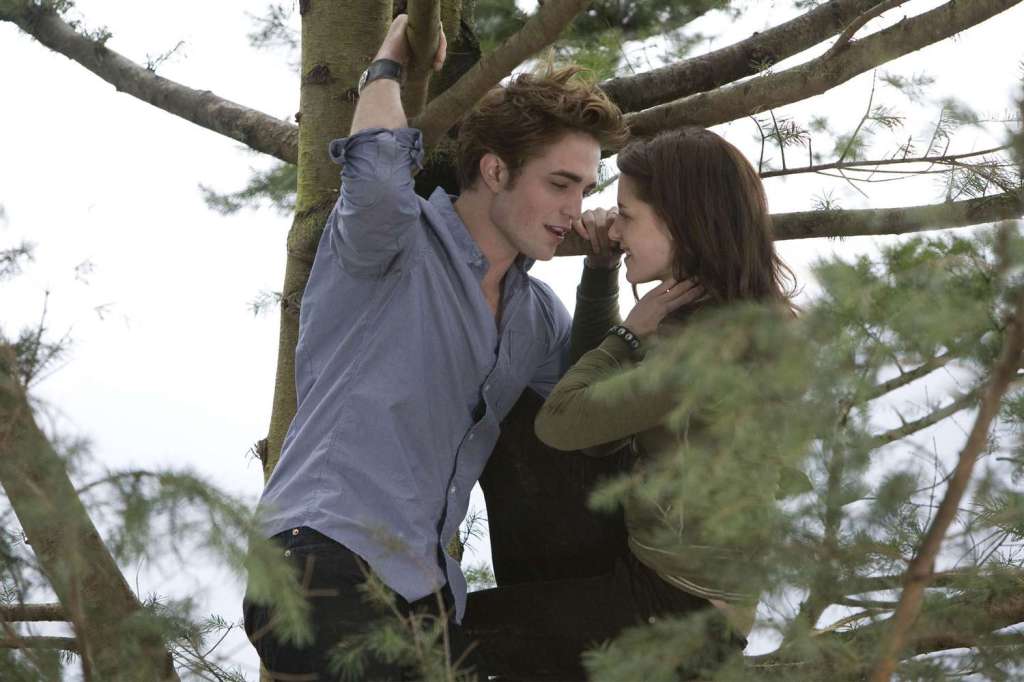
Twilight focuses on the romance between teenage ingenue Bella Swan and the alluring, brooding, immortal vampire Edward Cullen. As we approach the twentieth anniversary of the series inception, if you have gone this long without picking up on that detail, I must ask where you’ve been living, but I digress. The story never purported itself to be more than that. The romance between Bella and Edward is the central plot line, with the intricate world of Meyer’s vampires as a backdrop to this tale. This is a narrative tool that features throughout numerous stories, with a fantastical world at our fingertips. Still, the narrative focuses solely on a story set within it. As a book, this is where the first-person perspective aspect works well. Bella knows nothing of Edward’s world, and we learn of it through her as she is exposed to it more. That is the primary hallmark of first-person perspective, a POV technique I tend to loathe for that precise reason. I don’t need to know everything from the first line of a story, but I feel that fantasy stories are better told from a more open POV. It isn’t about hiding a plot element but making it available to us even if the characters are unaware of its existence. We call it dramatic irony.
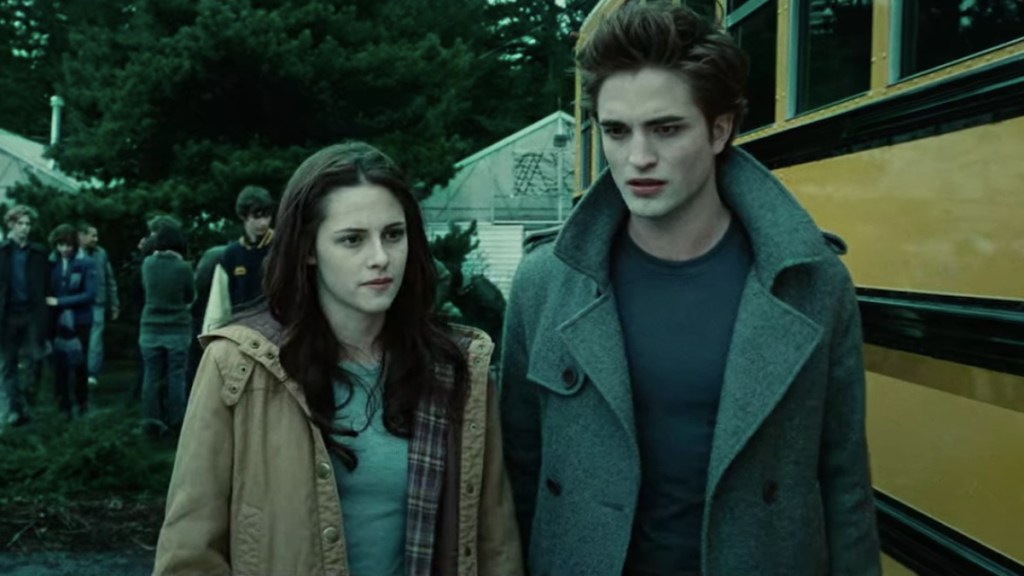
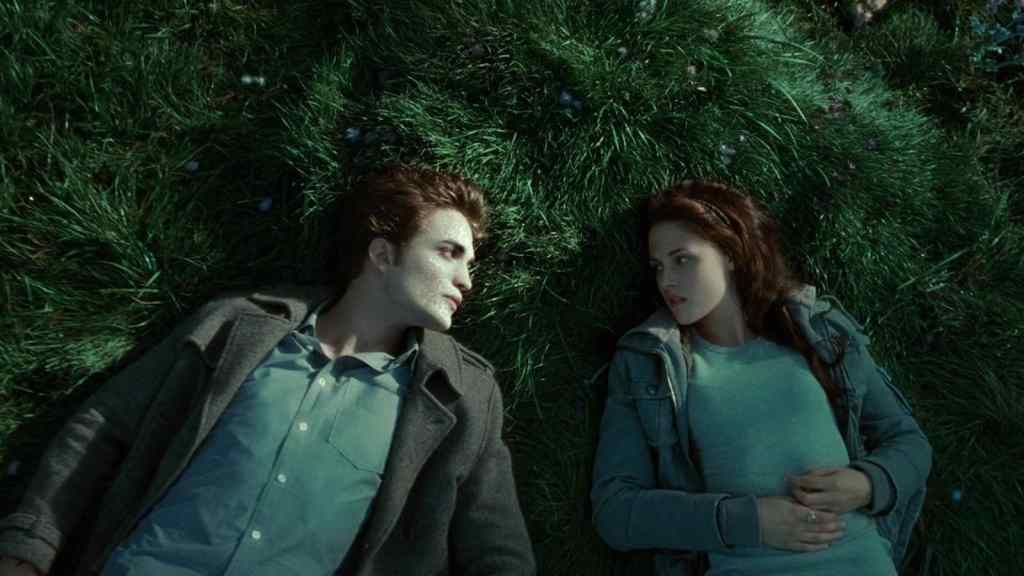
That said, Stephenie Meyer captivated my attention with her book, and I will be taking no notes on her writing or the quality of her story. She told a captivating, compelling story – that is a simple fact. Billion-dollar franchises do not occur with poor material. Moving on from that, the movie could work with a nearly complete series, with three full installments to guide their path in adapting her work by the time production had begun and the fourth one being written. This meant that plot elements that would be expanded on in, at the time hopeful, later entries could be showcased. For example, Jacob Black, an admittedly minor character in the first novel, is not excised from this book. His importance is treated with care. He has a few significant scenes in the movie that keep him in the periphery of our minds, eagerly anticipating the love triangle about to be born in the first sequel. This also meant that the importance of specific details could be suggested while others could be missed. The flaw of a first-person perspective, I’m afraid, exposes just how difficult it is to convey information that you, as a writer, are not yet ready to divulge. Jasper’s accent is top of mind.
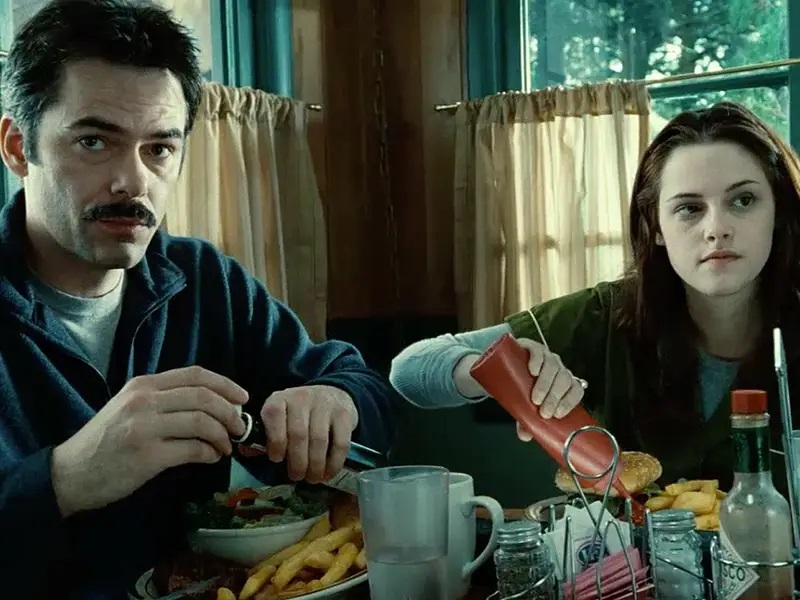
The film begins with a quote and cinematic imagery that thematically ties into the story that we are about to see as a figure that moves too quickly for our eyes to discern hunts a deer in the woods. Bella is in Arizona with her mother, Renée Dwyer (Sarah Clarke), and her new husband Phil (Matt Bushell here, but replaced in later installments with Ty Olsson), a scatterbrained but well-meaning woman and a minor league baseball player respectively. Having been forced to mature faster to care for her mother, Bella decides to head to Forks, Washington, and live with her father, Charlie Swan (Billy Burke), the police chief for Forks. This wasn’t a decision she made lately. While her demeanor makes it harder to read, she is clearly irked about uprooting her entire life. Her relationship with her father is frayed, but with Phil acting as a more stabilizing force in Renée’s life, Bella felt she could detach and find her own way, despite any reservations she might have. Considering how often some children have to parent their parents, it isn’t precisely unbelievable.

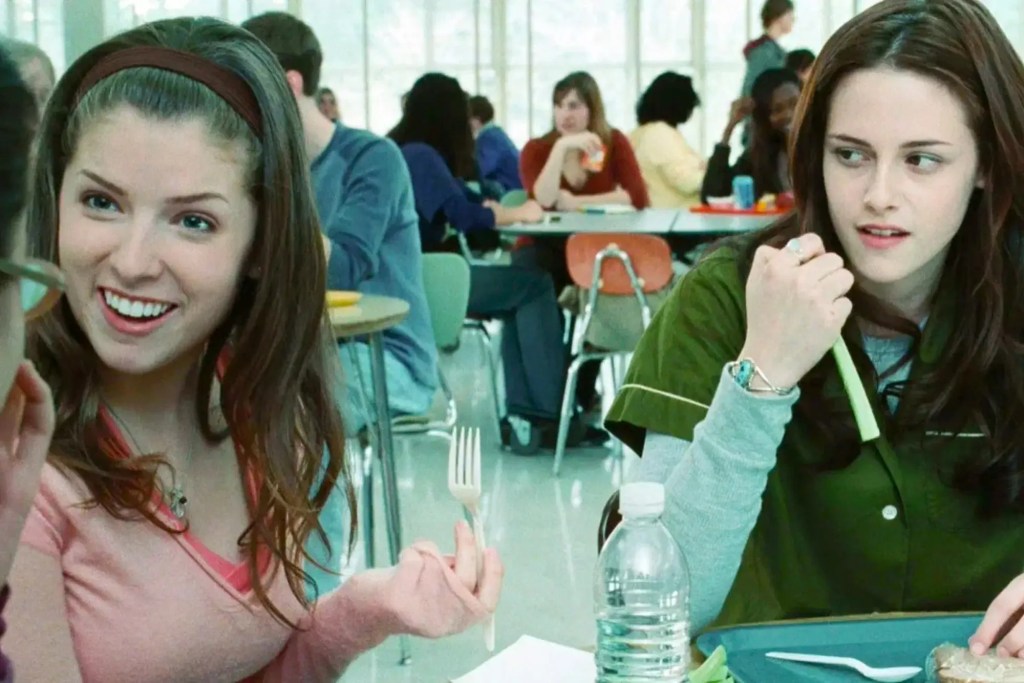
Twilight features a large ensemble of characters and slowly devotes time to the story to explore them. Certain scenes that grant more insight into the characters, through Bella’s perspective, aren’t included, and some characters are cut out or merged with others. Those cut characters often had near-identical characters on hand to cover the more important plot points. For example, Jessica (Anna Kendrick) and Lauren were more or less combined. While the latter character could be implied to be portrayed by one of the many extras that fill out certain scenes at Forks High, Jessica had more presence in later books, making it clear why Lauren’s most prominent contributions were grafted onto Jessica.
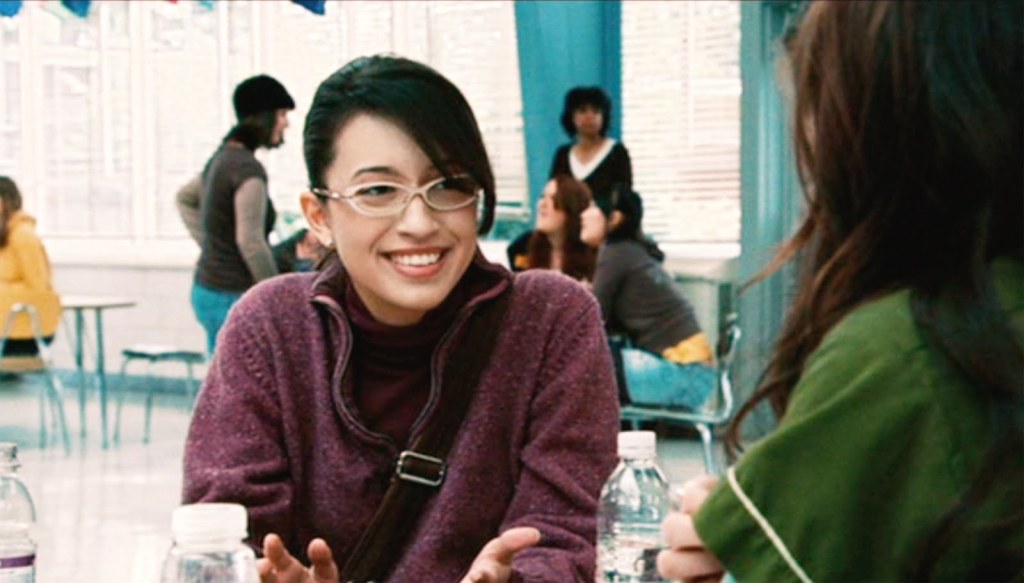
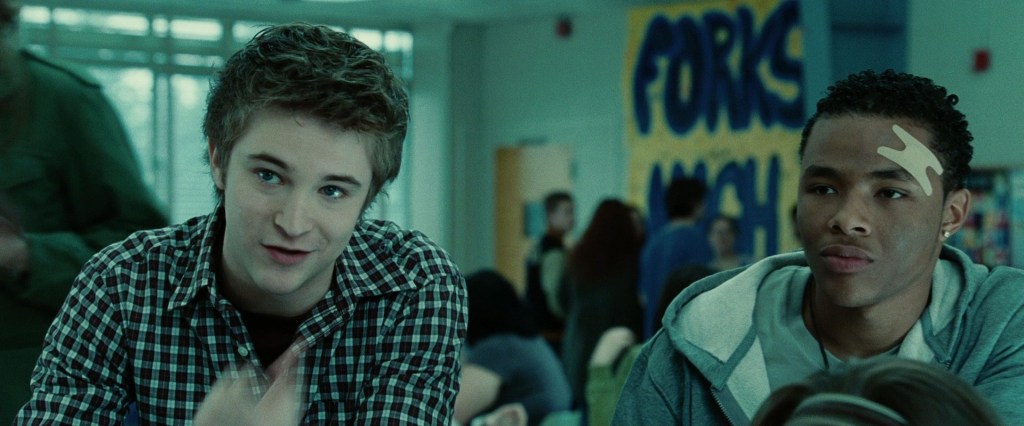
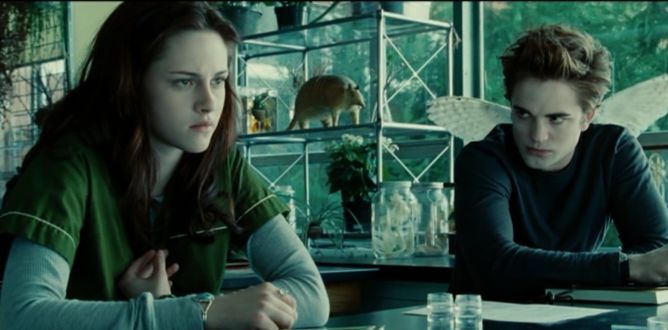
Among the rest of the high school students who fill out Bella’s initial friend group are Eric Yorkie (Justin Chon), Angela Weber (Christian Serratos), Mike Newton (Michael Welch), and Tyler Crowley (Gregory Tyree Boyce). The former three, alongside Jessica, are the only ones who carry on for the series and form Bella’s core group of friends in the human world. Another character, Ben, was merged with Eric. As Jessica puts it, Bella is essentially a “shiny new toy” for the boys to look at. With all three boys fighting for her attention, Bella’s comfort level is cratering. Based on little we know about her life, she’s not used to this kind of attention. A handful of other characters, with the most significant being Mr. Molina (José Zúñiga), their science teacher, and Waylon Forge (Ned Bellamy), a friend of Charlie’s who is introduced to the film to create a victim for the three vampiric antagonists, fill out the roster.
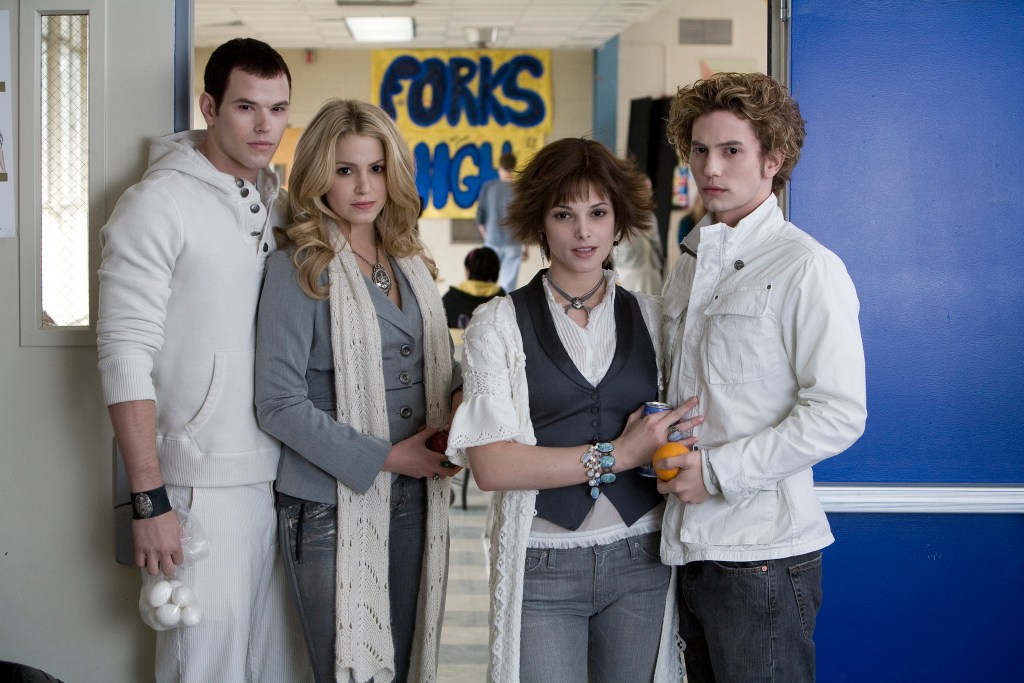
Next, we have the Cullen’s, a coven of vampires led by Carlisle (Peter Facinelli) and Esme (Elizabeth Reaser). Together, they have five children, including Edward – with the others being Rosalie Hale (Nikki Reed), Jasper Hale (Jackson Rathbone), Alice Cullen (Ashley Greene), and Emmett (Kellan Lutz). Rosalie, Emmett, Jasper, and Alice are both in relationships with one another that they don’t bother to hide, using the thin veneer that they’re adopted.

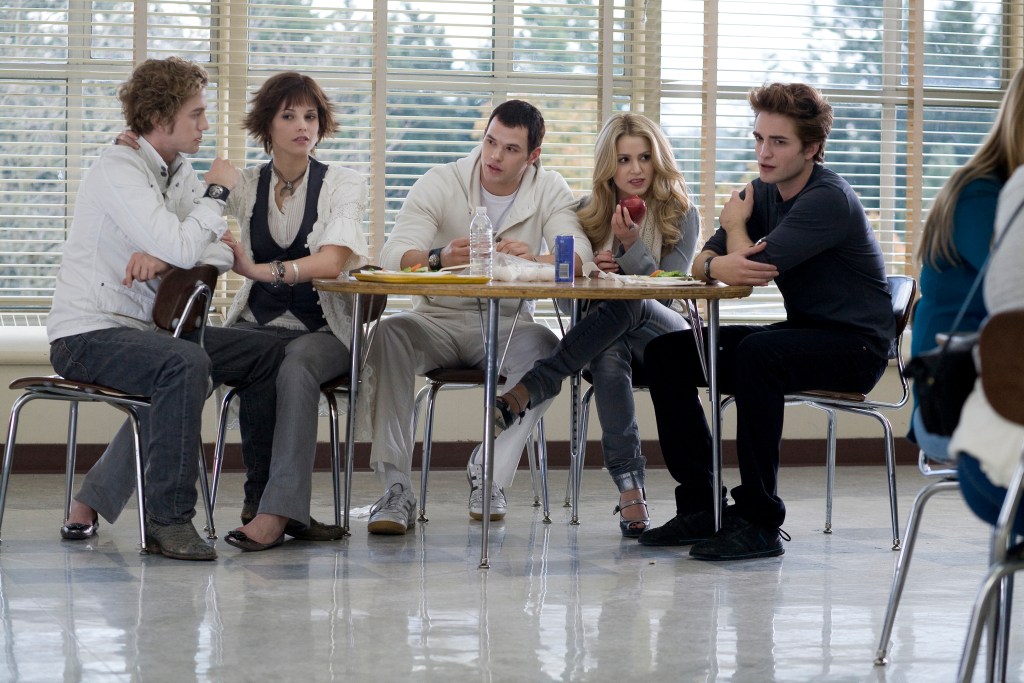
The Cullens’ are the most important group introduced in the series. Their burgeoning relationship with Bella casts a shadow over the rest of the groups that simply cannot be matched. However, since this entry is merely a gateway into the greater world, their roles are still minor compared to the growing romance between Bella and Edward. By the time they each get their time to shine, we have a sense for who they are, and it allowed those moments to feel bigger.
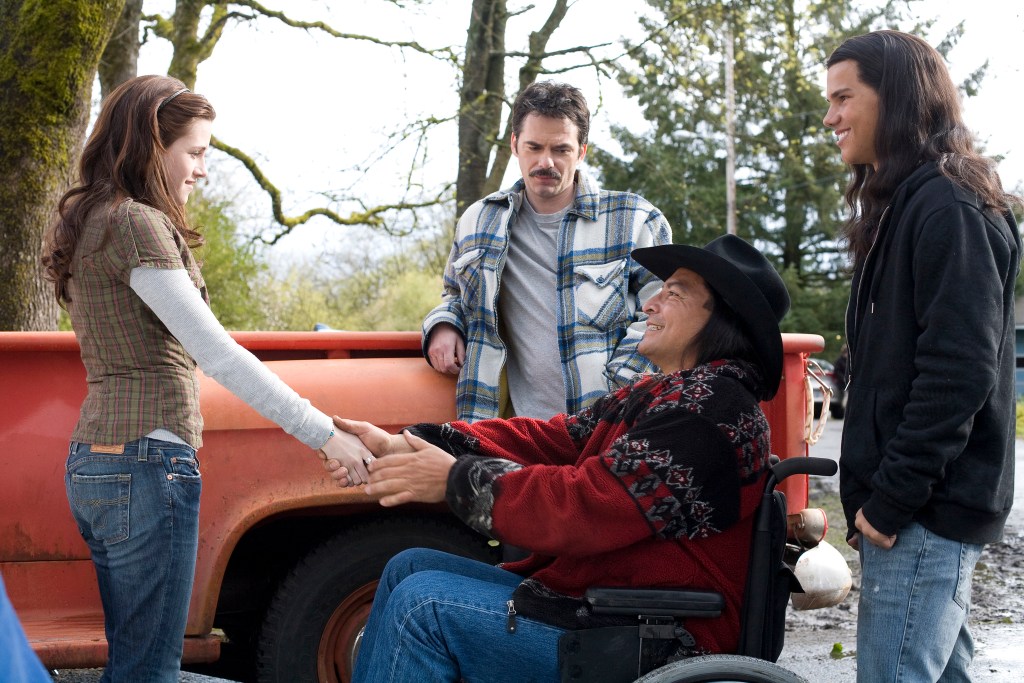
The final faction is the Quileute tribe, primarily represented by Jacob Black and his father, Billy Black (Gil Birmingham). Since Jacob appears sparingly, much of the impact of his role came from fan’s knowledge of where the story would go.
Since it was not exactly guaranteed that the sequel would be made, two additional Quileute tribesmen were introduced and are largely believed to be stand-ins for two of Jacob’s friends, Sam Uley and Embry Call (played by Solomon Trimble and Krys Hyatt, respectively). The two characters are relatively more important than their single scene would imply, but why go out of your way to cast actors for such prominent roles that you have yet to fully develop. So, while it is generally accepted that those were the characters they played when it came time to flesh out the Quileute faction fully, new actors were brought in for New Moon.
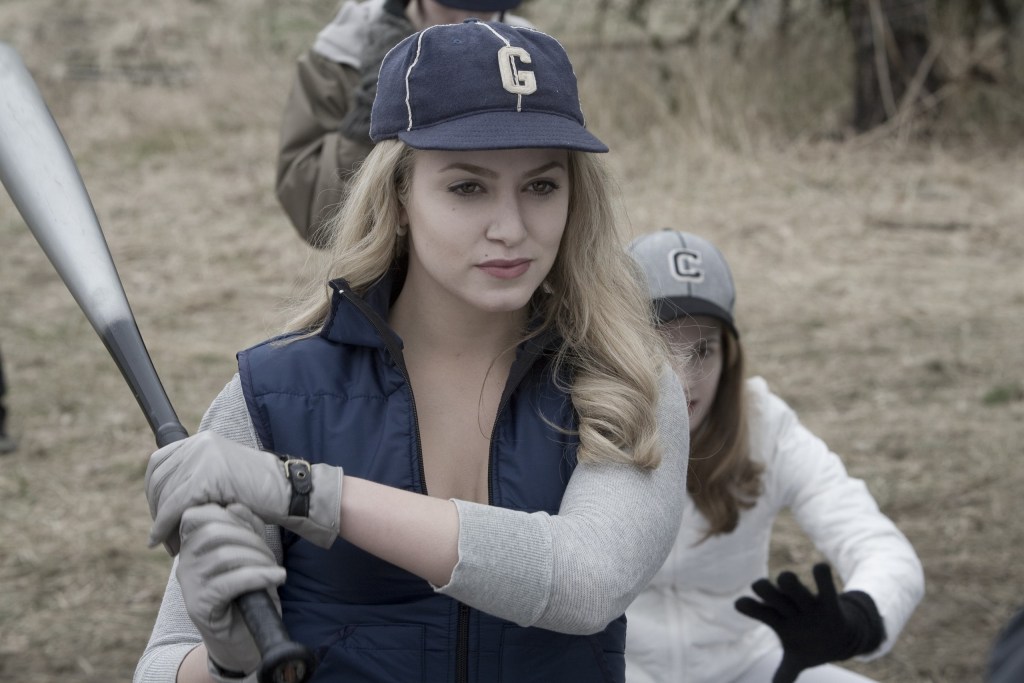
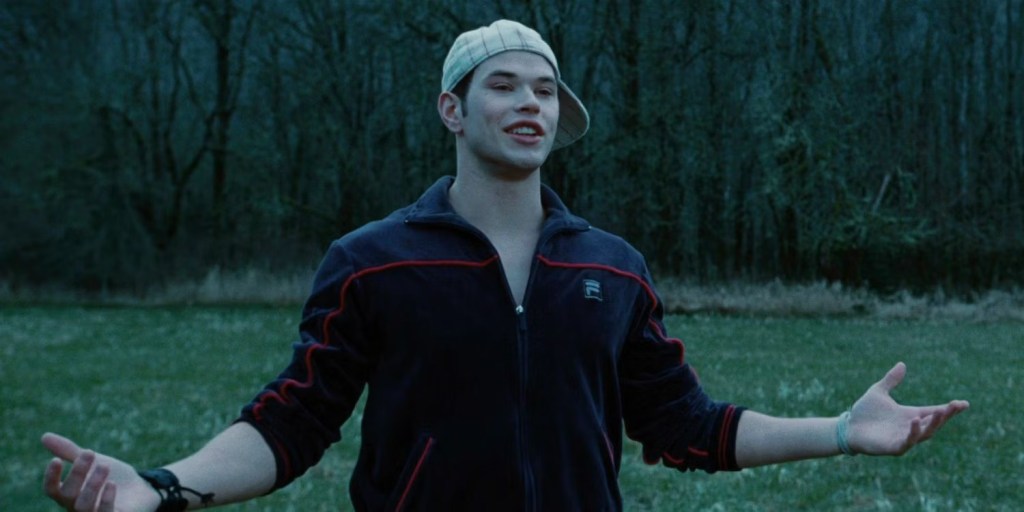
As Bella learns more about them, their relationships change and adapt as they entertain a potential new family member. Alice is the only one who truly gets any attention to her character in this film and is the one who embraces Bella the easiest. However, the extended version does grant a few more moments to the rest. Rosalie’s antagonism with Bella sets her apart, making her a more defined character whose story is expanded later. Because they are not the focus, the moments they have stand out to define them. We know that Emmett is a playful, energetic kind of guy who would put most school jocks to shame. Jasper’s reticence to get close to Bella paves the way for exploring just how difficult the Cullens’ lifestyle can be.

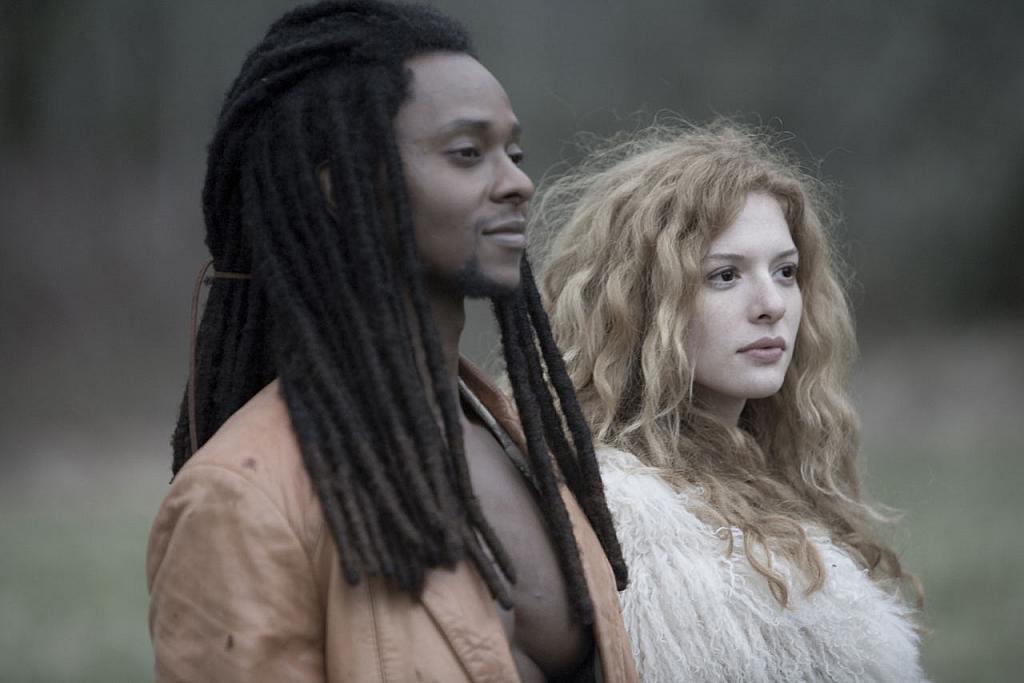
Lastly, we have the interlopers – James Witherdale (Cam Gigandet), Victoria Sutherland (Rachelle Lefevre), and Laurent Da Revin (Edi Gathegi). While the Cullens’ subsist on animal blood, these three view humans as toys and sport. James is a gifted tracker, capable of marking a victim and hunting them to the ends of the Earth if necessary. As a trio, they present an interesting alternative to the Cullens, as it is explored in later installments that large covens are challenging to maintain even without a semi-permanent residence. We see the visceral, more free-willed version of a vampire through their eyes. They are mindful of their surroundings but aren’t exactly afraid of humanity. If you had their gifts, would you be?

James is the central antagonist for this entry, with his compatriots taking center stage in the following two films. As a character, he benefits from the transition from page to screen, with his growing threat to the community laid out before our very eyes before he crosses paths with Bella over halfway through the film. We see with our own eyes that he is not somebody to be trifled with.
James’ conflict with the Cullens’ also fractures his own tenuous group. While the next entries would explore this relationship, and the damage that its fracturing had on them, we are given the impression that they aren’t entirely close in this one. It is not until the credits are about to roll that we see just how big a threat Victoria could potentially be, with revenge clear in her gaze. Laurent, on the other hand, appeared far more opportunistic than either James or Victoria. Indeed, much of his story is revealed after the fact.
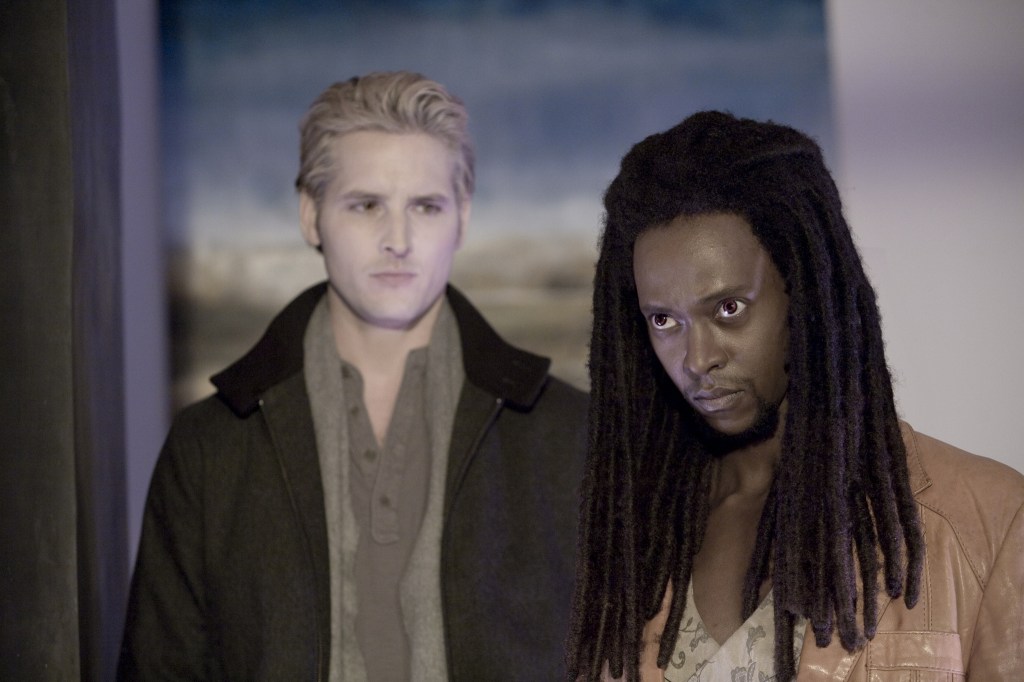
I have always believed that Twilight’s weakest aspect is how it uses its world. This comes down to my usual gripes with first-person perspective stories for the books. This limitation is excised from the films. We get to see scenes that we would have only heard about from the book, or that would have been implied because a movie, by its very nature, has to tell a story differently. Twilight doesn’t dance around the fact that James, Victoria, and Laurent are a threat to Bella and the Cullens’ very way of life. They didn’t have to touch on the more extraordinary aspects of their world to lay the threat bare, but the sequels greatly built on that ever-growing threat. Because the story dances around the fantastic world that Bella is exposed to, we spend our time with the story dancing around it, too. I enjoy the books and the films for different reasons. When reading, I can fill in the blanks with my imagination to bring the world to life. When watching the films, I can take my time to enjoy that world as it has been brought to life by the directors and the actors’ performances. There’s a reason I only ever watch the four extended versions of this series; it allows for so much more of the world to unfold before my eyes.
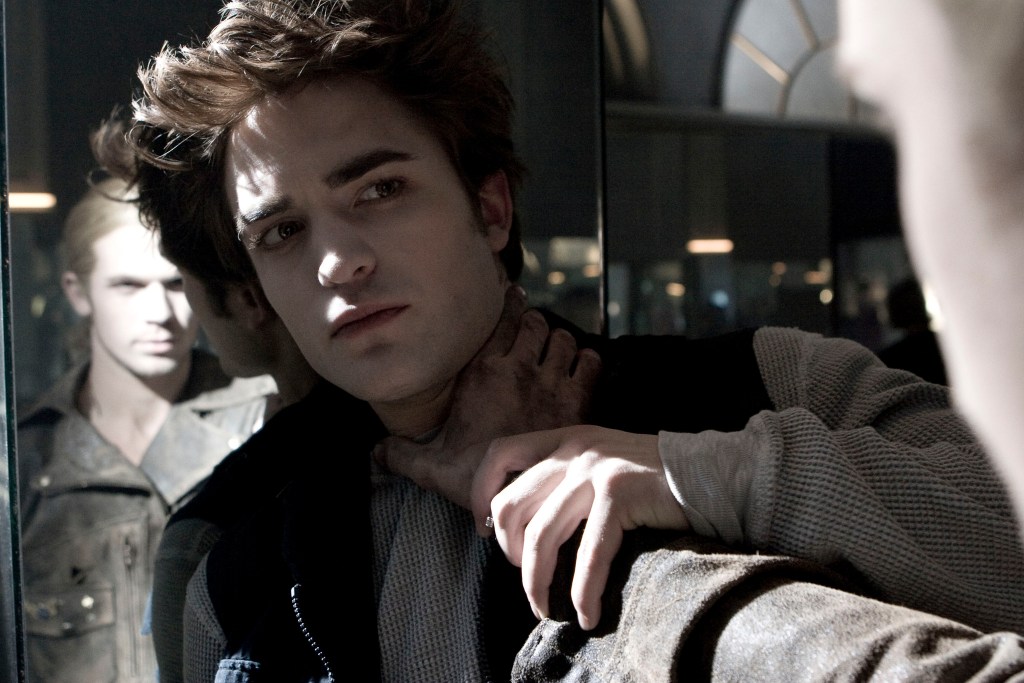
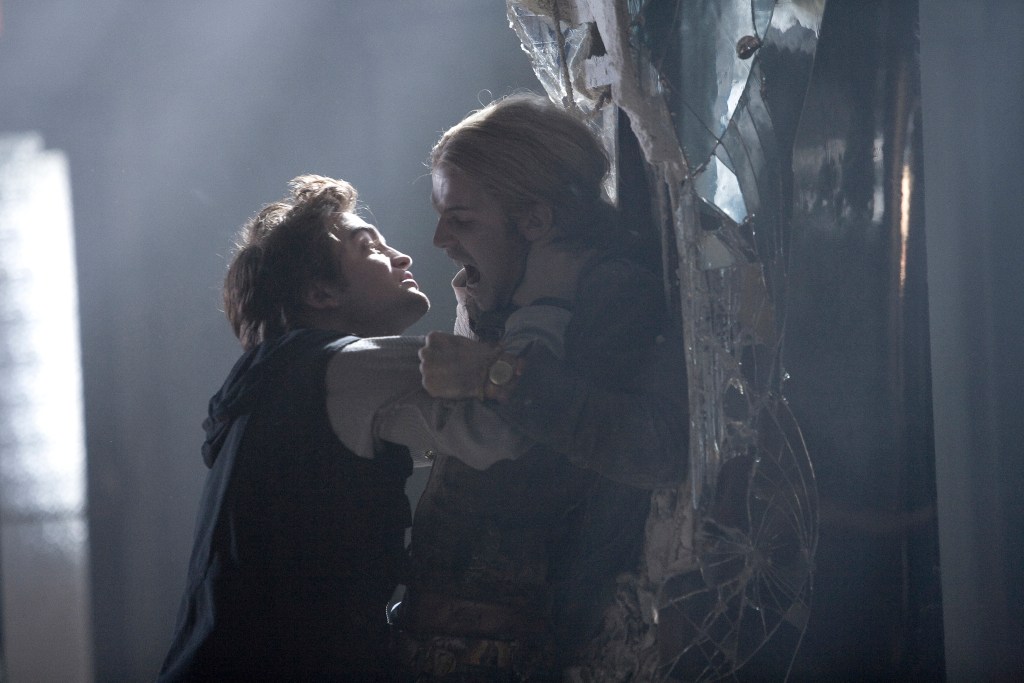
One of the benefits that comes from the adaptation is the fight between James and Edward, which we only get glimpses of in the book as Bella is all but thrown around the ballet studio’s mirrored hall as a ragdoll would be. We are told what the Cullens’ did to him, but here we get to see it, albeit as Bella is going in and out of consciousness. The movie allows us to see these scenes, however distorted they’re presented, rather than vaguely describe them and hope we can cobble together our own image.
Twilight is a strong contender for one of my favorite film series. It’s one that I come back to over and over again. It’s easy to get into and fun to watch, and I enjoy the romance between the two as it develops. While criticized as a character, Bella is often misunderstood in the same way that often happens with stories centered on and catered to women. I lay many of these criticisms on the fact that we are inside Bella’s head for the entirety of the story. Her thoughts and doubts are thrust at us without the context and motivation the rest of the ensemble has to offer as a counterbalance.
Those who have read Midnight Sun often argue that it is the better version of the story, but I like to experience them as two halves of the same whole. They are presented in differing manners for a reason. For one, Midnight Sun was written after the main series was complete, allowing more obvious nuggets to be laid out for later plot points. Equally important is that books and other media created with a female audience in mind are often criticized unjustly by those who don’t even bother to engage with the material personally. For those people, I dismiss their opinions out of hand – yes, you can have an opinion about something without reading it, but allowing your opinion to form because others have dismissed a work and then refusing to engage in it on your own provides a flawed outlook.
No, I am not saying you should go out and immediately watch or read something you are not interested in. I am chiding you for insulting or judging those who enjoy the work. That is where I draw my line.
 Lloydd Marshall Books