
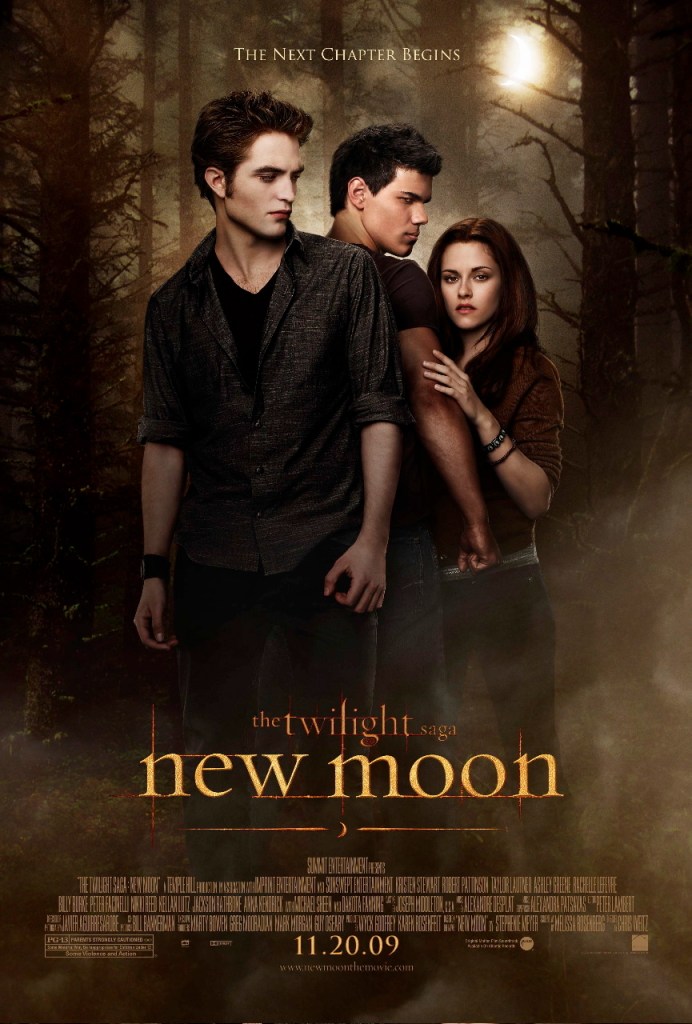
The second entry in the long-running, incredibly successful franchise courted controversy before filming began. While Twilight was already in the process of becoming a cultural phenomenon, it’s safe to say that not everybody was aware of the book series before the first film came out.
With its release in 2008, it drew renewed interest from fans of old, who were happy to have the final book in the series released, and those who found out about it as it was adapted to film. New Moon was a different sort of beast. It focused on a new group of ensemble characters and shunted its vampiric supporting cast to the sidelines.
Bella Swan (Kristen Stewart) is in the process of enmeshing herself within the supernatural world of Edward Cullen (Robert Pattinson), the century-plus-year-old Vampire who has found renewed purpose in his unending existence. The threat of James (Cam Gigandet) ended without resorting to turning Bella into a vampire. Still, now the Cullens find themselves in a prickly predicament. Edward is staunchly opposed to cursing Bella in the same way he views his existence. As Stephenie Meyer explores the greater world of her series, the political implications begin to unfold in this entry’s endgame.
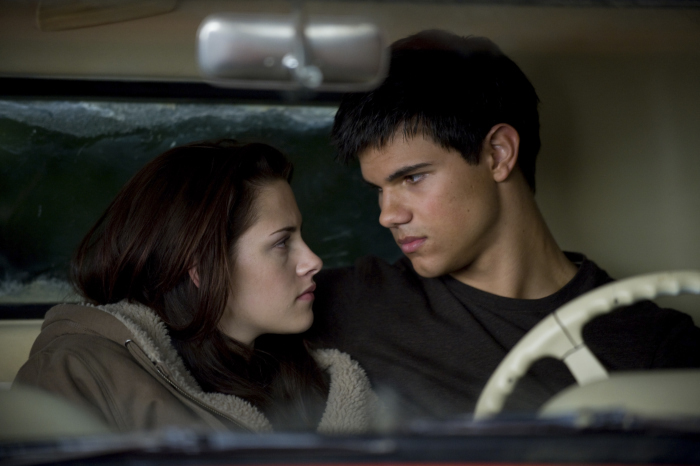
The story is centered on the fallout of Edward Cullen’s departure from Forks, Washington so that he might keep Bella safe from the dangers of his world. This leads Bella to reach out to her old friend, Jacob, as he is drawn into a new world of his own that spills out into Bella’s life. As the drama begins to ratchet up and the threats start to encircle Bella, it becomes clear that she is embroiled in the secrets of others. However, she still clamors to involve herself in the world of Vampires and Werewolves, undaunted by the danger.
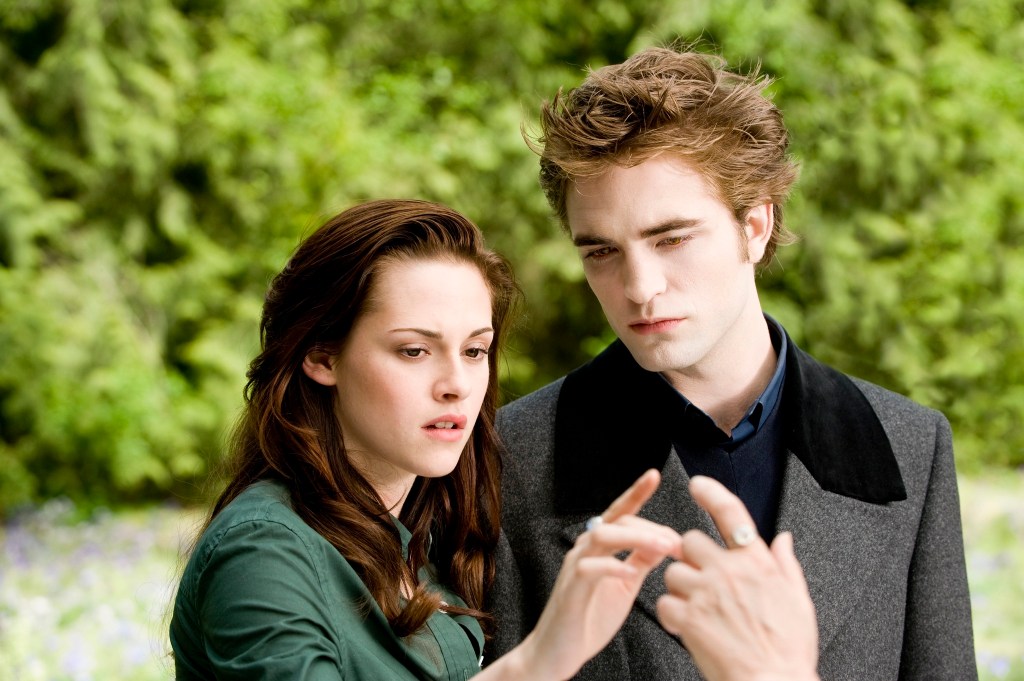
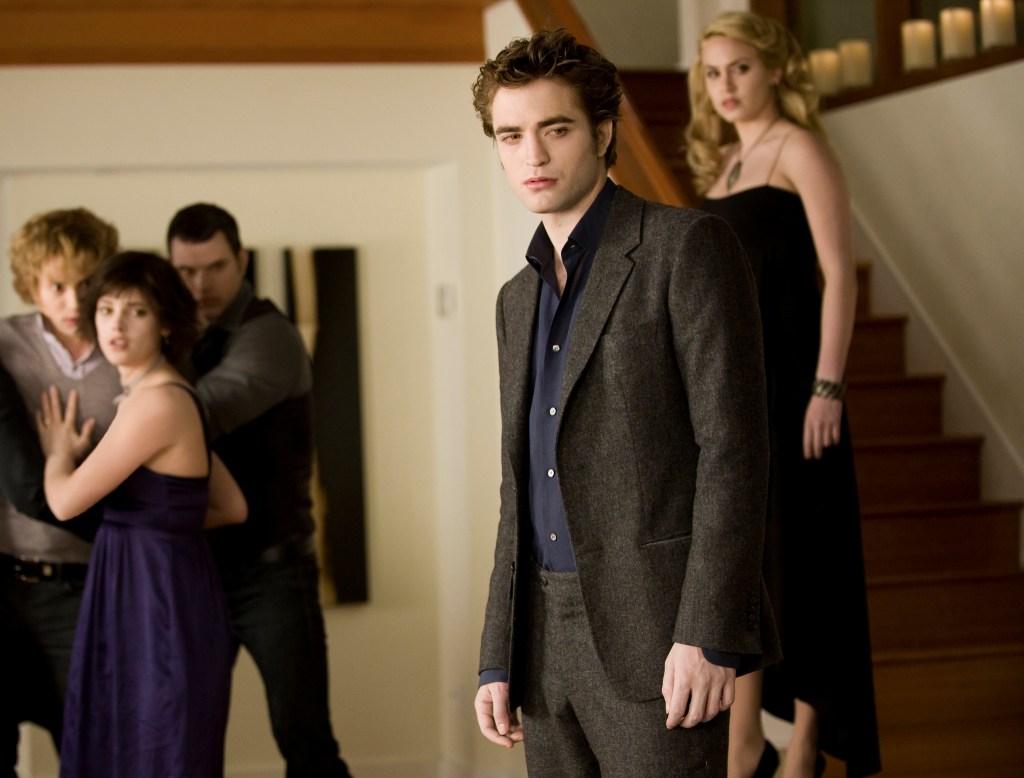
The Cullens’, led by Carlisle and Esme (Peter Facinelli and Elizabeth Reaser), welcomed Bella wholly into their coven, except for Rosalie Hale (Nikki Reed). Alice (Ashley Greene) and Emmett (Kellan Lutz) view Bella as one of their own, while the difficulties expressed by Jasper (Jackson Rathbone) and Rosalie temper them out in a mostly balanced division of opinions.
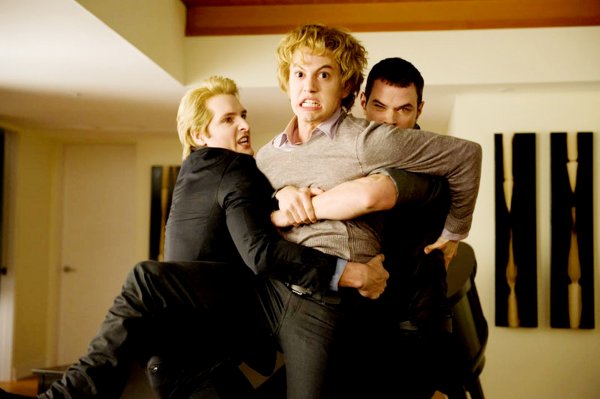
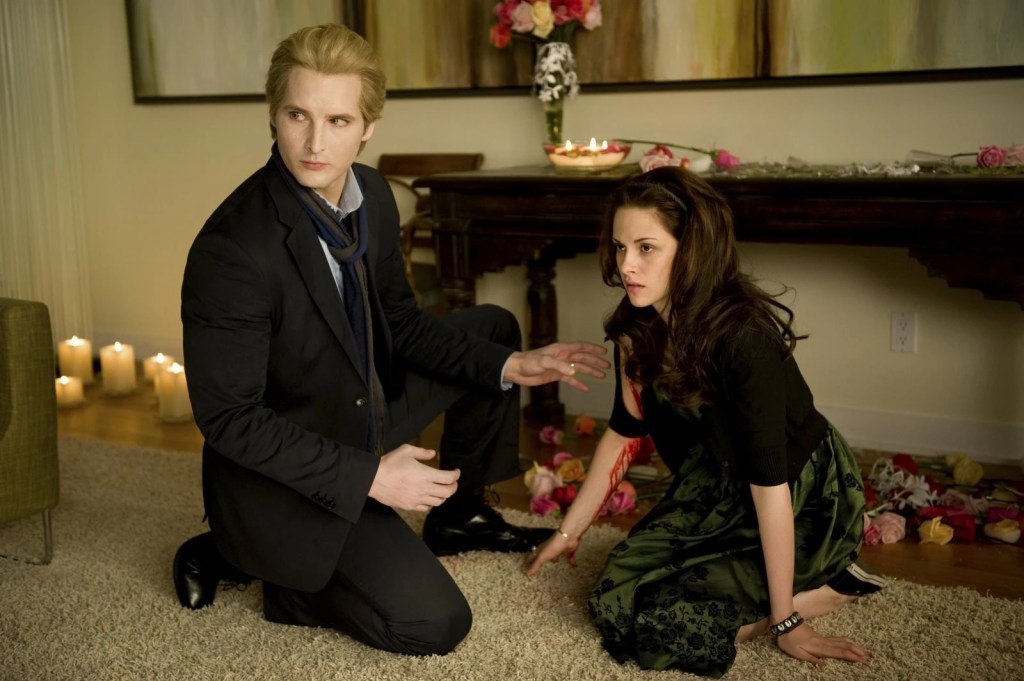
But this debate is squarely put on hold after Bella’s birthday party, and the spilling of a small amount
of blood thrusts Jasper into a blood frenzy that spirals out of control. Edward leaves Bella behind, feeling it’s the best move for all parties involved. With that, the Cullens’ are pushed into the background for most of this entry, and another faction emerges.
Billy Burke returns as Charlie Swan, trying to connect with his daughter as she goes through a major heartbreak with Edward’s departure. After everything that happened in Twilight, he is distraught to see the emotional turmoil that his daughter is left in. With months passing where she does little more than eat, sleep, go to school, and have nightmares, he becomes inured to it all – to the point where he finally settles on sending Bella down to Florida to live with her mother. This single choice jumpstarts Bella’s participation in the main plot.
Throughout the film, his connection with his daughter grows more strained. Bella, desiring to be with Edward, knows that this will mean severing her connections with her human life.
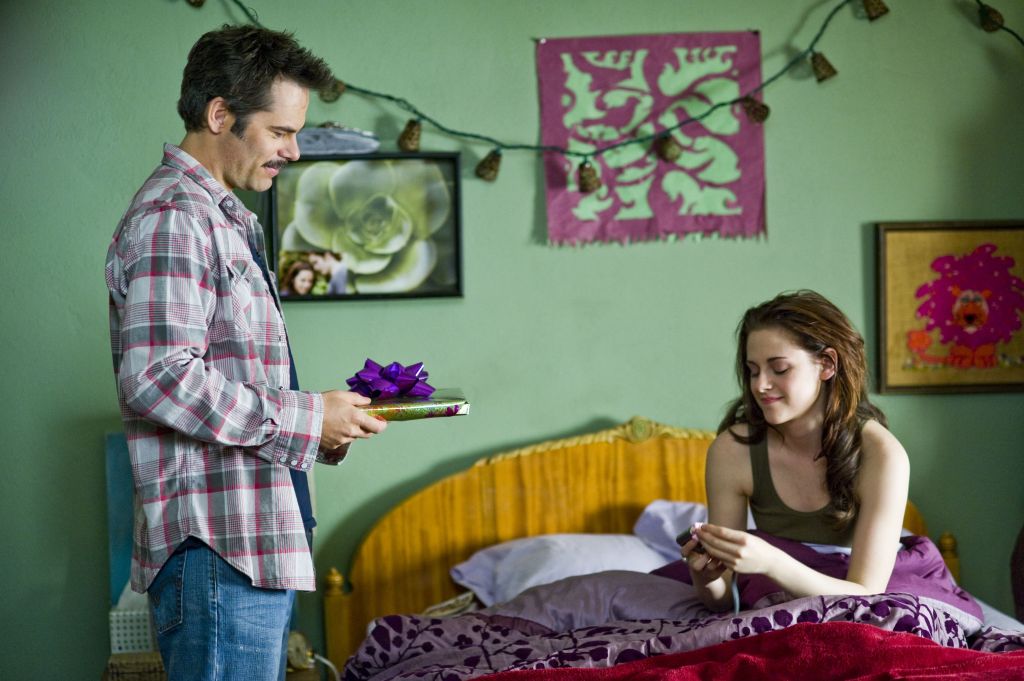
Still, it remains evident that her father is important to her and vice versa. She does her best to protect him from a world he exists on the periphery of, never fully cognizant of the danger he’s really in.
Considering Stephenie Meyers’ initial plan was a duology, with only a few plot elements included between the two entries, it is amazing how much more she could build out from those broad strokes. The most powerful addition to her expansion was the Quileute, Native Americans indigenous to the Pacific Northwest. When utilizing real-world culture, storytellers tend to mishmash elements – usually in a bid not to offend a specific group or subgroup – and how successful the effort can be depends on one’s skill level and attention to detail. The supernatural element is obviously a fictional addition to a real-world group of people. Still, this entry puts Jacob Black (Taylor Lautner) into the spotlight.
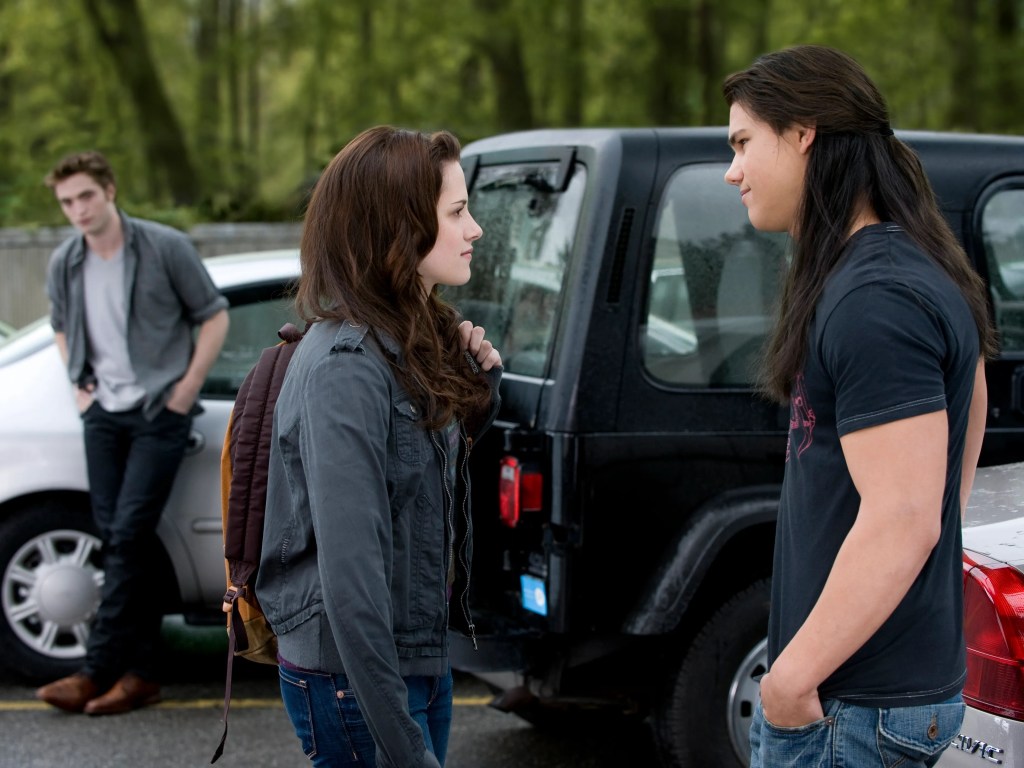
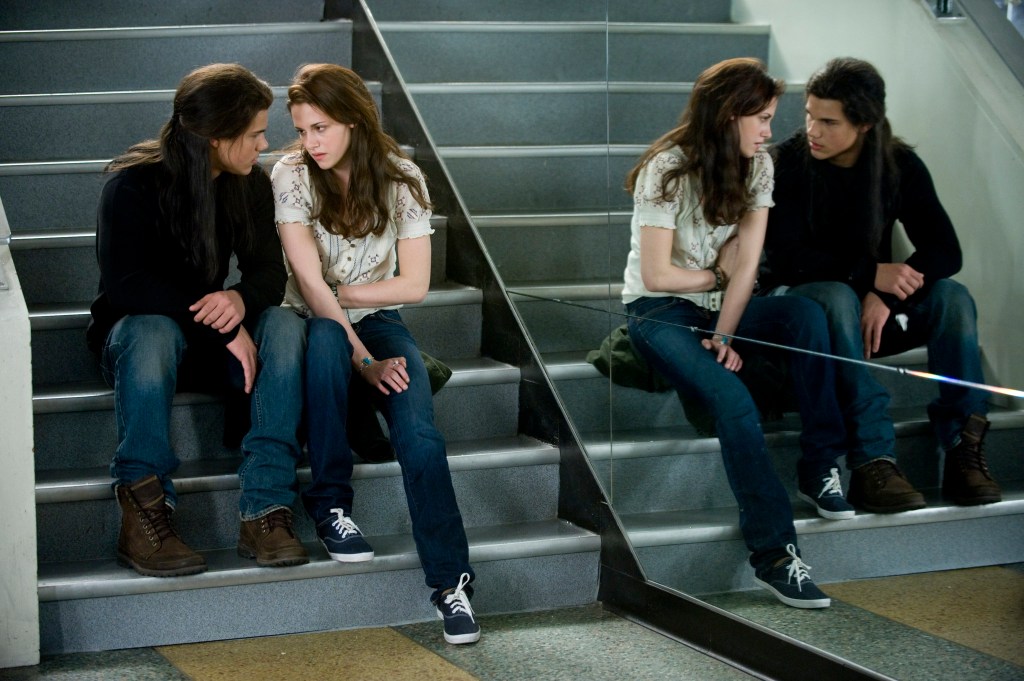
Several major characters are introduced on the Quileute side, but a few of them take center stage: Sam Uley (Chaske Spencer), Paul Lahote (Alex Meraz), Embry Call (Kiowa Gordon), Jared Cameron (Bronson Pelletier), Quil Ateara V (Tyson Houseman). The former four are the ones who become Werewolves in this film, with Quil gaining the ability in the next entry. Like the Cullens’, because the story is told entirely from Bella’s perspective, we are only given glimpses of their personalities in the books. Here, in the film, we can see the connection that threads them together – the warmth and friendship that binds them in much the same way the Cullens’ have.
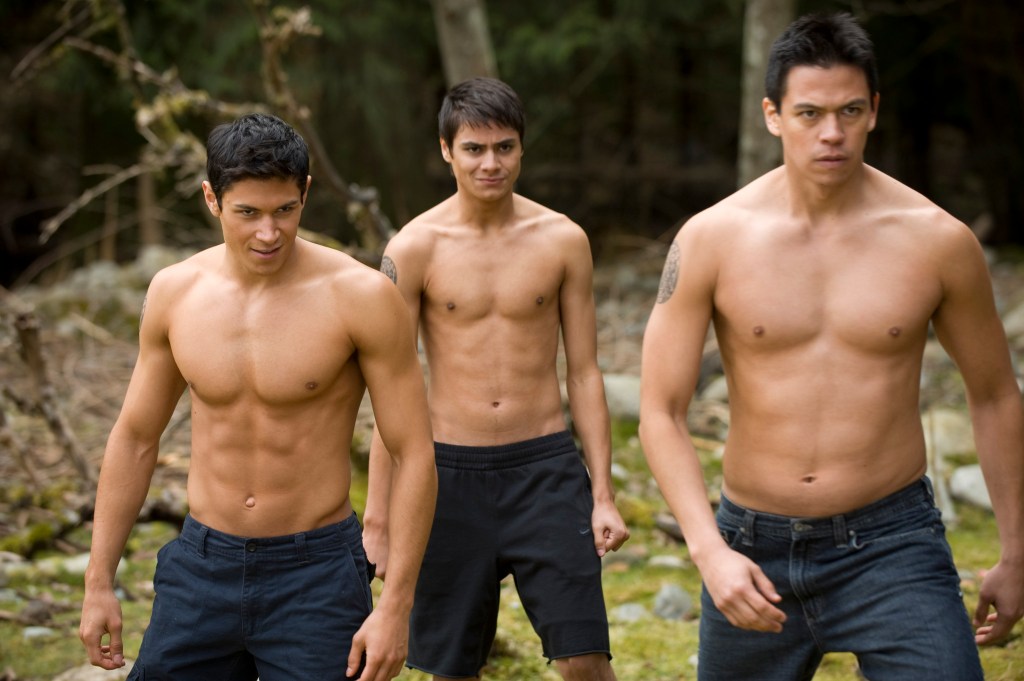
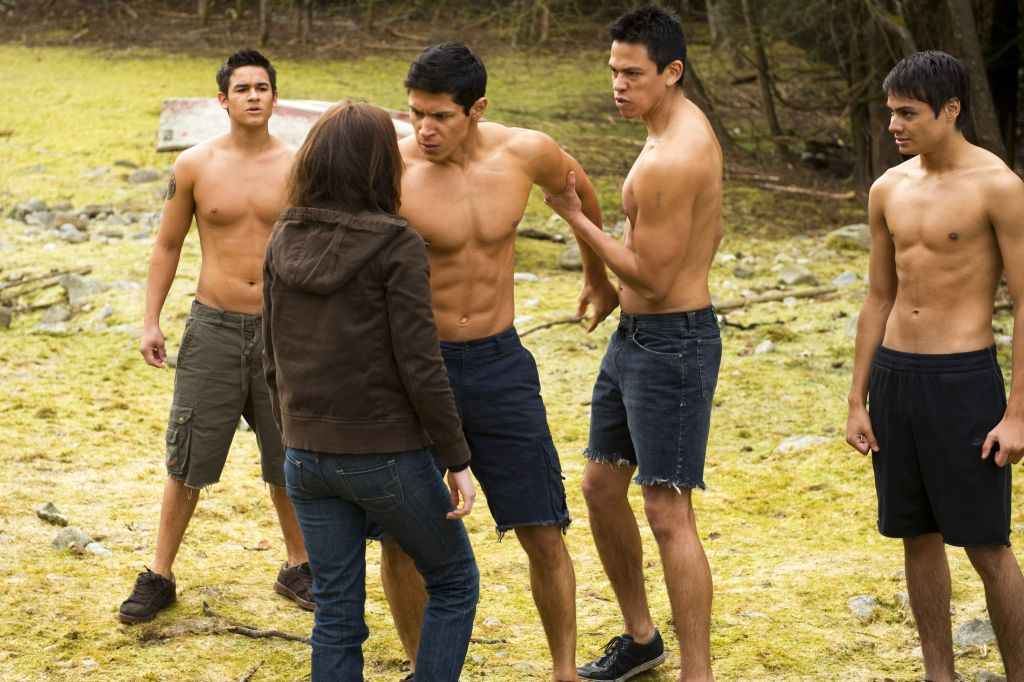
Sam is the Alpha of the pack (an outdated term that still holds weight) despite Jacob’s family having the strongest leadership claim. This conflict between the two is a thread that flows throughout the rest of the series, with Sam taking the lead when Jacob outright rejects his heritage at first. With Jacob torn between his love for Bella and his familial obligations, he doesn’t take the lead, leaving Sam to be the one to make the hard choices. First is Jared, who acts as his second in command; next is Paul, who is a hotheaded cannonball that seems to be out of their control from time to time; and finally, there’s Embry, who is desperate to fit in and eager to prove himself. While we don’t see Quil’s reaction to being excluded as clearly as Jacob’s fears of his friends falling under Sam’s thrall, it wasn’t hard to see how this could be a problem.

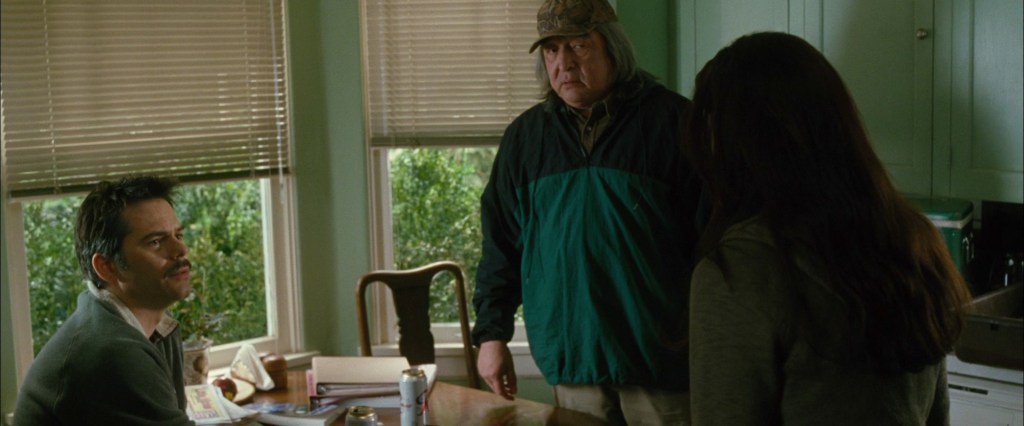
In an effort to streamline the introduction of characters, it was decided to delay the proper introduction of two of the Quileute’s (Leah and Seth) despite a vital plot point involving their father, Harry Clearwater (Graham Greene). Since their role is mainly in the background, this delay is understandable. Billy Black (Gil Birmingham) returns in a more prominent role, acting as one of the Quileute elders alongside Harry. The treaty between the Cullens and the Quileute’s begins to unravel as tensions between the groups rise. This is also partly why the Cullens vacated the area.
With Edward out of the picture, Bella is lost in a depressive fog, only to find that adrenaline and thrills can elicit a hallucination of Edward, allowing her to feel some connection to the love of her life. Her friends at Forks High, Jessica (Anna Kendrick), Mike (Michael Welch), Angela (Christian Serratos), and Eric (Justin Chon) react in varying ways to Bella’s withdrawal. Mike attempts to kindle a romantic relationship with Bella. At the same time, Jessica finds herself in a dangerous situation as she tries to be a friend to Bella. Mainly, they act as normal teenagers, trying to draw their friend out of her self-exile. Still, Bella’s unwillingness to do so leaves their efforts mostly wasted for much of the film.
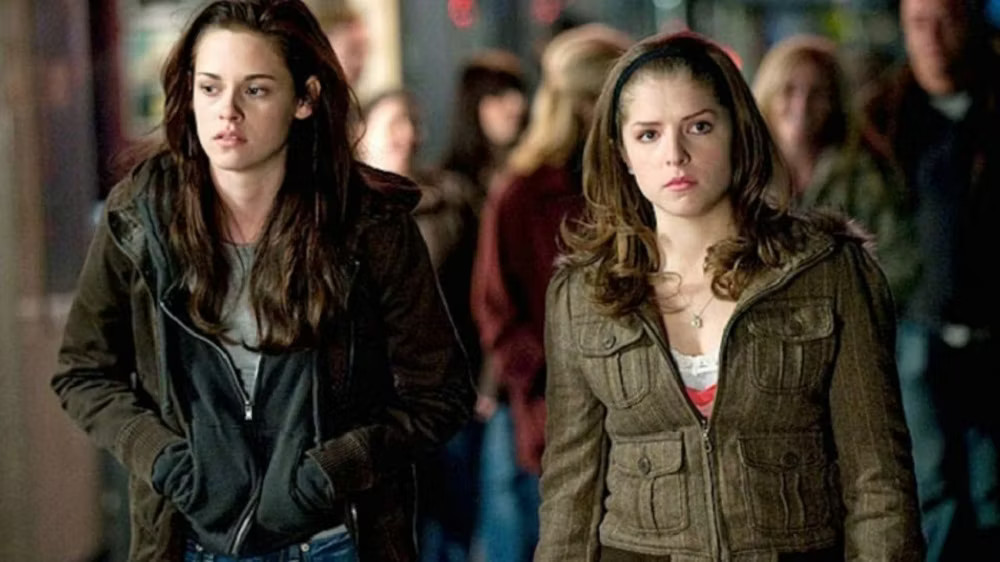


As a core group, they fill out the world, showing that Bella’s life can be filled with love and support. Her ability to reach out to them is strained because they represent what she would be leaving behind if she became a Vampire. Yet, when push comes to shove, Bella can open up to them again.
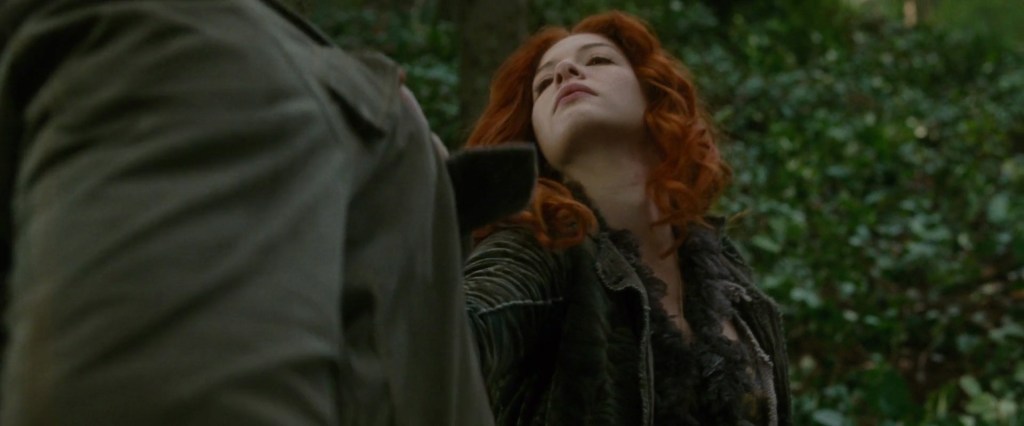
James was the primary antagonist of the first film, and his death has cracked the fragile foundation of the alliance between his former coven mates, Victoria (Rachelle Lefevre) and Laurent (Edi Gathegi). Scheduling conflicts would lead Lefevre to depart the final entry of her character arc, which is a true shame because her brief appearance here alluded to how much she could truly shine as a fiery, erratic vampire. Laurent is the one who, despite only having a brief appearance, becomes the central antagonist of the first half of the film. With much of his character development between books left in the shadows, the crumbs set for Breaking Dawn are not laid out carefully enough for my liking. He primarily serves as the impetus for introducing the Vampire-Werewolf conflict. Still, his death sends ripples throughout the rest of the series.
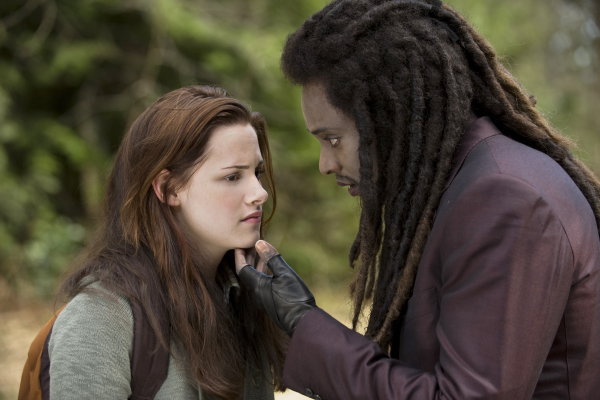
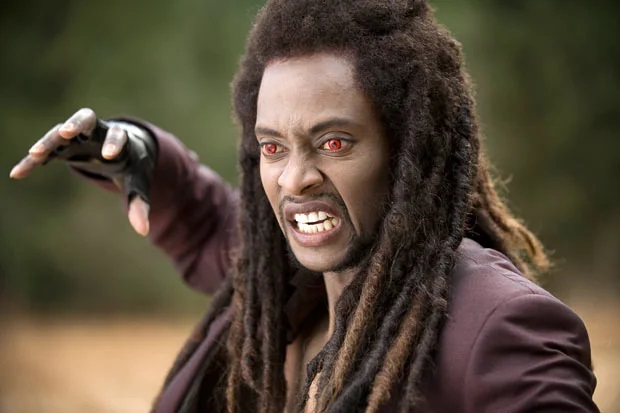
As a character, Laurent represents the biggest waste of potential, and this only because his rich character arc is relegated to the background. He represents a powerful dichotomy between the traditional vampires that the Volturi purport to be and the progressive coven that the Cullens have built.
Because we don’t get to see his relationship with Irina play out on screen (either in film or in the books), we are left to learn about his efforts to grow as a person after his death. The tension surrounding his unexpected death at the hands of the Quileute’s is intense and complex, and it merely continues to prove to me that first-person perspective is the weakest storytelling method if it’s not used effectively.
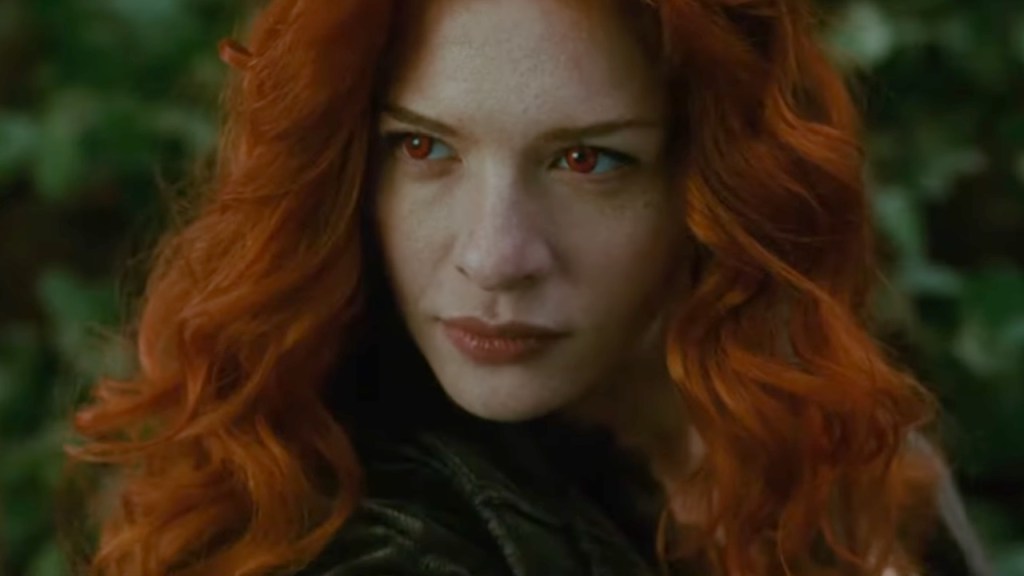
Victoria is the most capable villain who is not affiliated with a major group. While initially not presented as a threat, she becomes the bane of the main characters’ existence through her dogged persistence and her nebulous ability to “escape” any situation.
Victoria is clearly a calculating force, one that they never truly saw coming. Edward’s inability to read Bella’s mind becomes the crux of their relationship problems. Because Edward is so used to being able to read the very nature of another person’s actions or intentions, he cannot truly grasp the depth of Bella’s connection with him or the threat that Victoria would present. At the same time, Alice’s visions are incredibly subjective and based on individual decision-making, which leaves him firmly believing that he can leave Bella behind and that she would just move on like most humans might. This ultimately drives the conflict presented to the main characters where the Volturi is concerned.
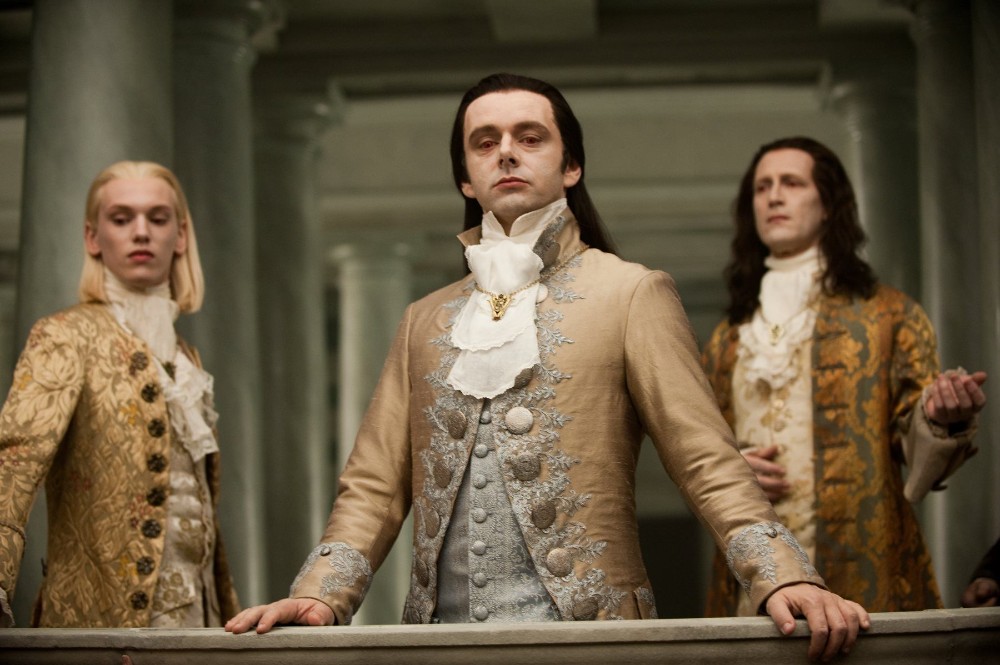
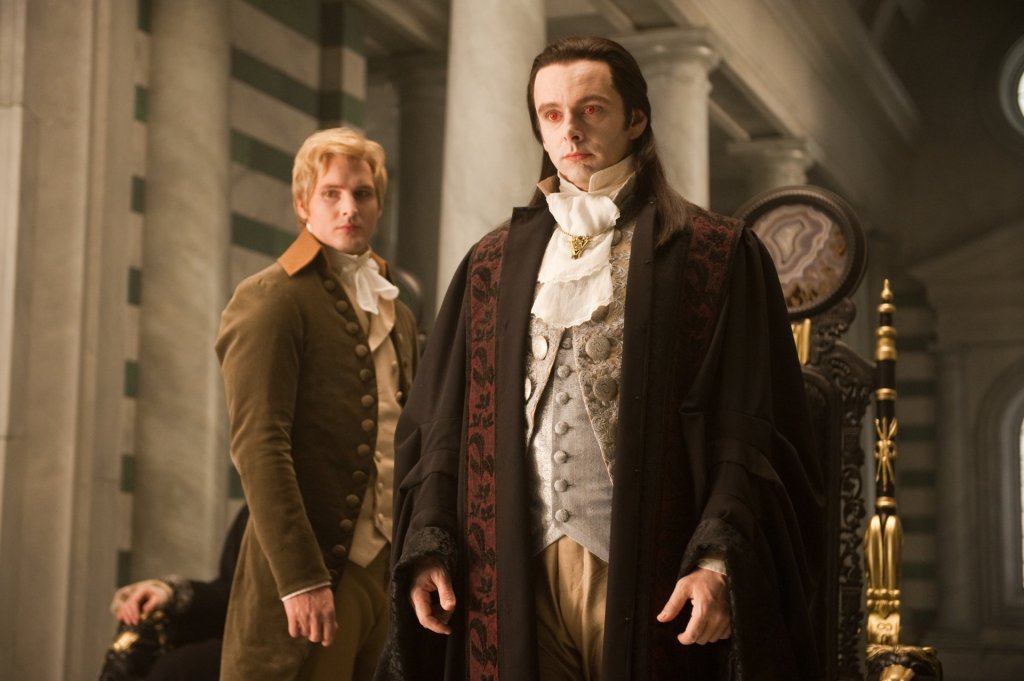
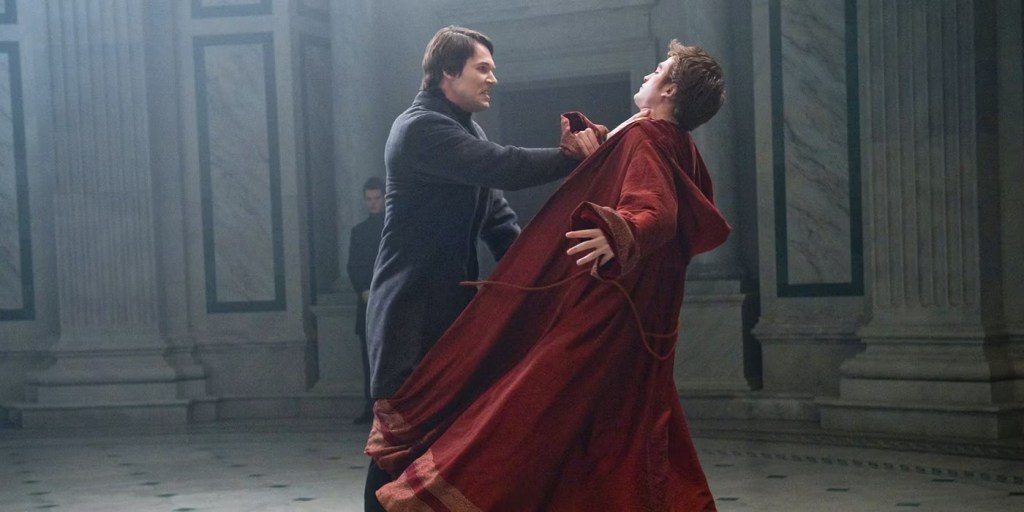
The final major faction in Stephenie Meyers’ work is the Volturi, the ruling elite of the Vampire society. The group is led by a triad – Aro (Michael Sheen), Caius (Jamie Campbell Bower), and Marcus (Christopher Heyerdahl). They are three ancient beings over three millennia old, with only Marcus lacking a truly superb individual power, while Aro has tactile telepathy, and Marcus can identify relationships. They may seem like less than valuable abilities, but together, the three were able to form the largest and most complex coven of vampires. Of the significant Volturi-based characters, Jane (Dakota Fanning) and her brother Alec (Cameron Bright), Felix (Daniel Cudmore), Demetri (Charlie Bewley), and Heidi (Noot Seear) are introduced. Jane is the only one whose power is focused on, with her ability to inflict pain used to test Bella’s nascent abilities.
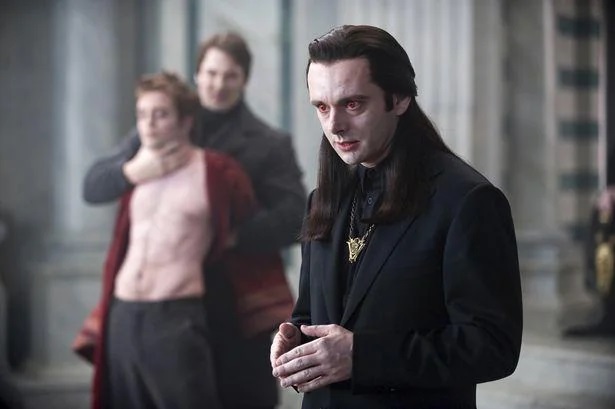
Of the three, Aro is the most integral member of the group. He is their leader, and through his efforts and manipulations, the group has maintained its supremacy for so long. Through his actions, we see that while the others have an equal say, Aro is “first among equals.”
We merely get a taste of Jane and Alec, with Dakota Fanning’s Jane receiving more characterization through her “active” role versus her brothers’ more passive performance here. It’s clear why the two, and Felix and Demetri, took center stage in a major subplot in Eclipse.
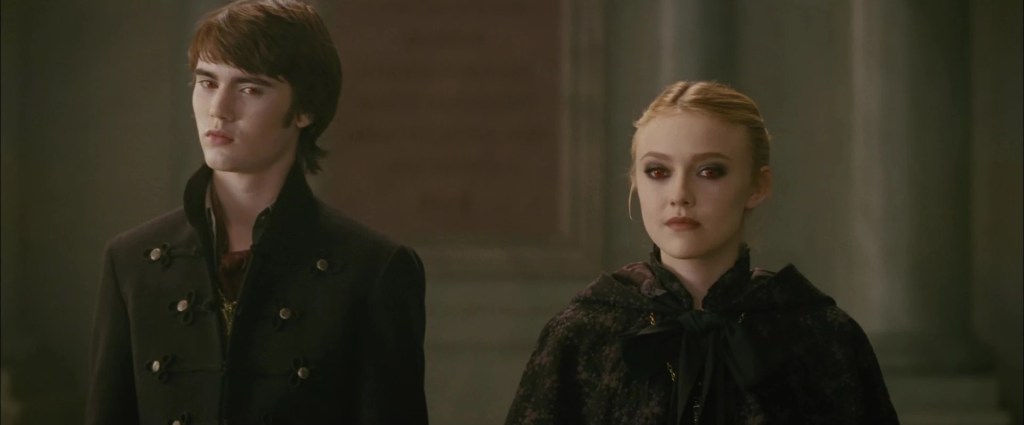

When it comes to the book, because we are given a long, carefully detailed explanation of who the Volturi are, the film can easily translate them. Jane and Felix’s sadism is on full display, for example. On the other hand, the calculated, cunning side of the Volturi comes out in an understated yet brilliantly executed manner. New Moon gives us a taste of the vast apparatus that exists to control vampire society and enforce the few laws that they have.
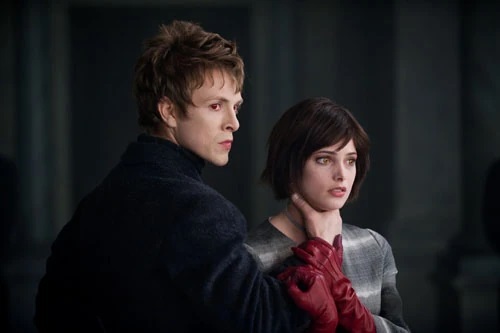
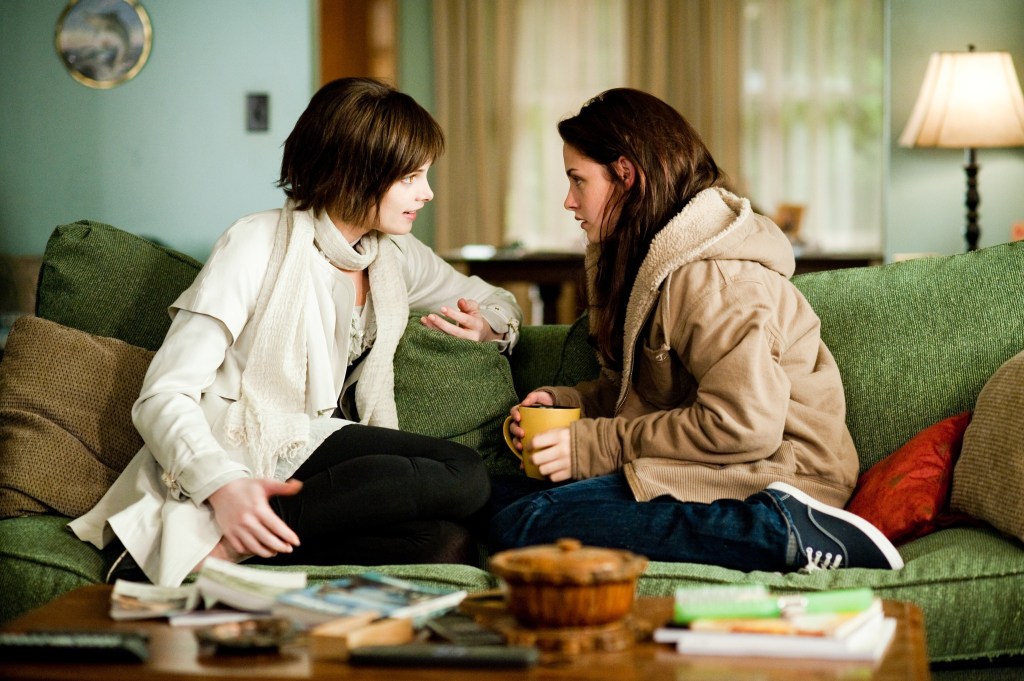
While Rosalie, Jasper, Emmett, Esme, and Carlisle all take a backseat – literally only appearing in a handful of scenes, Alice has a more prominent role, second only to Edward on the Cullens’ side. Through her return, we learn the limitations of their abilities regarding the Werewolves – however arbitrary they might be. We also get to see further development in the fun friendship that Alice and Bella have. They are the closest, after all, considering Bella and Rosalie’s near antagonistic relationship. This also provides a path for Alice and Jacob to have a friendship form over the next three films.
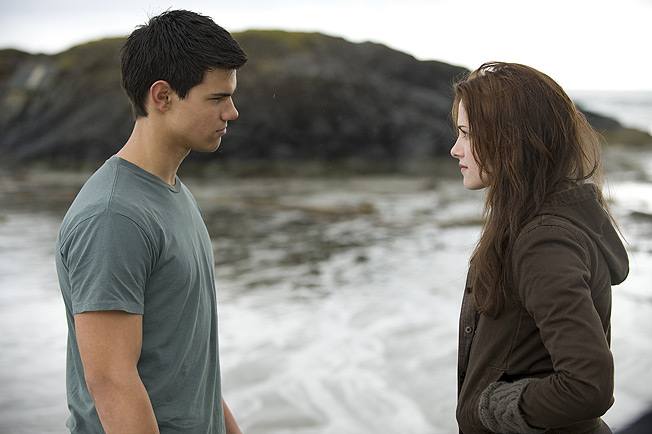
New Moon had to take time to develop the two major factions it introduced, the Quileute’s and the Volturi, while balancing its primary plotline. Because it and Eclipse were expansions of plot threads that connected Twilight and the original finale, Forever Dawn, characters and plot points that weren’t included could be introduced. The conflict between the Cullens and Victoria, and later the Quileute’s and the Volturi, was able to breathe more freely with the additional page count and subsequent screen time. Since we aren’t just in Bella’s head, the film has to devote time to showing certain developments, especially those merely implied or hinted at. The best example is Victoria’s hunt for Bella, which the Cullens believe is impossible because they underestimate the connection between Victoria and James. At the same time, the limits of their abilities and how they pertain to the Quileute shapeshifters paved the way for an intense conflict.
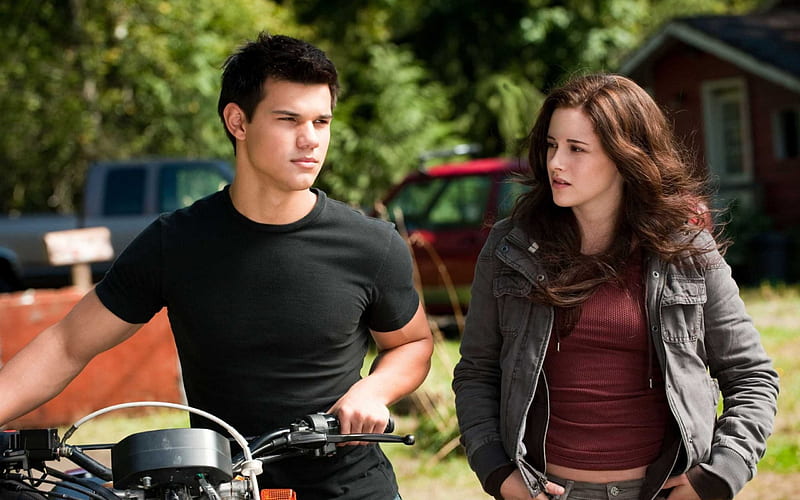
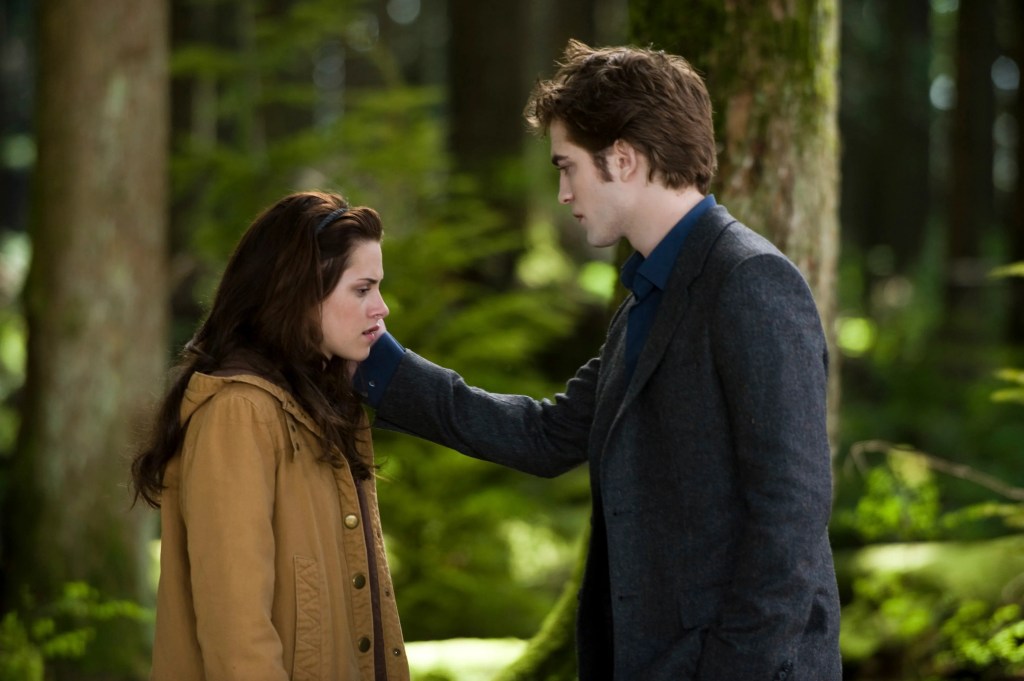
New Moon expanded the supernatural world, but more importantly, it did what other stories that would come later failed to do. It built a convincing “love triangle,” even if the term doesn’t accurately reflect what it is tacked onto. While it’s clear that the love story between Bella and Edward was the endgame, her friendship with Jacob did provide a solid foundation for a compelling alternative. It was enough that “Team Edward/Team Jacob” was a masterpiece of marketing that Summit Entertainment did not fail to cash in on. Even if the end was a foregone conclusion, how we got there was always the point.
 Lloydd Marshall Books