
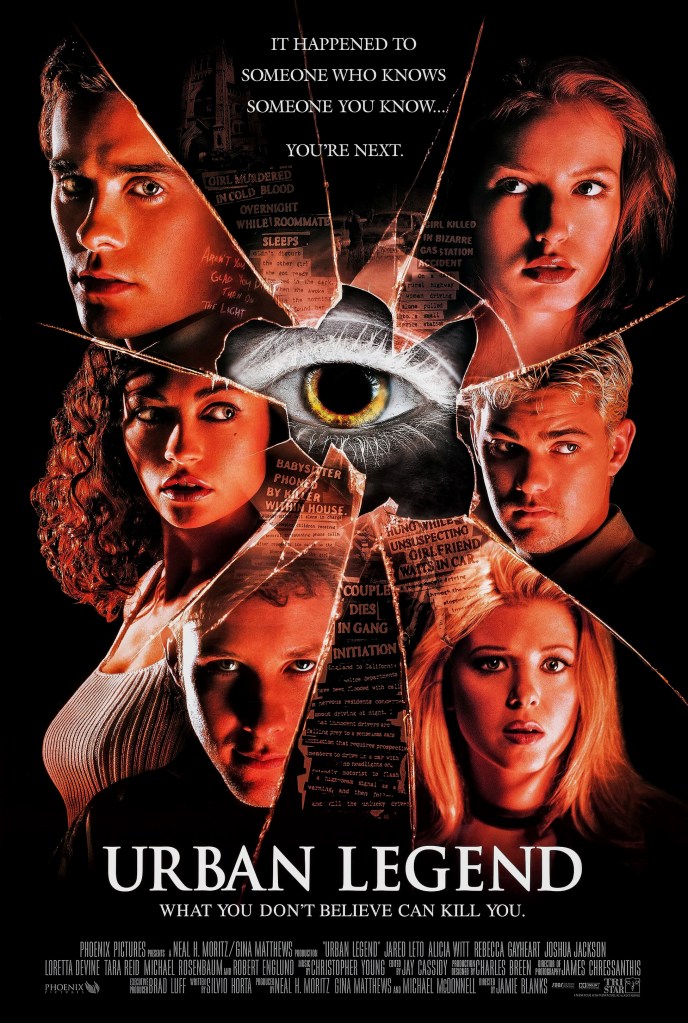
Following the coattails of the successes paved by Scream and I Know What You Did Last Summer, Urban Legend would be released in the autumn of 1998. Much like its predecessors and successors, Urban Legend relied on fun, quippy dialogue, tight-knit groups of characters with depth and morally gray backgrounds which would receive more focus than their forebearers like Friday the 13th and Halloween, and finally a cast of young, attractive, but well-known teen idols.
While earlier slasher fare would cast relatively unknown actors, some of whom would be propelled to stardom in their later careers, the 90s was renowned for its swath of recognizable faces. Even if they were up-and-comers, they were top of mind for audiences of the era.
As its title makes clear, the crux of Urban Legend is folktales that have been passed from person to person, changing with each iteration to become more elaborate and eerie. All these tales and legends are rooted in horror, with innocent people meeting grizzly ends to convince children and teens to not stray from the well-traveled paths laid out by their ancestors. Urban Legend builds on these stories with a hooded killer who seeks to bring them to life, tormenting a group of college students in fictional Pendleton University in New Hampshire. Each murder is tailored to a specific legend, with the parallels to the respective characters’ lives and experiences providing the bedrock for their situation. As the central characters, though, Natalie and Paul take the lead in the investigation, as the people around them offer help or advice occasionally before meeting grisly ends.
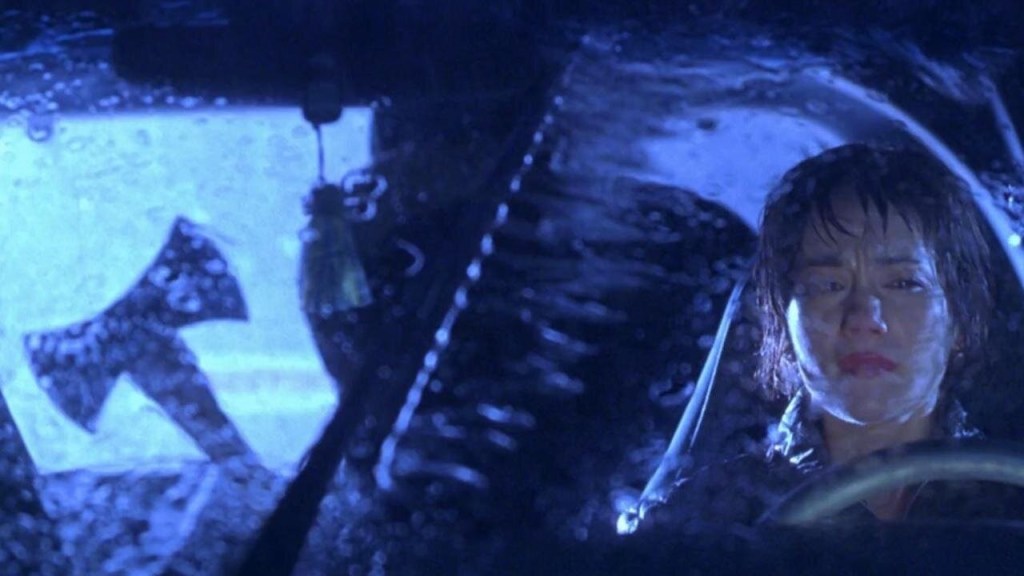
We begin by with the introduction of a young woman, Michelle Mancini (Natasha Gregson Wagner), who is driving alone along a dark, isolated road far from the city when she realizes she has to get gas. What begins as a fun, energetic scene of a woman enjoying music while taking a nighttime drive turns into a harrowing situation. An older, creepy gas station attendant convinces her that she must leave her car to pay, only for her to hurry back when he can’t stutter his way through his explanation. By then, it’s too late. A figure is in the back seat, and with a single swing of their axe, Michelle becomes the opening victim to a long slew of re-enactment murders.
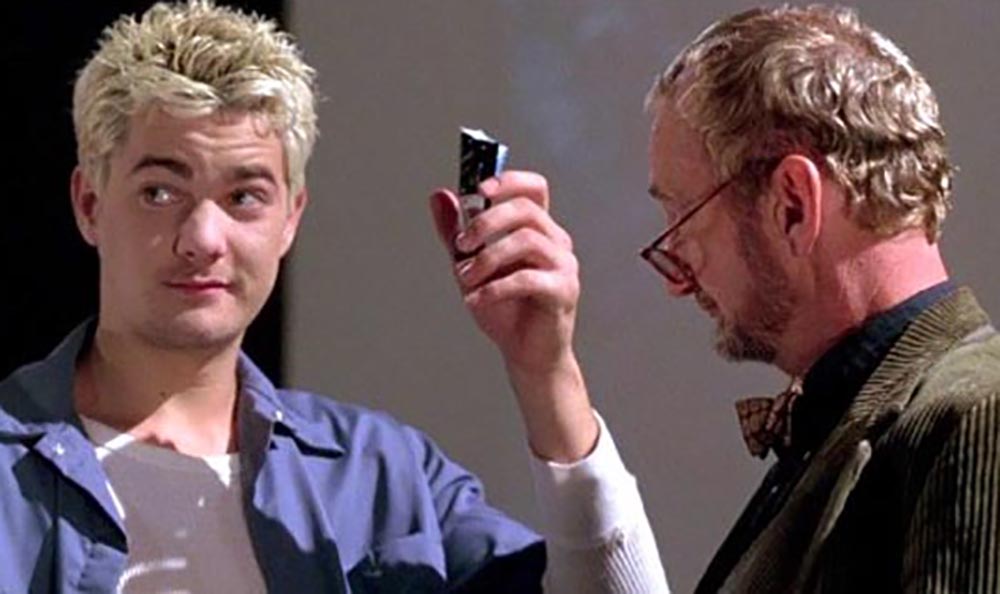
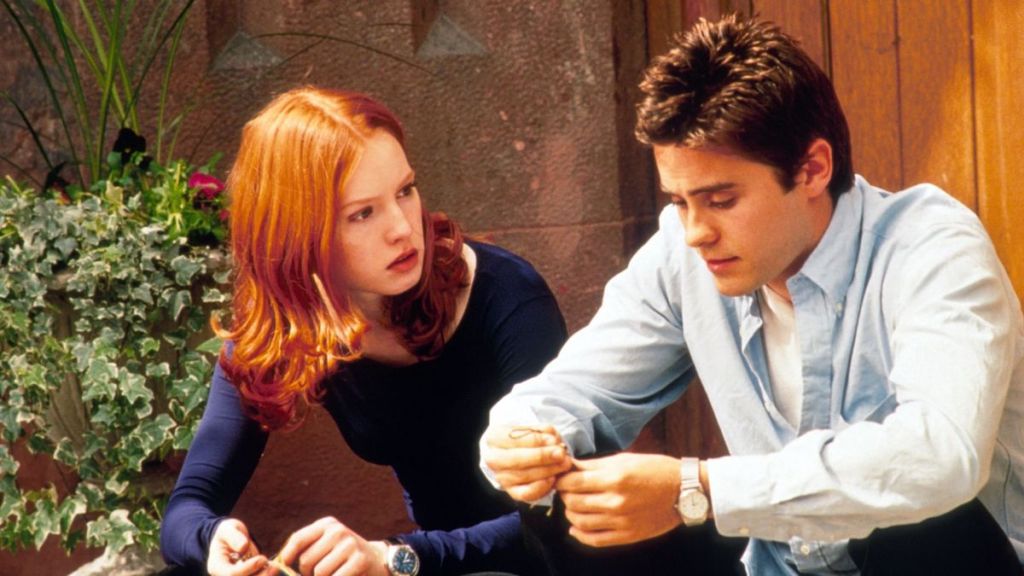
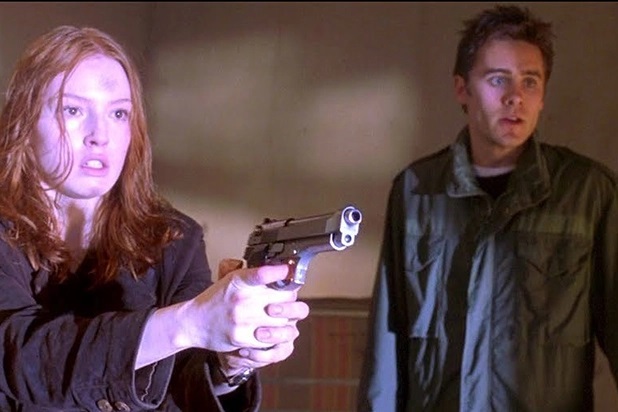
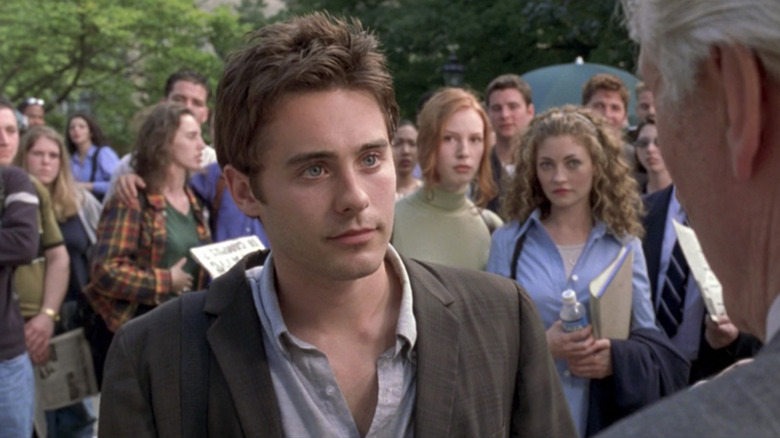
Urban Legend stars Alicia Witt as Natalie Simon, a student with a close group of friends talking about Pendleton University’s well-known urban legend surrounding a supposed massacre in the now-abandoned Stanley Hall Dormitory. This is something that Paul Gardener (Jared Leto, of My So Called Life fame) is a journalism student who finds the case. However, Parker Riley (Michael Rosenbaum, a young fresh face whose career would take off with the likes of Smallville a few years later) finds it to be an exciting possibility. Other members of their immediate group are Brenda Bates (Rebecca Gayheart, who had played a supporting role in Scream 2 the year before and had a recurring role on Beverly Hills, 90210), who is one of Natalie’s closest friends, Sasha Thomas (Tara Reid, soon to make it big with American Pie), Parker’s girlfriend and another of Natalie’s close friends, and Damon Brooks (also in a memorable scene from Scream 2, but a major player in Dawson’s Creek and The Mighty Ducks film series), who has a keen romantic interest in Natalie.
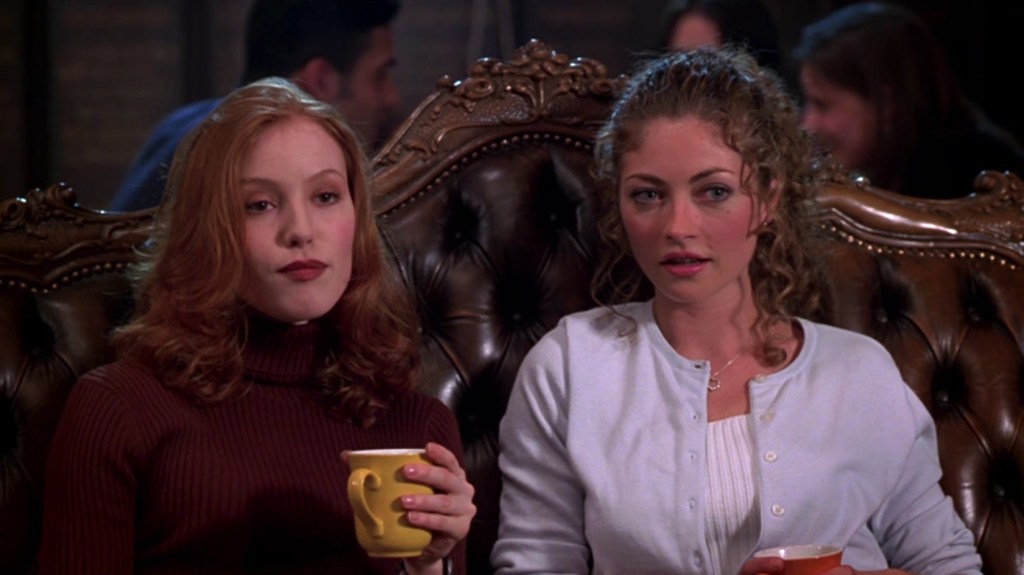
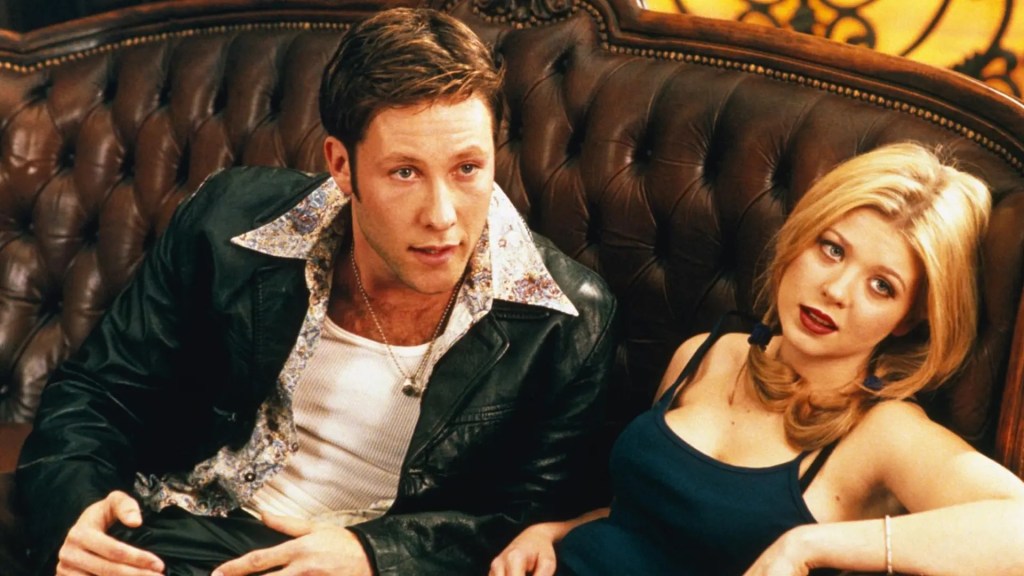
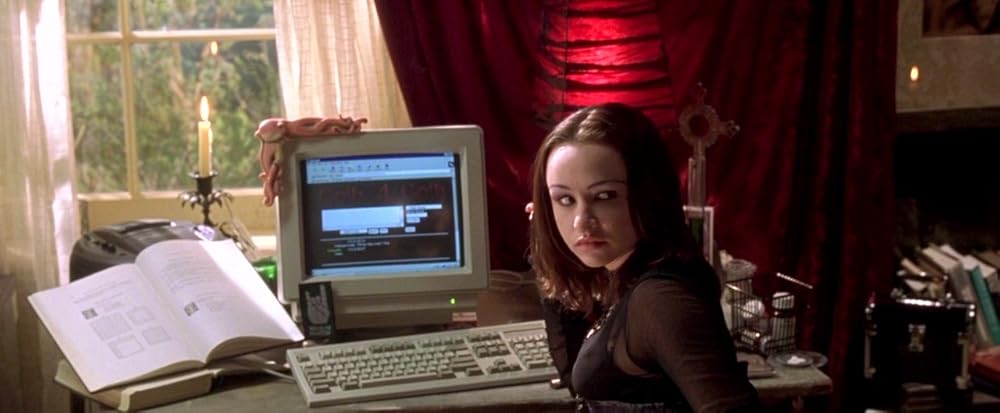
With news soon spreading about the death of Michelle, Natalie is stunned and derailed by the shocking murder. However, she initially hides that she knows Michelle well. As is the norm for such news, it spreads like wildfire throughout the campus, and her friends are talking about it like everybody else. With her death bringing the film’s story forward, we are introduced to other characters played by more well-known actors – especially in the horror genre. Tosh Guaneri (Danielle Harris, renowned for her roles in Halloween’s 4 and 5, as well as Don’t Tell Mom the Babysitter’s Dead) is Natalie’s roommate, who often has men over to the annoyance of Natalie due to the frequency and Tosh’s stern boundaries about privacy.
Professor Wexler (Robert Englund, Freddy Krueger himself) teaches a course on urban legends, allowing the thematic elements to tie closely to the plot itself. His role is memorable, perhaps because of his iconic actor.

He offers sage advice, both on the past and the present – much like a harbinger. His ties to the past also provide generational context for the modern-day murders.
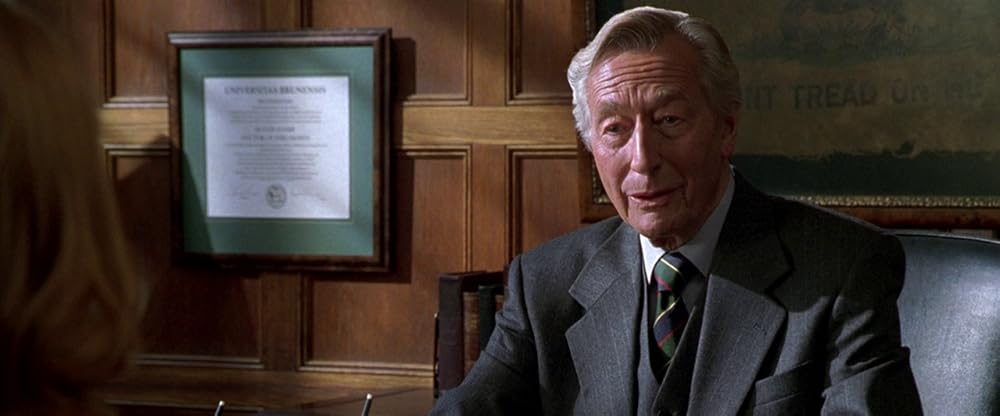
Dean Adams (John Neville), with a long, storied career at the University, is an exciting addition, as is Reese Wilson (played by Loretta Devine), a campus security officer. As the adults in the room, they should have been the fiercest protectors of the students at Pendleton, but as is usually the case, they obfuscate and ignore the students’ plight, leading to more and more murders as the film unfolds.
Reese plays a massive supporting role in the latter half of the film once she begins to take things into her own hands and investigate the series of attacks on campus.

While her initial apathy is understandable, her later proactivity is incredibly beneficial. She makes a valiant effort in the latter half of the film, but her attempts at mitigating the threat are hampered by those around her, and her lack of resources.
Urban Legend’s primary schtick is what it used to separate itself from the pack. Thematic murders, with an intense, memorable iconography, sought to place it in the same tier as Scream. While its opening murder was shocking, it’s clear that the opening of Scream is one for the history books few have matched. Still, its adherence to this plot gave it the grounding that some slasher films would eschew in favor of shock and gore. Urban Legend also wasn’t afraid to make its characters unlikeable or morally gray – with Damon and Parker running the gamut, making one wonder how they were ever in the group of friends. From the discussion about mixing pop rocks with soda to the scratching of feet on the car roof from a boyfriend’s body hanging above an unaware girlfriend, to the axe-murderer, and even the infamous “Aren’t you glad you didn’t turn on the lights” tale, the deaths increasingly evident pattern becomes known to the characters rather slowly. With half the group’s unwillingness to admit what is happening until their paths cross with the killer, it’s your typical slasher fare – and I love it dearly.
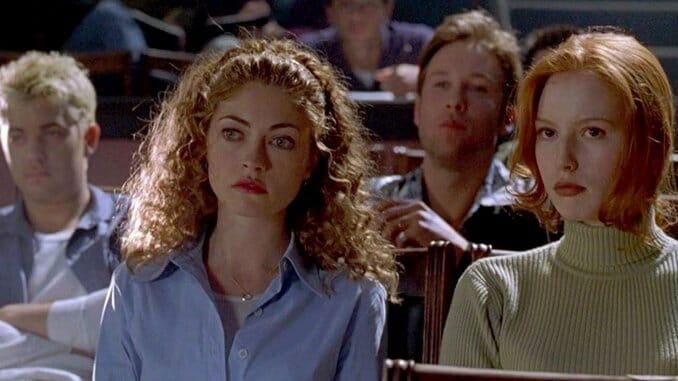
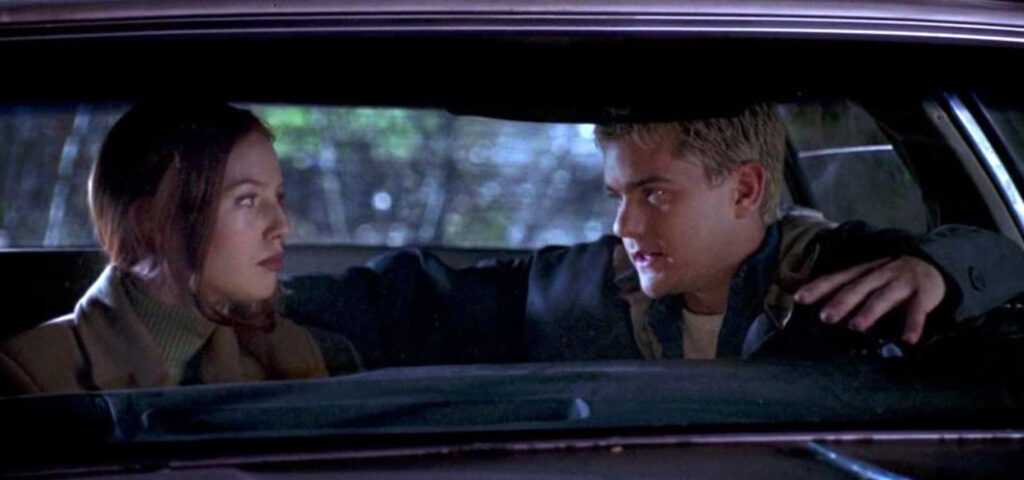
What separates it from Scream, but puts it in the same vein as I Know What You Did Last Summer, is the impact of the older characters. Had the Dean taken Natalie’s concerns more seriously, rather than painting her previous actions as making her an unreliable witness, at least four of the murders may have been prevented. Similarly, in I Know What You Did Last Summer, characters ignored Helen Shivers’ plea for aid and her warnings about the danger present in their area, leading to their deaths and, ultimately, her own death at the hands of the killer. By contrast, Scream placed its slasher plot in the presence of the real world. The police took Sidney’s concerns and fear seriously, rapidly responding to the threat and putting her under near-constant security once it became clear that she was the primary target. They took precautions to hold a suspect (Billy, in this case). Still, the constraints of the real-world legal system are what allowed the deaths to occur on the final day of the massacre at Stu’s house. While making a valiant effort, the real world it was set in led to the tragedy worsening. Here, Urban Legend relies on the same old tropes that power slasher films: teens unnervingly unbothered, or actively interested, in the murders, apathetic adults, and scenarios that feel implausible or outright unrealistic, leading to several deaths and the continued massacre.
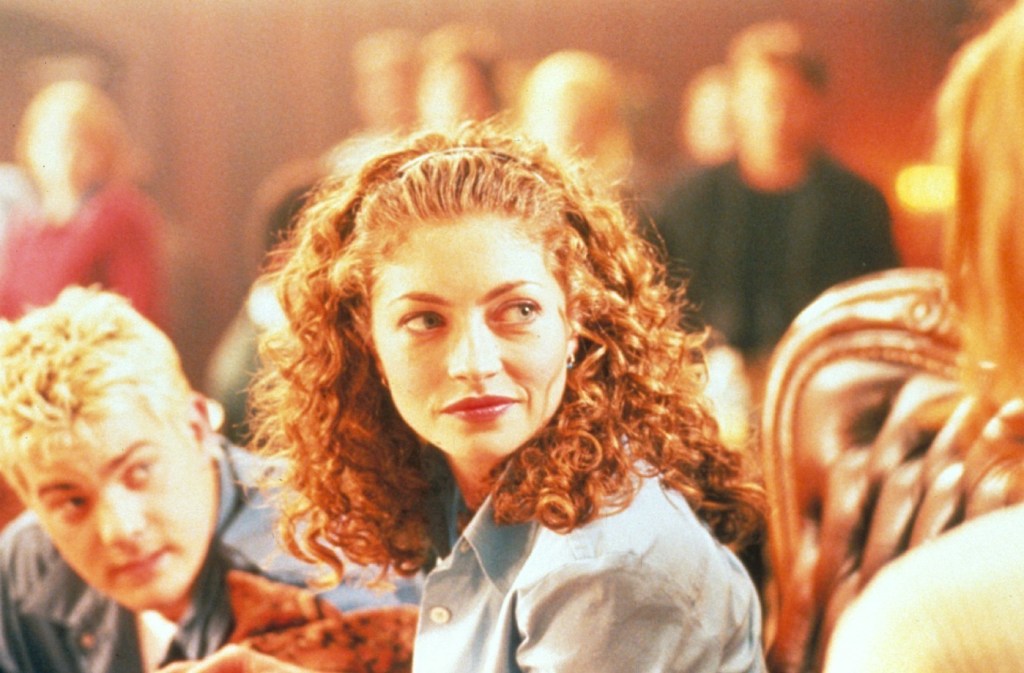
Two standout performances are Rebecca Gayheart’s as Brenda and Jared Leto’s as Paul. They play central roles in Natalie’s character arc as she seeks the truth about what is happening to her and her friends. Their advice sometimes runs contradictory, setting the stage for a climactic finale where Natalie is unsure who to trust. How they play off of Natalie and one another provides an interesting deconstruction of the Angel and Devil on one’s shoulder and the voice of reason that these legends often attempt to instill in their audiences.
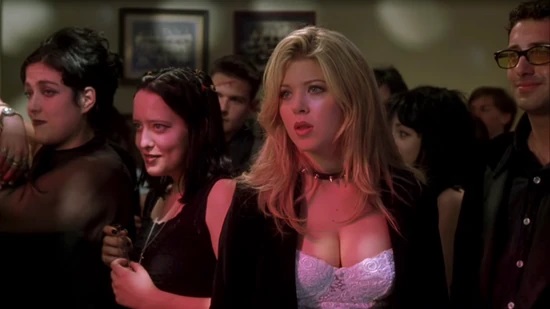
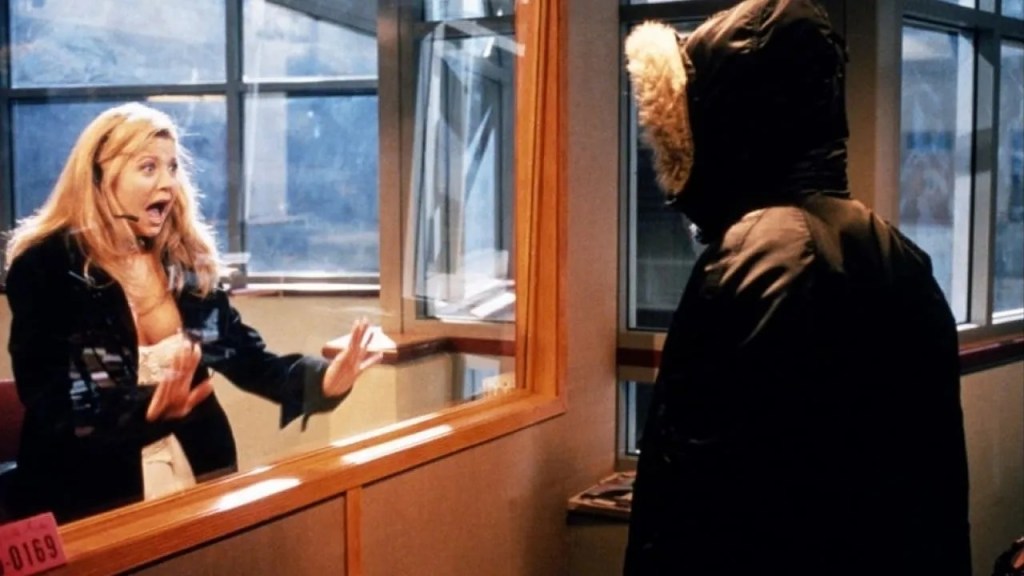
And, of course, as a slasher, there is always an iconic scene focused on a young woman as she attempts to evade a killer. Drew Barrymore and Rose McGowan in Scream, Sarah Michelle Gellar in Scream 2 and I Know What You Did Last Summer, Jamie Lee Curtis in Halloween, etc. Here, that honor belongs to Tara Reid and her character, Sasha, who is the character with the most prolonged encounter with the killer, not including the finale. With a visceral threat and nobody around to help her, her attack is being broadcast live on the radio, which she is still connected to, with listeners not believing the threat is real until it is far too late.
That does nothing to make Urban Legend a bad film. In fact, it adds to the movie’s charm. As a slasher film, it fits the mold well where it needs to and paves the way for interesting differences that later slasher films would pattern themselves off of. To say it has an enduring legacy would be an understatement.
 Lloydd Marshall Books