
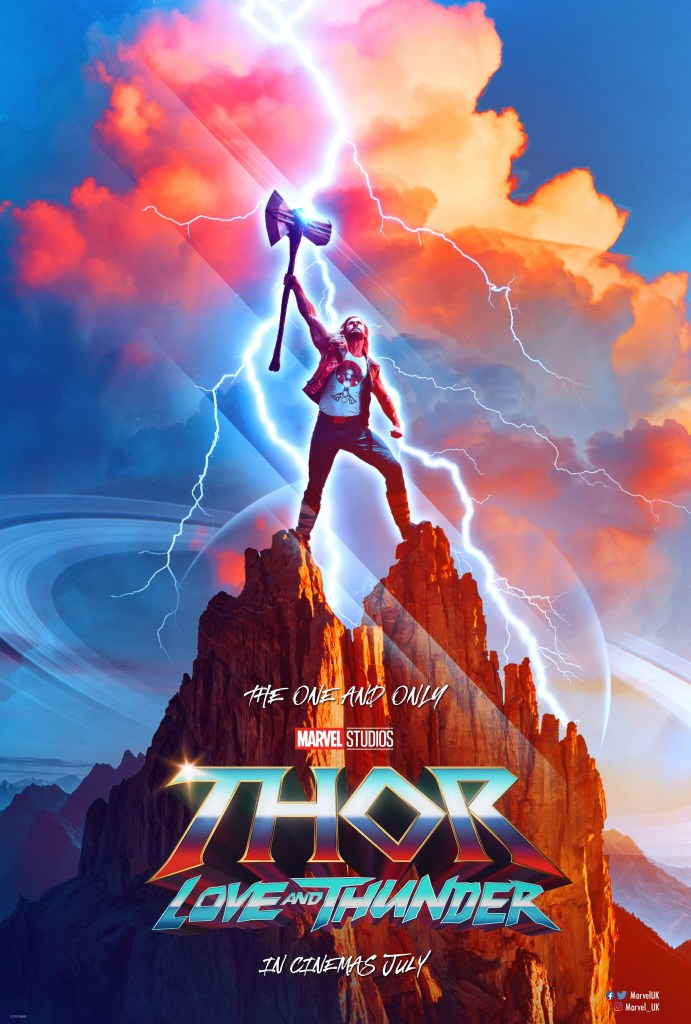
As the first series to score a fourth film (not counting the Avengers themselves), Thor: Love and Thunder takes the titular character in a new direction. For the first time since the second entry, Jane Foster (Natalie Portman) returns, this time to take on the mantle of the Mighty Thor.
At the same time, Thor (Chris Hemsworth) is going through a midlife crisis, with his story picking up where we left off, tagging along with the Guardians of the Galaxy. However, he quickly finds himself plotting to aid his longtime friend and ally, Sif (Jaimie Alexander), when she launches a distress call.
Phase Four of the MCU was focused on rebuilding the world after it was shattered by Thanos’ snap – and Thor: Love and Thunder was devoted to bridging the gap between the old and the new. Unlike Black Widow, which was filling in the gaps of a previously unaired adventure, or Black Panther: Wakanda Forever, which needed to pivot into a brand new direction after the death of its lead, heart, and soul, Thor: Love and Thunder sought to be a somewhat lighter fare. Yes, it undeniably dealt with darker themes and topics – its main villain was Gorr the God Butcher (Christian Bale). Yet, Taika Waititi has been known for his ability to bring out the lighter, funnier side of Thor and his ensemble. Granted, half of his ensemble is dead, also by Waititi’s hand.
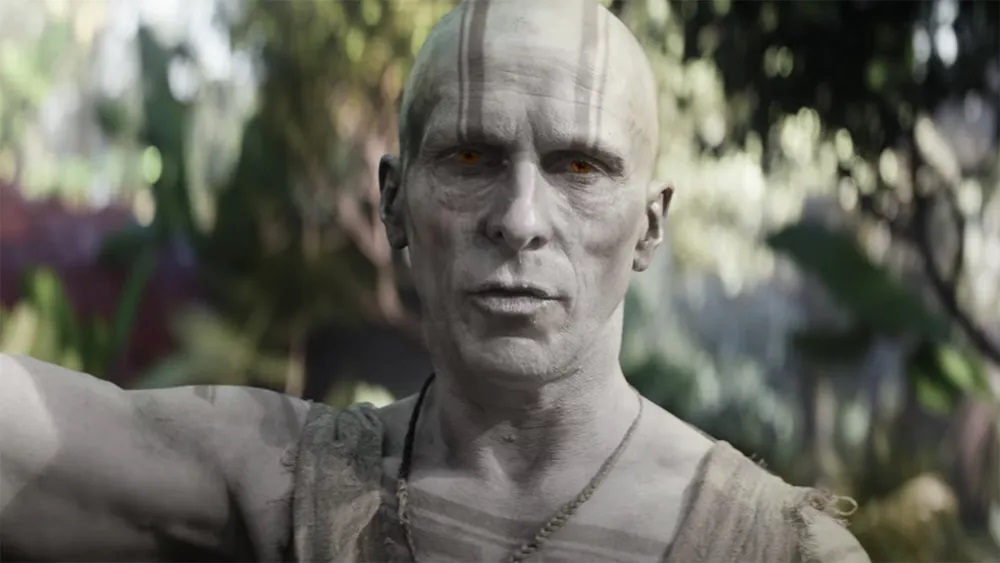
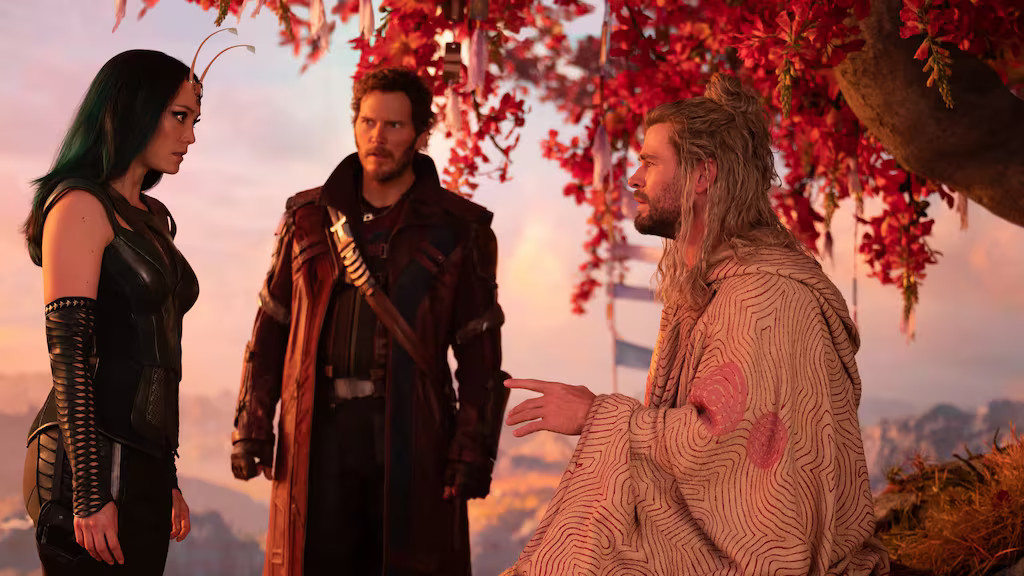
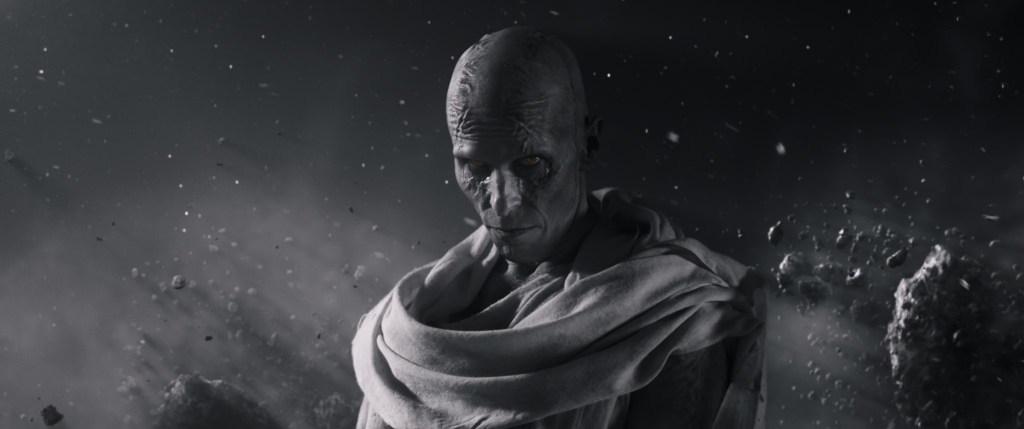
The film opens with Gorr, having lost his people and his daughter Love (India Hemsworth), and his faith in his people’s god, Rapu (Jonathan Brugh), is all that he has left to cling to as he crawls across the blazing desert in an attempt to survive. When Gorr comes across his god in physical form, he begs the deity to undo the pain and suffering he has gone through, only to be met with cruel dismissal. Having just defeated a powerful being who wielded the Necrosword, Rapu soon finds himself at Gorr’s mercy – but his words fall on equally deaf ears. Gorr vows to kill all gods and sets off a murderous rampage that would barely register with a being like Thanos.
This film combines several major threads to build its primary story, with Thor struggling to figure out his new path, Valkyrie focusing on her role as the King of Asgard, and Jane trying to save her life from terminal cancer. Jane’s decision brings together the MCU’s efforts to explore how magic and science interact, playing off of Thor’s explanation to Jane, Darcy (Kat Dennings, and Dr. Erik Selvig (Stellan Skarsgård) from his first film. Her hope that Mjolnir can stave off her fatal illness is understandable. Magic and divinity have performed countless miracles worldwide. Still, she soon realizes that her mortal body cannot handle the divine energy the hammer sends coursing through her. Yes, Mjolnir revitalizes her, but it’s also cannibalizing her remaining life energy at the same time.
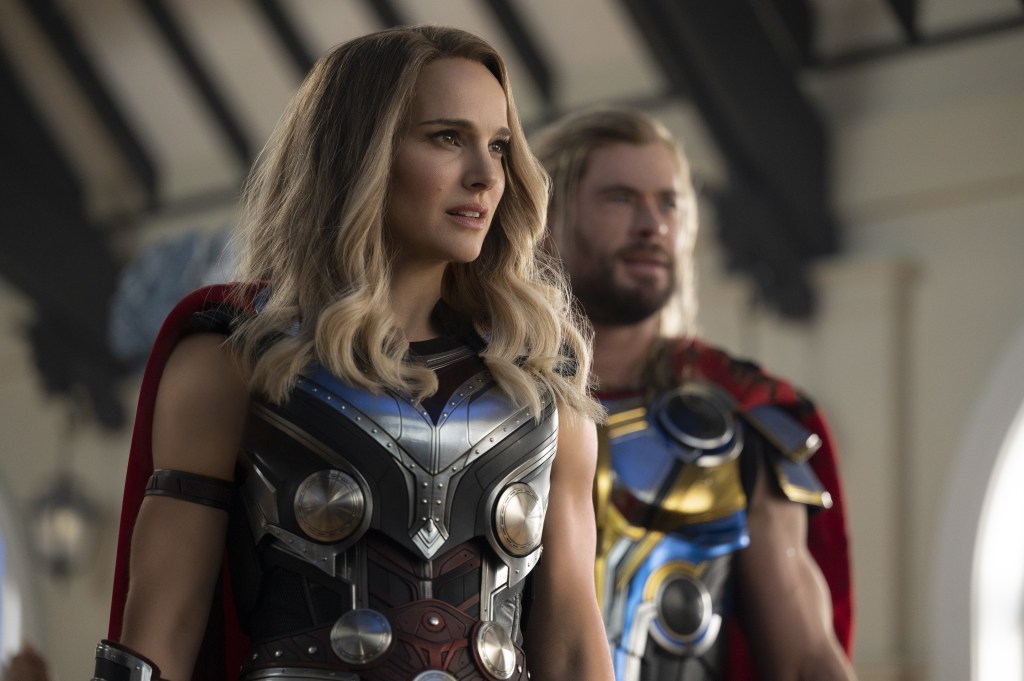

One thread that the film was brilliant to pick back up was New Asgard, under the stewardship of King Valkyrie (Tessa Thompson). Her major storyline, revealed in earlier interviews to center on a search for a Queen, was scrapped at some point (to my chagrin). Still, Valkyrie plays a sizeable supporting role regardless. New Asgard takes center stage for the second act when Sif reveals that Gorr is hunting for all the Gods – and Thor’s earthbound home is now on the chopping block. Korg (played by Taika Waititi) returns, joining Thor, Valkyrie, and a newly empowered Jane Foster to fight Gorr, protect New Asgard, and warn other pantheons of Gods of what’s to come. Valkyrie is all too eager to join the crusade, having found herself wholly and utterly bored with merely overseeing a kingdom during peacetime.
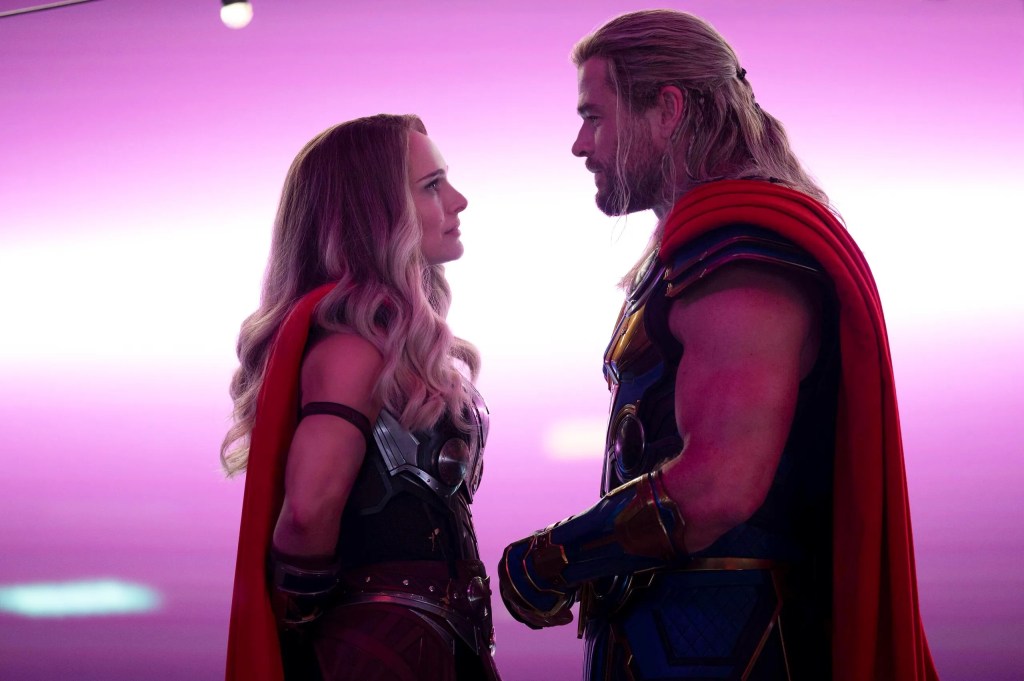
Because Natalie Portman chose not to return for Thor: Ragnarök or the other opportunity she might have had in Avengers: Age of Ultron, this is the first time we have had Jane Foster back on screen.
Admittedly, Portman provided ADR for unused footage from her time on Thor: The Dark World, utilized during Avengers: Endgame; this is her first proper return. This allows the story to actually address the collapse of Jane and Thor’s relationship, which seemed on solid footing at the end of The Dark World, only for Avengers: Age of Ultron to lay the groundwork for trouble in paradise (for them as well as Tony Stark and Pepper Potts). With this, the biggest flaw of a live-action, sprawling, interconnected film series is laid bare. The availability of actors, or their willingness to return, can dramatically impact the material that makes it into a film. We’ll never truly know how the third Thor entry might have turned out if they had tackled a story featuring Jane, Darcy, and Erik – though the latter two had other opportunities to continue their respective stories, Jane was not so lucky until now.
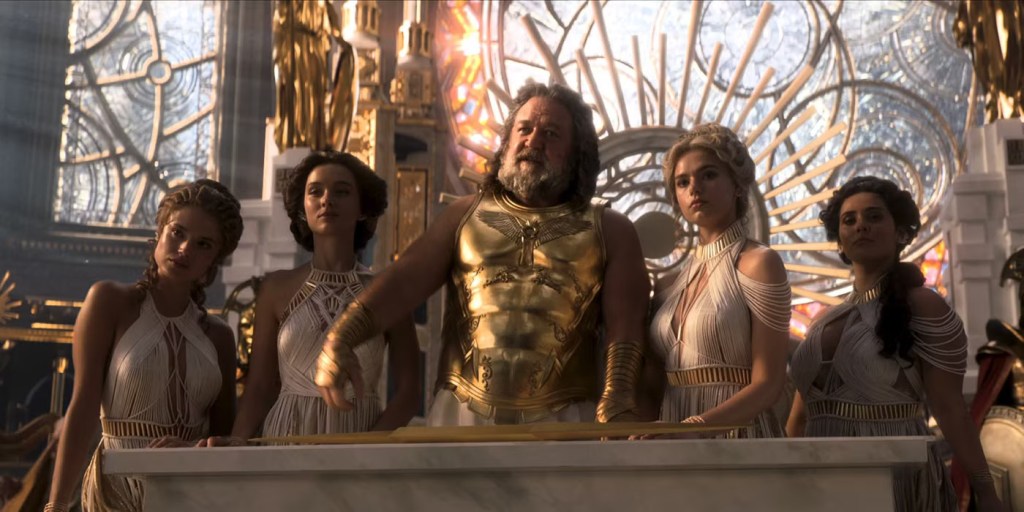

Like most MCU films, Love and Thunder devoted some of its time to introducing characters who will become important in later entries. Two such characters were introduced, Zeus (Russell Crowe) and, during a post-credit scene, Hercules (Brett Goldstein). During the second act, Thor, Valkyrie, Korg, and Jane head to Omnipotence City to warn the Greek pantheon, where they encounter Zeus and a plethora of other deities who have decided to hide out from Gorr rather than confront the threat head-on. Zeus and the other gods are less than thrilled. They feel they have no reason to involve themselves in the conflict because they do not believe that Gorr can reach Eternity to be granted his one wish. The callous disregard from these gods is no different from Rapu, despite the ever-present threat that Gorr clearly represents. Without their aid, Thor and his allies head to the Shadow Realm to combat Gorr themselves and rescue a group of New Asgardian children the God Butcher saw fit to kidnap.

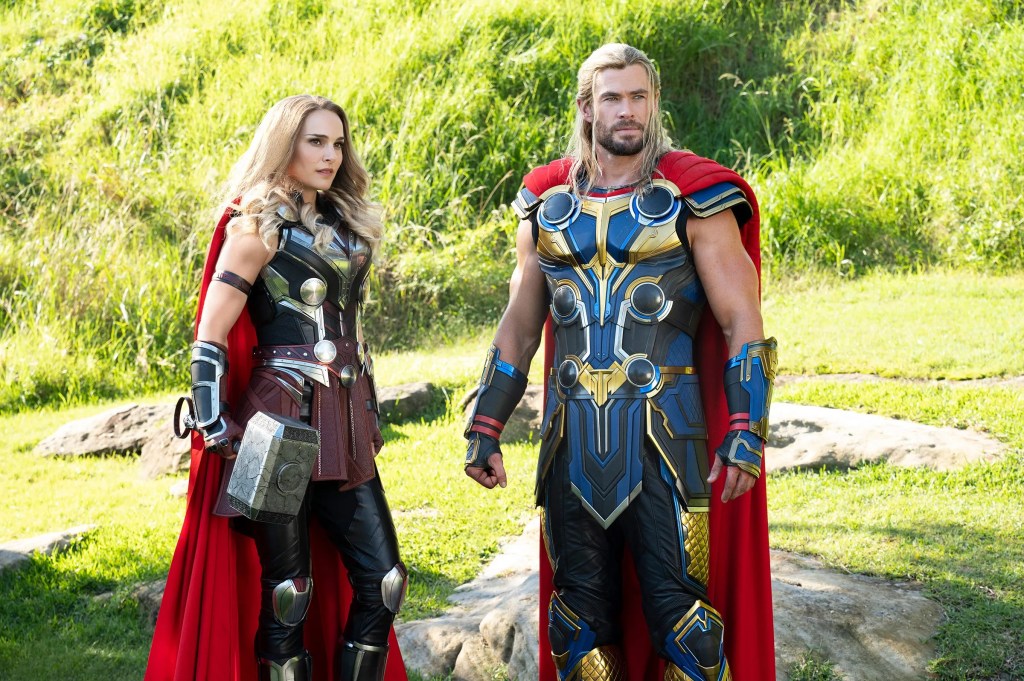
Thor: Love and Thunder is an exciting story as its own entry. Jane’s arc is one of intense despair despite her perseverance. Thor’s personal issues surrounding his place in the world are entirely identifiable. Valkyrie’s lack of interest in the mundane aspects of her position is something that most people go through at least once. All in all, each of the three main characters on the hero’s side deals with personal conflicts that make them relatable to the audience. Their respective divinity is immaterial to these problems because they cannot be solved with fantastic powers. This is ultimately reinforced by Jane’s plan failing – Mjolnir, for all its power, cannot heal her terminal illness. With ultimate irony, Eternity could.
This dives straight into the battle between selfish desire and selfless love. Gorr and Thor, both before Eternity, have the opportunity to have their true wish granted. Plagued with darkness, hatred, and rage, Zeus was correct about Gorr’s wish – he wanted to destroy all Gods. Thor can defeat Gorr and take the wish for himself, granting Jane life where his hammer could not. A battle between selfishness and selflessness is fought – with the hero setting aside whatever he may want without a moment’s worth of hesitation. Thor has realized what was missing and implores Gorr to do the same. It truly is a battle between light and dark.

The Guardians of the Galaxy, Peter Quill (Chris Pratt), Nebula (Karen Gillan), Drax the Destroyer (Dave Bautista), Mantis (Pom Klementieff), Kraglin Obfonteri (Sean Gunn), Groot (Vin Diesel), and Rocket (Bradley Cooper) all return briefly, tying up Thor’s decision to leave with them at the end of Endgame. While they don’t play a large role in the film, it does serve to tie together their storylines until they reappear in their own third entry, which came out the following year.
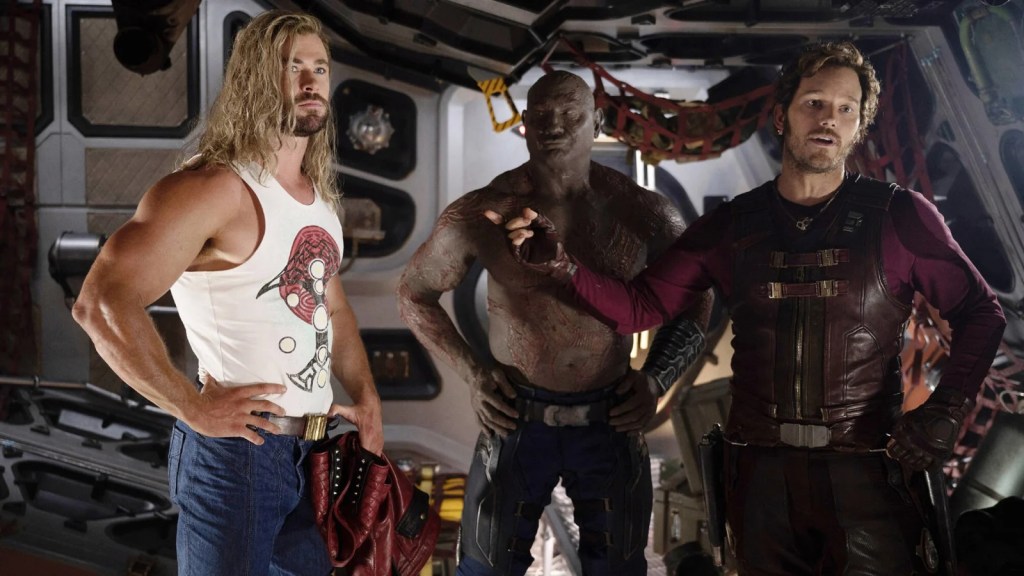
Their exasperation with Thor, even as they seek to provide friendship and camaraderie, is hilarious.
Some have argued that Thor: Love and Thunder was the inferior film between Taika Waititi’s offerings (the other being Thor: Ragnarök). However, it is essential to note that most of Phases Four and Five were treated with undue harshness for one reason or another. From the wholly original (Eternals and Shang-Chi and the Legend of the Ten Rings) to those that continued other stories (Black Widow, Ant-Man and the Wasp: Quantumania, and The Marvels) especially were torn to shreds in several circles. However, Thor: Love and Thunder was not trying to reinvent the wheel. It was a treatise on trauma, personal growth, forgiveness, and acceptance. It hits these points through its thematic elements, characters, and overarching plot with grace and finesse. We’ll see if Thor returns in a solo film or if the character will be confined to team-up appearances in the Avengers entries forthcoming. One thing is for certain, Thor and Valkyrie have a bright future in the MCU – and I cannot wait to see where they go next.


 Lloydd Marshall Books