
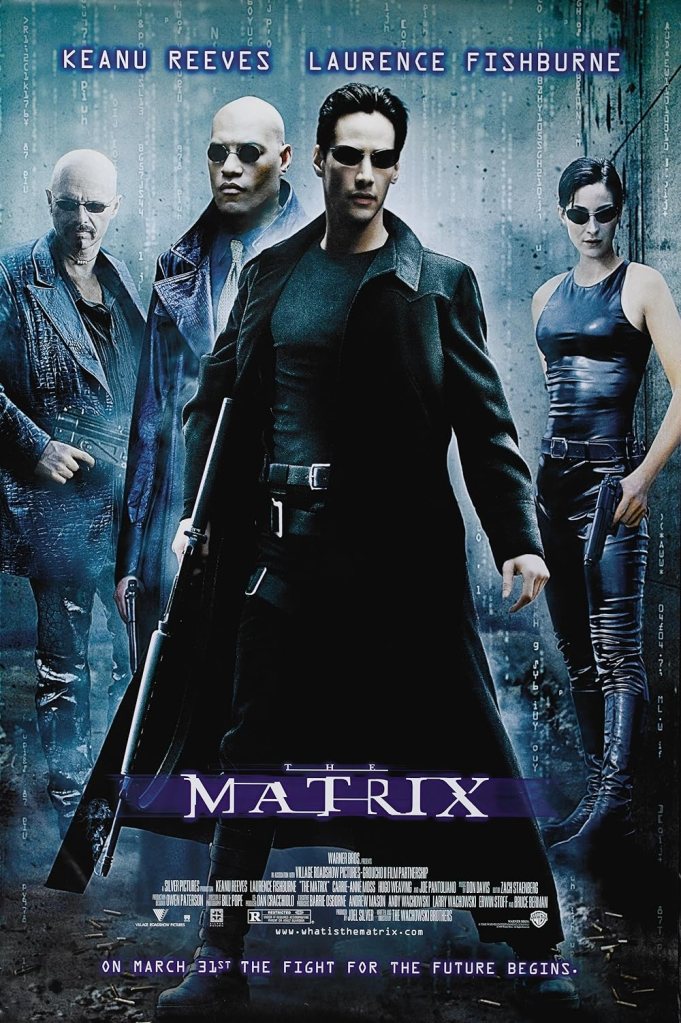
As a film, The Matrix makes its concept feel epic while confining itself in a manner that makes it accessible. The depth of its message can be understood in the shallowest of terms without sacrificing the complexities layered within it. Having succeeded in weaving a tapestry rife with religious parallels, filled with the concepts of “right versus wrong,” “truth versus lie,” and “perfection versus flaw,” The Matrix operates on a level that has led filmmakers scrambling to evoke what many view as a masterpiece. I am one of those “many.”
The 90s were hell. A world of drab, unrelenting monotony interspersed with a haze that obscured a seedy, ever-growing underbelly of what technology is and could be. We see this through the duality of Thomas Anderson (Keanu Reeves), who, while working an office job that at least ties into his skills, is clearly something he finds no enjoyment in. Let alone purpose. That’s where “Neo” comes in. A second life, as described by Agent Smith (Hugo Weaving) as being “guilty of every computer crime we have a law for.” This second life promises to bring Thomas into a world he has searched for years and finally answer a question that has been nagging at him: what is the Matrix? As Neo becomes his true self, these dual identities merge, creating a cohesive whole that can combat the system. The very virus that humans are described as in the climax of the film.

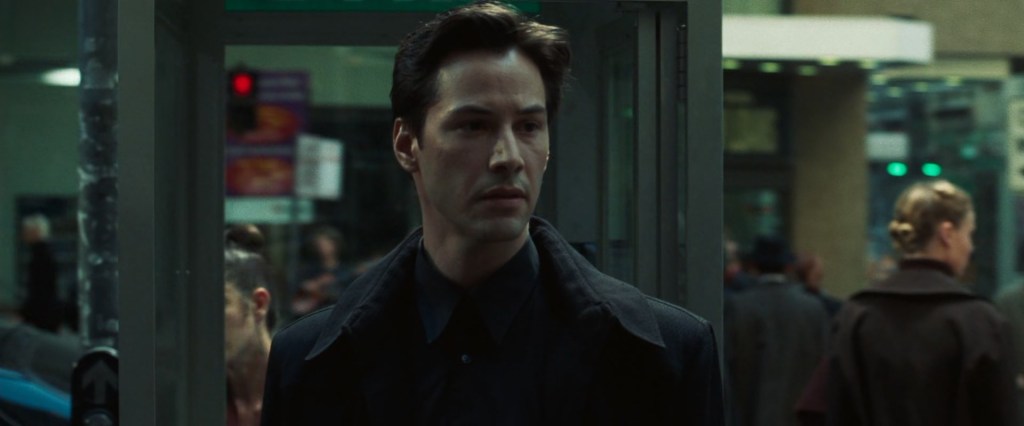
Film has always had a knack for analyzing the era we live in while striving to expand on what the world will be like based on our current trajectory. A.I. is a concept that has been with us for a long time, the scope of which we have only begun to truly touch as we reach the midpoint of the 2020s. Yet, the realm of artificial intelligence that the Wachowskis weave together is terrifying, as so many stories tackle the concept. Within The Matrix are easter eggs tied to computer technology and its world. A joke many people took years to notice is presented so casually it’s not surprising it was missed. After all, how many people think about cookies?
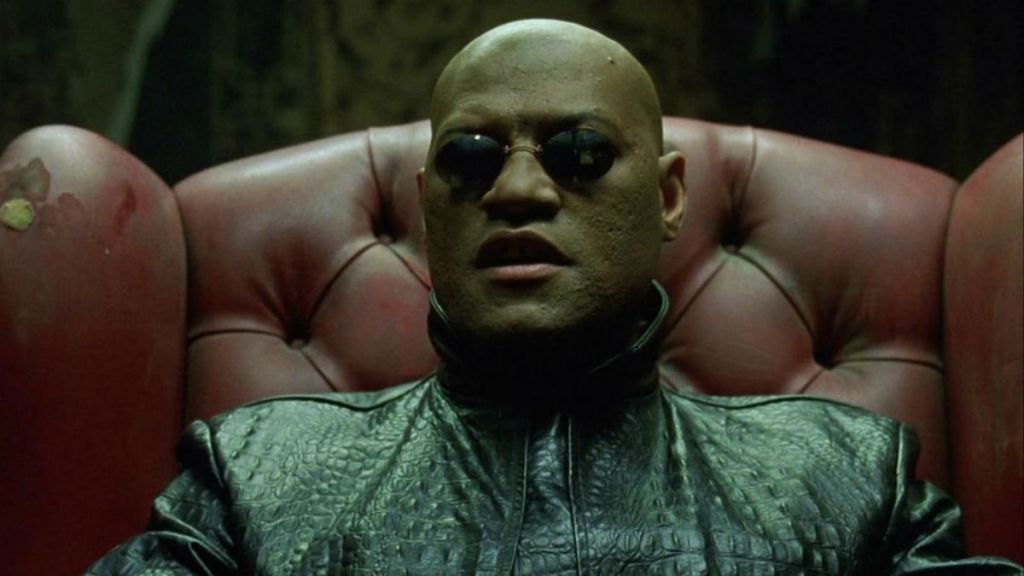
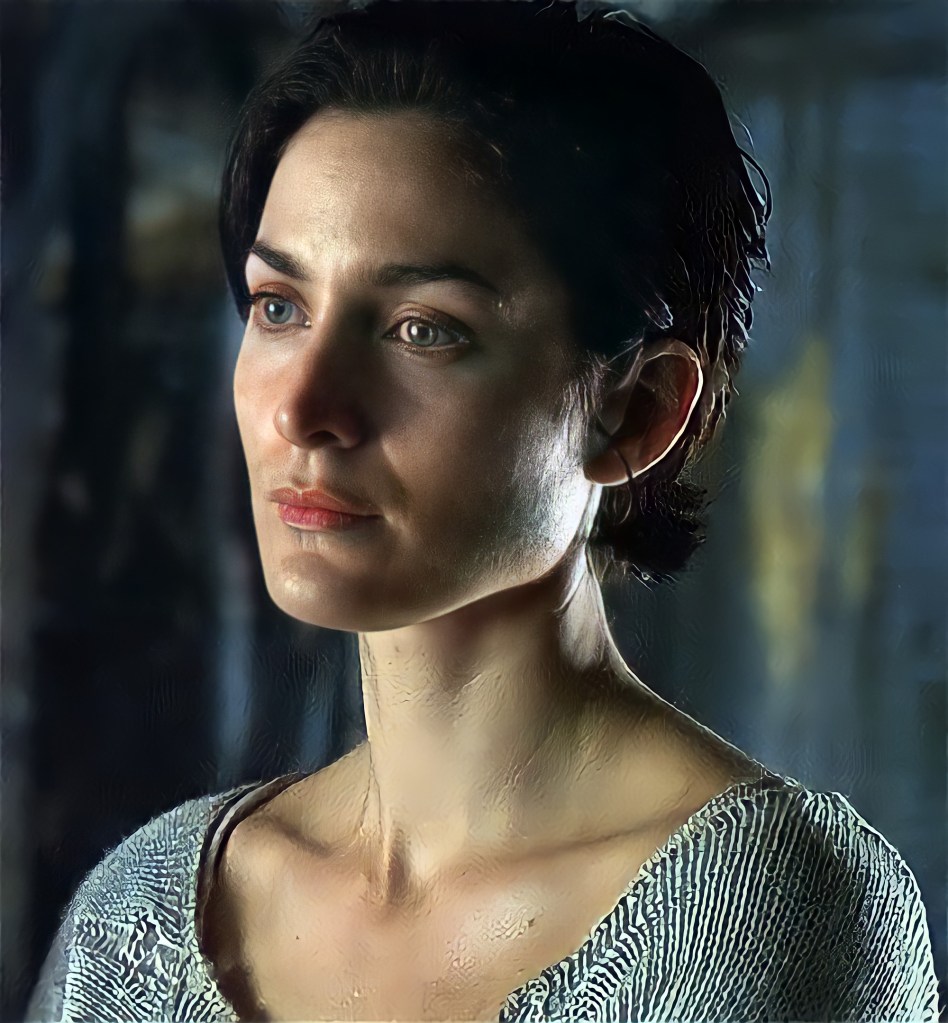
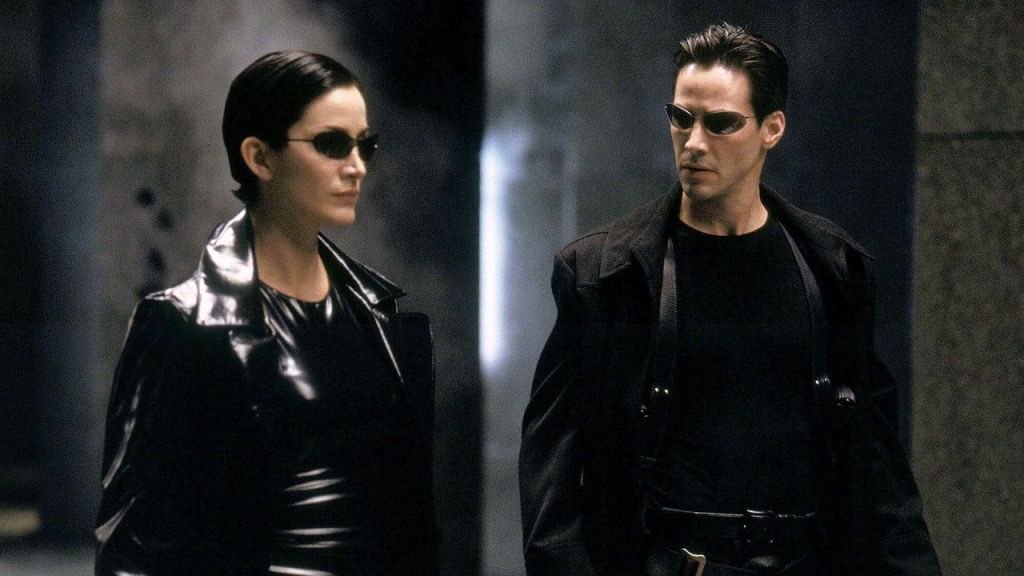
When Neo first meets Trinity (Carrie-Anne Moss), the cracks in the foundation of his life have already begun to form. It was pretty clever to send a beautiful, engaging, distant woman as the lure to draw Neo into the web of allies that Morpheus (Laurence Fishburne) has been amassing over his life – it parallels wonderfully with “the woman in red,” that acts as a distraction in a bland world, forewarning danger. As the film goes on, this first meeting takes on new meaning. The Oracle (Gloria Foster), who only appears in one extended scene, has impacted the entire main cast – even if we don’t get to hear the details of their one-on-ones with her (if they all even had one). Morpheus explains that she tells them what they need to hear, not necessarily what they want. Therein lies the power of her prophecies.
Fate versus free will is a duality that we as a species have questioned, and The Matrix elegantly weaves that in through the entire story. Would you believe somebody who you already don’t believe can see the future told you that you were “the one” destined to save everything?

Probably not. Neo, already resistant to everything that he has seen and been told, even after having been broken out of the system by the time he is introduced to the Oracle, was never going to believe the Oracle.
That’s why the first half of their conversation, and the tone she sets with how she first meets him, is incredible. The Wachowskis were deliberate in this scene, though this holds true with every scene and character. Morpheus is clearly a believer, ignoring all signs that Neo might not be “the one,” while Trinity and the rest of the Nebuchadnezzar crew are trying to figure out how he fits into their established mold.

The Oracle appears to have made her mind up. She is dismissive, shows no favoritism, and has him brought to her humble home, where we see children practicing skills that Neo doesn’t have. A child bends a spoon as a matter of course. While Neo can emulate it after a few moments of hard concentration, the ease of the child’s actions sits in your mind when he meets the Oracle. “What’s really going to bake your noodle later on is, would you still have broken it if I hadn’t said anything.” After this, and a bit more back and forth to separate her point from the meat of her message, she drops the bomb that Neo isn’t the one. She planted a seed that the rest of the film would take care to tend to and grow, watching it bloom in the finale. If she had simply told Neo that he was the one, he would have resisted it, but as she said – once he’d finished the cookie, he’d feel better. The pressure that Morpheus, and potentially the others, would put on him could roll right off. Because he isn’t the one. Right?
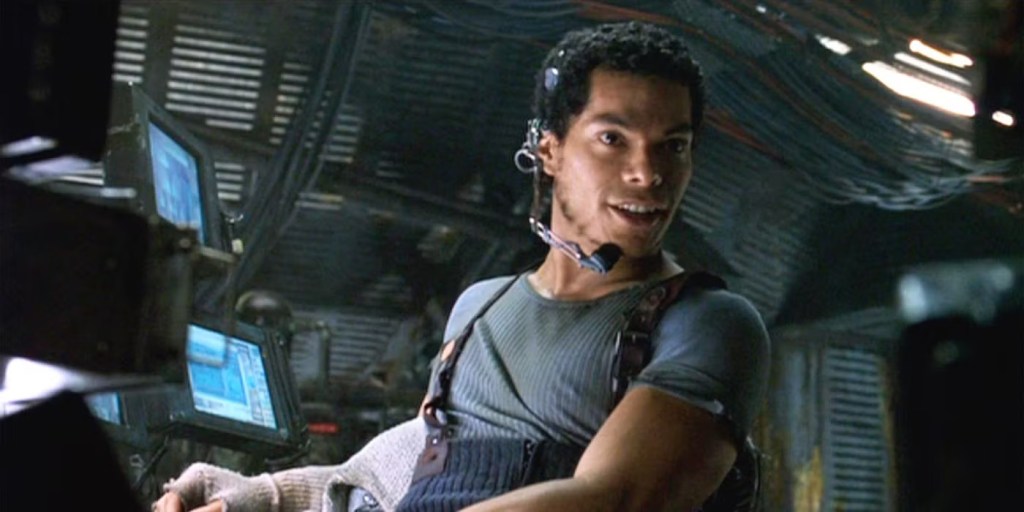

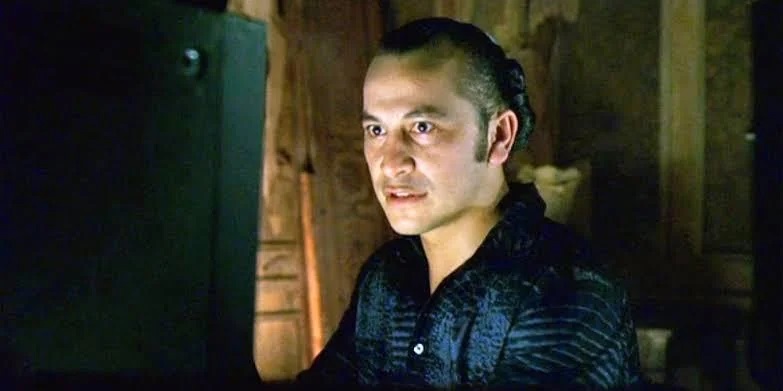
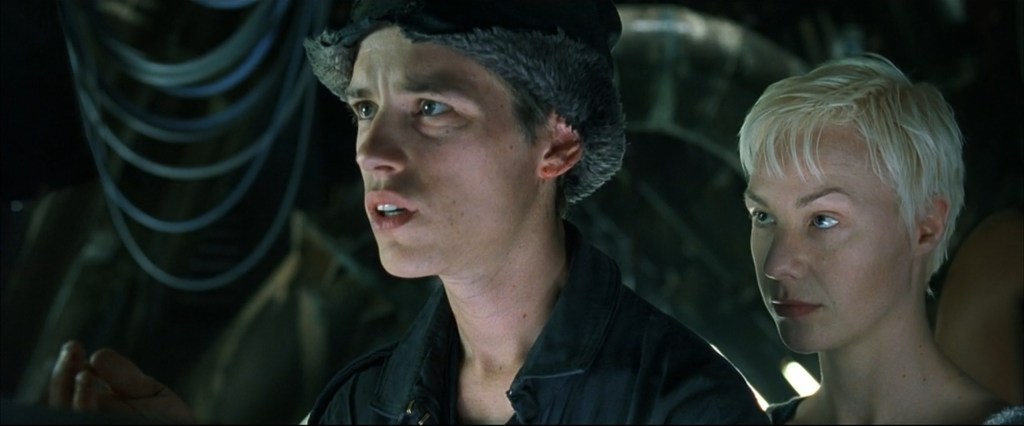
The Nebuchadnezzar crew fills out the supporting ensemble, with Morpheus and Trinity at the head of the crew. We have Tank (Marcus Chong) and Dozer (Anthony Ray Parker), a pair of brothers born outside of the Matrix – some of the only natural-born humans the world has produced, within Zion, a hidden city that acts as the last bastion of humanity. Next, we have Apoc (Julian Arahanga) and Switch (Belinda McClory), the most experienced freed humans alongside Trinity, who are dispatched on missions within the Matrix often enough to feel confident in their ability to succeed. Just as long as they don’t run into an Agent. Mouse (Matt Doran) is the youngest member, tying together with Morpheus’ comment that Neo is an anomaly.

There is a specific resistance to being freed from the Matrix after a certain age. Mouse’s commentary on the food they eat, compared to the silent resignation and general acceptance of the others, makes it clear that he is their newest member. Lastly is Cypher (Joe Pantoliano), the Judas. Like Mouse, he is resistant to the kind of life they have to lead in the freed world – but he takes this resistance to the darkest extremes and betrays the team for a free ticket back in.
They rely on one another as a group and have come to trust in their unity. When they act in concert towards a particular goal, it is nearly with a single-mindedness towards achieving it. That’s what makes the only mission we see the entire team tackle together so hard. By this point, they have formed a familial unit with each other – and the betrayal of one stings hard. It’s simply a blessing that the sting is fatal because if it had been allowed to fester…
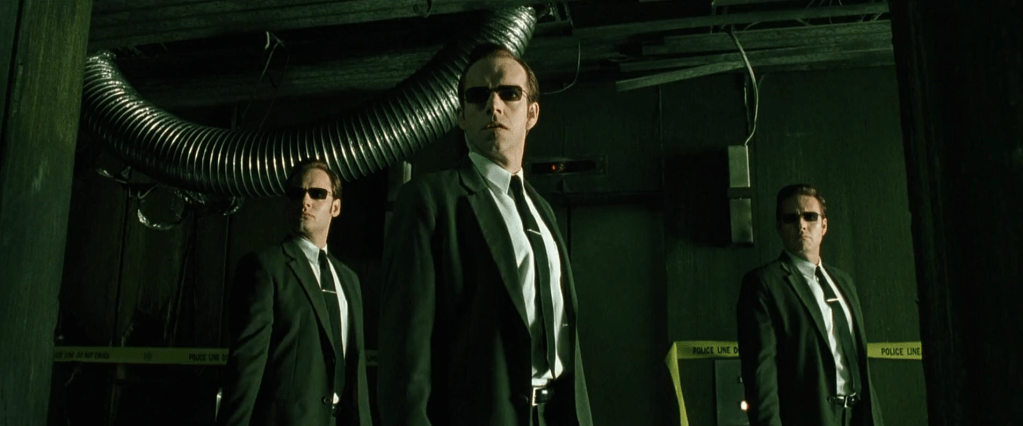
The Agents represent the biggest threat to freed humans as a group. They are a type of “program” within the Matrix that has been granted sentience. It allows them to use the code to its fullest but still within the laws of the system that governs the Matrix. Because they know they are in what basically amounts to a simulation, they can leap great distances between buildings, dodge bullets from a close distance, and override the code of other people within the Matrix. Agent Brown (Paul Goddard) and Agent Jones (Robert Taylor) are a trinity of calm, collected, emotionless hunters dedicated to finding the codes to access the mainframe codes for Zion. After which, they plan to destroy the last vestiges of humanity and enjoy the orderly system they have brought into existence.
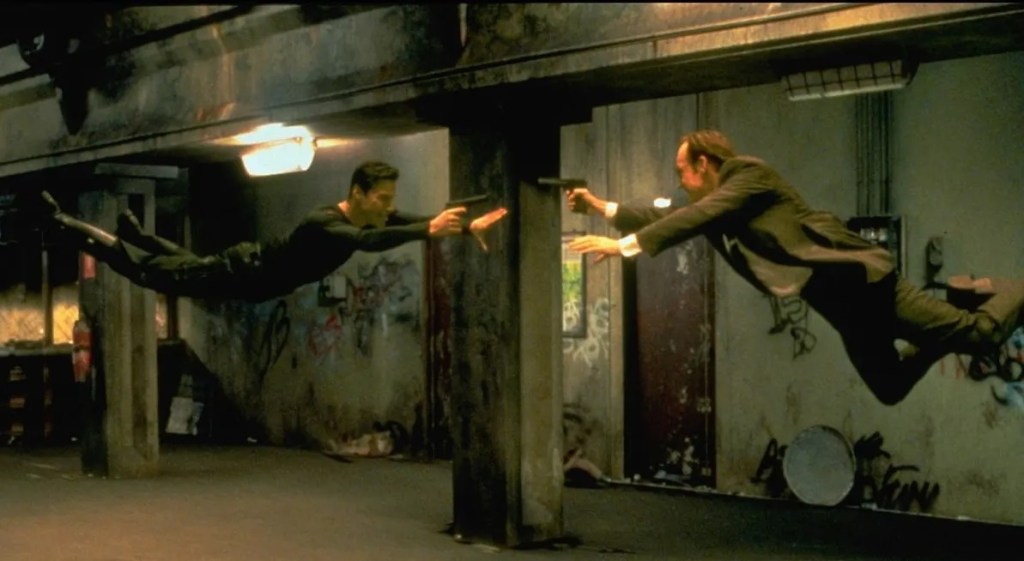
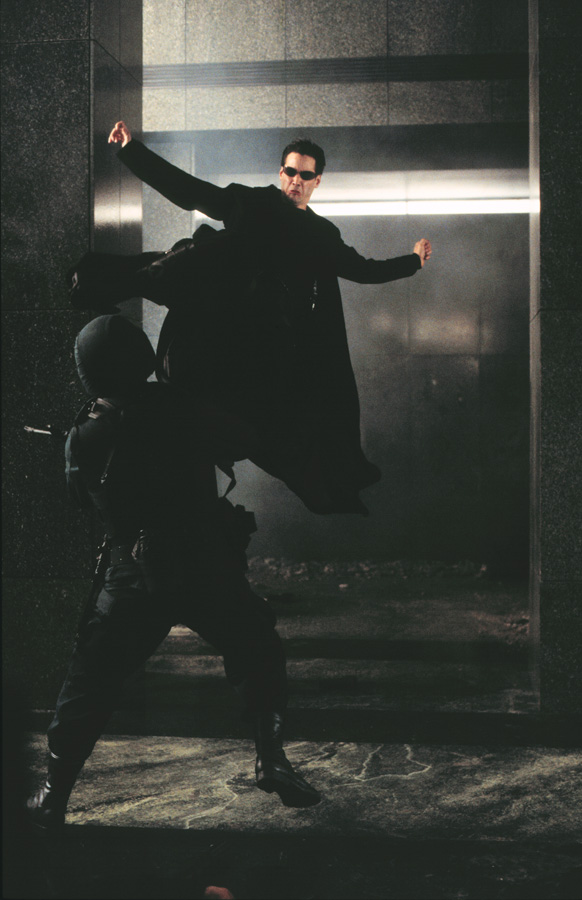
While it is a quintessential science-fiction film, it is hard to deny that action goes hand-in-hand with the genre. The Matrix takes complete advantage of its concept to justify the kind of outlandish maneuvers that action films use without logical explanation. Defying gravity for extended periods to deliver successive attacks? Why simply use the code to your advantage. Yet it blends this manipulation of reality to its benefit, allowing exhilarating set pieces and tense fight scenes to flow throughout the film.
On its own, The Matrix provides a comfortable, bittersweet resolution to its main story. What might come next is left open to interpretation by the time the credits roll. Its themes have been delved into, its characters left changed by their experiences, and the possibility of hope still lingers in the air as Neo fully embraces his role as the one.
 Lloydd Marshall Books