
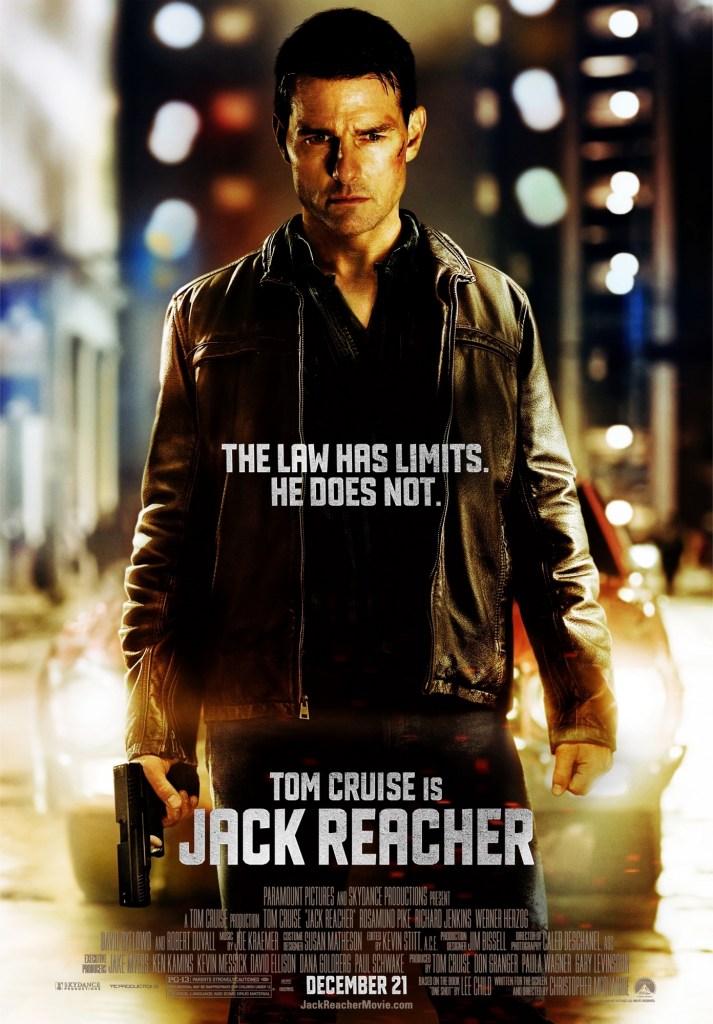
At the time of its release, Jack Reacher was almost certainly the only adaptation of Lee Child’s work that would ever be made. Film was the go-to method for adapting books in the 2000s and 2010s, with a smattering of efforts being made in television – almost invariably premium channel offerings such as HBO’s Game of Thrones.
Making a movie is an arduous, involved process with countless people involved – and even when you have the written work to fall back on as a proven success, the people investing in that film want assurances. More assurances than previous existing success in a project can offer by itself. Enter Tom Cruise as Jack Reacher.
Jack Reacher is the titular character, a self-described hobo – not a vagrant. He chooses to live a transient lifestyle with minimal belongings but is not necessarily destitute or begging for money; he emphasizes the distinction between the two terms. It is a defining aspect of his character and what makes the long-running novel series work so well. There’s a built-in justification for introducing a new slate of characters in every adventure. Each story can thus become a self-contained adventure. If not for the general length of a novel, this path is usually the most analogous to a television series. Episodic series can deliver a self-contained story, a new supporting cast of guest characters, and a bit of development on major plot points every week. Therein lies the issue for a book series – even the longest ones could barely field an entire season of twenty-two episodes. So a compromise is made – one book per season, which the most recent adaptation, Reacher, is doing with Alan Ritchson as the title character.

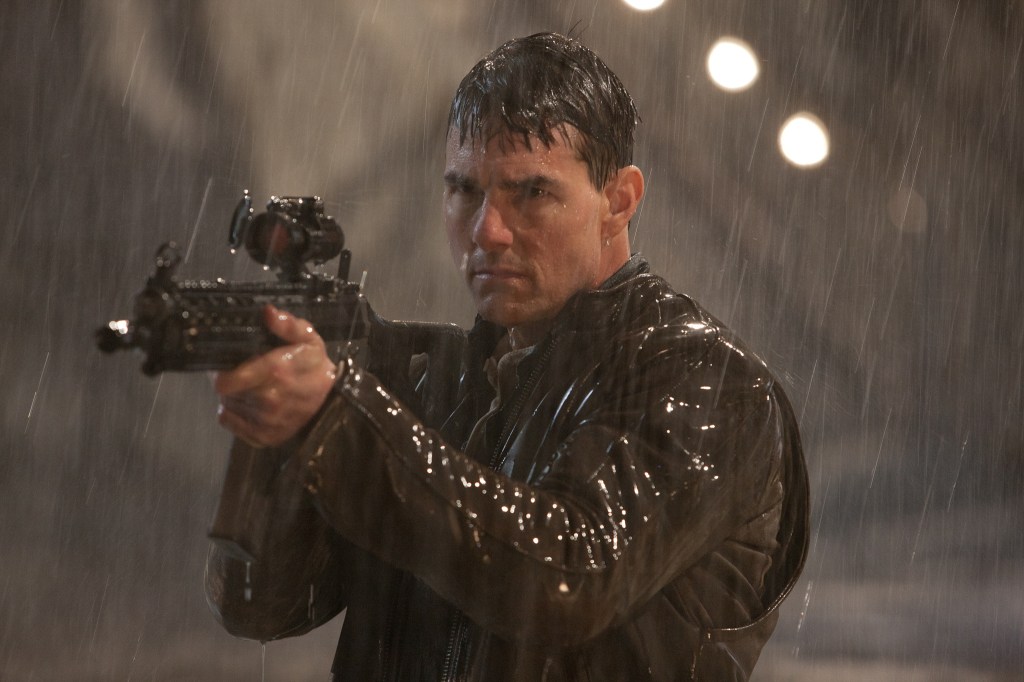
Alas, Jack Reacher is an iconic character in literary circles, and the films and television series have brought the character to mainstream success. Already a massive success, it was only natural that it would be adapted eventually. Tom Cruise, as one of the most bankable stars at the turn of the century, however, was an admittedly odd choice for the character. Beyond being a hobo, the character is a notorious mammoth of a man, standing at well over six feet and packed with muscle, with maybe a hint of Autism, without ever actually clinging to the diagnosis. Tom Cruise is nowhere near that tall, despite the tricks of the industry used to make him tower over his female co-stars. While he is a bona fide action star, his characters are generally more outwardly emotional than Reacher is known to be. Still, Tom Cruise brought the character to life in a believable fashion without fitting the bill perfectly – and without his name on the marquee, the chance of the film being made was next to zero. When faced with having a movie versus not, creative license is a necessity.
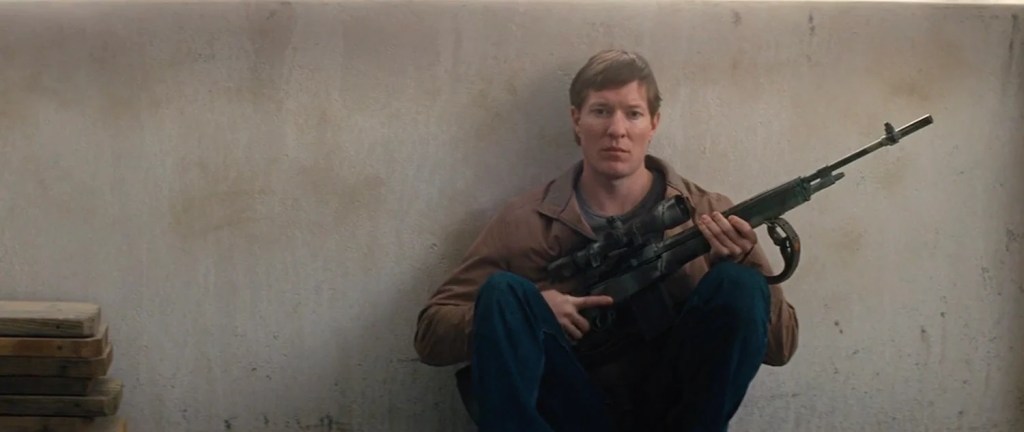
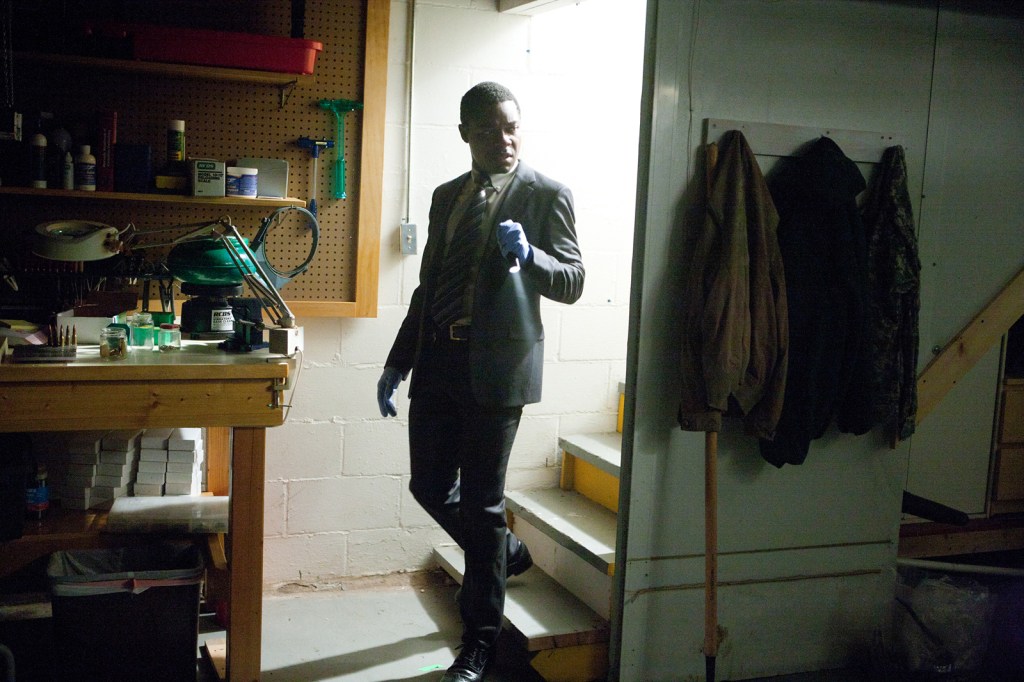
With seventeen full novels released by the time the movie came out, there was a wealth of material to pull from for Jack Reacher. Rather than adapting the first released novel, Killing Floor, which is also chronologically the fifth entry in the series (tenth when short stories and novellas are thrown in, for good measure), One Shot, the ninth book, twelfth chronologically, was chosen. A dynamic entry, it focuses on a conspiracy involving the murder of five people via sniper rifle and the swift arrest of a suspect by the name of James Barr (Joseph Sikora) by Pittsburgh police detective Calvin Emerson (David Oyelowo). Refusing to speak to anybody, the man writes down one name – Reacher’s. The sensationalism of the crime hits national news, drawing the ire of Jack Reacher, who, at one point, had Barr dead to rights for having committed mass homicide during his time in the Army – only to get away with it because the men he had killed had just gone on a days’ long rape spree shortly before Barr shot them. Karma may have netted Barr a reprieve, but Jack Reacher does not let things go, especially when his gut tells him that a person will do something.
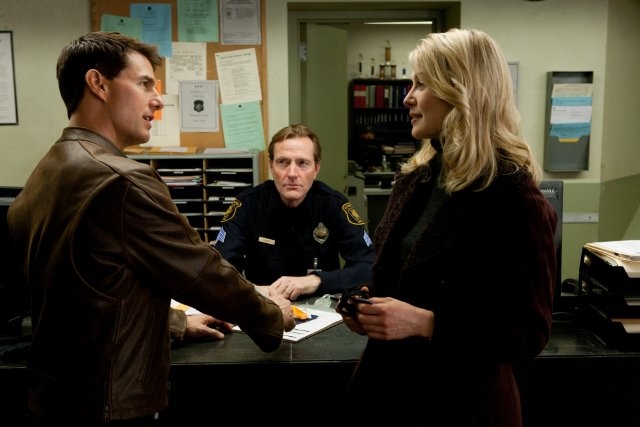

At the center of this is an ambitious District Attorney, Alexi Rodin (Richard Jenkins), and his daughter, Helen Rodin (Rosamund Pike), acting as Barr’s defense attorney. This is one of the most notable changes from the novel One Shot, in which Helen is the sister of James Barr, not the daughter of the man trying to put him away. Changes like this would usually baffle me, but it is clear why the film chose a different tact for a novel series prone to play in shades of grey. It is a bit more understandable in a simplified version of the story for Helen to have an intimate relationship with Jack Reacher – though the tension between them remains unresolved by the film’s end. But Helen Rodin serves three key roles from the book in one – Barr’s sister, a reporter, and an investigator, all of whom play central roles in the book but who were composited in one. Even with an over two-hour runtime, there simply isn’t enough wiggle room to juggle a large ensemble cast in a film like this. The cast it juggles as is was ambitious enough, and to sacrifice any aspect that made it in would be a shame.
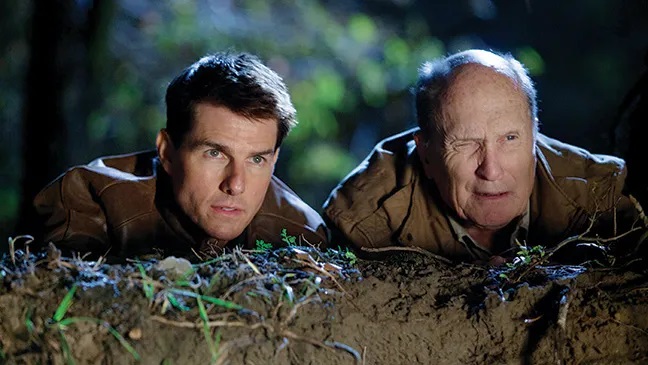
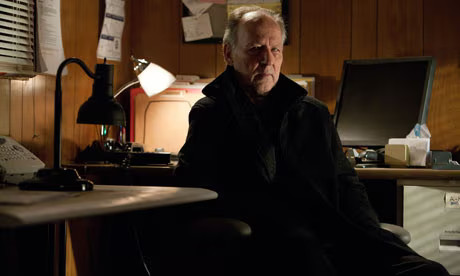
Any good Jack Reacher story involves the title character investigating some conspiracy, usually involving local corruption, murder, and somebody who needs to be protected –the love interest, a child, a family, or even himself. In this case, we see Reacher fail throughout the story, reminding us that, despite his intensity and ability, he cannot be everywhere at once and make people listen to him. This is explored most thoroughly through the character of Sandy (Alexia Fast) and serves a major secondary purpose – revealing the underlying conspiracy at a point when, ironically, Reacher would have probably left town. Sandy, who is drawn into the mess because she was offered a small amount of cash to accuse Reacher of calling her a whore, leading a group of locals to attack him, ends up a casualty of the real villains, and boy, what villains they are.
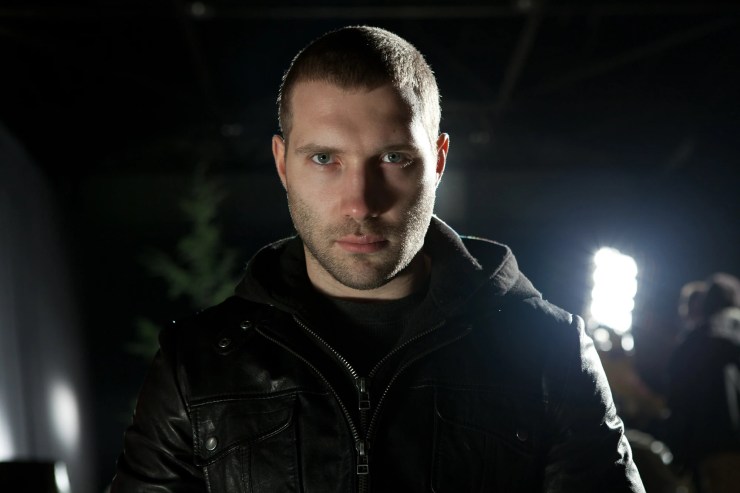
From the outset, Jack Reacher does not hide the shooter’s identity – Charlie (Jai Courtney) – which allows for immense dramatic irony. Reacher is inscrutable in his belief that Barr killed the five victims down at the waterfront because of his history with the man.
If not for Sandy’s actions, he might have let it go because Alex Rodin is known for not taking on a case he might lose. Justice will be served, even if it means James Barr will live. While the broader conspiracy is not clear at this point, we, as viewers, know that, in this instance, he is innocent. When Reacher agrees to help Helen and begins to see some of the evidence, the story starts to fall apart. He does know James Barr and the conditions under which he executed those rapists during his time in the Army with the definition of perfect for a man who is not a great shot. From there, the pieces begin to fall into place, and the location from which the shots were made begins to collapse under genuine scrutiny. This is where we start to see more going on under the direction of a man known only as Zek (Werner Herzog).

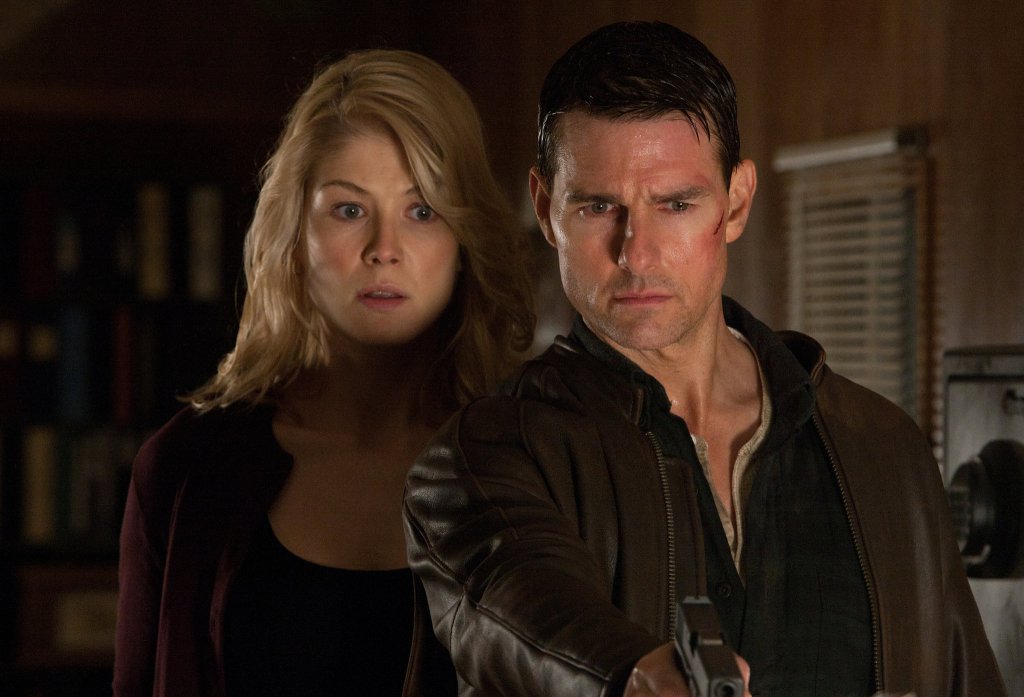
The rest of the supporting cast includes Linsky (Michael Raymond-James), who is a member of the violent Russian gang that is using a construction company as a front to extort bribes from city officials in Pittsburgh. Jeb Oliver (Josh Helman), another gang associate, is set upon Jack Reacher on his first night in town, and his friends act as a minor obstacle. Martin Cash (Robert Duvall) acts as an ally, and critical witness, to Reacher, whose gun range offers one of the most damning pieces of evidence that this was a long-planned conspiracy. Together, they fill out the ensemble, letting the investigation feel like it has actual stakes and momentum.
By the end of its runtime, you’re rooting for Jack Reacher to tear his way through the conspiracy brick by bloody brick, and boy, if he doesn’t deliver.
 Lloydd Marshall Books