
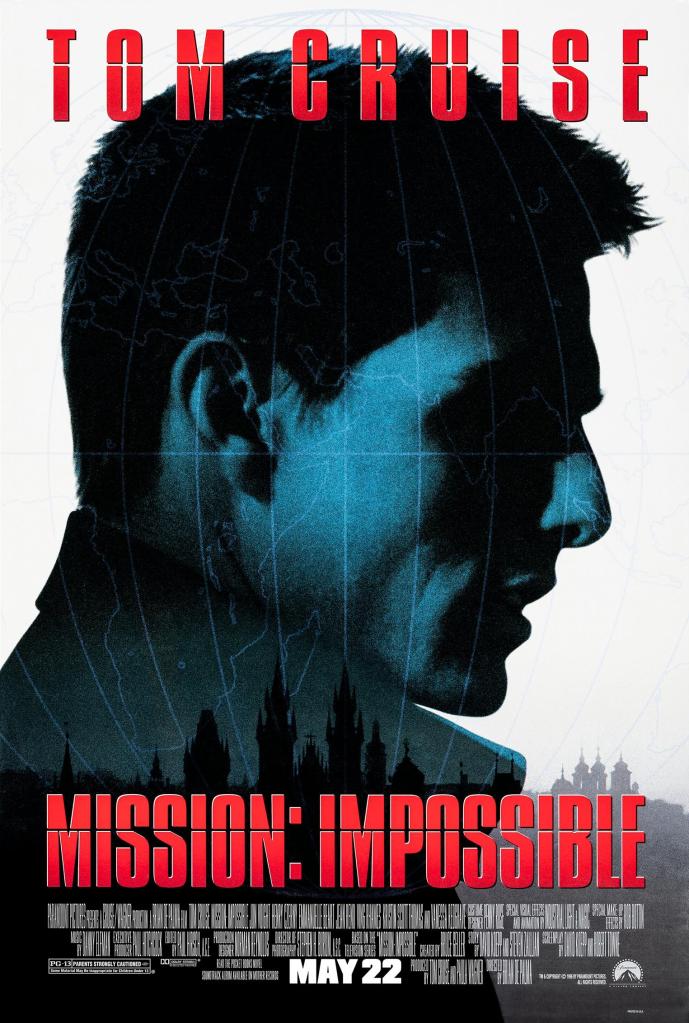
Tom Cruise has had a long and storied career, and while he is associated with many things – jumping on Oprah’s couch, his penchant for running, and the fact that he performs many of his own stunts –he is perhaps most widely recognized as Ethan Hunt in the Mission: Impossible film franchise. What began as a successful television series from the 60s was turned into an iconic, profitable film series that has outgrown its progenitor.
That is not to say the television series is unacknowledged; after all, Jim Phelps (Peter Graves) had a role in the first film. What began as a quieter film that was almost certainly going to be a one-off soon morphed into one of the most recognizable franchises in the 21st century that was not centered on a comic book. Mission: Impossible has been the defining role for Cruise – the kind that he can fall back on when he needs to, while pursuing other projects in due time. While rumors swirl that The Final Reckoning, formerly styled a Dead Reckoning – Part Two, might be the final entry, comments from Cruise, and his long-time directorial collaborator, Christopher McQuarrie, lay the groundwork for more entries to come in the future.


Released in 1996, it is considerably tamer than its follow-ups, several of which have delved into speculative fiction to drive their stories forward. Granted, what was once speculative fiction is now reality, and even the most thought-provoking McGuffins in the most recent outing is growing ever closer to becoming a reality, preferably without murderous intention. Yet, Mission: Impossible tinkered with the shows, most notably with the character of Jim Phelps, to craft a cinematic continuation. Certainly, the stakes are lower in this entry than, say, Rogue Nation, but the original film leaves nothing to be desired.
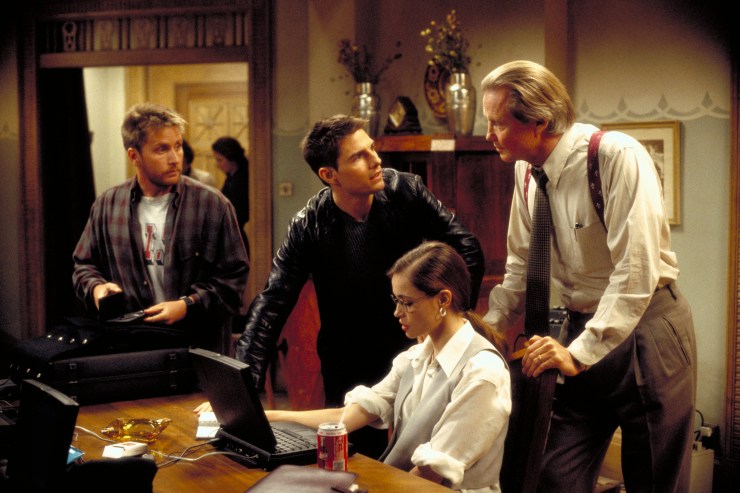
Mission: Impossible begins with a standard mission for an IMF team, who have been sent to retrieve a NOC list in Prague – the Non-Official Cover List – which lays out every IMF operative’s real names and codenames.
This team is comprised of Ethan Hunt, Clair Phelps (Emmanuelle Béart), who is there as the getaway driver, Sarah Davies (Kristin Scott Thomas), who is their deep cover specialist, Jack Harmon (Emilio Estevez), their tech liaison, and Hannah Williams (Ingeborga Dapkūnaitė), who is their surveillance and overwatch specialist. Within the first fifteen minutes, every single member of the team is killed, leaving Ethan as the sole survivor and the chief suspect by IMF leadership as the mole in their organization.
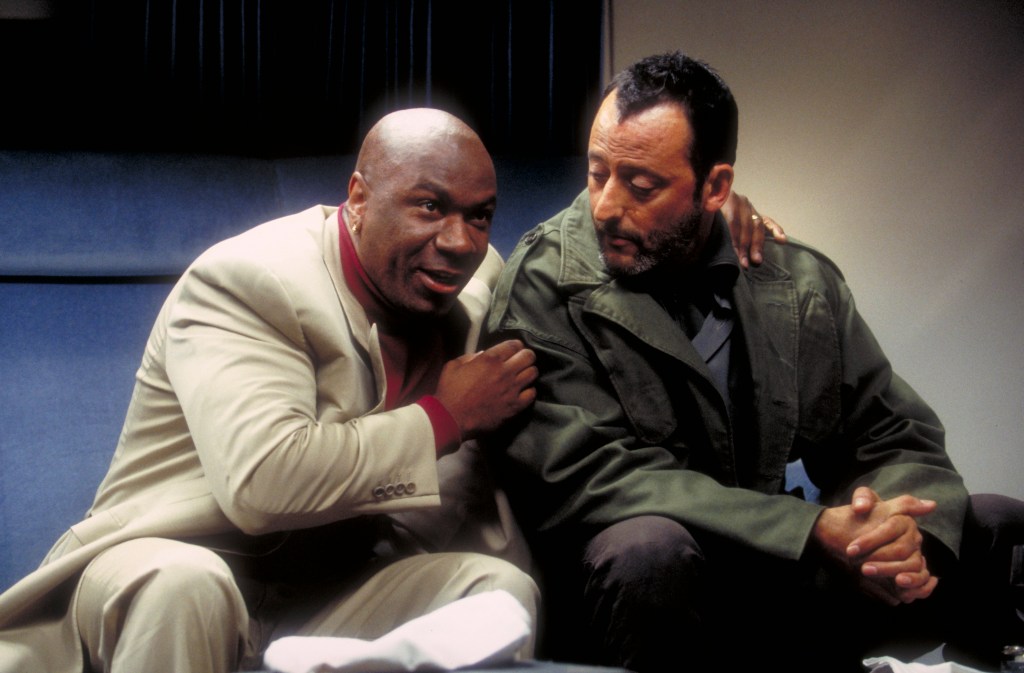
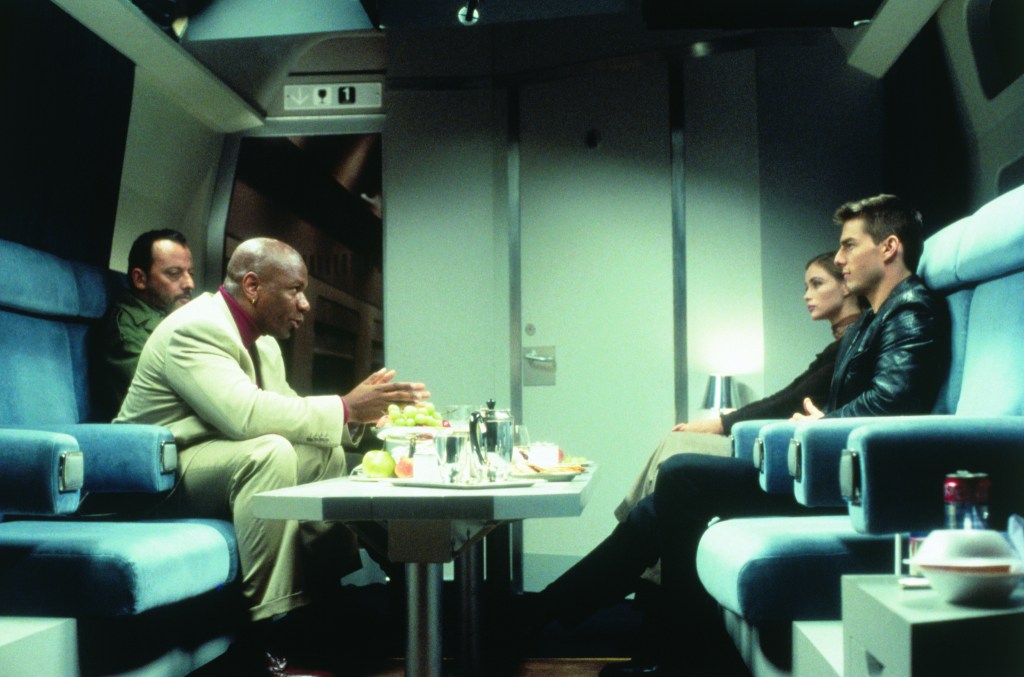
Ethan, disavowed by the IMF and desperate to clear his name, is forced to go on the run for much of the film. We are introduced to him as a man deeply embedded in the IMF, but Ethan is forced to execute his plans for much of the movie without the group’s support. This is where the lead supporting cast in the film comes in, with Luther Stickell (Ving Rhames) and Franz Krieger (Jean Reno), a skilled computer hacker and pilot respectively, being his main support. While Stickell would go on to play a prominent role in each successive film, barring Ghost Protocol, where he had a cameo at the end, Krieger is soon revealed to be a traitor hiding in Ethan’s team, drawing on Mission: Impossible’s greatest strength: who can you trust in a world of spies who lie?
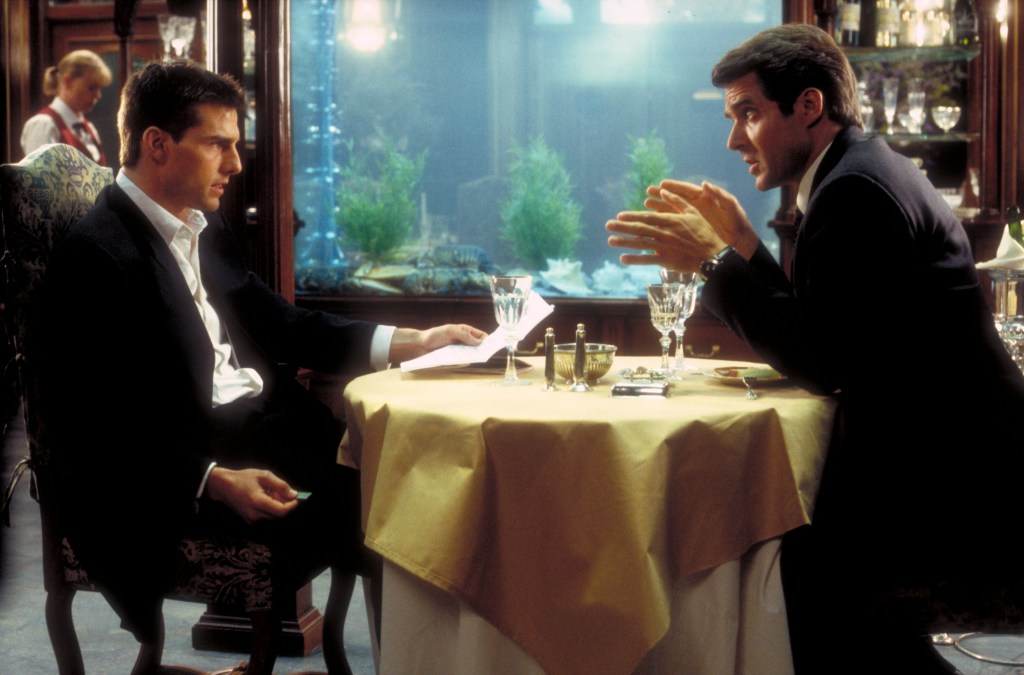
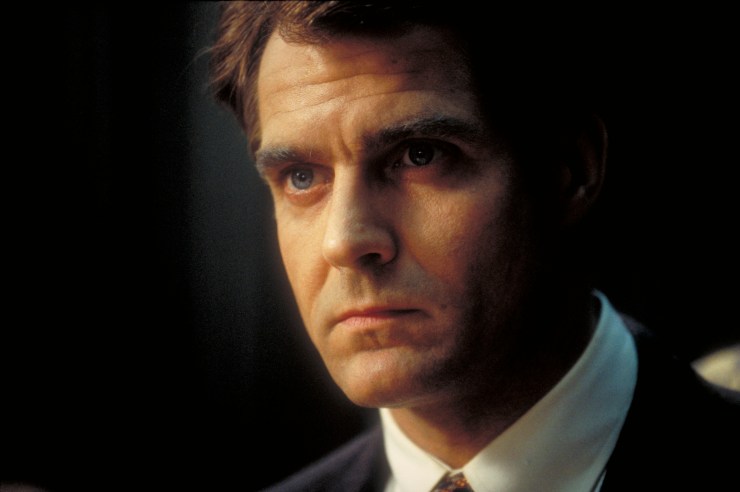
At its core, Mission: Impossible is a thrilling adventure following one man’s search for the truth. But what is true? Eugene Kittridge (Henry Czerny) is introduced as the chief of the IMF, who is convinced that Ethan must be the mole solely because everybody else on the team is dead (they’re not). Friends and allies could reveal themselves as traitors at any moment, ensuring that truth and trust are not the same. When standing on the outside looking in, the evidence points squarely toward our main character, making Kittridge’s firm belief that he has the right man understandable. While we know Ethan is just “that good,” the rest of the world doesn’t.

This entry is more renowned for its espionage and focus on spycraft than its action set pieces. While these action scenes are eclipsed by those that would come in later years, they are no less tense.
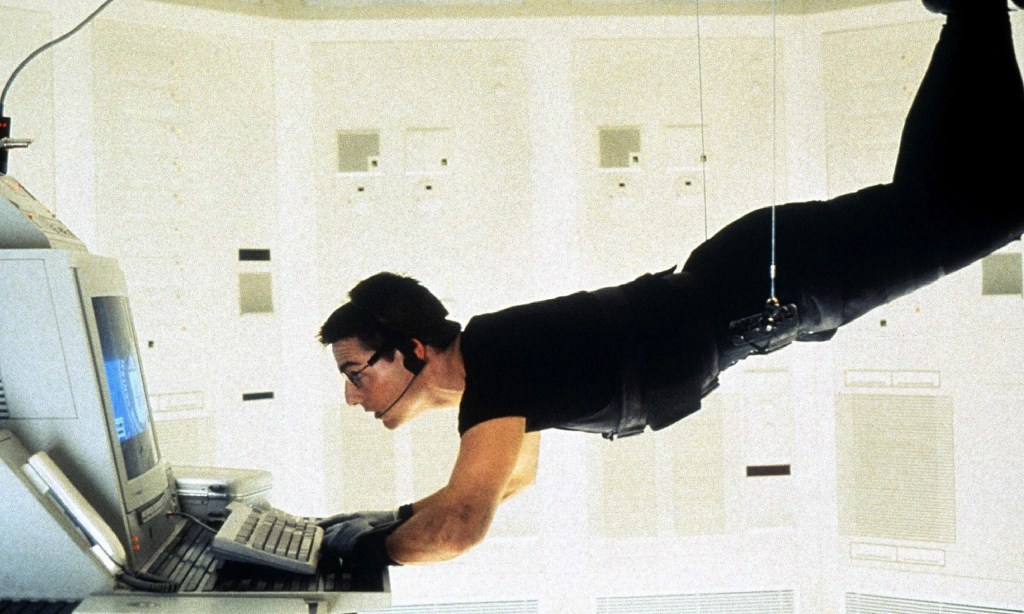
Watching Ethan break into the CIA’s headquarters, we are treated to one of the most harrowing sequences ever put to film. As he dangles above a room to access an air-gapped computer terminal, everything about the room is designed to make it impenetrable – the slightest change in temperature, the level of sound in the room, or pressure on the floor will set off an automatic lockdown. Before Ethan even makes it into the room, we are treated to the comprehensive security measures in place to protect this computer terminal, which holds half of the NOC list. This does nothing to detract from the film and sets it up as a quiet opener for the cinematic insanity that would follow.

As the central protagonist, Ethan Hunt is early into his career with the IMF, which can explain why some of his more notable traits are less than prevalent. He is nowhere near as bombastic, and the film relies on quiet, psychological techniques that can make it feel like a character drama in between the various missions that Ethan and his team undertake throughout the film. Comparing it to the television show puts the movie in wild contrast, nonetheless, with criticism being levied at Mission: Impossible for being more violent than the show it was based on. Like all criticism aimed at the media, it is entirely subjective, and Mission: Impossible is not above catering to different genres.
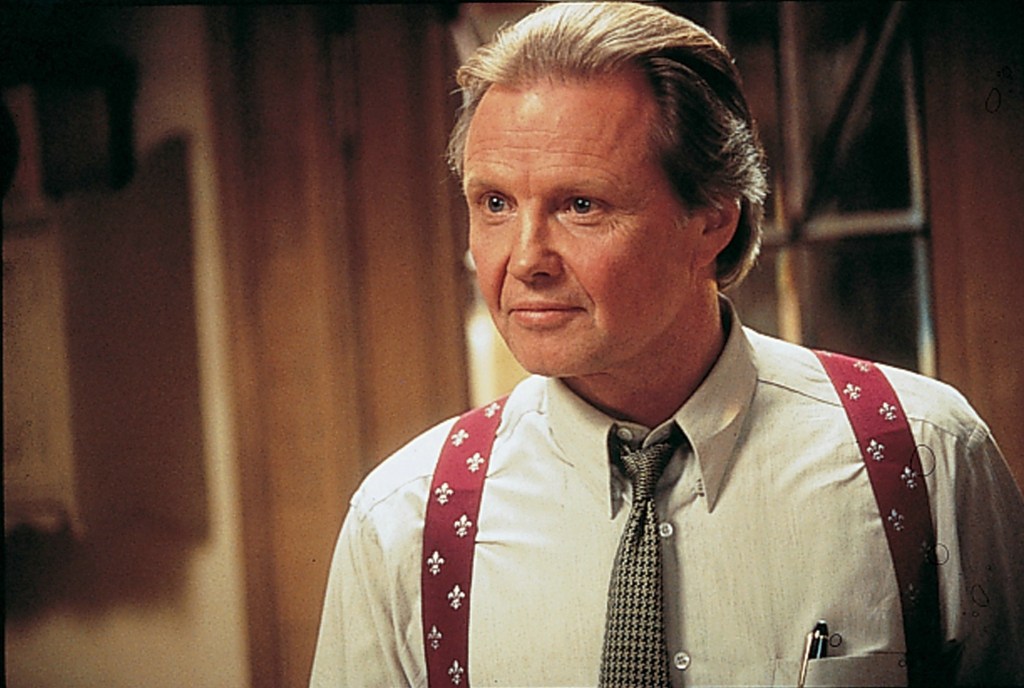

The primary antagonists are Max Mitsopolis (Vanessa Redgrave), an illegal arms dealer who views tackling the IMF as little more than a regular business day, and Jim Phelps, who may or may not be the same character from the show and is a veteran member of the IMF and Ethan’s team leader. Having both of them as the villains allows for a more methodical antagonist (Max) to play alongside the ideological threat (Jim), a pairing that rarely works well together for long. When it comes time to execute their final move, is it any wonder that their partnership breaks down with one trying to kill the other? Like many characters in the franchise, their role is confined to this entry, but their impact is felt years down the line – Max more so than Jim, with her children playing prominent supporting roles in later films.

As a villain, Max is more interested in ensuring that her business is not interrupted than with the total destruction of the IMF. In fact, she spends some of her screen time with Ethan flirting with him – which is almost certainly intended on exploring how she is able to draw vulnerable and desperate people to her side – like Jim Phelps.
The Mission: Impossible franchise did not get its start with this film, but it has usurped its origin in many ways. As the series comes close to potentially ending this year after almost thirty years and eight films, one has to wonder if Tom Cruise’s goal of continuing to play the role of Ethan Hunt into his eighties is practical – because it would certainly be enjoyable.
 Lloydd Marshall Books