

Generally, when a series reaches its sixth entry, it knows who and what it wants to be. Mission: Impossible – Fallout acts as the point where the series knowingly digs its heels into what works and continues to build towards a cohesive storyline with a slate of characters that it could rely on.
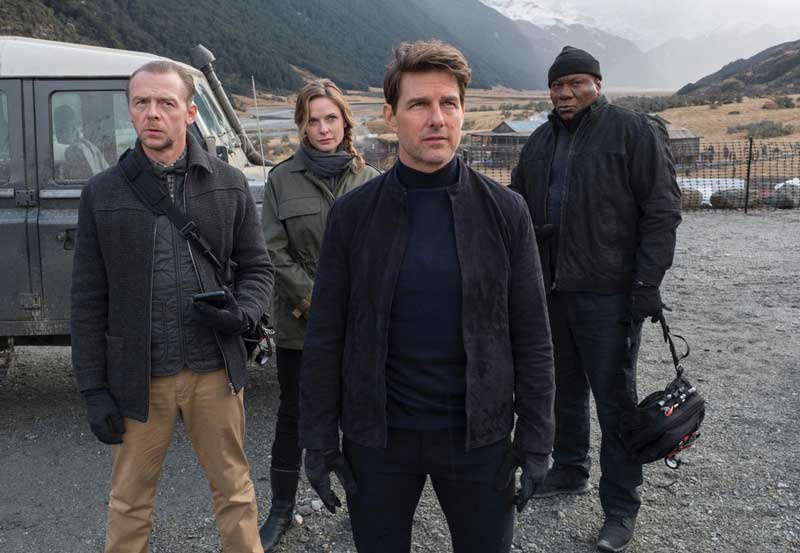
As usual, Luther Stickell (Ving Rhames) and Benji Dunn (Simon Pegg) returned, and we are all grateful for that. Still, we also had the return of Ilsa Faust (Rebecca Ferguson) to keep Ethan Hunt (Tom Cruise) well and truly grounded. Now, they must hunt down the remnants of the Syndicate, who have rebranded themselves as the Apostles under the leadership of an extremist known only as John Lark.

For the first time in the entire franchise, a storyline was continued from one film directly into the next one. Yes, technically, Rogue Nation picked up on the thread left by Ghost Protocol, but there were no recurring enemies for the team to contend with. Solomon Lane (Sean Harris) might not have been the major antagonist of this film, but his return was a major boon. After all, most Mission: Impossible villains met their end in the movie they were introduced in, but Solomon was a notable exception. While Solomon was decidedly not the main antagonist of Fallout, his presence provided a continuity that Mission: Impossible would often overlook in favor of a new spectacle. Considering each film covers a handful of days and takes place years after the preceding film, it does make sense why these details don’t translate from one movie to the next. Real life rarely works that way, but we’re not discussing real life.


“John Lark” and the Apostles seek to free Solomon from imprisonment and complete their mission from the previous film. As the film opens with the usual prologue mission, they succeed in the first steps of their plan by stealing plutonium under guard by Ethan, Benji, and Luther. Despite being in the open, essentially in a giant kill box, the Apostles do not take the three out, which is how they come to realize that it was not about killing them – yet. The fact that they don’t kill Ethan specifically is one of the few hints that this conspiracy has a personal element long before it becomes clear who the main villain will be. Like always, Ethan always manages to make the fights with his enemies personal, no matter how impersonal they start out.


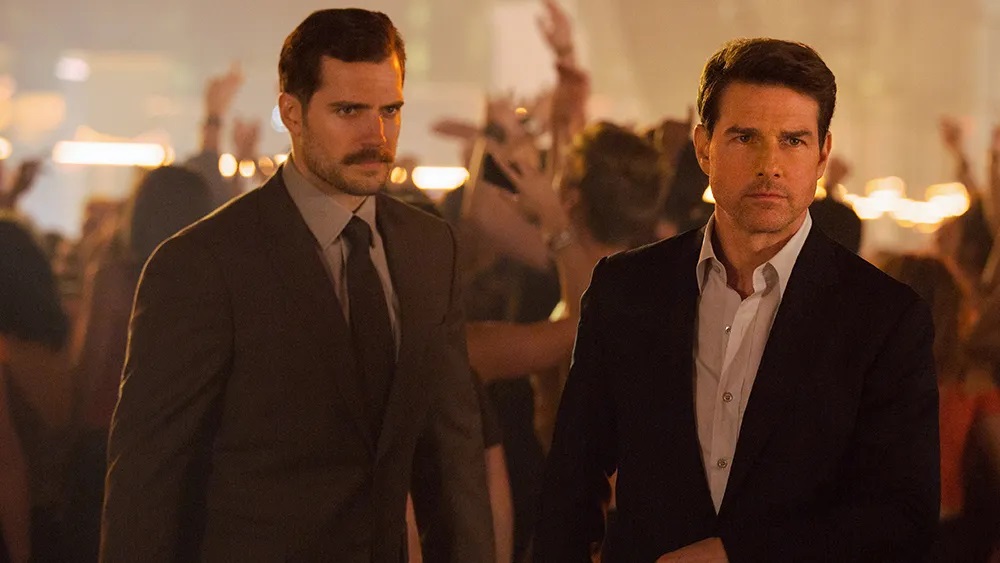
This time, Ethan technically has the support of the intelligence community. Alan Hunley (Adam Baldwin) was placed as the IMF Secretary and has come to trust Ethan’s instincts and abilities. Still, his successor as the Director of the CIA, Erika Sloan (Angela Bassett), has no such illusions. When the plutonium cores are stolen, Erika cites multiple intelligence and mission failures on the part of Ethan and his various teams, then assigns one of her own agents, August Walker (Henry Cavill), to shadow him as they seek to retrieve the plutonium and avoid nuclear fallout. August Walker acts as a foil to Ethan, with Erika specifically describing Ethan Hunt as a scalpel and August as a hammer. We see this most clearly in their fighting styles during the iconic bathroom fight scene with the “John Lark” decoy (Liang Yang), where Lark is able to effortlessly dominate the fight despite their contrasting styles. Or, perhaps more tellingly, because of their contrasting styles. Enter Ilsa, and the plan goes off the rails, but at least our intrepid heroes are saved!

This film also dives into the psyche of Ethan Hunt, as viewed through the lens of others.
His actions and the choices that he makes, on top of how often he must act despite his own government abandoning and betraying him time and again, lead one to wonder if he is, quite simply, insane. August outright asks how long it is before Ethan simply goes off the rails for real because of everything he has been put through in a bid to protect the world, oftentimes from itself. The film does not shy away from the fallout of Rogue Nation, either, showing that Ethan has nightmares of Solomon Lane going after the people he cares about. When this proves prescient, Ethan is, as expected, more determined to tackle his enemies.
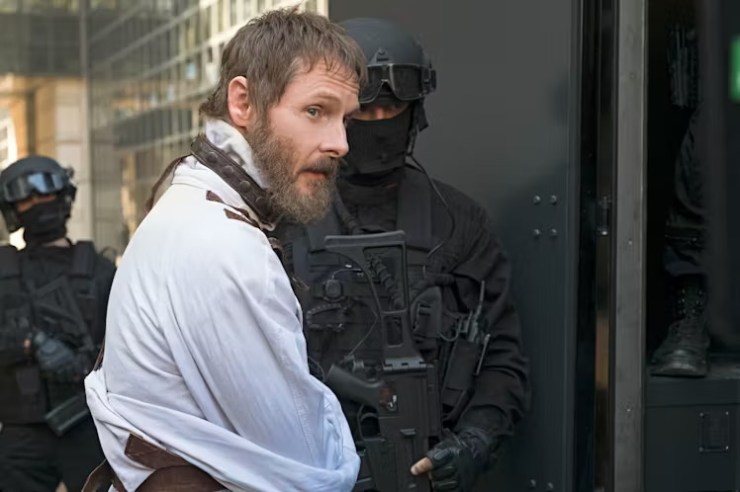
As a villain, Solomon Lane continues to prove that he is a despicable person with a goal that would end life as we know it because he wishes to reshape the world.
Ethan posits that Solomon simply wants to hurt people, and the number of people he has casually dispatched confirms this point. Solomon spends the first half of the film imprisoned. Almost every faction in the entire film vies to have Solomon freed, each taking various actions to ensure it happens.


MI6 because he knows too much about them, resulting in them dispatching Ilsa Faust with the promise of coming in from the cold; John Lark and the Apostles intend to have their vaunted leader back on top, and stole the plutonium to barter his release; Ethan and his team view Solomon as the fastest route to finding the plutonium. With all of their goals crashing together, it’s not surprising that Solomon is freed, but the question becomes what he will do now that he is.
Then, there’s John Lark (and with how long the movie’s been out, if you don’t know, I apologize), AKA August Walker. At first, he is nowhere near as personally invested in how Ethan is dealt with.

Still, as the film unfolds, he becomes as obsessed with taking Ethan down as Solomon and every other villain that has ever crossed Ethan Hunt’s path. August is not the first character in a Mission: Impossible film to be portrayed as a protagonist until his shockingly inevitable betrayal, but he did start at a disadvantage. Ethan already doesn’t trust August because Erika Sloan assigned him to watch him, which gives Ethan and his team a bit of an advantage when the betrayal comes. It might have come at the tragic cost of one life, but it wasn’t Ethan’s life that was lost. As a villain, August becomes the main threat for Ethan to face, leaving Solomon for Ilsa to handle, and boy, did they give us a glorious fight.

Fallout is also notable for taking the time to delve back into a previous storyline through Julia (Michelle Monaghan), Ethan’s wife from the third film, who was believed to have been murdered throughout most of Ghost Protocol, only to be revealed at the last possible second as having survived and living away from Ethan’s shadow. Her return is larger, by contrast than in Ghost Protocol, coming late in the movie, where we can see that he has, in fact, moved on with her life. Wes Bentley shows up briefly as Julia’s new husband, Erik, proving that she has been able to rebuild her life, if even in hiding.

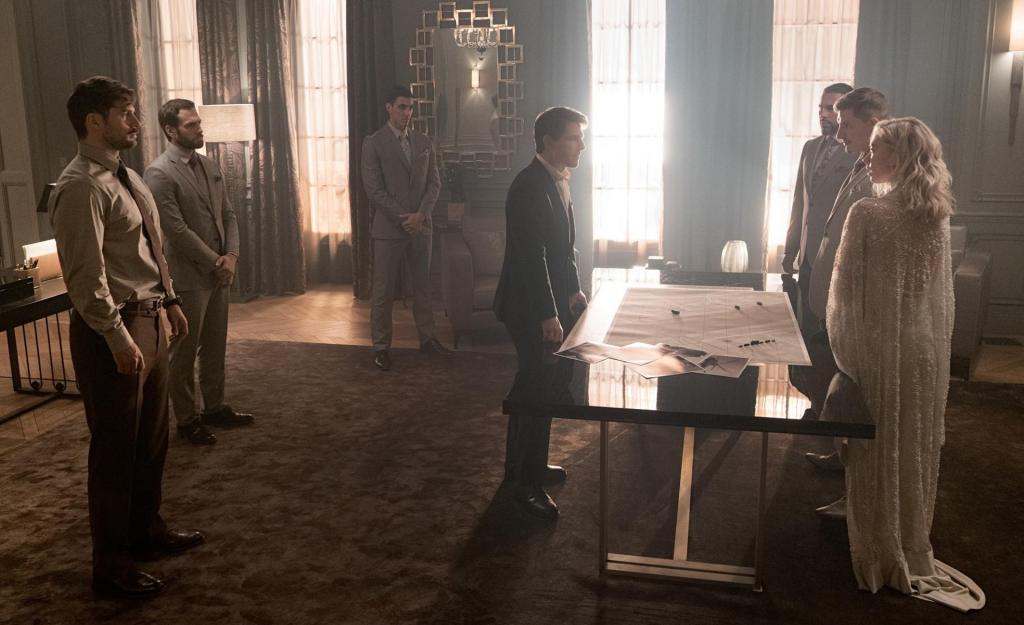
Finally, we are blessed with a pair of new characters in the form of Alanna Mitsopolis (Vanessa Kirby, fresh off of her two-season turn as Princess Margaret on The Crown), The White Widow, and Zola (Fredrick Schmidt), her brother and chief enforcer. The film reveals that they are the children of Max (Vanessa Redgrave), an illegal arms dealer and the secondary antagonist in the first Mission: Impossible film. Ethan must work with both of them in his bid to secure Solomon’s freedom to find the plutonium midway through the film.


All in all, Mission: Impossible – Fallout acted as a powerful follow-up to Rogue Nation and set the stage for what would be an entertaining follow-up. Fallout proved to be even more successful than Rogue Nation at the box office, ensuring that the two-part finale was green-lit with haste. It was, unfortunately, the last film to be released that was not impacted by real-world crises – with COVID-19 and the Strikes in Hollywood derailing Dead Reckoning and The Final Reckoning to the tune of well nearly $700 billion in production costs alone – who knows how much they spent on marketing.
 Lloydd Marshall Books