
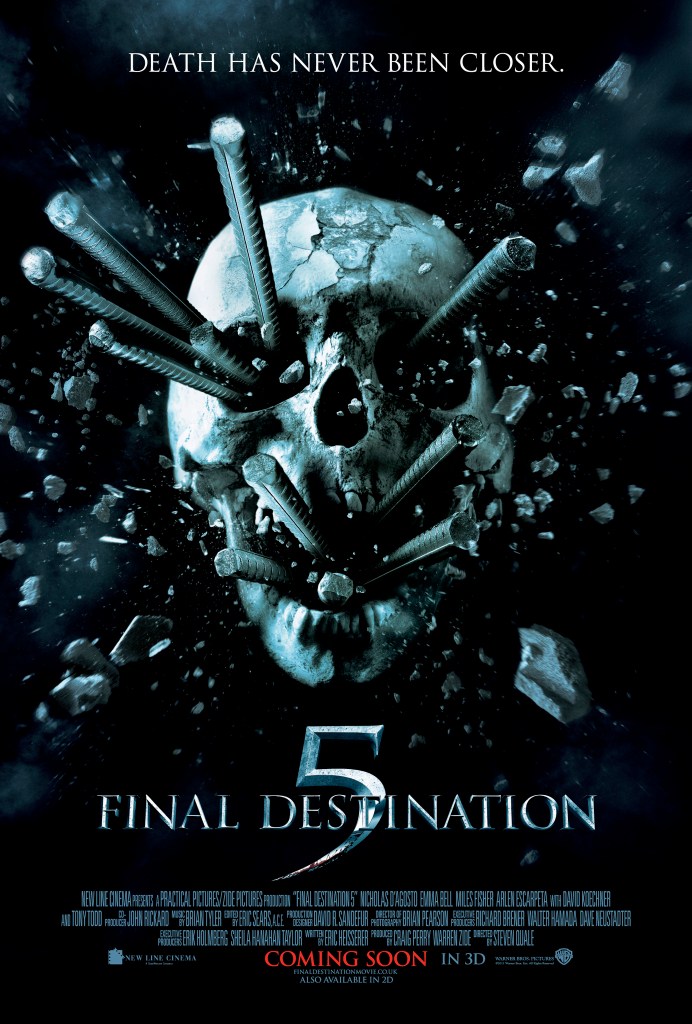
As the fifth film in the franchise and the intended finale at the time of its release, Final Destination 5 was dealt a poor hand from the start. Despite being the most financially successful Final Destination Film, The Final Destination cratered the word-of-mouth and reputational strengths that had allowed each preceding film to build anticipation for the next.
This left Final Destination 5 with a stellar, rather likable cast, an engaging storyline, well-executed death scenes, but the promise that this was, in fact, the Final Destination. Sometimes, you are left with bitters in the worst way imaginable, as everything before you now offers sunshine and rainbows.
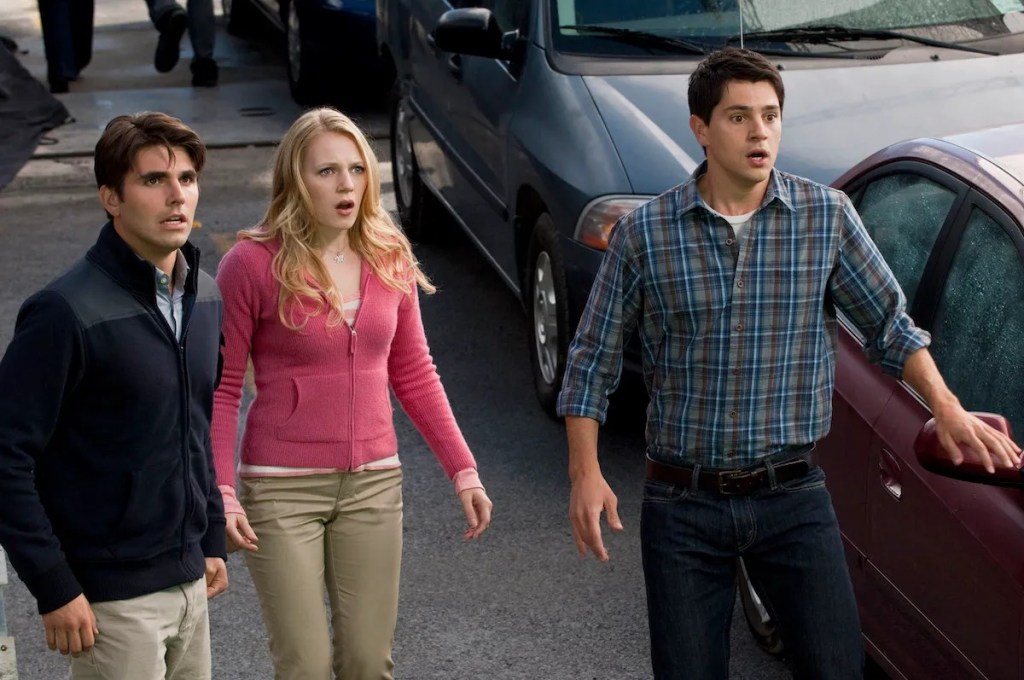

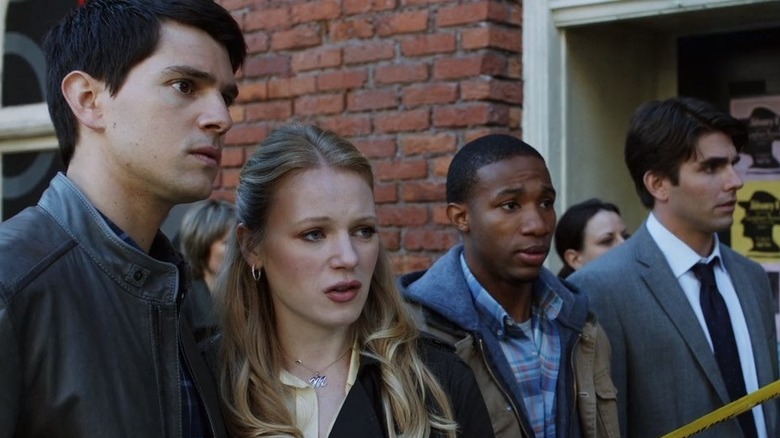
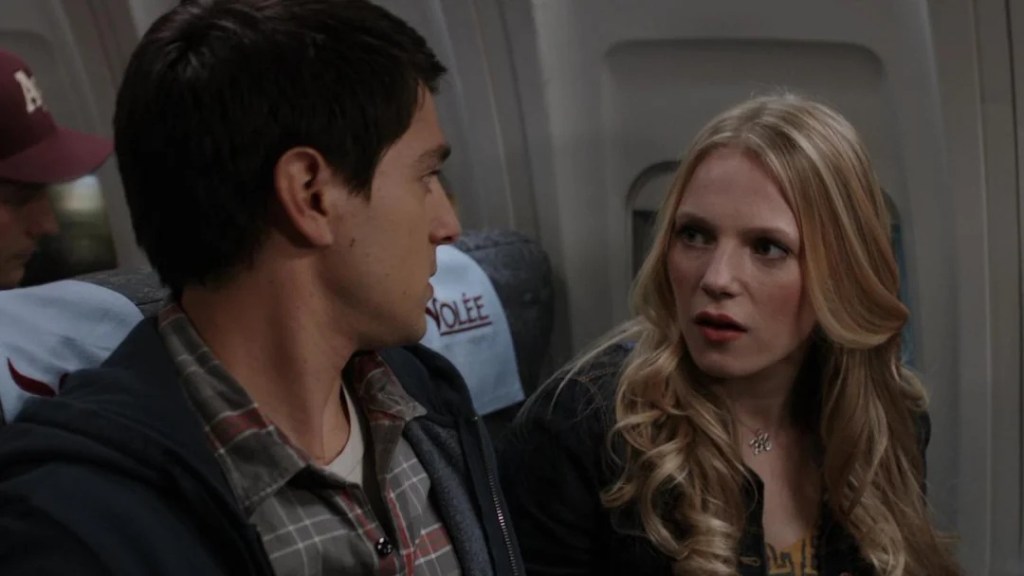
When compared to the preceding four films, the fifth outing ranks higher than The Final Destination but lower than the first three for many fans. Fan rankings, of course, are the bedrock of any community and can become quite the third rail. I have always appreciated each Final Destination film for its respective strengths and have never shied away from identifying its inherent weaknesses. For this film, the most cited weakness I can recall – from its initial release to the present day – is the performance of the two leads, Sam Lawton (Nicholas D’Agosto) and Molly Harper (Emma Bell).
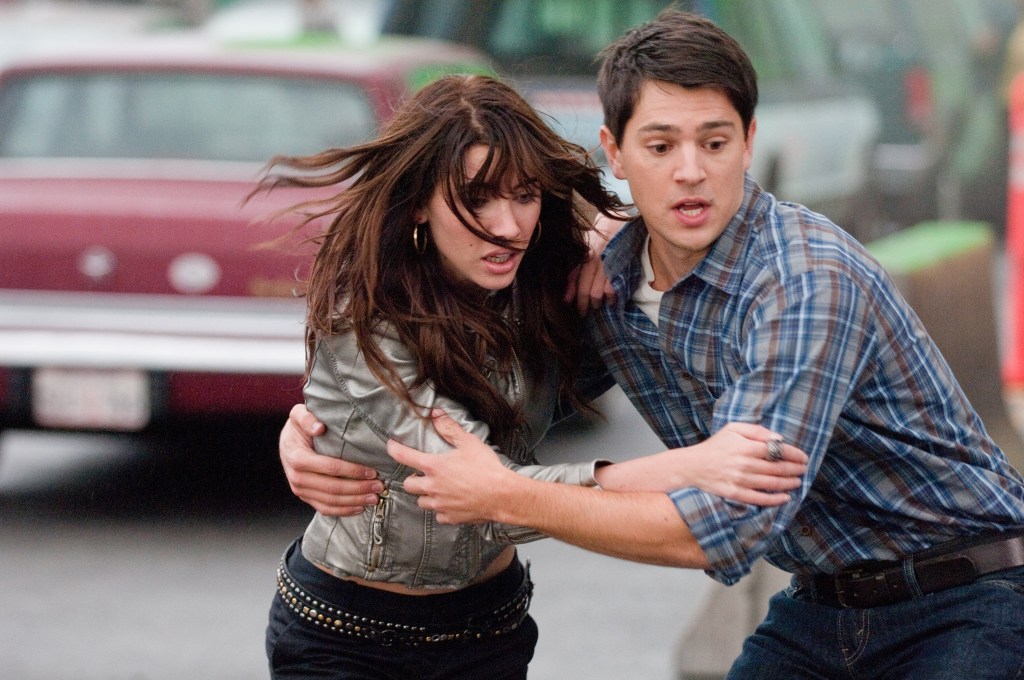
It is imperative to note that they are not hated or outright despised; they are merely viewed as less compelling characters than some of those around them. Perhaps that is the curse that comes with being a lead. Maybe it is the impact that comes from being placed next to Miles Fisher’s frenetic portrayal of Peter Friedkin. Regardless, I never took a personal issue with Sam or Molly as characters. Still, it is not difficult to acknowledge that both performances feel like they belong in different horror films. Quiet, more slow-burning horror films like The Witch, Hereditary, or Midsommar, all of which have a more somber, character-driven nature, such as Emma Bell’s performance – at least, that’s how I perceived it. Nicholas D’Agosto gives a compelling performance as the visionary, and his final scene is what sold me on his role.
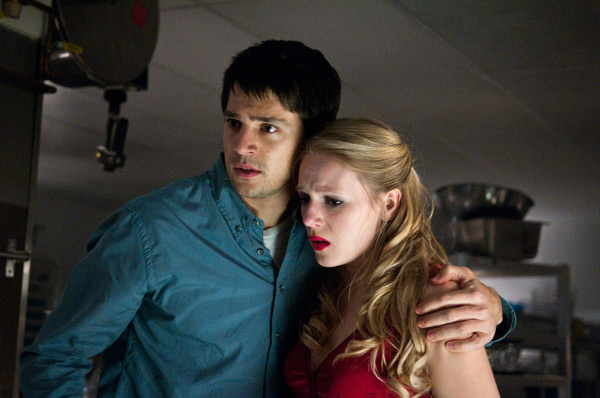
Emma Bell’s quiet performance next to Nicholas D’Agosto’s emotional performance is not entirely out of sync. When placed next to each other, it is not difficult to grasp why their romantic relationship collapsed before the film began.
While Molly states a very specific reason for why she ended the relationship, their differences are clear from the outset, which did not undermine their feelings for one another.
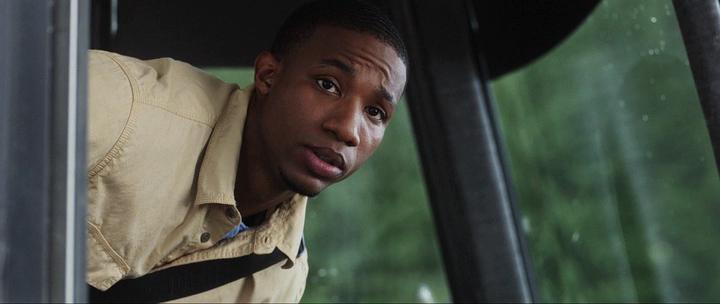
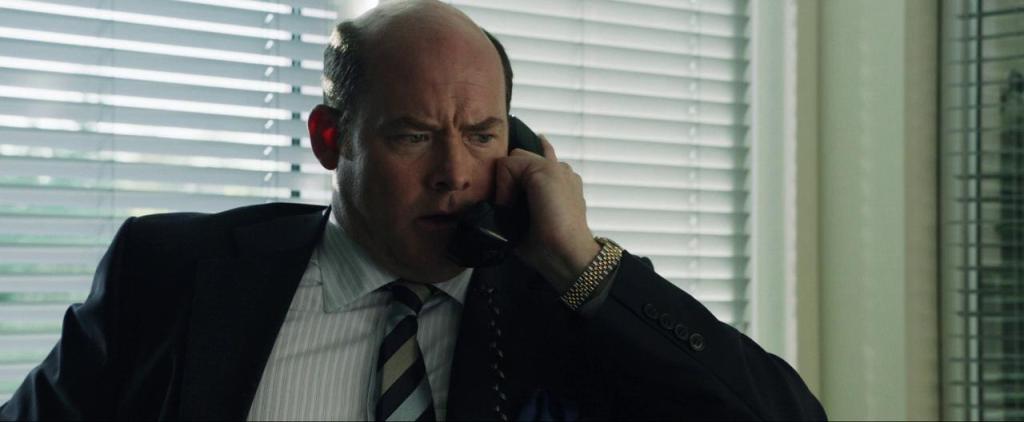
The main cast this time consists of a group of office workers from Presage Paper, who are on their way to a company retreat when they become caught in the middle of a catastrophic bridge collapse. As mentioned, Peter Friedkin (Miles Fisher) is one of the major characters and is the best friend of Sam, and Peter’s girlfriend, Candice Hooper (Ellen Wroe), who is a gymnast and an intern at the office. Olivia Castle (Jacquline MacInnes Wood), a local sales division employee, Nathan Sears (Arlen Escarpeta), the local manufacturing division supervisor, and Isaac Palmer (P. J. Byrne), the local tech support fill out the major employees, and, finally, their boss is Dennis Lapman (David Koechner), the manager of local sales.

As a cohort, they are an interesting bunch – despite the tension between Olivia and Candice and Sam and Molly’s recent breakup, the group as a whole seems to get along well enough.
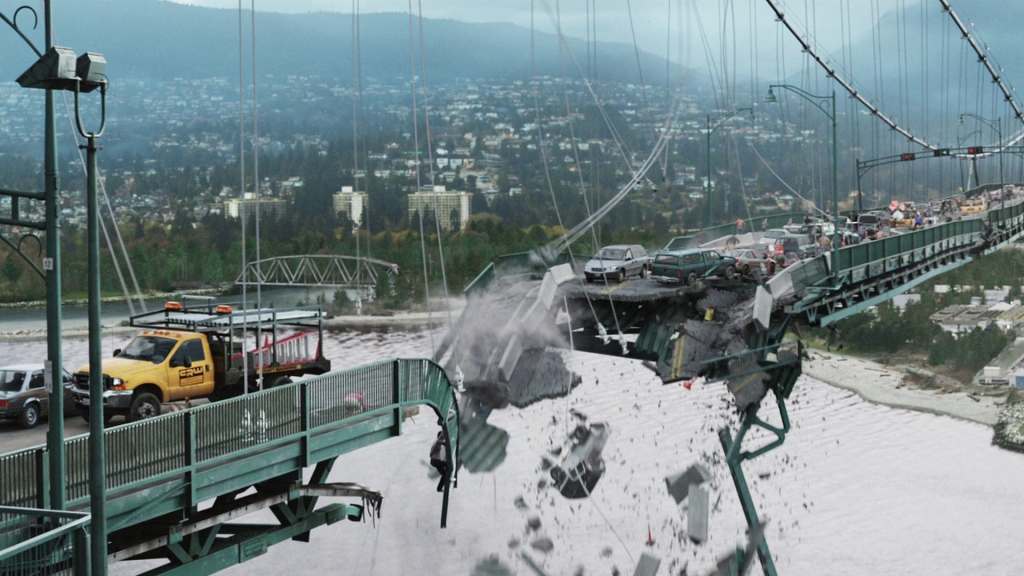
The bridge collapse, which has been talked about at length by fans, critics, and experts alike, is one of the most cerebral opening disasters. While bridge collapses, like the other inciting incidents, are exceedingly rare and, perhaps, one of the more easily survivable disasters, they are not so rare as to be unimaginable. It is certainly a spectacle, but structural engineers have, with ultimate irony, praised it for being more realistic than fictional stories generally try to adhere to. There are, of course, Final Destination’s usual painful coincidences. From unfortunate run-ins with a boat’s sail, boiling tar, and a bit of horribly placed rebar and corrugated steel, the deaths that unfold in the Premonition are not for the faint of heart.
Like The Final Destination, the deaths in this entry’s Premonition are tied to the frenetic chaos of the event, with almost every death occurring while trying to escape the horrifying scenario. In Final Destination 2, characters also met their end in the Premonition sequence while attempting to evade the disaster. Still, far less attention was paid to it as the characters weaved around the highway, while here, the attempts to get off the bridge make up a good portion of the scene. Compared to Final Destination and Final Destination 3, where the disasters in each Premonition were inescapable by that point, Final Destination 5 offered the cleanest exit for the most characters from the scene before Death denied them. Still, with time to spare, by the time Sam came out of his Premonition, he was able to save the main cast with his warning, like all other visionaries.
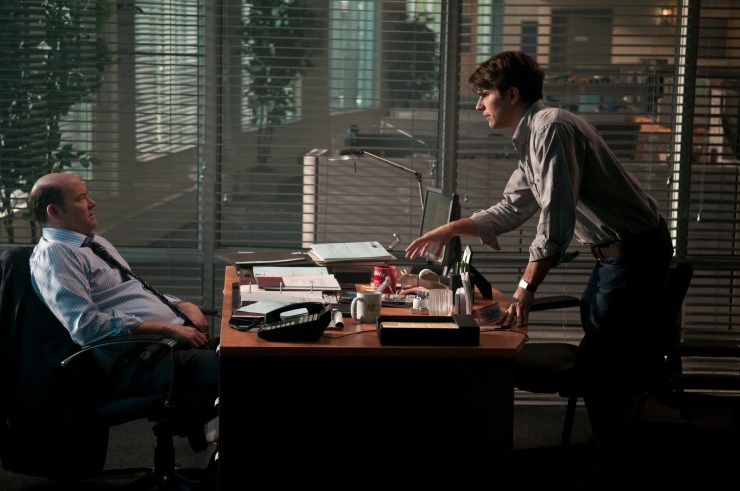
Like each film in the series, the events are covered in a handful of days. We are treated to the reality that a company can face after seventeen of its employees die in a tragic accident: imminent closure.
While the manufacturing side remains open, leaving some of the cast with their jobs in place, those who worked in sales are now in a state of flux, which is made all the worse by what follows. Barely two days after the Bridge Collapse, the first survivor dies in a catastrophic accident, and each one follows shortly thereafter. While Sam and Molly begin to piece together what is happening, Peter is left devastated by the events unfolding around him and clings to the only glimmer of hope on offer, succumbing to being a villain before the credits roll.
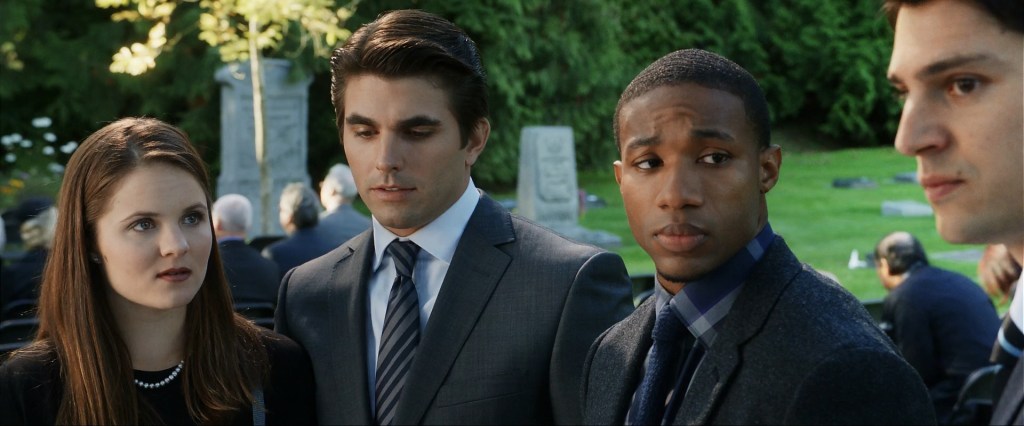
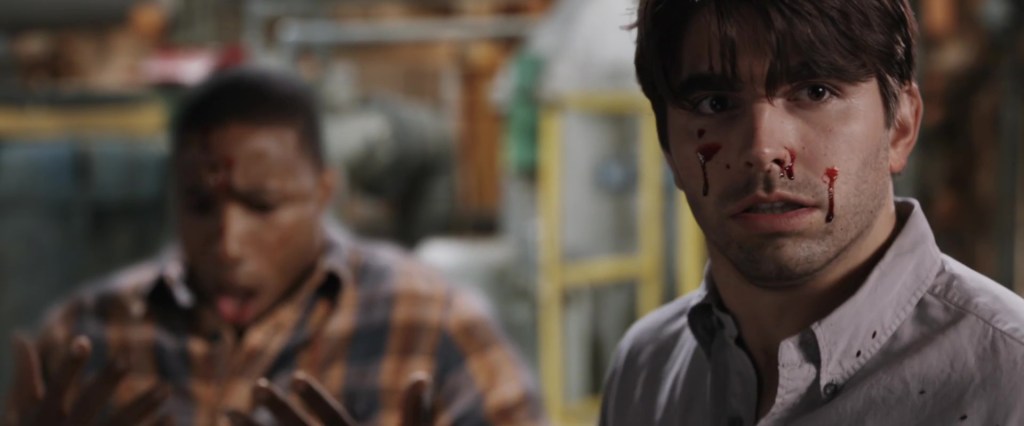
Still, each survivor makes a lasting impression in this film. Candice acts as the emotional grounding agent for Peter, who also happens to be her boss, ultimately making her introductory comments where she slut shames Olivia all the more hypocritical. The lecherous Isaac acts as the expected “most dislikeable” character in the ensemble, whose death in the Premonition unfolds solely because nobody cared enough to warn him to get off the bus.

Olivia, who is presented as the classic “hot beauty,” is by far the most emotionally vulnerable character of the supporting cast. Her character shows shades, most of which are merely implied. By the time her death finally rolls around, she is one of the most sympathetic characters. It is, as of this writing, perhaps not surprising that she is the only character to originate from the fifth film who has a dedicated page on Wikipedia.
Nathan is presented as trying to learn how to assert himself at work and as perennially unlucky – though, had he actually missed the bus for the retreat, his luck would have been far better in the end.
Other major supporting characters include Tony Todd, returning as Bludworth after skipping out in the previous two films (though he did have a vocal cameo in the third film); with the twist revealed at the end, his presence makes a lot of sense. Agent Jim Block (Courtney B. Vance) marks the first time that the police are actively investigating the disaster since Final Destination – in an official capacity, at least. He was assigned to interview the survivors and subsequently the string of coincidental deaths that followed. Where the FBI is hostilely suspicious of Alex Browning in Final Destination, Agent Block is far more willing to investigate the possibility that Sam is innocent and merely trying to protect the other survivors. Finally, we have Roy Carson (Brent Stait), a co-worker who works in Presage Paper’s factory and spends much of his screen time berating Nathan, his direct (and much younger) superior.
Final Destination 5 was a marked improvement over its predecessor in the ways that mattered, but that was not enough to keep it from being the intended finale. With the same budget as The Final Destination, $40 million, it earned $30 million less at the box office for a total haul of just under $158 million. If it had not been the intention of the people behind the franchise at the time to end the series, that alone could have garnered support for an immediate sequel. While Bloodlines was ultimately released in 2025, surpassing its predecessors with room to spare, that was still a fourteen-year wait.
 Lloydd Marshall Books