
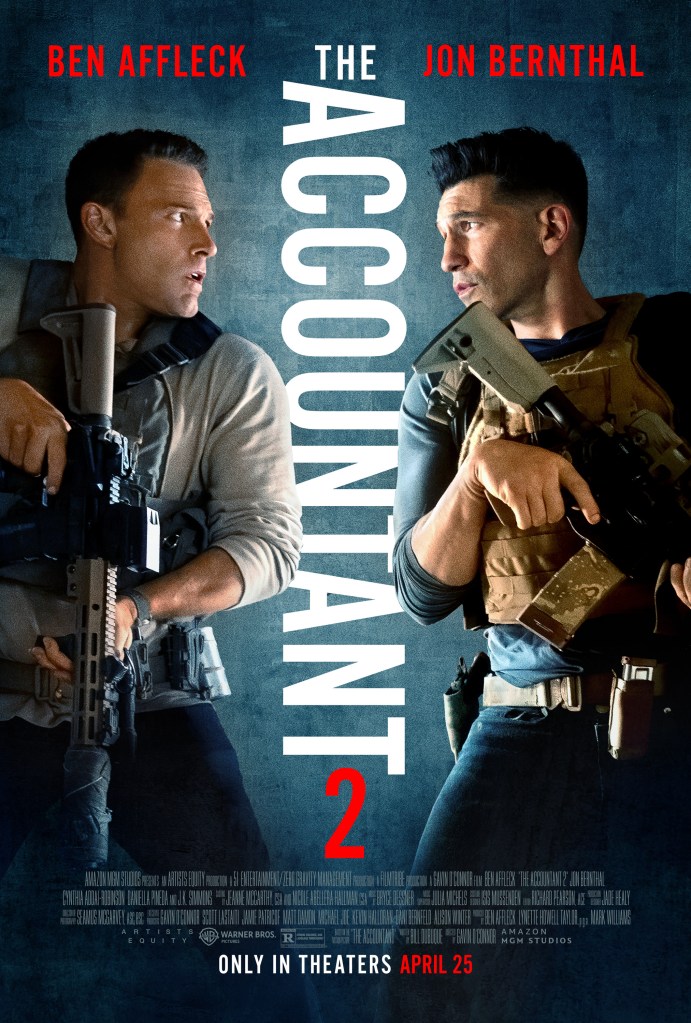
How often are we blessed with a sequel years down the line? Unless it is a massive legacy sequel to a long-running franchise, the chances tend to be on the low end. Yet, every once in a while, the stars align and we are given a glimpse of what could be when studio executives are willing to listen and take a leap of faith. That they will trust us when we inform them that we do, in fact, want that sequel.
The Accountant was released in 2016, and talk of a sequel began almost immediately. Yet it would be nine years before one was finally delivered, but damn if it was not worth the wait.
The Accountant 2 picks up in the present day and reveals that, despite making the promise to stay in touch, “Christian Wolff” (Ben Affleck) has not kept up with his relationship with Braxton (Jon Bernthal). Throughout the film, a significant portion of its main story is devoted to the two brothers genuinely rebuilding their relationship, with each tackling the issues between them from different perspectives. Because this movie does not have to feign the pair knowing one another for the majority of its runtime, The Accountant 2 dives deeply into that aspect of its plot. We can see that, despite the differences in how they perceive the world, they aren’t entirely different. Murder is, for them, always a solution on the table.
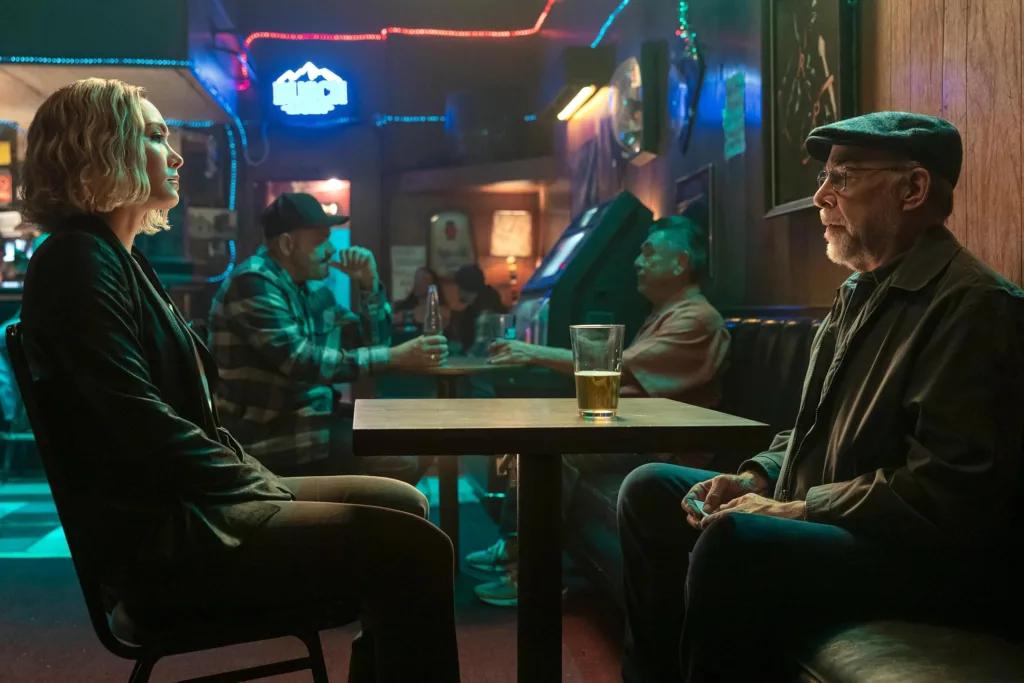
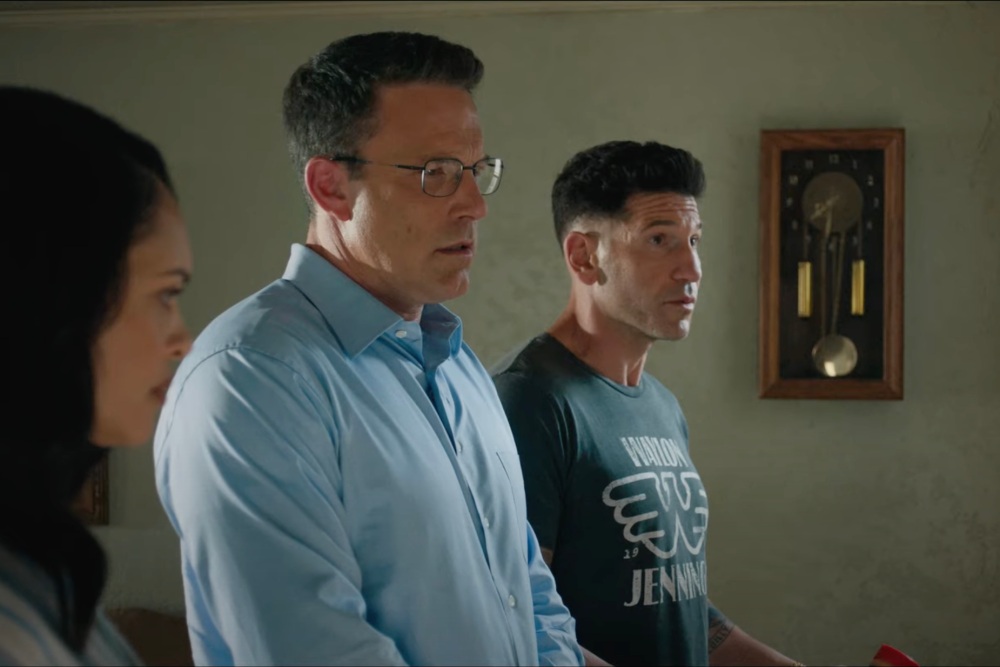
It is rare for a film to openly acknowledge that it will open by killing a well-received character to set off its plot, and kudos to The Accountant 2 for making it plain that Ray King (J.K. Simmons) was going to die in all of its marketing. It is a risk, but the movie took it to build an interesting story that provides more than just a reason to reunite the main cast. While Dana Cummings (Anna Kendrick) is the only major character from The Accountant who survived, that doesn’t return, she is also, admittedly, the only character whose presence would feel contrived. In contrast, Marybeth Medina (Cynthia Addai-Robinson) was positioned to be Ray King’s successor before the credits rolled last time around, ensuring her presence here. Finally, Justine (portrayed physically by Allison Robertson and whose computerized voice is provided by Alison Wright) returns as Christian’s mission control, and this time she is partnered with a team of kids from Harbor Neuroscience who help keep their mission on track.
While King’s death is critical to the rest of the story, and his role is minor when compared to the three leads, it is, by no means, unimportant. His impact on Christian and Marybeth is what enables the story to unfold on their end. While Braxton’s involvement in the plot is completely tied to his relationship with Christian, it grants the core trio an outsider’s perspective. None of them are tackling the investigation in the same way – Marybeth wants justice through legal means, Christian wants answers to bring closure, and Braxton simply wants to engineer chaos and ride the wave to its conclusion.
Some of the aspects in the film wouldn’t have worked if it had begun immediately after the first film, most notably how Marybeth has come to terms with her role in the arrangement. Put simply, she hasn’t.
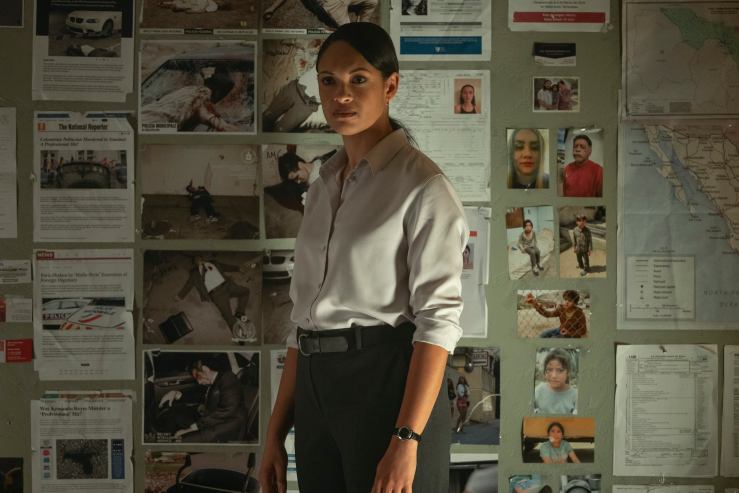
Each tip that Christian or his operation sends in has continued to prop up her career. Still, she literally cannot sit well with it, such that she continues to have chairs ordered for her office.
It acts as a physical manifestation of her discomfort with the arrangement. On the one hand, Marybeth can acknowledge that the tips Christian and his people send her are worthy of investigation. Braxton’s tactics especially unnerve her.

Still, it never feels to her as if the scales are quite balanced. Because, in her book, Christian Wolff – and Braxton, once she meets him – are no better than the people she is directed to.
When it comes to this world, Christian and Braxton are the ones who drive it toward its inevitable conclusion – and Marybeth collects justice in an injust world.

All of Marybeth’s efforts to follow the book ultimately fall short. They are honorable and noble, but they are the actions of a competent, moral person in a world where her opponents are not above sniping somebody in FBI custody right in front of her. As mentioned previously, Ray King’s murder is what prompts Marybeth to take action. If not for his efforts in the film’s opening act, it is doubtful that Marybeth, Christian, or Braxton would have even known that a scheme was unfolding.


Every move that Marybeth makes thereafter is expected and countered. While Braxton and Christian’s presence complicates matters for the villains, her resistance is what nearly cripples their success partway through the film. It begs the question that Marybeth ultimately answers: Is morality worth pursuing for the sake of justice? When she uses Harbor Neuroscience’s name to get documentation from a Hospital, it becomes clear that bending the rules has its place.
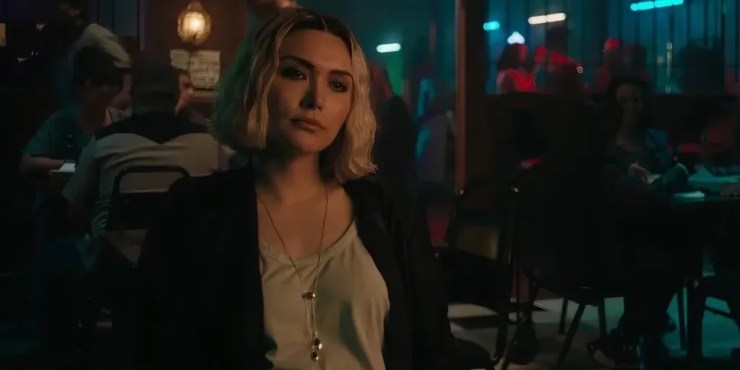
We are introduced to a quartet of new characters who are central to The Accountant 2. First is Anaïs (Daniella Pineda), a ruthlessly efficient assassin who meets with Ray King in the film’s prologue.
When they are ambushed, she assumes that King was the one who was followed and departs the situation, which ultimately results in his death. While she is technically right, Anaïs was also being trailed for the very same reason that Ray was, which provides the central mystery that the protagonists untangle over the next two hours.
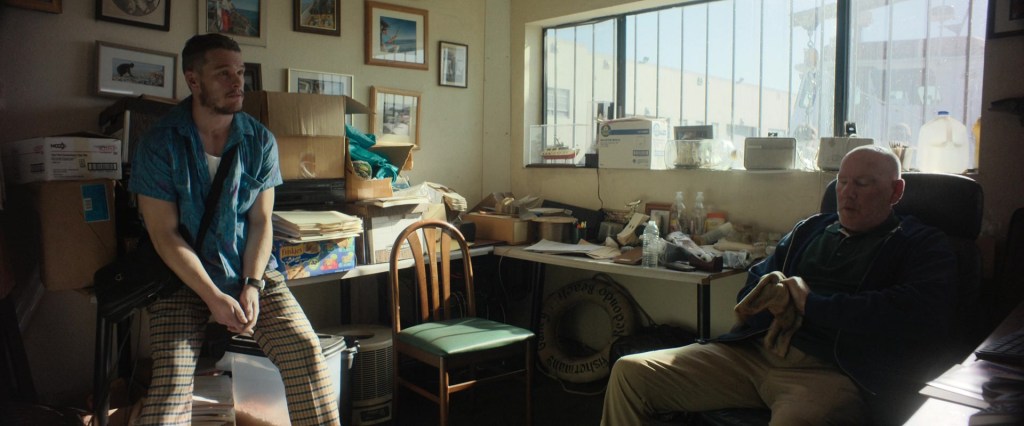

Second, there is Burke (Robert Morgan), the primary antagonist who has been orchestrating a human trafficking ring for years, and is attempting to eliminate any threat to his operation before it can blow back on him. Third, there is Batu (Andrew Howard), who is revealed to be the employer of Braxton and Anaïs, dispatching a worldwide assassination network that has suffered a setback since Christian tore his way through Braxton’s team in 2016.
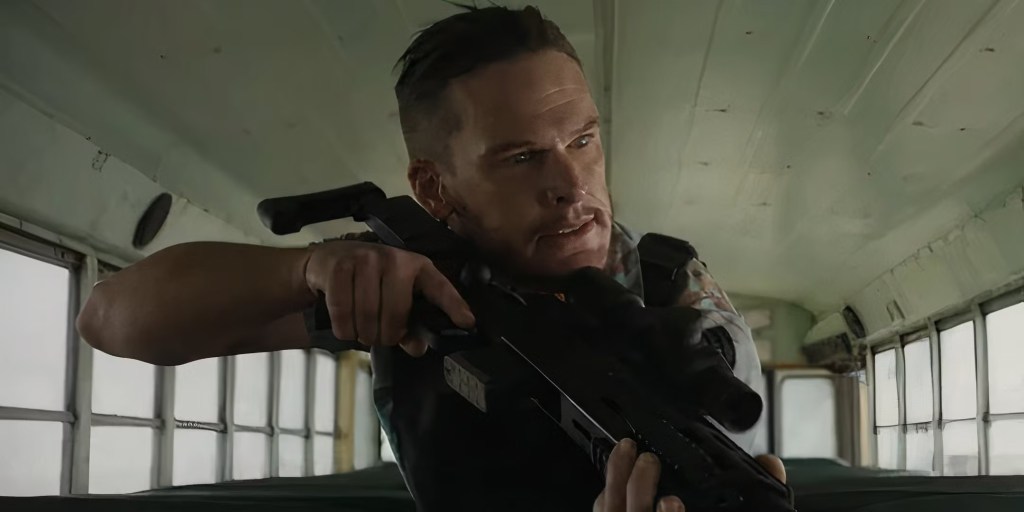
Finally, there is Cobb (Grant Harvey), who acts as the muscle for Burke’s operation and is ultimately tasked with removing evidence of its existence.
His presence ensures that there are stakes to the action – a physical force that can push Christian and Braxton. In contrast, Burke merely acts as an ideological threat to them and a personal milestone for Anaïs.
What makes The Accountant 2 so enjoyable is that it does not ignore the grim reality of the world it has devised. It openly acknowledges that it exists in a gray zone, where simply ‘being good’ is not in and of itself enough. Marybeth is not wrong for wanting to do things by the book, but she exists in a world where moral turpitude exists, and being ‘right’ cannot protect you. Her discomfort with the tactics that Christian uses is understandable. Still, the key difference is that these are tactics she uses. The only difference is that she has a piece of paper signed by a judge, and, as the media shows again and again, a subtle disregard for legality and morality is often used to ensure that piece of paper is signed. Christian, Justine, and Braxton skip a step, which is precisely why the film has a happier ending than it would have if Marybeth had conducted her investigation by herself. Whether that is a good thing or not is why this is a fictional story and not the real world.
Because sometimes, a story works best when told through the lens of fiction and not reality. It is easy to root for Christian Wolff and Braxton to tear their way through mortal manifestations of humanity’s worst traits. It’s generally less thrilling to imagine it in the real world.
 Lloydd Marshall Books