

With its sequel recently released and the horror-comedy version of the film delving into it earlier this year, I felt it was time to take a look at an old classic. Granted, this was the third Freaky Friday film to go by the title, but the fifth film in the franchise, so ‘old’ is, of course, a relative term. Starring Jamie Lee Curtis, right after her first post-Halloween: Resurrection return, and Lindsay Lohan during her initial zenith, the story is as old as time and remains enthralling twenty-two years later. The only major surprise was the length of time it took for this film to receive a sequel.
Tess (Curtis) and her daughter Anna Coleman (Lohan) have struggled to see eye to eye with one another. Things have only escalated between them as the countdown to Tess’ marriage to Ryan Volvo (Mark Harmon, in one of his few film appearances during his stint on NCIS) draws closer to zero. The two could not be different from one another. Tess is a straight-laced, rather conservative psychologist, and Tess is a rebellious, punk-rock girl who views music as more than just a passion, but a purpose. Their inability to effectively communicate with one another about even the smallest details of their respective lives leads to endless conflict between them – something that has impacted all of their relationships through their personal lens. By the time they get to dinner, their argument has disrupted much of the balance in their family.
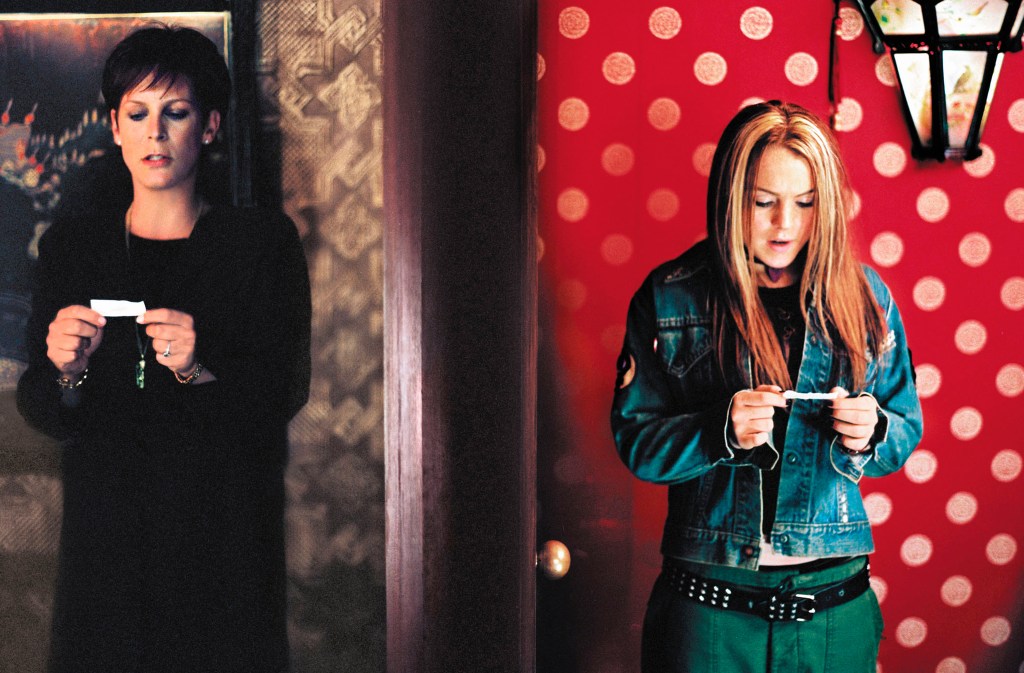
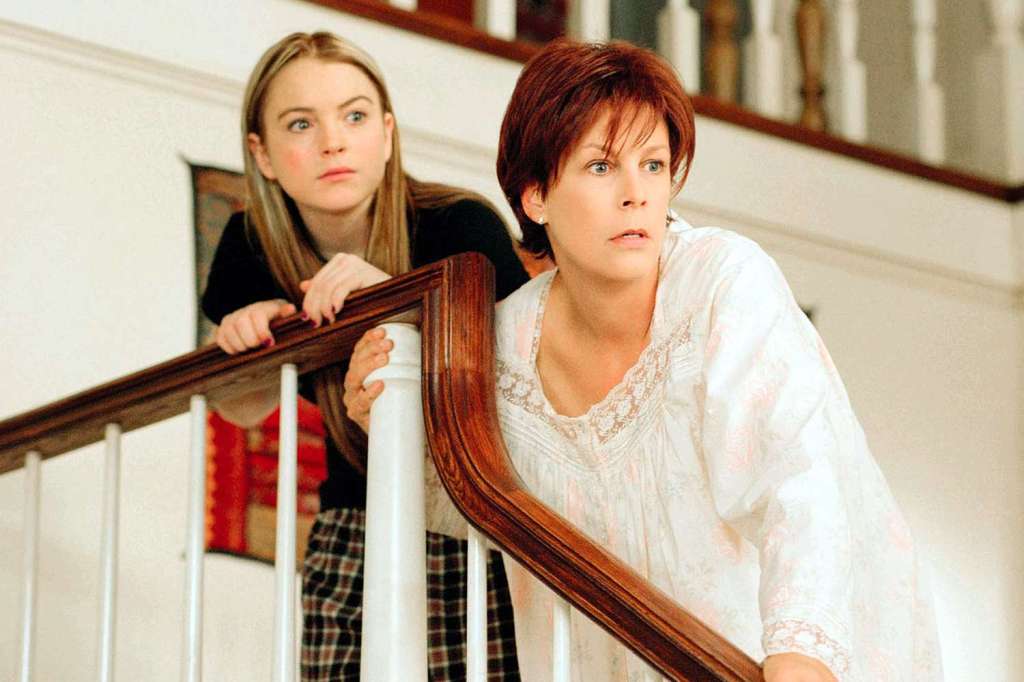
Part of what makes the conflict interesting is how it focuses on ‘familial obligation’ at its core, and the dynamics that thread throughout what it means to be a member of a family. Tess and her band, Pink Slip, comprised of her two best friends Maddie (Christina Vidal) and Peg (Haley Hudson), have locked down an audition for a spot in the Wango Tango showcase, which happens to coincide with Tess and Ryan’s wedding rehearsal. Yes – the rehearsal, not the actual wedding. Part of what it means to be a parent is understanding when, how, and why to restrict what your child does with their life while they are still a child. What that looks like from one family to the next is clear.


By the time the film opens, it is clear that Tess has tacitly supported Anna’s interest in music. Guitars and an entire setup for her band in the garage are not cheap. While the electric guitar Anna uses was her father’s, the space was never removed. The implication is that Tess does not mind Anna’s pursuits, which undercuts most of the arguments that Tess is a selfish person who does not care about her daughter’s interests or her life. Vice versa, Tess and Ryan are taking a major step forward in their relationship, and while the film does not delve too deeply into the difficulties that stem from trying to parent another person’s child.
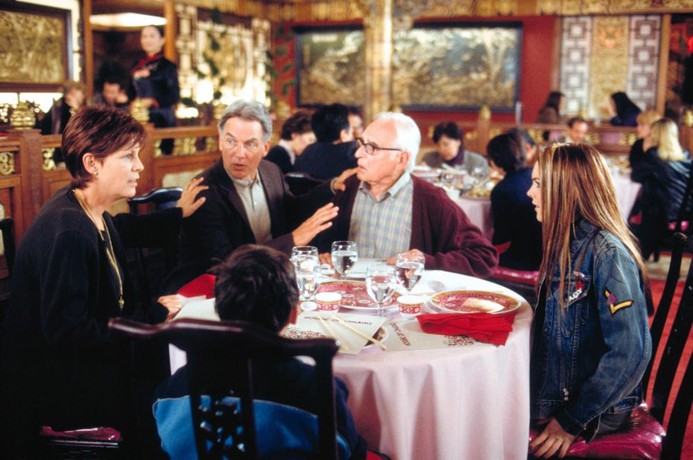
Tess is implicitly setting the stage for marrying Ryan. Still, the film does not focus on this complex topic; it does show that Ryan is attempting to bridge the gap between himself and Anna. Ryan views his relationship with Tess as stable and secure. Ryan does not view his relationship with Anna in the same vein. This makes it more understandable why he would support Anna slipping out of the rehearsal, or outright skipping it, in favor of a milestone performance with her friends. Brownie points are not something to overlook.
We see, through the film, that it was not just about understanding one another, but also about how they viewed the world around them that needed to change. This is because our perspectives are shaped by our experiences and knowledge. Tess did not understand that Anna was not exaggerating about her treatment by Stacy (Julie Gonzalo) or her English teacher, Mr. Elton Bates (Stephen Tobolowsky), until she inhabited Anna’s body. Anna did not fully grasp how her younger brother, Harry (Ryan Malgarini), felt about her until she was in Tess’ body, because Harry would confide in their mother in ways that he wouldn’t or couldn’t with his sister. It is these unvarnished moments that carefully frame the story’s themes. Perspective cannot exist without context, and Freaky Friday takes the time it needs to provide that context to us long before Anna and Tess get it.

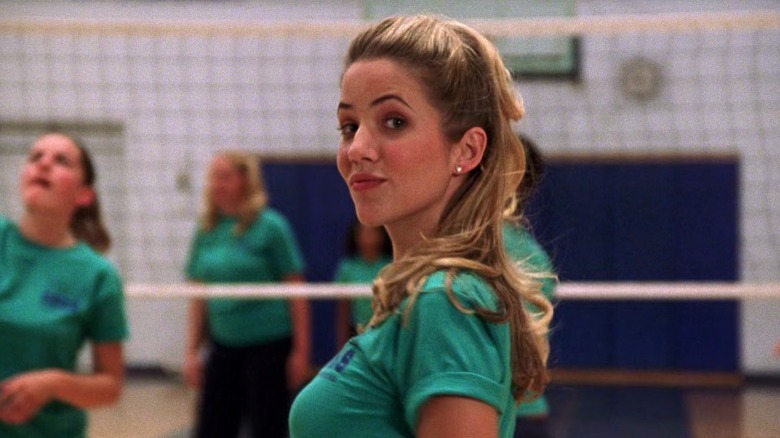
During this period, a massive comparison was made in the media among three specific starlets – Lindsay Lohan, Hillary Duff, and Amanda Bynes. For a time, it was impossible to escape one of their films, not that I even wanted to. Since Hollywood has always had a tendency to recycle itself when casting its productions, this resulted in the then ‘it-boys’ jumping from one film to another, with most of them. But it was also one of those little details that was blown way out of proportion. Considering that only Chad Michael Murray starred with Duff and Lohan in A Cinderella Story and Freaky Friday, and Oliver James starred with Duff and Bynes in Raise Your Voice and What a Girl Wants, it becomes clear this was one of those stories that became “talked about” with little ground to actually stand on. I find it far more interesting that Julie Gonzalo starred with Jamie Lee Curtis in Freaky Friday, exchanged practically no dialogue with one another, and then went on to play her daughter in Christmas with the Kranks.


Freaky Friday was not trying to be an explosive story that challenged genre conventions. It was meant to be a fun, energetic ride. It did set out to tackle a deeply complex relationship in a state of flux. Parents and their children, even in healthy relationships (which this assuredly is), do not always have the easiest time communicating with one another. Tess and Anna’s relationship before the movie begins is only hinted at, through pictures in the opening credits and a handful of lines over the film. We are left to infer what it was like so that we can focus on what it has become. In the end, it sets the stage for it to come out in a better, more stable, and more understanding place.
 Lloydd Marshall Books