
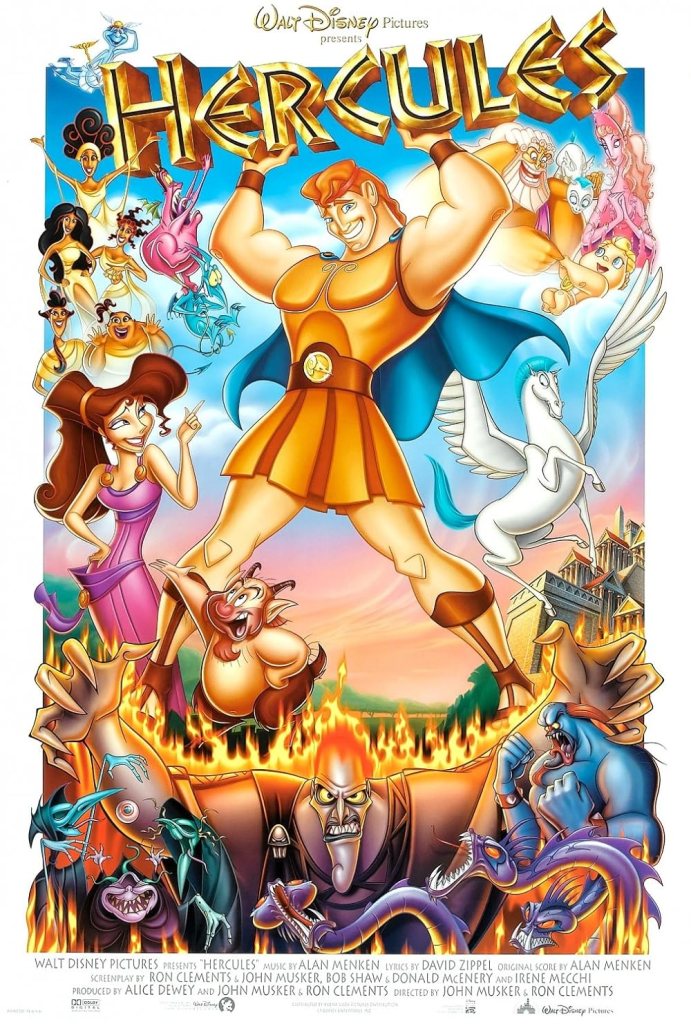
Released in 1997, Hercules was one of the darker Disney films of the Renaissance era. That it managed to adapt one of the more mature topics ever put into literary form is, in and of itself, an entertaining miracle. After all, some of the most famous tales and myths involve Hera, presented here as Hercules’ biological mother, attempting to eliminate him by any means necessary.
Never mind the focus on sex, violence, and other aspects that most people would not consider child-friendly. Still, with all that in mind, Hercules was a financial and critical success, earning it even a nomination for Best Original Song for “Go the Distance.” It is not the film’s fault that it was released in the same calendar year as Titanic.
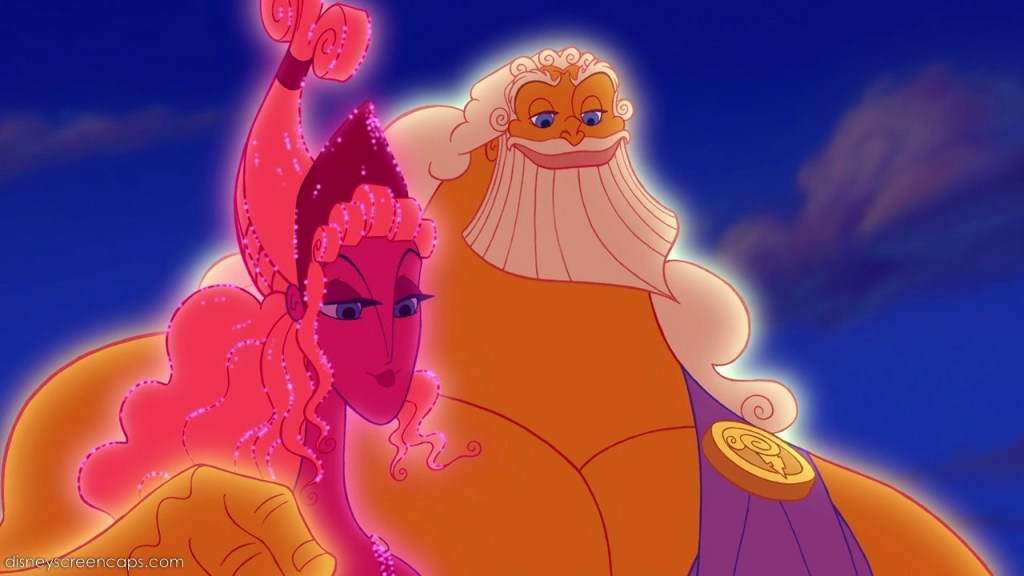
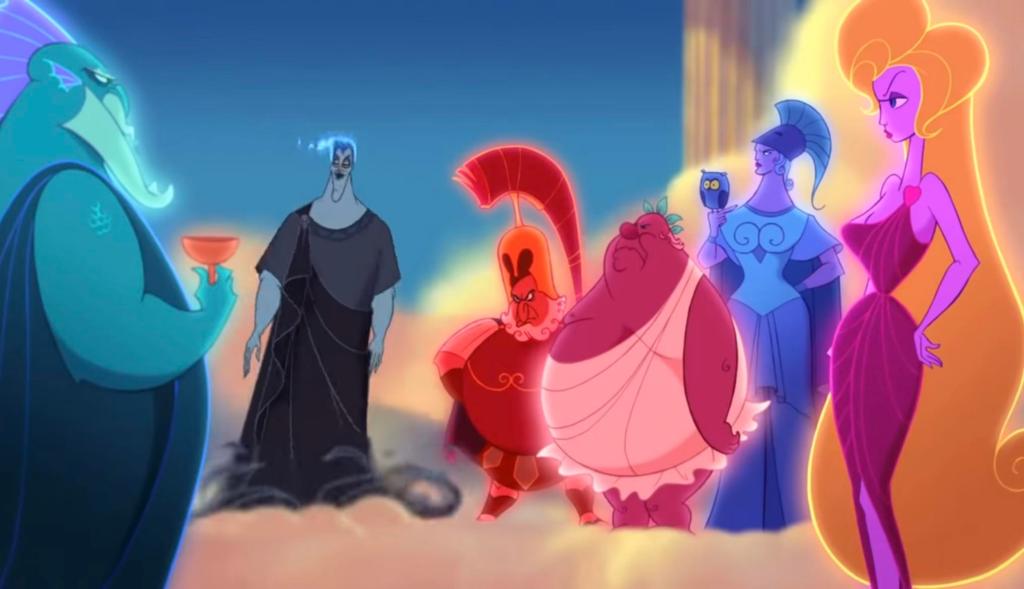
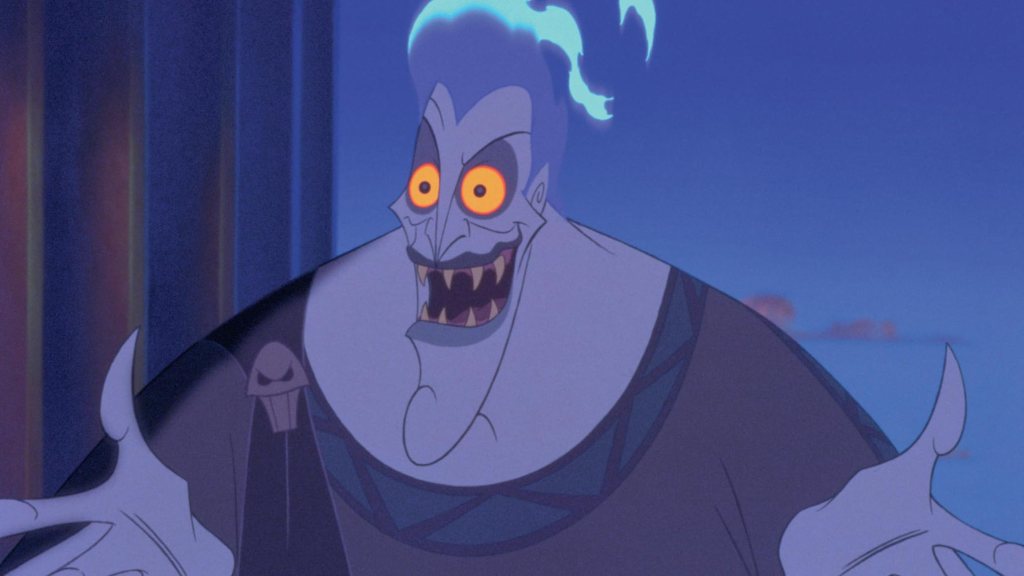
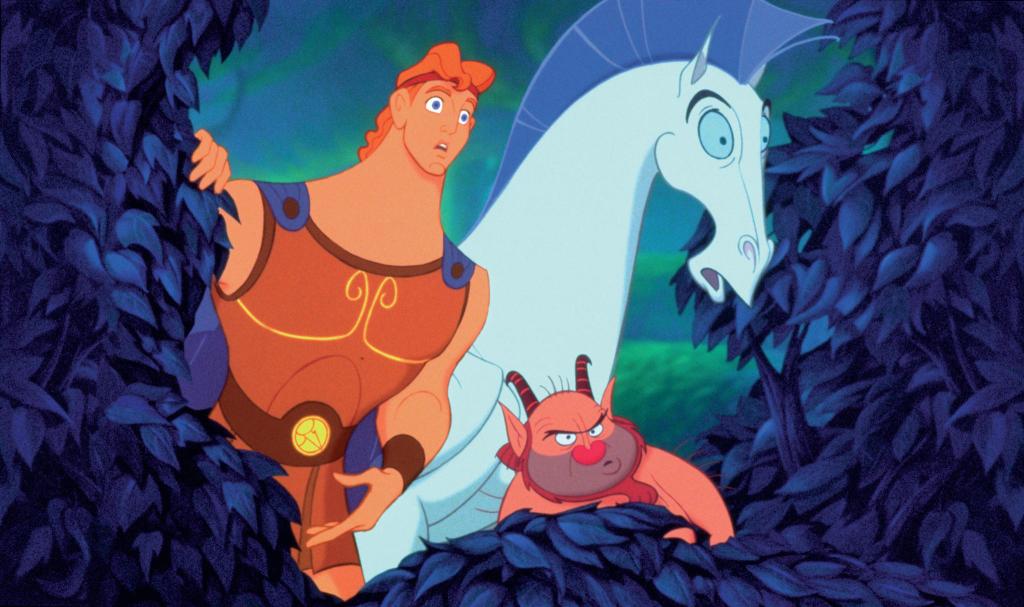
Set in Ancient Greece, Hercules (Voiced by Tate Donovan, Josh Keaton as a teenager, and musically voiced by Roger Bart) is the son and heir of the King and Queen of the Gods – Zeus (Rip Torn) and Hera (Samantha Eggar). Hades (James Woods), bent on revenge for being ousted from Olympus and banished to guard the Underworld, sends his minions, Pain (Bobcat Goldthwait) and Panic (Matt Frewer), to kidnap the newborn baby, drain him of his immortality, and set the stage for the collapse of the Divine Order. Because Hercules is fully divine, rather than the child of Zeus and a mortal woman, this plot beat was added to ensure that the majority of the Myth could unfold as written. Found seemingly abandoned by Amphitryon (Hal Holbrook) and Alcmene (Barbara Barrie), Hercules grows up as a mortal unaware of his true heritage or why he is so different from those around him.
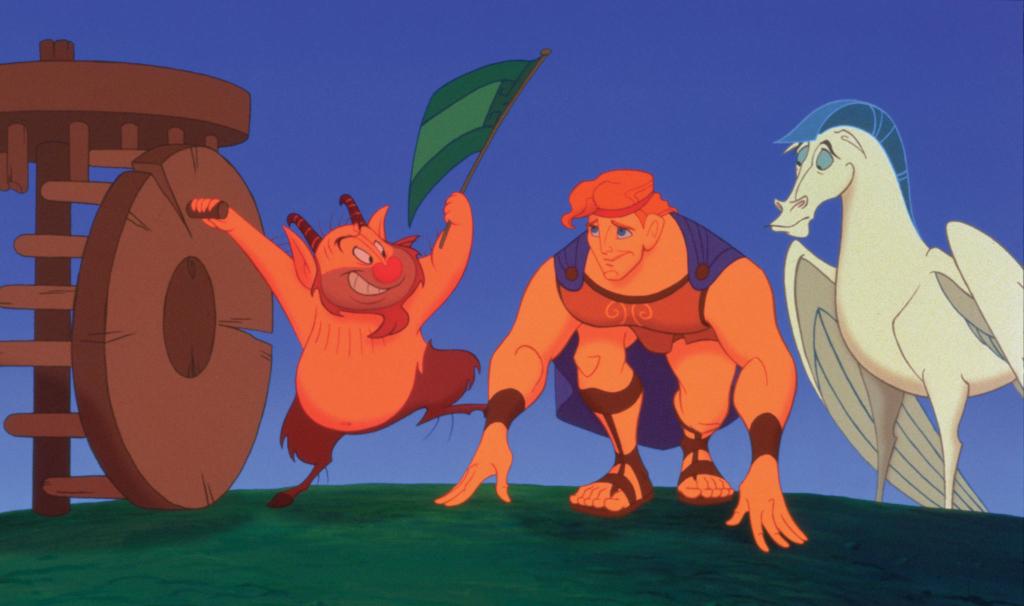
Hercules’ journey from an awkward, gangly teen to the musclebound visage he is known for is played out through a montage and a sixty-five-episode television series that notoriously ignored multiple plot beats from the film. Granted, its release in 1998 and the intentionality of the people behind the show to simply have fun with it, give it more than a bit of leeway. During this period, Hercules is under the care of Philoctetes/Phil (Danny DeVitto), a crochety satyr who did not want to train Hercules but does so under divine order (read: threat) by Zeus. This film also provides one of the most interesting contrasts to my favorite Disney film, Sleeping Beauty. In it, Maleficent spends years searching for Princess Aurora fruitlessly because of her bumbling minions, whereas here Hades lounges around believing that he has already won because Pain and Panic gave him a report that indicated that Hercules was dead. Years passed by for both villains before their next confrontation, but minion incompetence was at the root of both.
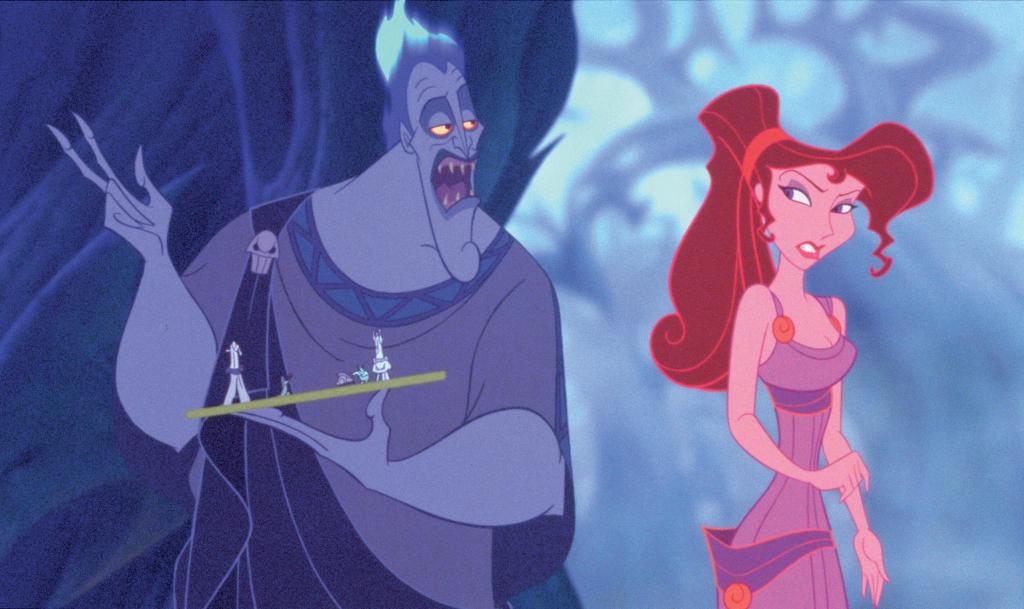
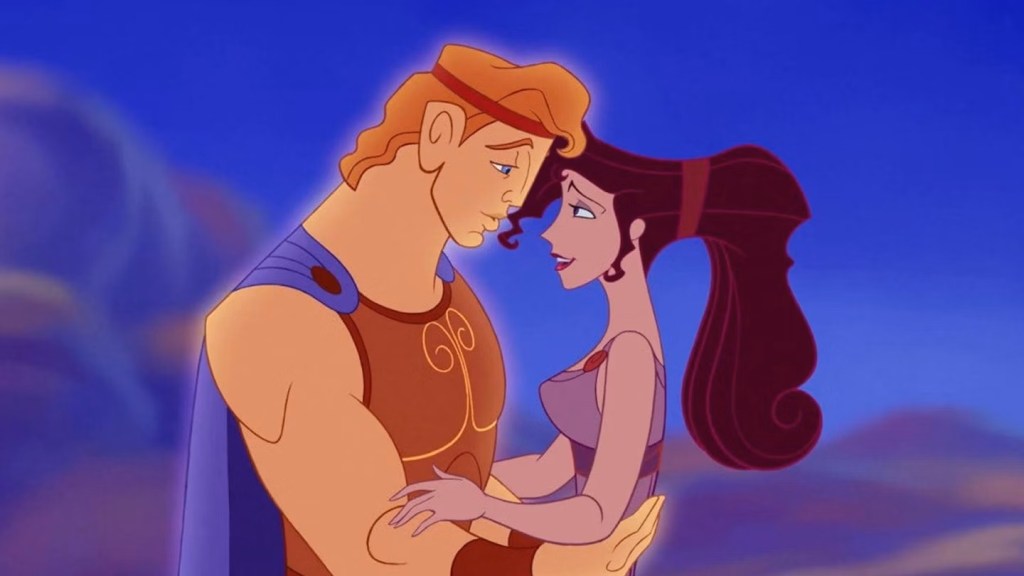
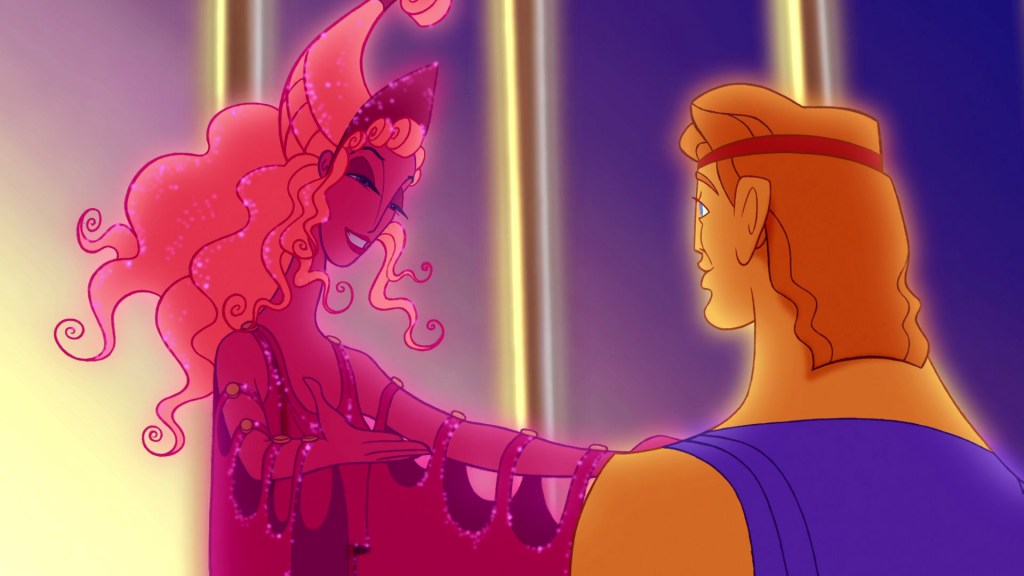
The relationship between Hercules and Megara (Susan Egan) is central to the plot. While a minion of Hades, trying to salvage what’s left of her life and soul after a deal with Hades left her with the short end of the stick, she comes to care about him truly. Before the reveal, we spend much of the time with her character in a way that serves to differentiate her from the standard love interest, a facet of 90s Disney films that has continued to the modern era. Her introduction is designed to riff off the standard ‘Damsel in Distress’ scenario, caught up in one of Hercules’ 12 Labors. Because of her past, her ability to trust and rely on Hercules is complicated – men have proven to be manipulative cowards who would abandon her at the first sign of difficulty. Hades preys on this fear of hers, granting him leverage that could hurt both of them.
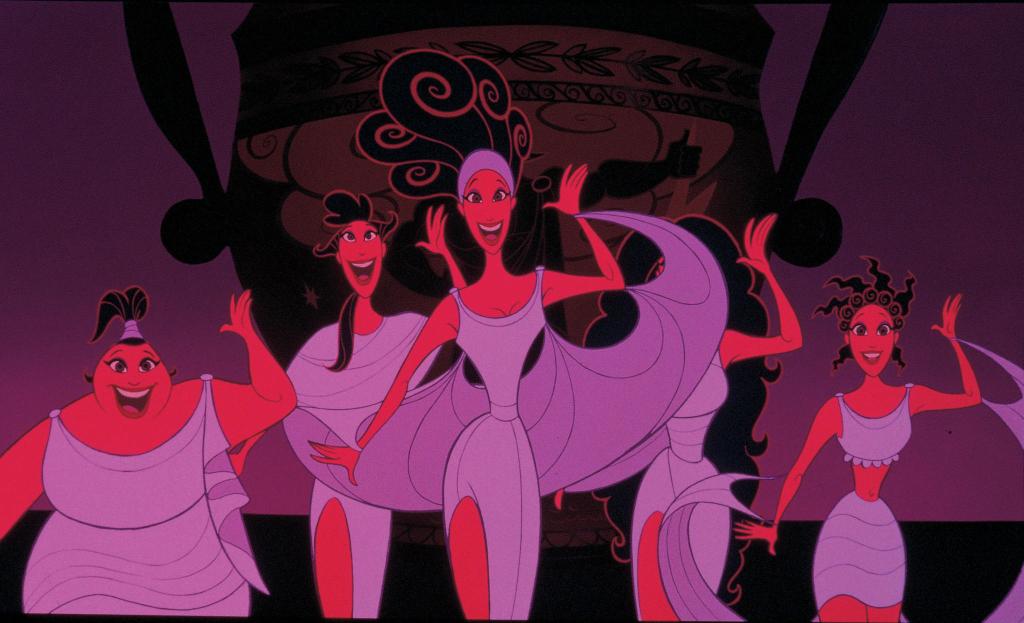
Where music becomes a core aspect of a Disney film, Hercules emphasizes it further through the unique concept of The Muses (Lillias White, Cheryl Freeman, LaChanze, Roz Ryan and Vaneese Thomas), powerful figures in Greek Mythology. They act as a narrative chorus, telling the story and delivering one of the most engaging songs of the film (Zero to Hero). The “I Want Song” was the aforementioned “Go The Distance,” and we get a true in-depth look into Megara’s feelings, positive and negative, during “I Won’t Say (I’m In Love).” While there was no villain song, which is not a prerequisite for Disney films and is more often not included, James Woods does not take a back seat in this film. Having ad-libbed many of his lines to capitalize on his comedic timing, he delivered a memorable performance.

Several liberties were taken with the Greek Myth surrounding the titular character, and unlike Pocahontas – a person whose existence is confirmed – Hercules is not a real historical figure. So, it is not entirely surprising that Hercules (1997) was one of a long list of films considered for and ultimately will receive (as of the writing of this review) a live-action adaptation. For that reason, it is clear why Pocahontas will likely never receive an adaptation; however, as the preproduction process for an adaptation of Hercules rolls on, controversy has struck it for similar reasons. The Russo Brothers are (as of the writing of this review) attached to the project, and the reception to their initial pitch, from audiences, critics, and perhaps most importantly, executives, was not lukewarm. Rather, it seemed colder than Dante’s eighth level.
A POV-flip focused on Hades was not viewed with antipathy, mind you. It was the modern approach focused on TikTok that had people scratching their heads. Maleficent and Cruella both demonstrated that a perspective flip can be effective and work well. A nuanced, more grounded retelling, such as Cinderella (2015) and Mulan (2020), both of which retained fantastical elements while omitting the musical aspect from their adaptations, proved that an enhanced version of the story can work well too. While more recent efforts have faced pushback from audiences and critics alike, Disney’s long-standing track record of success is often taken into account more than that of other studios. While they have slowed down production on their live-action adaptations, that does not necessarily mean they’re cutting them outright from the slate. The most recent reports indicate that Disney will be taking a more faithful approach to the Hercules franchise. Time will tell, and so will I.
 Lloydd Marshall Books