
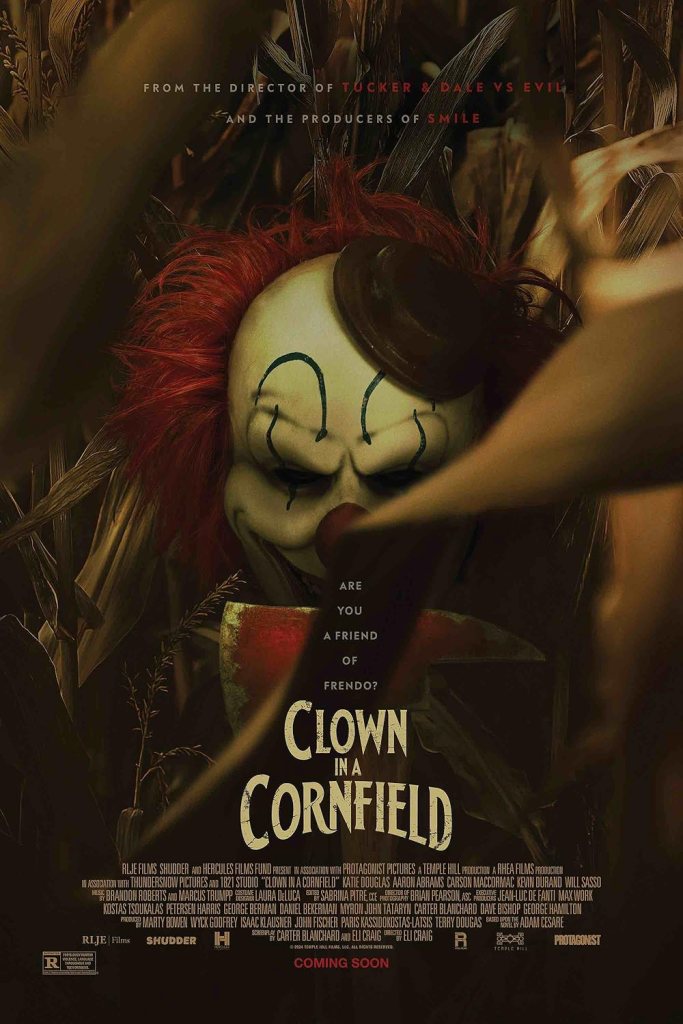
Clown in a Cornfield was one of several slasher films released over the summer of 2025, and what particularly drew me to it was Katie Douglas, who plays the lead role of Quinn Maybrook. Her role as Abby in Ginny & Georgia has been one of my favorite aspects of the show, and I always like seeing how an actor handles material outside of what I am introduced to them in.
Horror is viewed as an easy genre to tackle because it usually relies on jump scares at the expense of characterization, but that is a gross mischaracterization of a genre that will tackle tough topics, sometimes directly, other times in an allegorical manner. Clown on a Cornfield was based on the 2020 novel by Adam Cesare. It was an interesting slasher story that deals with the aftermath of Quinn’s mother dying of a drug overdose, resulting in her father, Dr. Glenn Maybrook (Aaron Abrams), moving them to a small town, Kettle Springs, to try and leave everything in the rearview mirror. What is meant to be a fresh start in a quaint, new place turns into a bloody nightmare of prejudice and homicide, and Quinn is forced to fight for her life.
Horror fiction has begun to move in the right direction. With every year, authors are taking that leap and tackling the slasher genre, an oft-lambasted facet of horror. More often than not, people poke fun at its reliance on tropes, despite most of the more interesting slashers ignoring or deconstructing them from the get-go. In fact, the earliest slasher films didn’t rely on the conventions that are often laid at their feet or did so in such a way that made logical sense. “Logical” does not mean rational, as I think most of us would concur that mass homicide is not entirely a logical solution to take with one’s problems.
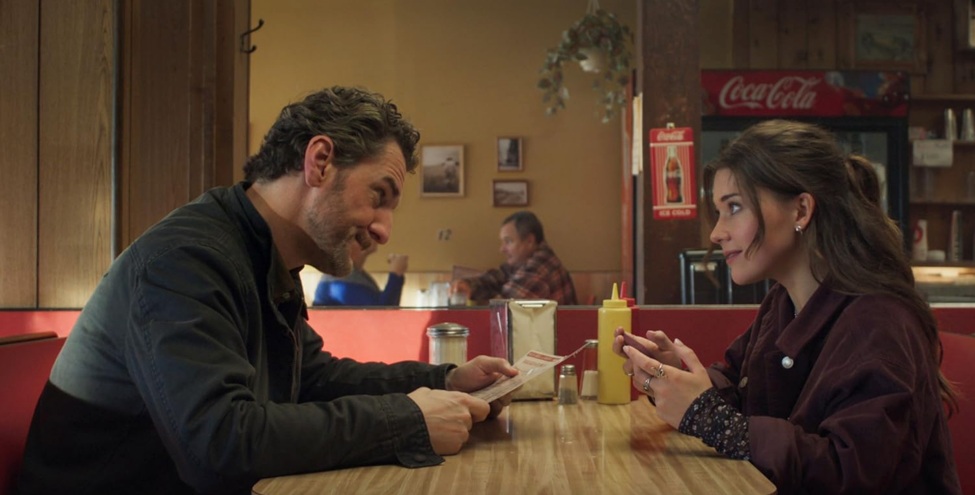
While the novel takes some time to delve into the slasher elements, the film adopts a different approach, altering the core concept of why the massacre is occurring, and thus opens with a death scene. Slasher films love a good prologue that sets the tone before we get to our main characters, and the film adaptation took that route – introducing a young couple who are brutally murdered. It is only after this, about thirty-four years later, that Quinn and Glenn are introduced as they move to Kettle Springs. She acts as the gateway to the community, ensuring that we see just how out of touch the town is by virtue of its hostility towards a girl who quite literally arrived yesterday.
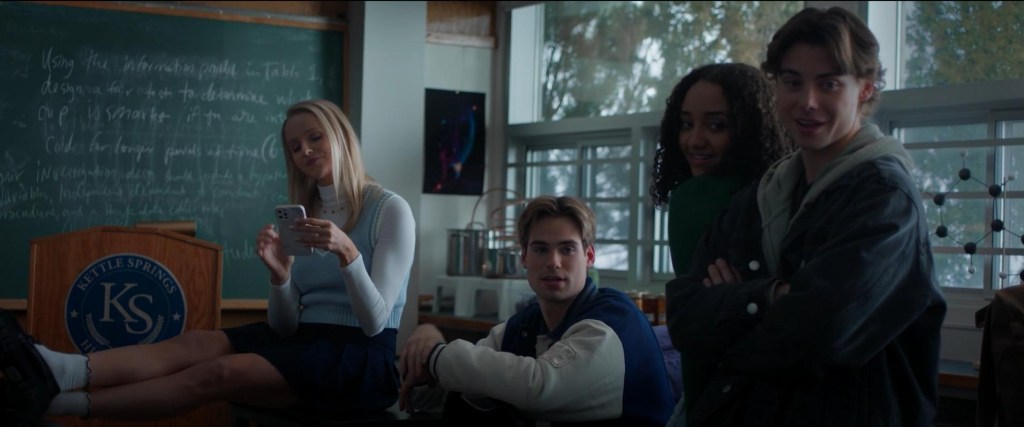
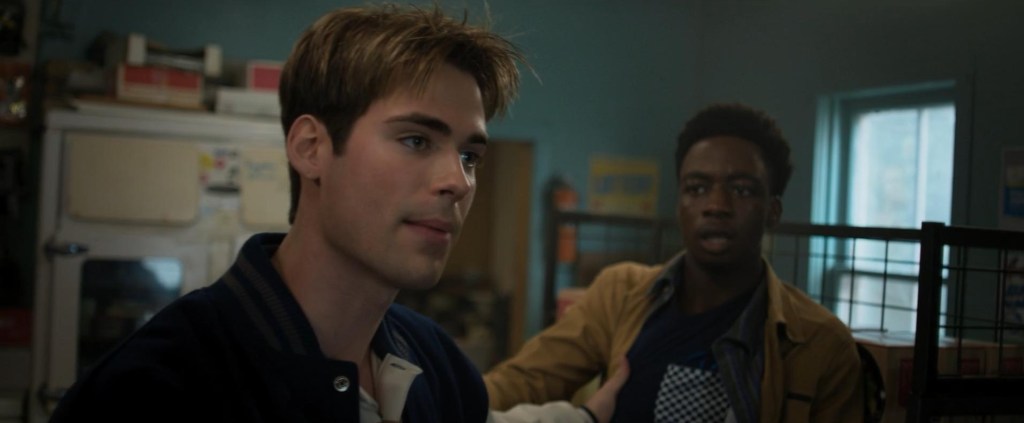
Quinn first meets Rust Vance (Vincent Muller), implied to be a close neighbor who is a bit awkward and played off as a stereotypical ‘redneck,’ interested in hunting, a bit socially awkward, but rather endearing. After this, Quinn is drawn into a pre-existing friend group circled around Cole Hill (Carson MacCormac), the son of Arthur Hill (Kevin Durand), the mayor, and a man whose family is intimately connected with the foundation of the town. His friends include Janet Murray (Cassandra Potenza), Ronnie Queen (Verity Marks), Matt Trent (Alexandre Martin Deakin), and Tucker Lee (Ayo Solanke). My favorite part of the story was the back-and-forth between Cole and Rust. For more on that, please watch Clown in a Cornfield!


The town seems to ardently hate this particular group, even more so than the rest of the teens. Perhaps the biggest missed opportunity for the film, in my opinion, is that the kids did not get the chance to toss back in the adults’ faces that their behavior and antics are a direct result of their parents’ and the community’s influence. You are where you live… That is not a flaw, because they wouldn’t have been able to see the irony of the situation, let alone the truth of the matter. After all, the killer’s motive is steeped in “logic,” not rationality.
To call the group “friends” of Quinn is an oversimplification. They are the first people to embrace her, albeit their pranks – which are not entirely harmful, just disruptive – throw her into their lot despite her having nothing to do with them. Janet and Ronnie are the ones who offer the most resistance to her presence. For Janet, it is primarily implied that she was interested in Cole and was rejected. Quinn’s seeming closeness with Cole acts as a thorn in her side. Ronnie is her loyal best friend, and that means her actions are all but predetermined to be in Janet’s favor. Sadly, Tucker and Matt don’t get nearly enough time around Quinn for us to parse how their relationship with her goes one way or the other. From the scenes they do share together, they aren’t cruel or callous, just a pair of teen boys who are prank-obsessed.
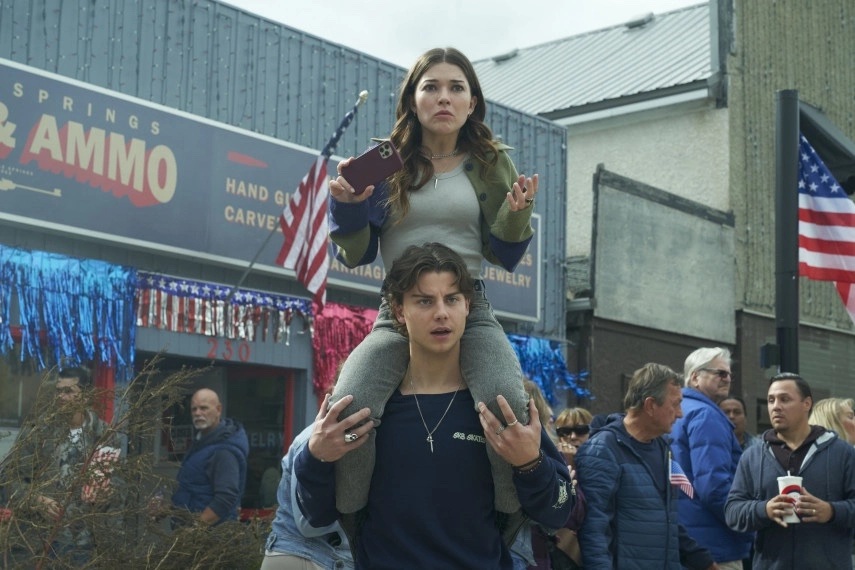

The adults in Kettle Springs are all portrayed as overly hostile to Quinn, for reasons that fail to land because they aren’t meant to. On her very first day at school, she is chastised for being late to class by her teacher, Mr. Vern (Bradley Sawatzky), and when she attempts to explain that she had been given wrong directions, she ultimately ends up in detention. Trudy (Daina Leitold), a diner waitress, is friendly with Glenn, but her dismissiveness of Quinn, a girl she has literally never met, comes across as comically overzealous. While Sheriff George Dunne (Will Sasso) is less overtly hostile when he first meets her, his attitude towards her simply being in the vicinity of a group of kids he doesn’t like is less than stellar.
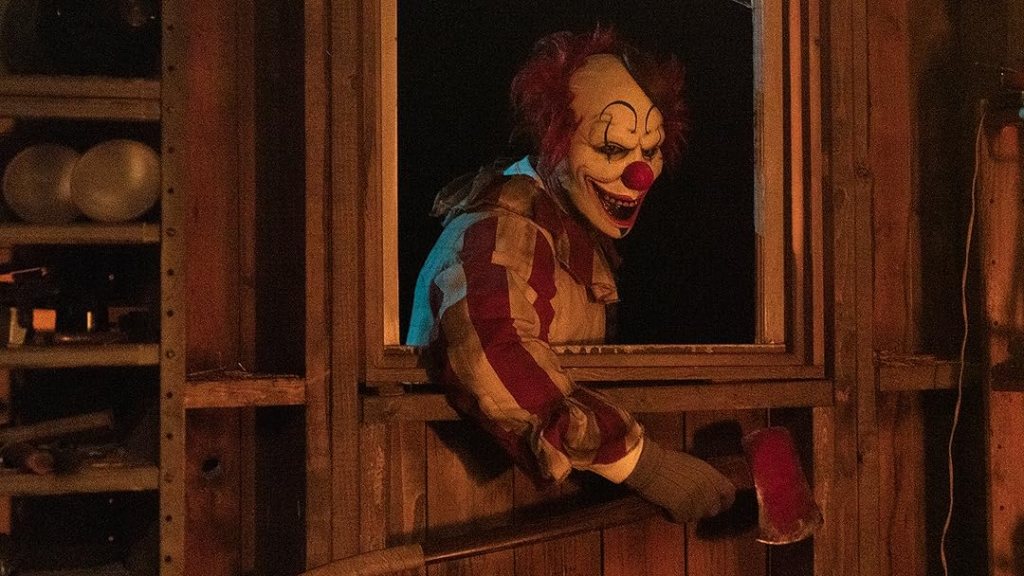

When adapting the book to film, the minds behind it did make a massive change that dramatically alters the core of the story – and while the novel is five years old, the movie is only a handful of months old. For that little detail, I’d urge you to read the book. As I have pointed out in several reviews, adaptations cannot be viewed through the same lens as the original work. What works in a novel is not necessarily going to work in a film.
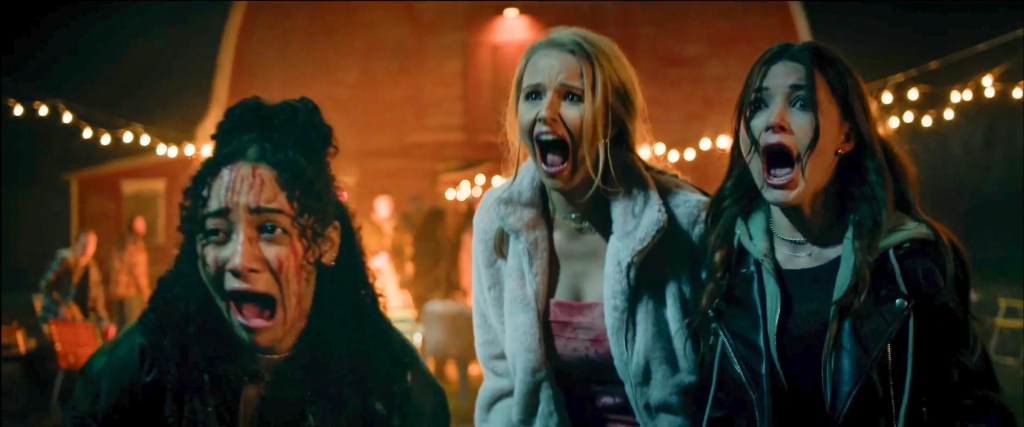
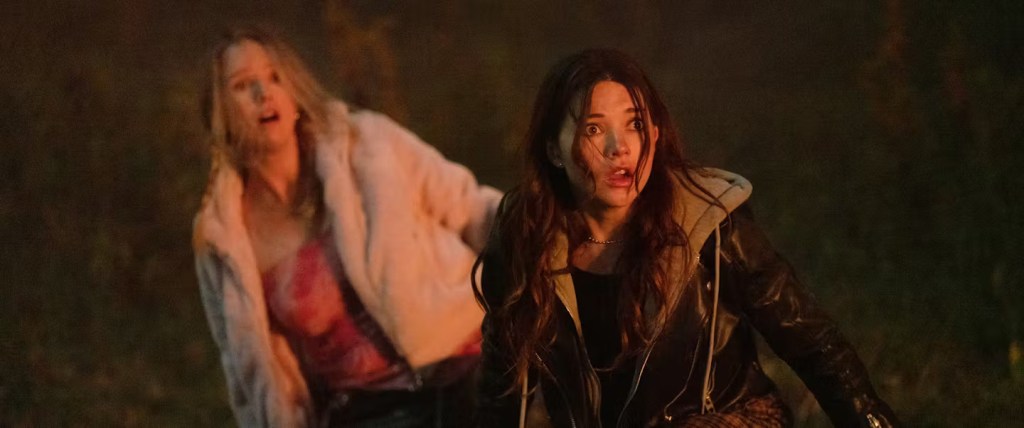
Clown in a Cornfield was written in third-person limited POV from Quinn Maybrook’s perspective – we see and feel the story through her eyes and are inside her head the whole time. This means that the story is biased towards her perceptions and knowledge. In contrast, the film is able to capture things from an external POV. True, the book will switch to the POV of another character, which is one of the strongest reasons authors will choose third-person limited, but this is generally because the character is about to die.
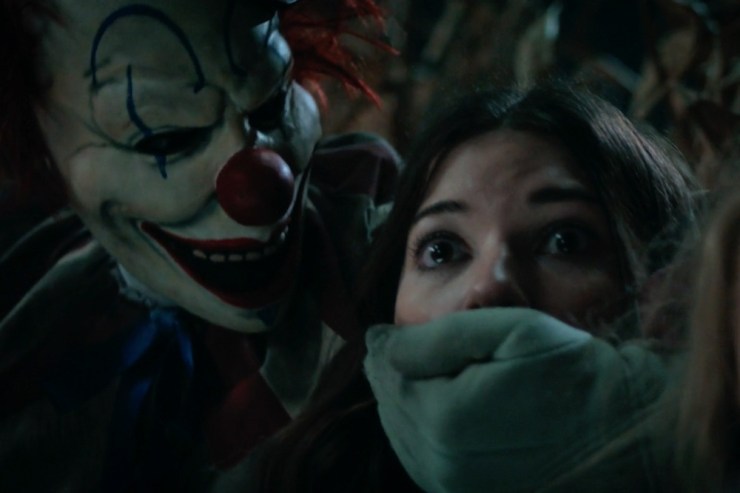
Clown in a Cornfield was a fun slasher film that reinforced, for me, why Katie Douglas is a good actress.
It relies on humor and comedic timing in addition to creative kills, which are some of the film’s greatest assets. Beyond that, the story’s nuance, which focuses on generational trauma and teen relationships, positions it as a story worth taking a look at.
 Lloydd Marshall Books