
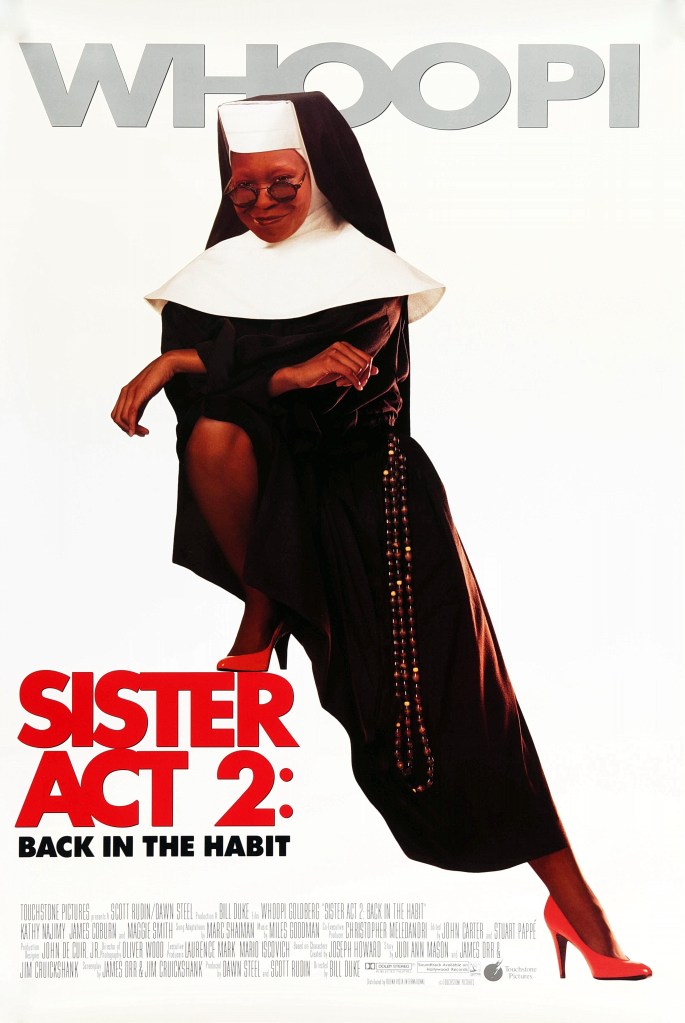
Released just around a year and a half after the first film, Sister Act 2: Back in the Habit reunites Whoopi Goldberg with her co-stars Maggie Smith, Kathy Najimy, Wendy Makkena, and Mary Wickes. Where Sister Act was a crime comedy musical, Back in the Habit set aside the gritty criminal aspect in favor of centering itself on educational reform. It did not drop the musical portion and would act as the breakout role for musician Lauryn Hill.
Set in a catholic school, St. Francis High School, this film was heavily inspired by the social justice work performed by Iris Stevenson, who worked at Crenshaw High School as its choir instructor and led her choir to perform at the Worldwide Music Festival in Nice, France. While she served as the basis for the character arc in Back in the Habit, it is imperative to note that Deloris Van Cartier (Goldberg), back in her cover identity as Sister Mary Clarence without the need to hide out from mafiosos, is still the same woman from her first outing. Dedicated, efficient, and stubborn enough to turn a classroom of unruly students into people who not only know they have a future but are also willing to put in the work to claim it.


Where the Monsignor of Sister Act was in on the plan to shield Van Cartier, the major leadership of St. Francis is decidedly not in the know here. This makes Sister Mary Clarence’s technique an enigma to most of the faculty and student body, who expect a nun who follows convention and would be a stickler for the rules. While she is not above ensuring her students follow the school’s rules, Sister Mary Clarence is also one to take risks and use unexpected tools to corral her students into something that resembles a capable choir and respectable youths. She meets them where they are at without ever lowering the bar, because to teach them, she must understand them. Not just who they are, but where they have come from.


St. Francis is under threat of closure, and with its end, the students in the community would lose not only a place of learning but also a valuable community that can help springboard them into their adult lives with skills they can rely on, relationships they can treasure, and safety to bask in. Father Maurice (Barnard Hughes), a humble man and the school administrator, and Mr. Crisp (James Coburn), the latter of whom is eager to close the school and enjoy his early retirement, have opposing agendas. Where Maurice clearly has a history with the Reverend Mother (Maggie Smith) and is doing everything he can to keep the school on the right track, Mr. Crisp is the villain of this story. He offers the biggest contrast to the previous film’s entire cast.

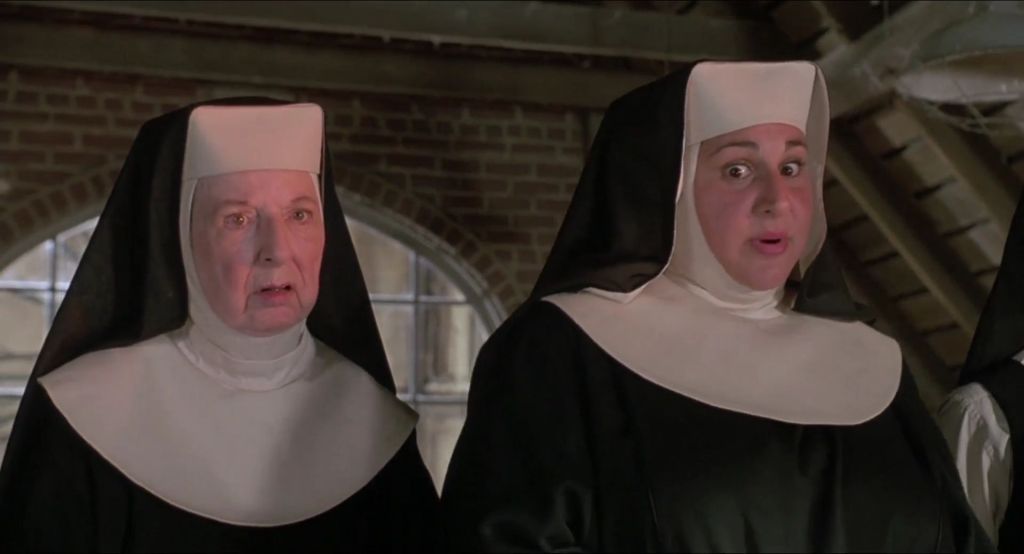
During her time as Sister Mary Clarence, she clashed with the Reverend Mother and Mr. Crisp. Still, only one of them genuinely had reason to bristle at her efforts. Sadly, the Reverend Mother has a vastly reduced role in this film, with around five scenes worth of material not counting the finale. But, as always, Maggie Smith is a force to be reckoned with. Sister Mary Patrick (Kathy Najimy) returns as comedic relief, teaching the students sex education in her own unique way, still acting as a rainbow in every scene. Sister Mary Robert (Wendy Makkena) takes on a similar role to Deloris in the first film, acting as a mentor to Rita (Lauryn Hill). Finally, Sister Mary Lazarus (Mary Wickes) acts as the choir leader but cedes control to Deloris in the hopes that she can do for the students what she did for the nuns, if not more.
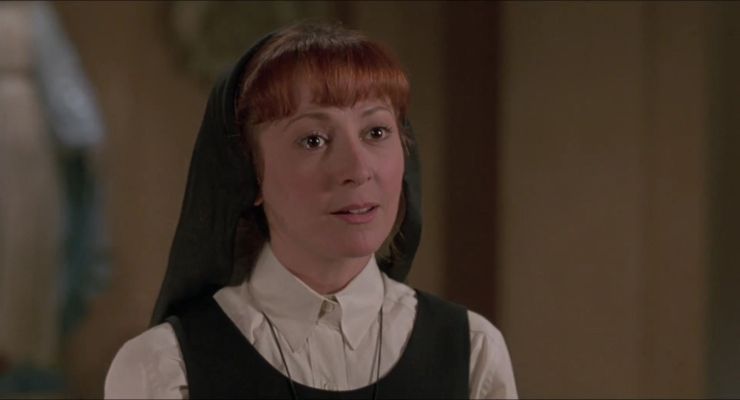
While her role is more minor compared to the first film, where her arc was intimately tied to Deloris’ story, Sister Mary Robert is anything but a wallflower this time around. Her efforts set the stage for the shift in Rita’s character.
Rita is, by far, one of the most well-developed characters in Back in the Habit. Despite her love for music and her natural talent, she is torn between what her mother wants and expects and her finding her own path in the world.

While their initial reason to seek out Deloris’ help was centered on just turning the school around and preventing its imminent closure, Mary Robert, Mary Lazarus, and Mary Patrick find old trophies while cleaning the music room and realize that the school had once been renowned for its choir. While there is no guarantee that the students involved could achieve great things, at first, Sister Mary Clarence is determined to help them do their best. If the school remains open, then that, in her opinion, is a happy coincidence. Even if, at the end of the day, it is her ultimate goal.
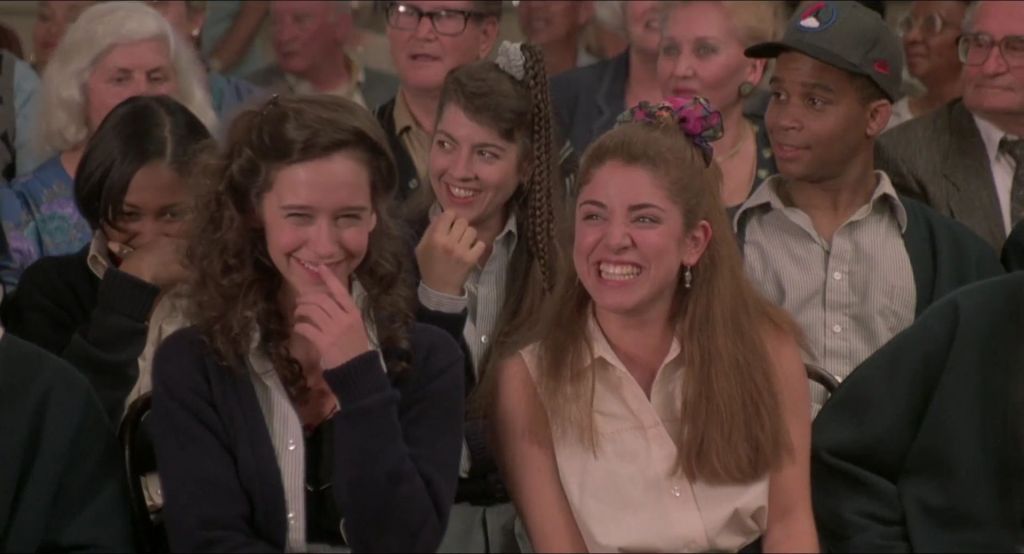

At first, the students viewed the class as an easy “A,” which is why many of them enrolled in it. Rita Watson is the most reluctant at first to undertake Sister Mary Clarence’s new direction. At the same time, the others view it as too much trouble not to go along and risk failing. The students are filled with numerous actors meant to fill out the class. Still, a handful are central to the storyline – such as Wesley Glen “Ahmal M’jomo Jamaael” James (Ryan Toby), Maria (Alann Ubach), Richard “Sketch” Pincham (Rob Johnson), Frankie (Devin Kamin), and, much like Lauryn Hill, Margaret (played by a young Jennifer Love Hewitt) in one of her breakout roles. Watching the core group grow from a ragtag bunch of misfits into a class that not only respects Sister Mary Clarence but is willing to go to bat for her when the inevitable exposure of her true identity gets out is… joyful.
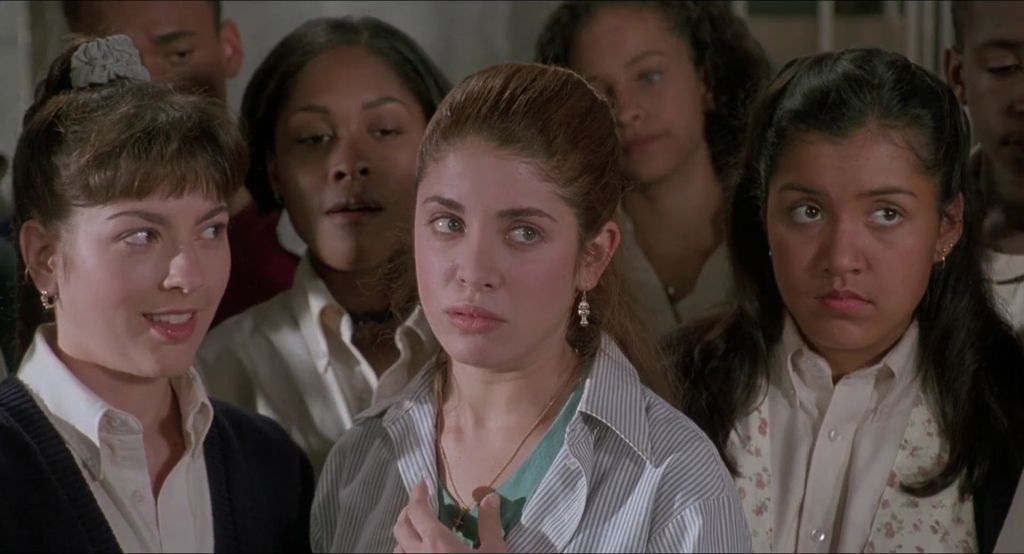
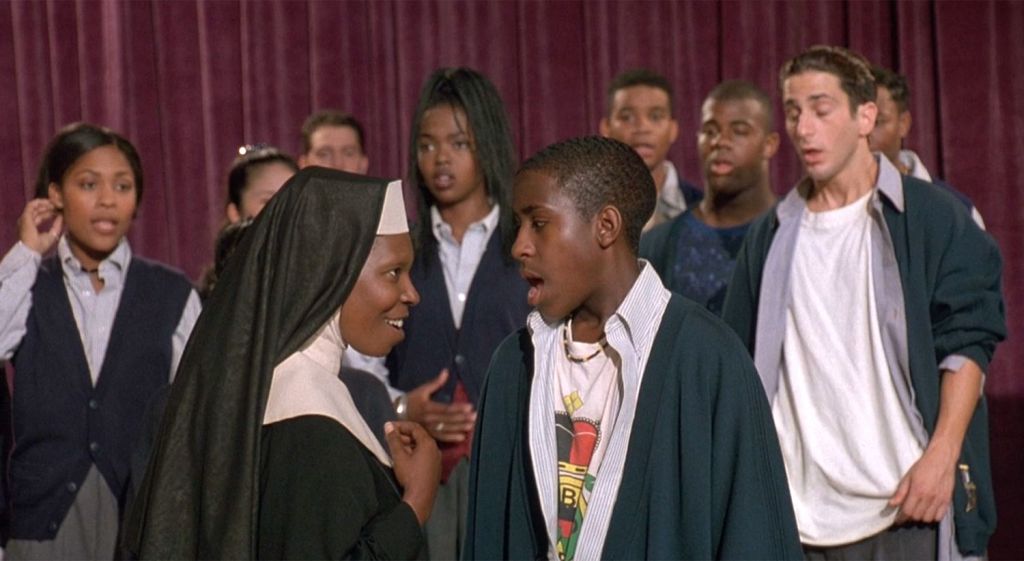
The additional supporting cast includes other faculty members, like Father Ignatius (Michael Jeter), Father Wolfgang (Thomas Gottschalk), Father Thomas (Brad Sullivan), and Rita’s mother, Florence Watson (Sheryl Lee Ralph). While the faculty cannot make heads or tails of Sister Mary Clarence, Florence is decisive in the her belief that music is a path to a long life of struggle and hardship, and acts as an obstacle to Rita’s path forward. In the end, they all come around, but their presence is a reminder that life is not simple or easy, even when you have support in your corner.


This time around, the nuns are not the only ones who are pulling double duty as actors and singers. The students under Sister Mary Clarence’s charge act as the primary musical performers as they prepare for a major competition, which they feel will lead to the school remaining open if they win. Although this film was not as well-received by critics as its predecessor, it was well-loved by audiences. Over time, its reputation has only increased. Much of that can be laid at the feet of Whoopi Goldberg, the musical numbers, and the heartfelt storyline about perseverance overcoming hardship. The film makes it clear that there is no guarantee that their efforts will be rewarded, but the act of fighting for their future proves to each student that they are worth the effort.

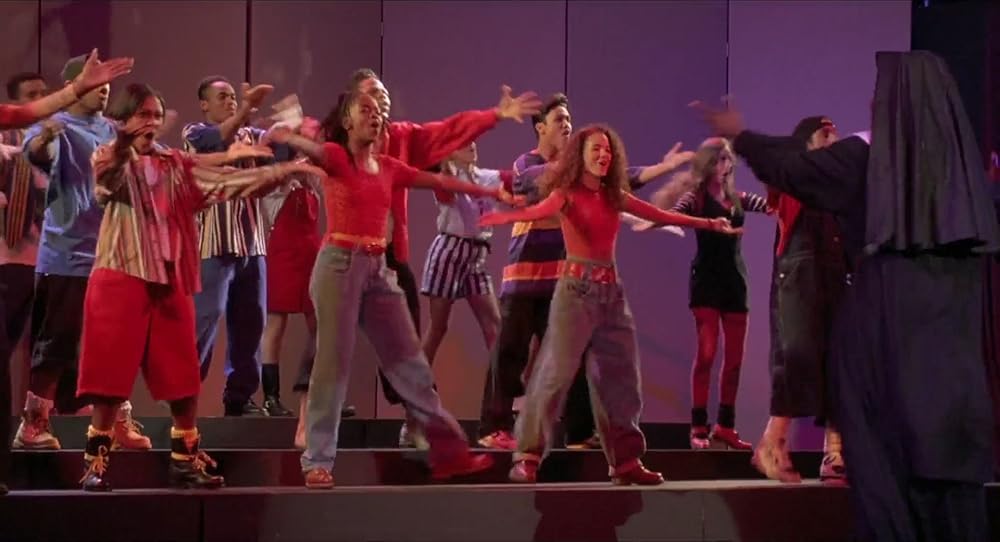
Sister Act 2: Back in the Habit might not have reached the same heights as its predecessor, but both films have earned their place in the cultural zeitgeist. Their musical numbers are among the list of clips I often pull up just to watch, even if I don’t sit down to watch the entire film. To call them enduring would understate their importance. Perhaps a sequel won’t ever happen, despite numerous efforts to the contrary, but one can hope. And I will certainly be there on opening night.
 Lloydd Marshall Books