
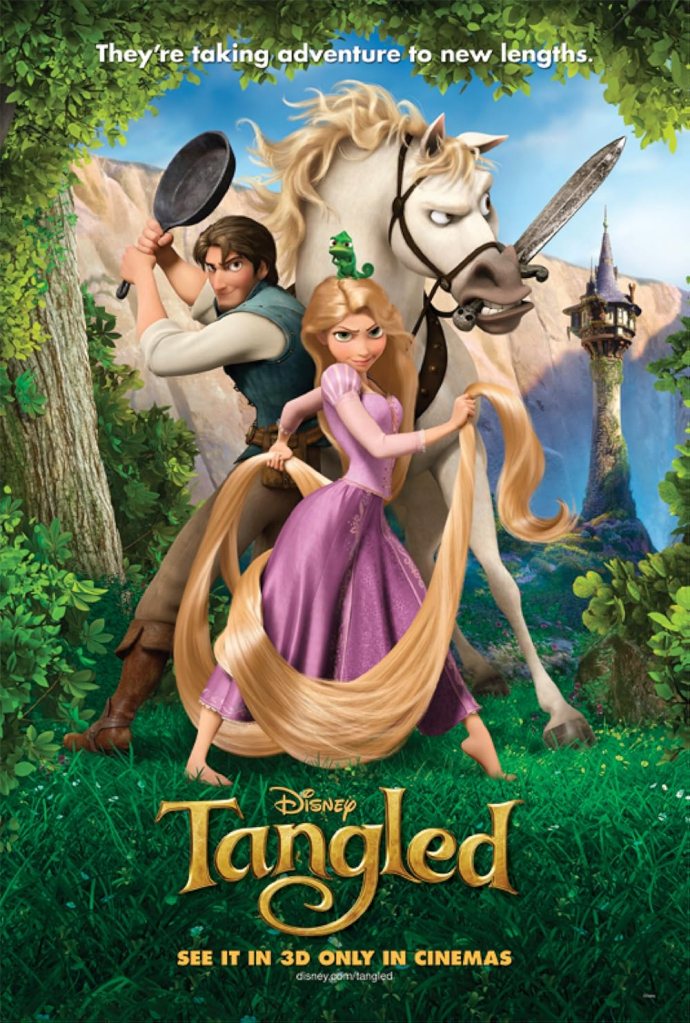
In the 2010s, Disney had pivoted back toward focusing on its animated features through 3D rather than traditional animation. While neither type of animation is “easier” than the other, it has become the go-to for Disney for a long time. Tangled had the pleasure of being the first Disney Princess film since The Princess and the Frog, the commercial “disappointment” that led to numerous changes in Disney’s strategy.
I’ll be clear, The Princess and the Frog was not a failure, but it is impossible to ignore that Tangled made twice as much – and at this time I don’t feel like relitigating all the actual reasons for why that likely is. After all, critics received it well, and I have long since viewed it as one of Disney’s better films. But I digress.
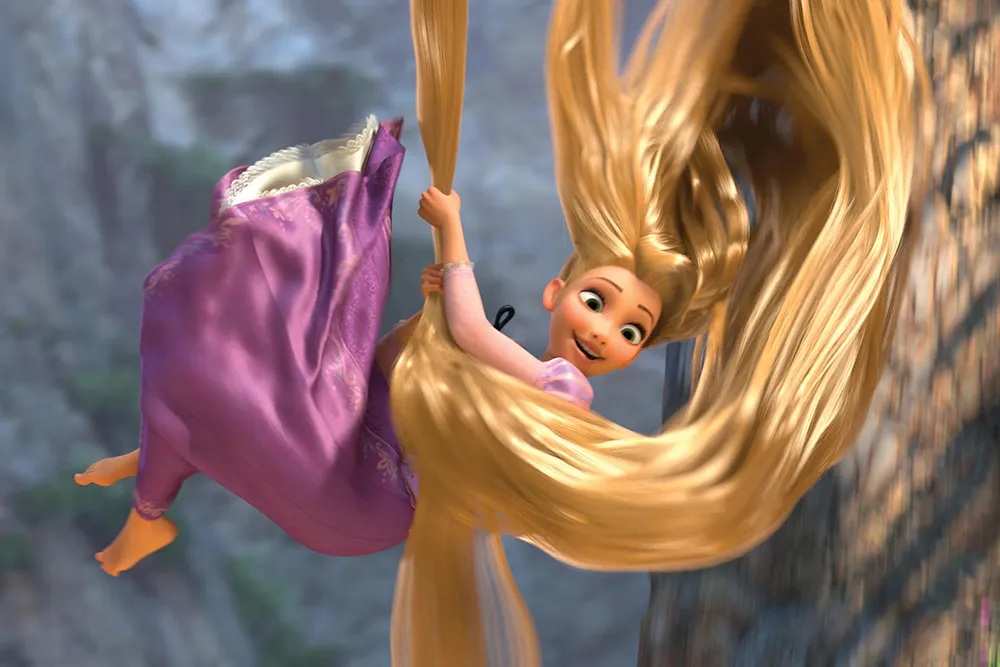

Tangled is inspired by Rapunzel, a fairytale predicated on the parable of “strangers” and where to put one’s trust. One can consider it the inverse of Little Red Riding Hood, where the stranger truly is a threat and masquerades as a close confidant to catch their target off guard. By contrast, Tangled and Rapunzel treat the “stranger” as the more trustworthy of the pair. A young man who wanders by the tower where Rapunzel has spent her life tending to her hair and dreaming of the world beyond her tower walls is precisely the kind of figure young girls and women are told to be wary of. But when the danger is already inside the castle walls, and you have no idea, the lines become blurred. Disney brings to life the core story and remixes aspects of its characters to provide additional depth, proving once again why it has always been a juggernaut when it comes to fairytale adaptations.
Rapunzel (Mandy Moore) is the young daughter of Mother Gothel (Donna Murphy), who has raised her in a tower with no way in or out for the past eighteen years – aside from Rapunzel’s long, well-tended hair out a window, of course. Every year, for as long as Rapunzel can remember, lights have filled the sky on her birthday, entrancing her with their beauty and mysterious origin. But she has spent each year being rejected by Gothel and warned of the dangers of the world, especially because of the power her hair holds – a power she insists people would want to exploit.


What Rapunzel does not know, but we, as viewers, do, is that Gothel kidnapped Rapunzel as a baby from the royal palace. She is actually the long-lost daughter of the Queen and King of Corona, who have released those lanterns with all their people on the Princess’ birthday in the hopes of guiding her back home.

Gothel’s “overly protective” nature, framed through one of the film’s musical numbers, “Mother Knows Best,” has worked overtime to cripple Rapunzel’s self-confidence and knowledge of the outside world.
We are treated to her daily routine, “When Will My Life Begin,” which lays out how the things we do every day can be reduced to minutiae over time. Cleaning the tower might have taken her hours in her youth, but by doing it every day, there is little to do but basic upkeep. With such a finite amount of space in her tower, her passionate painting becomes harder to maintain. Gothel’s efforts to control what Rapunzel knows mean that there are very few new books likely to be brought in. It isn’t as if Gothel could take the chance that somebody might write about the Lost Princess and give Rapunzel ideas. Through this, we see that she has “freedom” but not really. In her world, the only true companion that Rapunzel has at this time is her pet chameleon, Pascal.
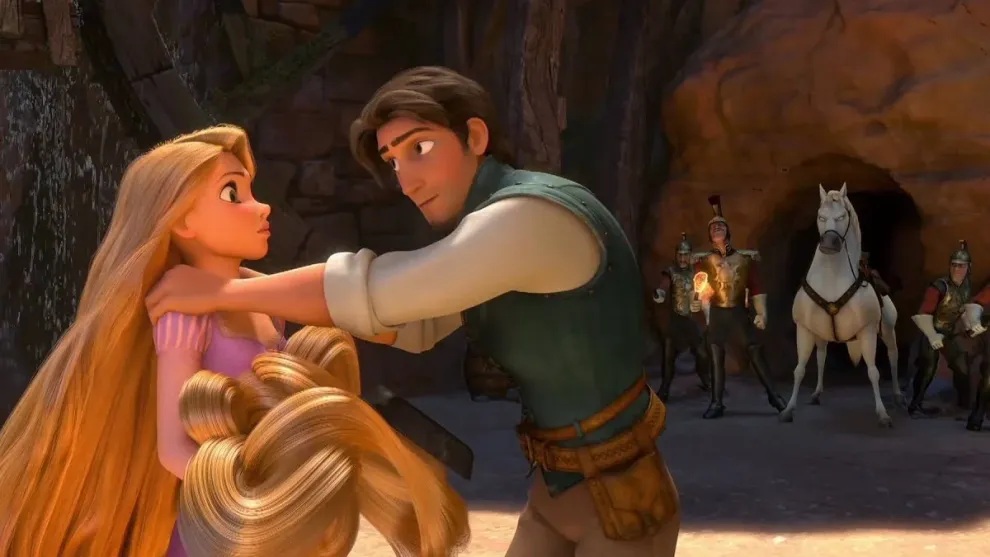

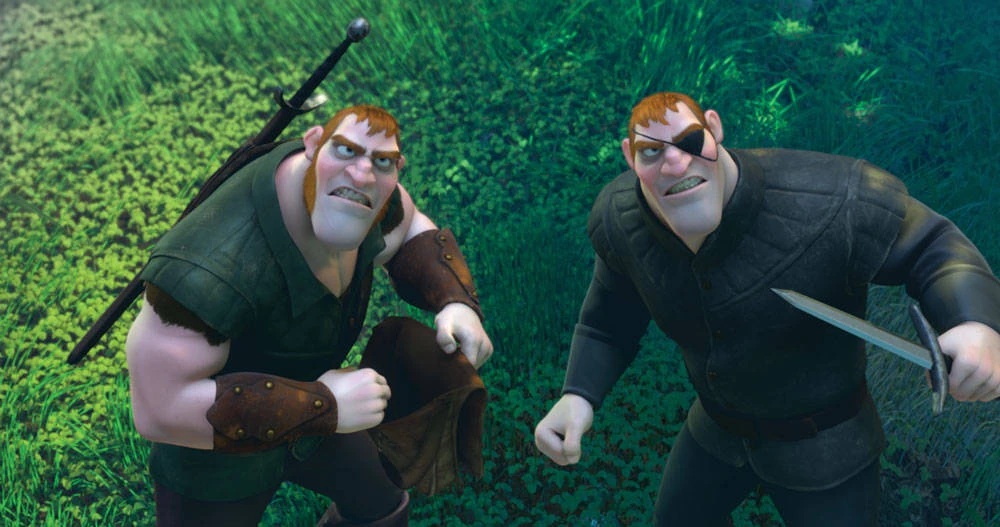
Flynn Ryder (Zachary Levi) is the male lead, introduced as he steals the crown from the royal palace with his two allies, the Stabbington Brothers (of whom only one is voiced – by Ron Perlman). Flynn betrays them in favor of keeping the crown for himself, setting himself up for a brand new life somewhere else. Still, he is pursued by the royal guard – and one dedicated horse by the name of Maximus.
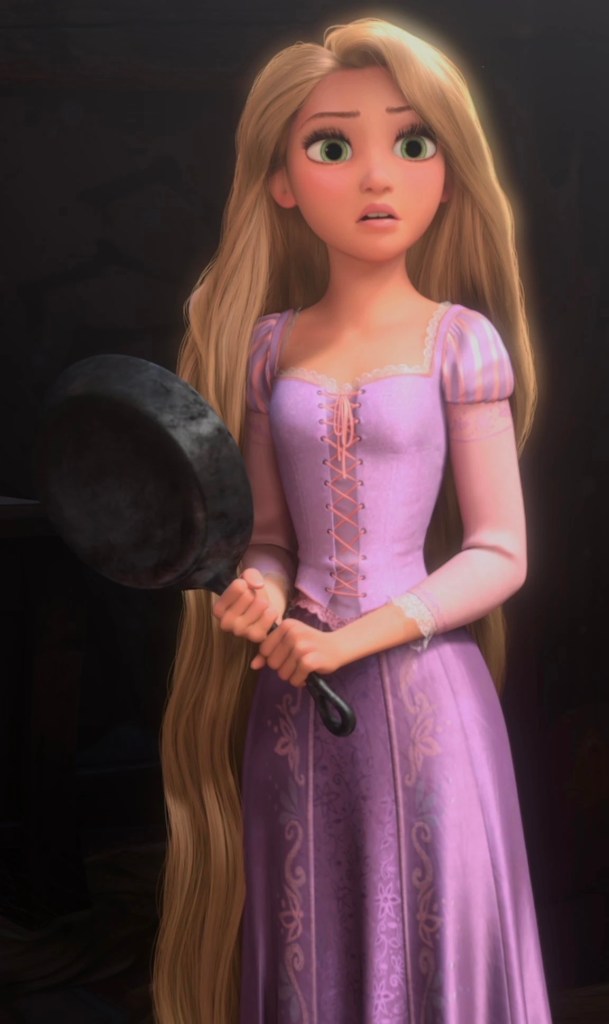
His dogged pursuit pushes him toward the forest, heading deeper and deeper until he comes across the perfect hiding place – a tower with no doors and only one entrance. Climbing up it, he meets Rapunzel, who attacks him with, perhaps, the funniest weapon imaginable: a frying pan.
With Flynn Ryder, Rapunzel is finally able to head out into the world and see it with her own two eyes, pushing the story into its primary plot. Rapunzel has very little time to get to the royal capital, where she will finally be able to see the sky lanterns be released for the first time in person. While Flynn is shown to be selfish, conceited, and self-centered – the definition of “Me, Myself, and I” – on the outset, his time with Rapunzel, Pascal, and Maximus results in him growing as a character. Throughout the film, he is, of course, being pursued not just by the royal guard but also by the Stabbington Brothers and, eventually, Mother Gothel.
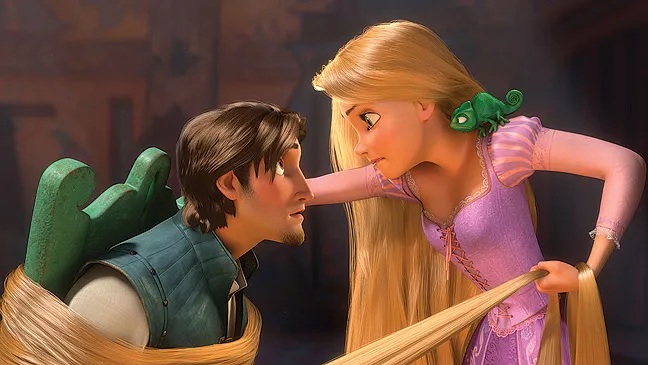

As a Disney Princess film, a central part of its story is a love story. Watching Flynn and Rapunzel grow closer, even over a handful of days, as her ingenuity, bravery, and compassion begin to break down his barriers and open him up to a new way of seeing the world, is always enjoyable. “I See the Light” is one of those songs that sticks with you, made all the more inspiring when you recognize that it was during the recording session for that song that Mandy Moore and Zachary Levi met for the first time. Unlike live-action films, the actors might never cross paths with one another during production because they simply don’t need to be in the same place to do their work.
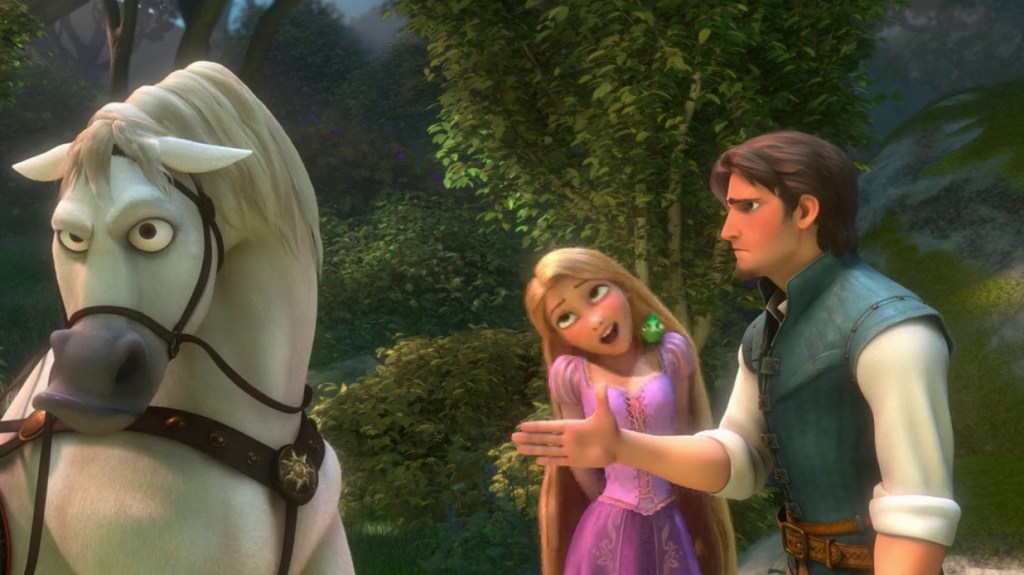
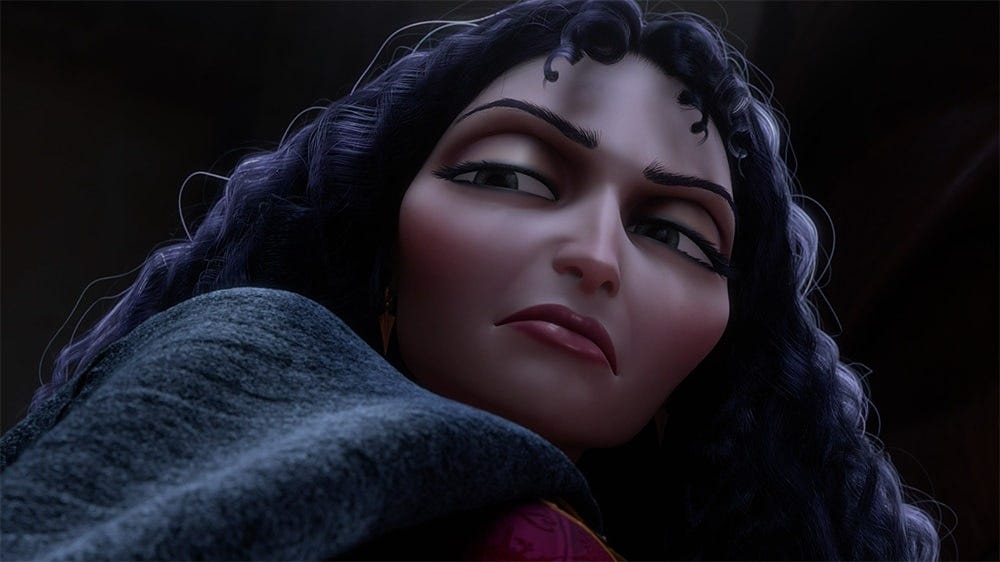
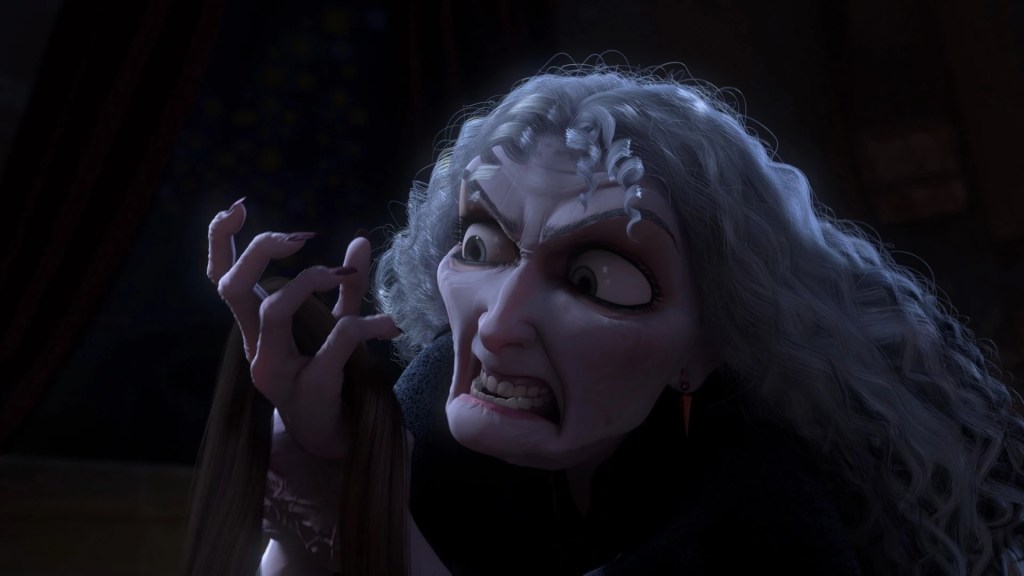
On its own, Tangled is a great Disney film, and I credit much of that to the chemistry between its lead characters. The rest, as always, lies with the villain, and Mother Gothel is one of the most harrowing creations. Mother Gothel reminds me of Lady Tremaine, Cruella, and Scar, whose threats come from within the “family,” so to speak. A character who should, by all measures, be somebody the main character can trust implicitly. Gothel has presented herself as Rapunzel’s mother, but is, in reality, her kidnapper. Yet, she is also a threat in the way that Maleficent and Jafar present themselves to their protagonists, possessing Magic that puts her on par with a modern-day version of the Evil Queen.
Tangled proved that Disney’s fairytales were not a thing of the past, and, true to form, it was followed up by one that drove the point home: Frozen. I simply wish that Disney recognized that what had hit The Princess and the Frog was not the title, but other aspects that have been baked in for a long time. Then again… Disney scrapped its The Princess and the Frog follow-up, while Tangled has received all manner of spin-offs.
One day.
 Lloydd Marshall Books