

Every series has to end at some point? Considering Halloween has technically ended on four separate occasions by now – depending on the continuity – perhaps “Ends” is more misnomer than fact. At this point, there is no hiding the fact that Halloween will return in some form or fashion, even if it is not under Blumhouse’s marquee. As long as the series can continue to craft an interesting story, a fun and energetic slasher, or a combination of both, fans will return.
Halloween Ends acts as a conclusion in two fashions. First, it closes out David Gordon Green’s trilogy, which began with Halloween (2018), acting as the fortieth anniversary sequel, much like Halloween H20, and continued into Halloween Kills, where the conflict escalates into Michael Myers’ most visceral massacre yet. Halloween Ends moved into a vastly more cerebral direction from its immediate predecessors and most of the other entries that have been made. Perhaps the only one that Ends can compare to in this regard is Rob Zombie’s Halloween and its sequel, which delved into the psyche of Michael Myers as a person. This is not to dismiss the efforts of Rob Zombie, as his film can be considered an acquired taste based on the route it took. Ultimately, the same is true of this film.
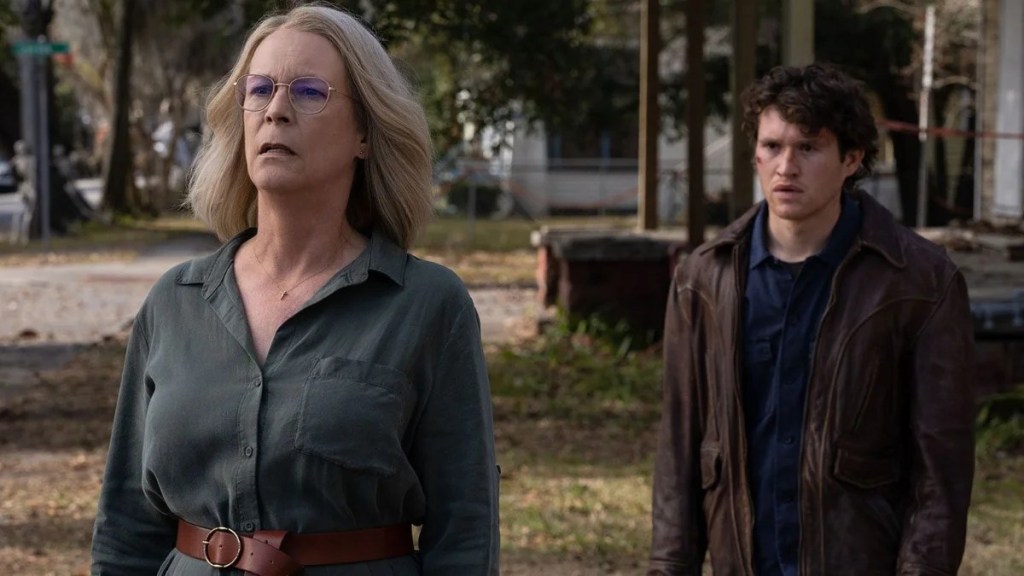
Laurie Strode (Jamie Lee Curtis) and her granddaughter Allyson (Andi Matichak) have worked to rebuild their lives after Michael’s shocking final murder – Karen (Judy Greer) – in 2018. For the first time, Laurie has worked to let go of the past and actually move on, trying to be happy. This is a marked departure in its own right. For most of Laurie’s returns, we have caught up with her immediately after the attack, as seen in Halloween II, or she has suffered from long-dormant trauma, as in Halloween H20 and Halloween (2018), or a combination, such as Halloween Resurrection. With Halloween Ends, Laurie is smiling, settled into her home, and enjoying flirting with Deputy Frank Hawkins (Will Patton).

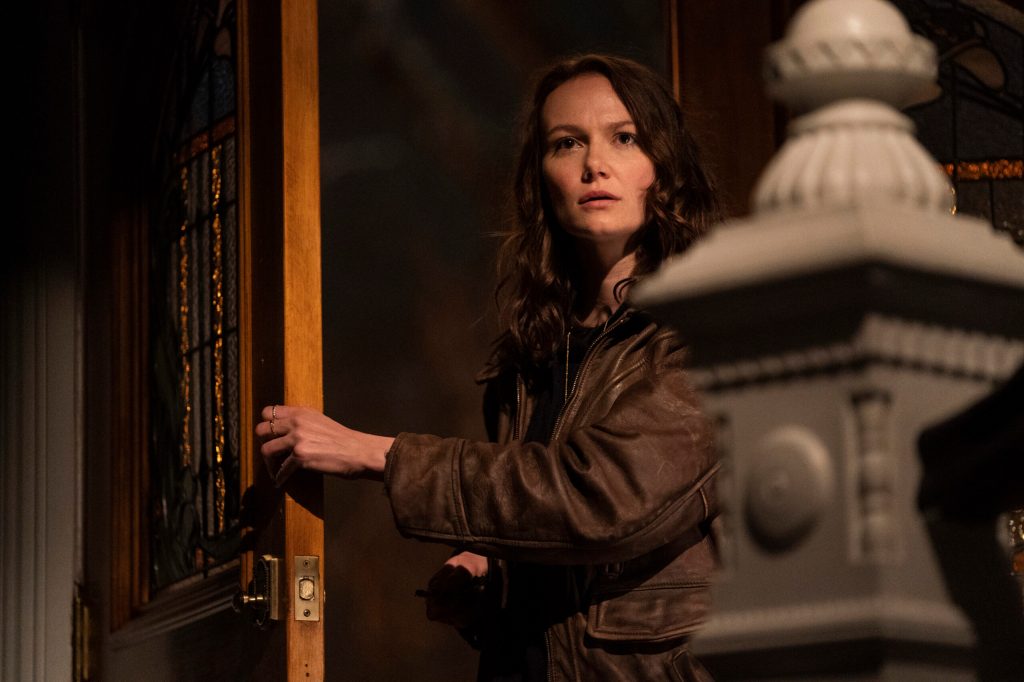
Allyson is working to find herself, having lost both of her parents in 2018. She is now working as a nurse for Tanner Mathis (Michael O’Leary) at Haddonfield Memorial Hospital, alongside Deb Jennings (Michele Dawson). While she seems to be fine, Allyson is truly exhausted by Haddonfield at this point – from her ex-boyfriend, police officer Doug Mulaney (Jesse C. Boyd), refusing to leave her alone, to her boss Dr. Mathis passing her over for a promotion in favor of Deb, with whom he has been carrying on an affair, to the fact that nobody will stop talking about the most traumatic night of her life as if it were coffeeshop chitchat. For Allyson, normal is anything but. All she dreams of, at this point, is leaving Haddonfield behind. The only reason she stays is out of concern for her grandmother and not wanting to leave her alone.

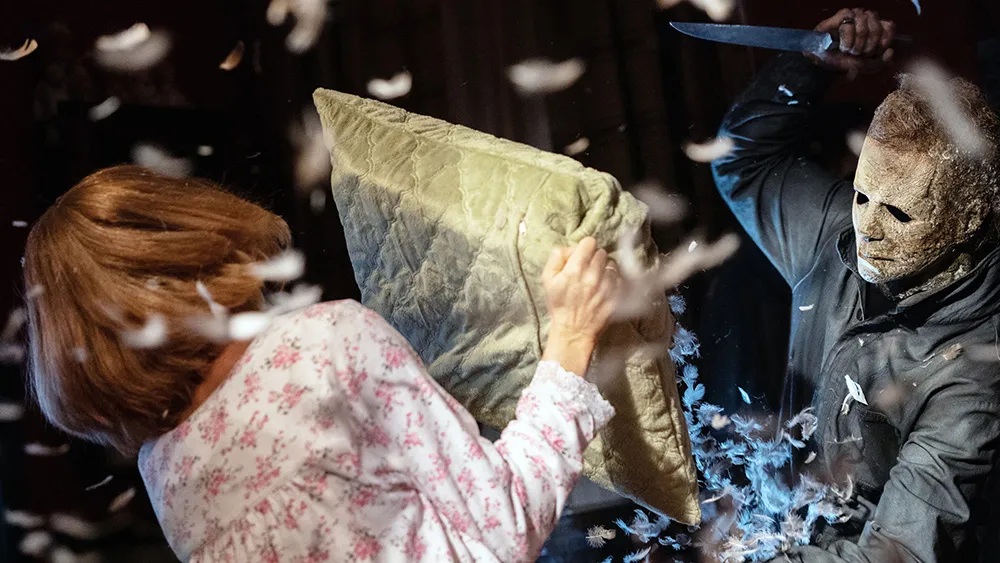
This time, Laurie has moved on, but Haddonfield has not. In the years since, death seems to follow the town like a curse. The residents pin all of the blame on Laurie – ignoring the fact that she is a victim of Michael Myers’ random attacks three times over by now. This was David Gordon Green and his team of co-writers – including Danny McBride, Paul Brad Logan, and Chris Bernier – intention. Trauma has been at the core of the trilogy, and how it clings to those it has impacted, whether they want it to or not. It does not help that Michael’s disappearance in 2018 gave no closure to the town and its inhabitants. Nor does it help when it turns out that he hasn’t disappeared but has spent the past three years hiding out in a sewer and moving about in the dark of night, terrorizing the town beneath its notice.
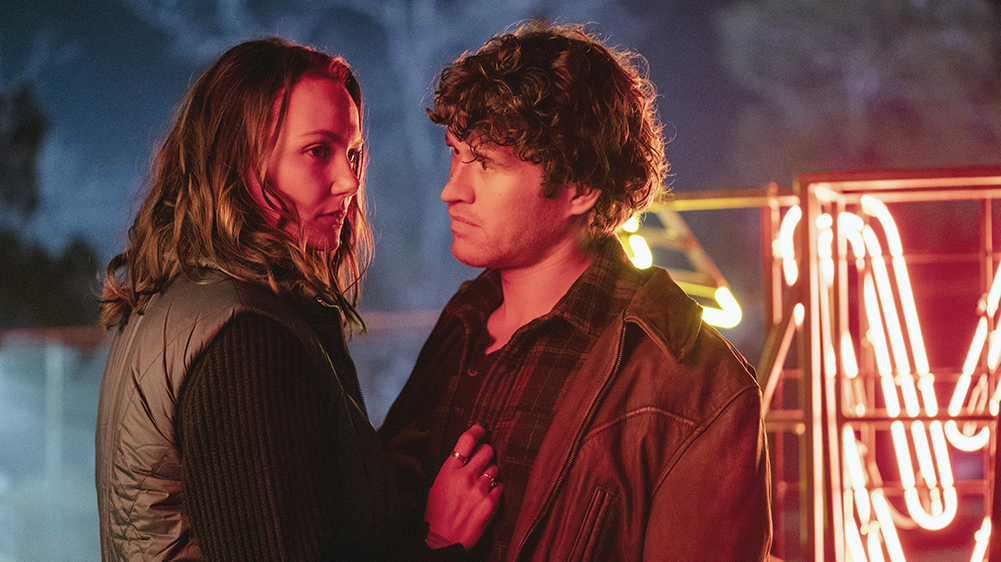
Even with all of that, Halloween Ends managed to find a way to divide its audience, though I am firmly on the side of “this absolutely worked.” At its core, it is not Michael Myers’ story, though Laurie’s story remains front and center. Rather, the viewpoint is firmly planted on Corey Cunningham (Rohan Campbell), a young man introduced as having a promising future in this town – smart, capable, albeit a bit awkward. He is entrusted with babysitting Jeremy Allen (Jaxon Goldberg) in the film’s prologue in 2019. At this point, Myers’ most recent massacre is still fresh in people’s minds. Jeremy decides to play a series of cruel pranks on Corey, culminating in the boy locking Corey in the attic and taunting him. Just as his parents, Theresa (Candice Rose) and Roger Allen (Jack William Marshall), return home, Corey manages to kick the door open – and knock it into Jeremy, sending the boy plummeting three floors to his death.

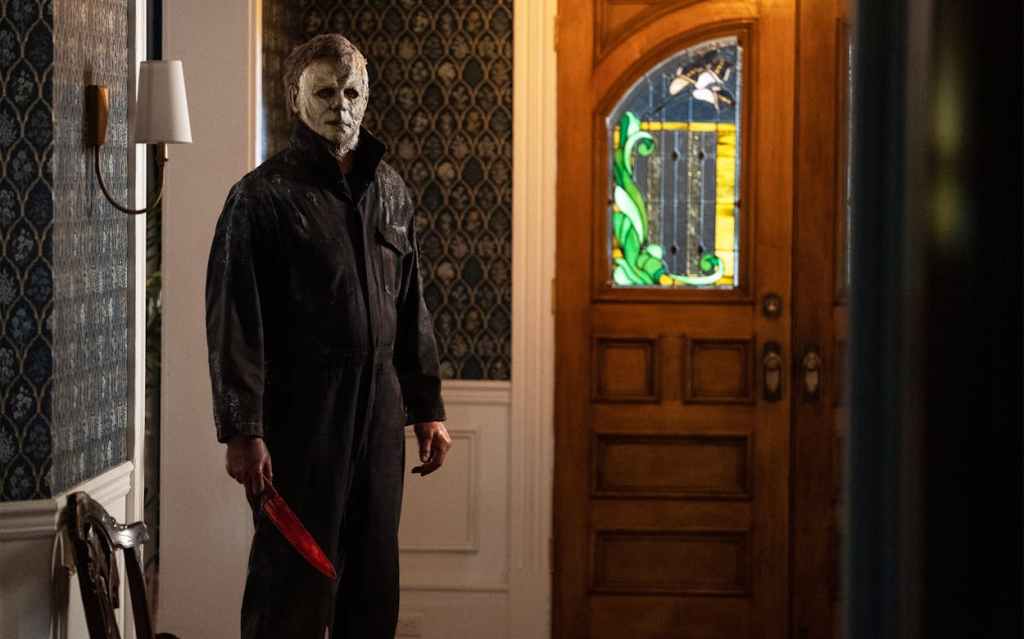
In the years that follow, Corey’s life has collapsed, and he is viewed not just with suspicion, despite having been cleared of wrongdoing, but with malice by the people of Haddonfield. Like Laurie, the town projects its hatred, rage, and disgust onto him, sending his life into a downward spiral from which he cannot escape. By the time Corey crosses paths with Laurie, she still sees a light in him that can be salvaged. She tries to cultivate it by introducing him to Allyson, which sets the pair on a whirlwind romance. It is, unfortunately, right before Corey crosses paths with Michael Myers, which sets the story in motion on how the world views and treats victims of tragedy. What follows is the divisive aspect of the film. Although it has been out for a few years, I encourage you – if you haven’t already and haven’t been online – to take the time to experience it for yourself.

Halloween Ends might be divisive, but I have always appreciated a film that refuses to fall back on old trends with each successive outing. Consider Friday the 13th Parts II through IV, which are indistinguishable from one another in practically every way. They found a few ways to differentiate themselves – Part II introduced Jason Voorhees, Part III, the famous hockey mask he’s been known for ever since, and Part IV, The Final Chapter, as the one that brought out his zombie form.
Yet the cast of victims has little going for them despite the actor’s best efforts to distinguish themselves, and they are not the reason somebody shows up for a Friday the 13th film.

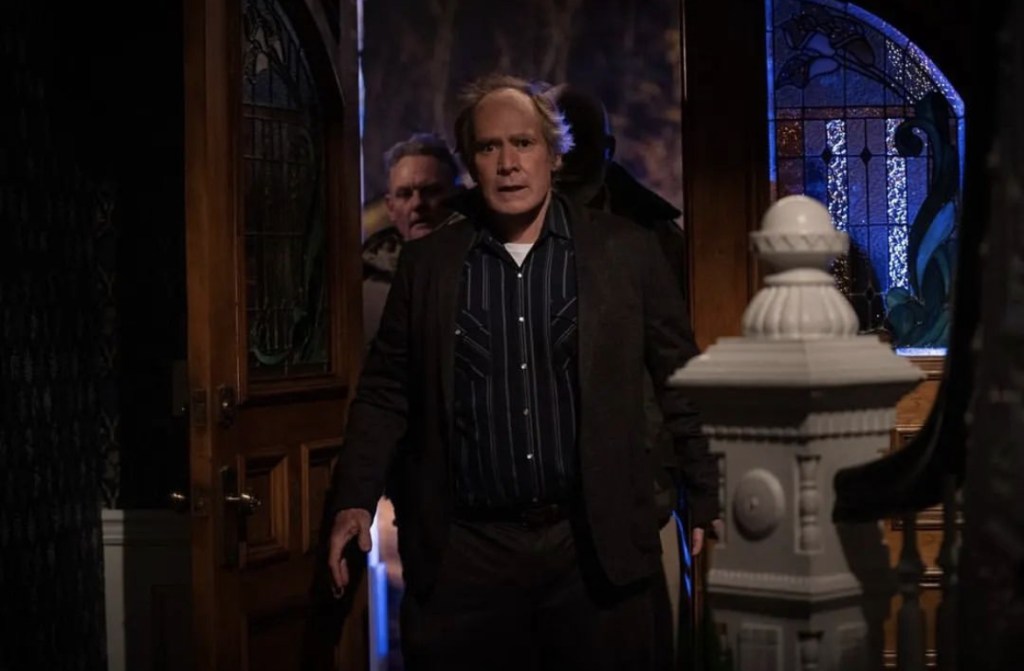
While Halloween has never had much trouble setting aside one entry from the other, each one has gone in a direction that challenged its audience, sometimes its patience. Whether it was the Cult of Thorn from 4-6, the hallucinogenic aspects of Rob Zombie’s Halloween II, or the decision to kill Laurie in Resurrection, the films have taken leaps and not all have paid off. That is the beauty of film – and in this particular series, we have multiple continuities to pick from if we so choose.
 Lloydd Marshall Books