
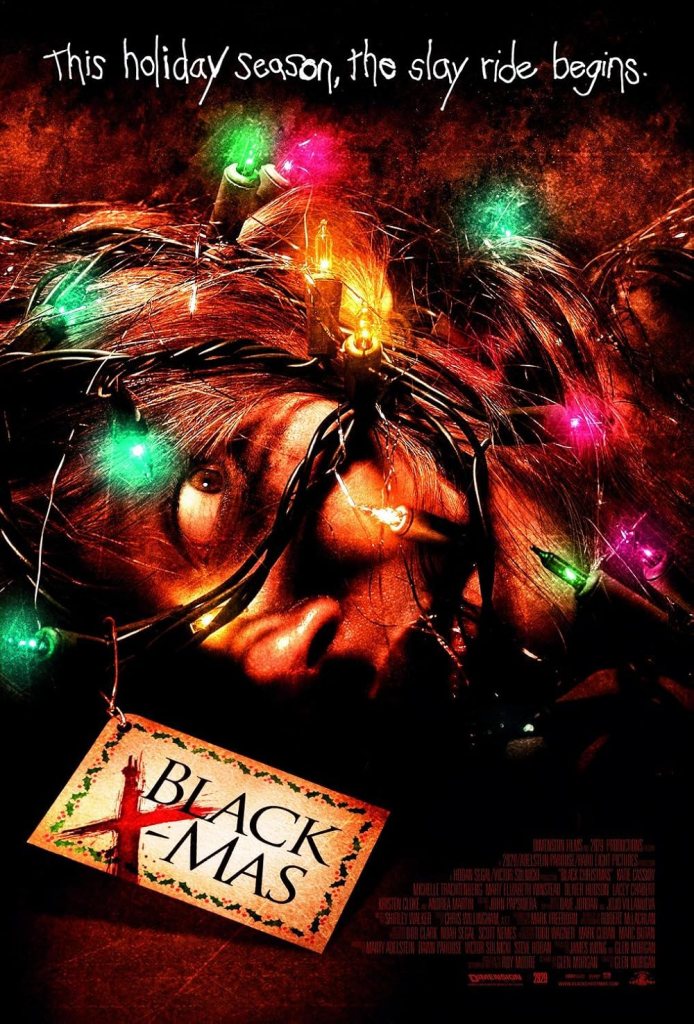
Christmas is one of those times that seems replete with options for genre fare, to the point where it has become a debate as to what qualifies as a Christmas film. Funnily enough, few debates consider slasher films part of that conversation, despite there being dozens of options, some good, some bad. At the end of the day, it depends on what you, as a viewer, are looking for. If you’re looking for lies, then look no further than Black Christmas (2006). Or, at least, its trailer.
Released in 2006, this film acted as a remake of a 70s slasher. It featured an ensemble cast of actresses who were icons in the 2000s, most of whom had a long-standing place in horror history. Katie Cassidy finally got to be the lead in a film like this, after playing the bubbly, vivacious friend to the lead character, only to die, a fate she’d be shunted back into four years later with the reboot of A Nightmare on Elm Street. The cast of sorority sisters included Michelle Trachtenberg (of Buffy fame), Mary Elizabeth Winstead, Crystal Lowe, and Kristen Cloke from the Final Destination series, alongside Lacey Chabert (from Mean Girls), and Andrea Martin as their housemother, who would later go on to star in Evil as an iconic nun, but who also appeared in the 1974 original. Jessica Harmon and Leela Savasta also feature as the sisters whose early disappearance sparks some of the mystery.


While the film spends much of its time working to reinforce that sororities, and by extension the Greek ecosystem, are designed to bring people closer together, the sisters are clearly on edge for much of the film. Part of what makes the situation so tragic is that, in true horror fashion, the characters are unaware that there’s a killer until well into the film, during which Kelli (Katie Cassidy) refuses to leave the house without the missing girls. Her compassion for her fellow sisters ultimately results in several more deaths, including nearly her own. With the situation deteriorating quickly, friendships don’t precisely sour, but the tension ratchets up to the extreme. Even so, when Lauren (Crystal Lowe) throws up on herself after drinking too much, Melissa (Michelle Trachtenberg) sets out to care for her… ultimately dooming them both.
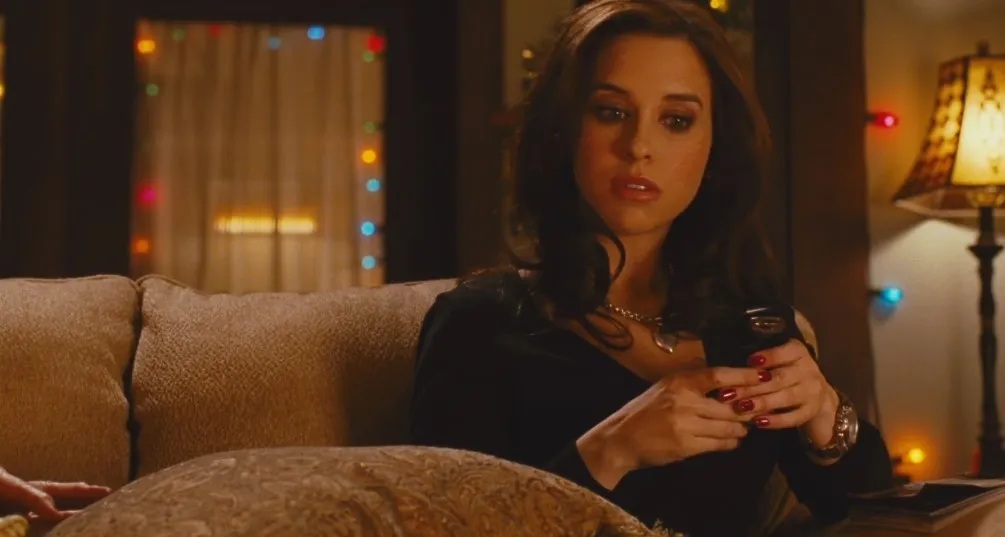
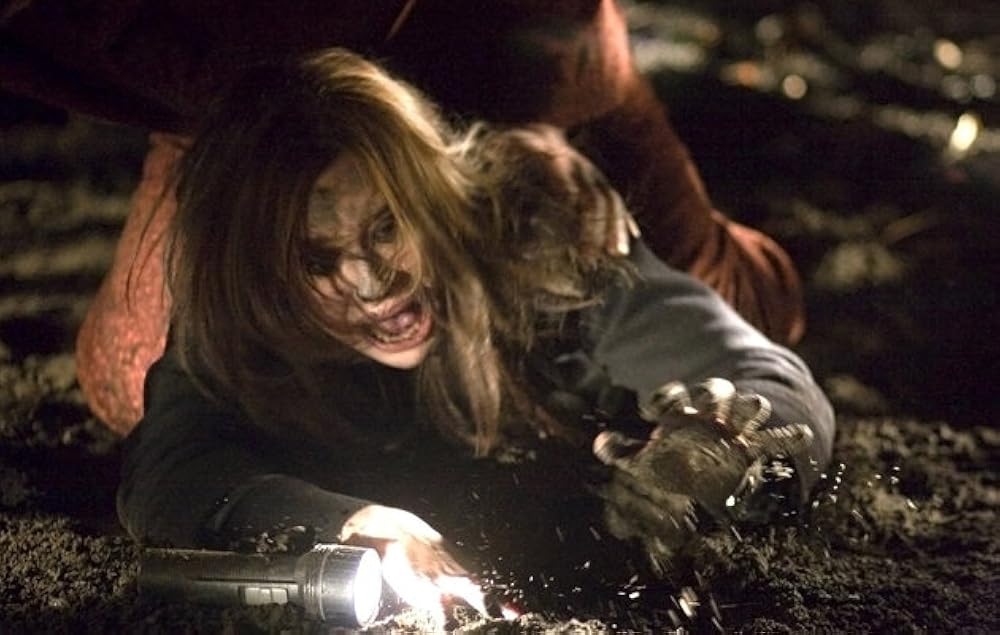
Throughout the film, the killer uses their kindness for one another against them. Still, they’re also not ones to waste an opportunity to attack them when they’re alone. One of the things that worked well in Black Christmas was that the ensemble cast left viewers wondering who was going to be the Final Girl until they’re deaths hit. Half of them had the name recognition, or the commonly associated character traits, to make it more or less up for grabs. Arguably, this is the film’s core strength. It makes each of the main characters a likable one, whom you want to root for to make it to the end of the film. As the deaths continue to mount in what can be viewed as an almost arbitrary order, it eventually becomes clear who the Final Girl is. With alternate endings, that becomes a bit more ambiguous.
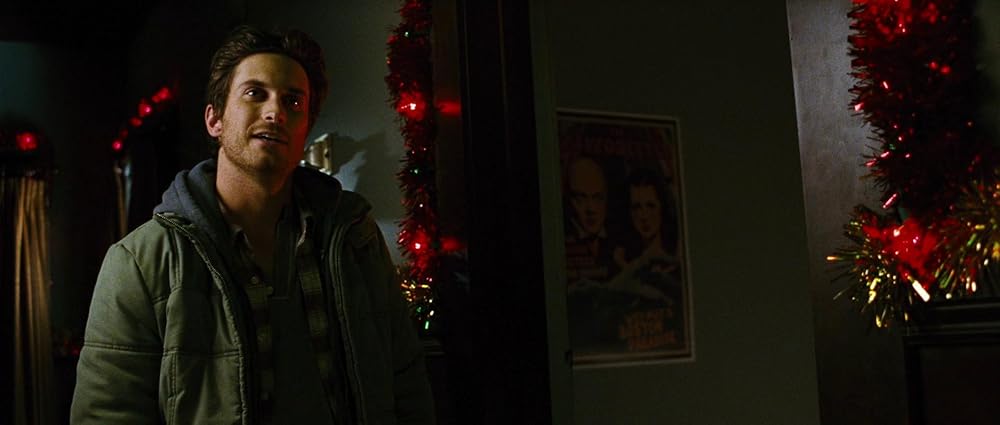
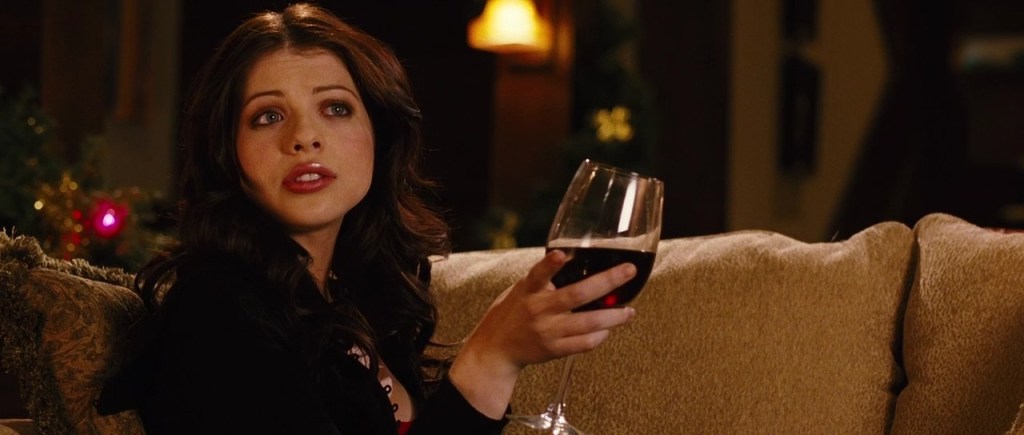
One other major character in the film is Kyle Autry (Oliver Hudson), who is Kelli’s boyfriend and who has apparently been cheating on her with Megan (Jessica Harmon), as is discovered on a sex tape. While the sisters debate who is behind their stalking and hitherto unknown murders, Kyle becomes the chief suspect. But another option is presented as an integral myth of the sorority’s history, a man by the name of Billy Lenz (Robert Mann and Cainan Wiebe), who is supposedly the father of his younger sister, Agnes (Dean Friss and Christina Crivici), by virtue of rape by their respective mother, Constance (Karin Konoval). It’s tradition for one sister to leave a present for Billy every Christmas, to stave him off. However, he’s been in an asylum ever since he turned his mother into Christmas cookies.


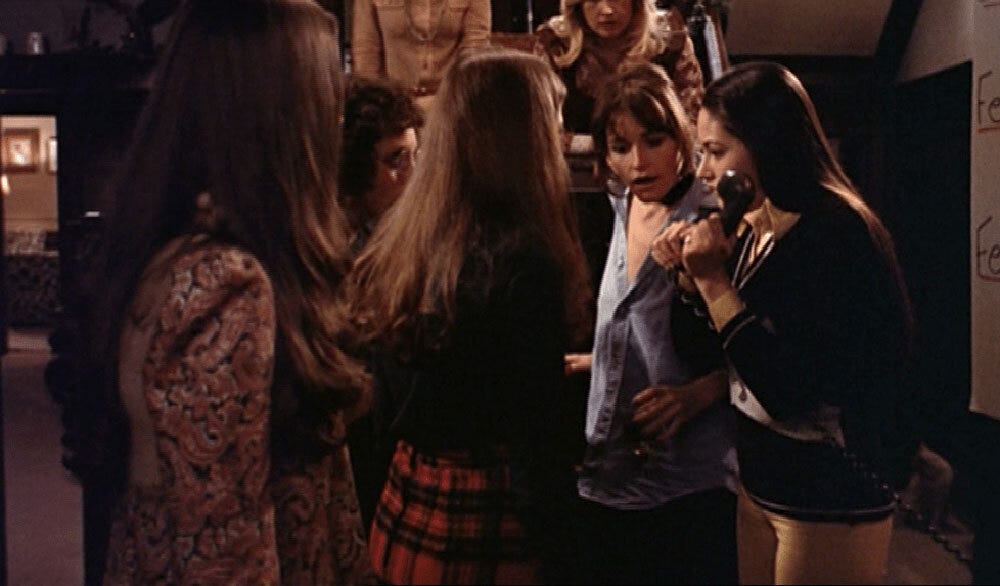
This aspect, alongside two character names (their housemother and Claire), is one of the few aspects that are retained from the 1974 Black Christmas. One of the first slasher films to exist, it is an iconic film, even if it has been supplanted by its more famous, or infamous, depending on one’s views on the genre, successors – Halloween, Friday the 13th, and A Nightmare on Elm Street. The 1974 version is the one that originated “the calls are coming from inside the house,” most famously associated with another slasher film (itself a remake of a movie that was more mystery than slasher), When a Stranger Calls. The 1974 original starred a pre-Superman fame Margot Kidder in addition to Olivia Hussey, then known for her breakout performance as Juliet in the defining version of Romeo & Juliet.
This film ended up becoming a cult classic, a process that has, over time, repeated itself with the 2006 entry and, in time, may happen for the 2019 remake.

Earlier, I mentioned lies, and this film was hit with several of them through the marketing process. When the trailer was released, it sold a particular type of slasher film that was incredibly interesting. When that trailer was released, Director Glen Morgan, the creative mind behind the first and third Final Destination films and a longtime hand in The X-Files, discovered the horrifying truth. Executives stepped in and had somebody else come in and film additional material for the trailers, resulting in over 90% of it being scenes that are not, and never were, intended to be in the film. Dimension Films’ meddling with Black Christmas ultimately resulted in Glen Morgan (as of 2025) never working on another film, choosing instead to focus on his career in television.
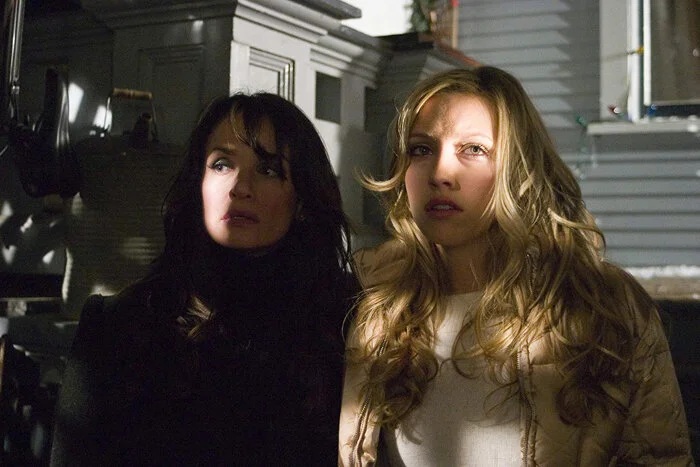

Black Christmas has its place in the slasher hall of fame for many, and while it is a film that I enjoy, the behind-the-scenes drama puts it on par with Wes Craven’s Cursed, released just a year earlier and flayed by the same people. Executives know a lot, but films like these prove that their heavy-handedness more often hurts than it helps.
 Lloydd Marshall Books