
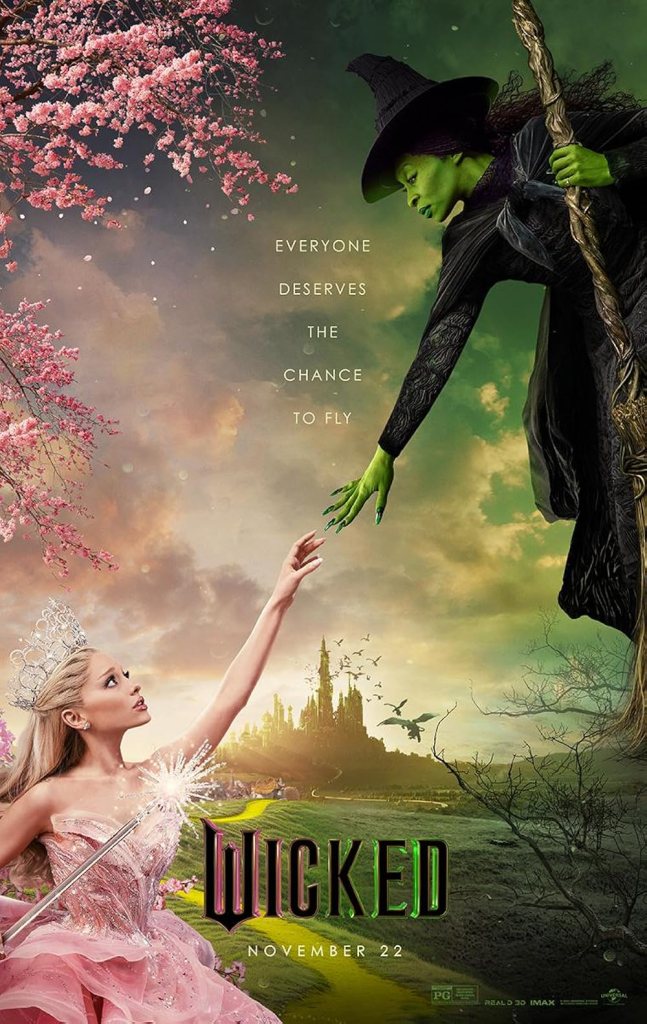
Centered on the story of the Wicked Witch of the West from a different vantage point, this musical was based on the musical based on the long-running book series Wicked. In recent years, we have seen a spate of movies and books that have taken this particular path and flipped the perspective.
When done well, it builds off the aspects of a story that were already present, so that a plausible explanation can be unspooled. Films like Maleficent and its sequel proved that it was a very popular idea. Still, the mere existence of this musical and its book reminds us that a good thing has come before.
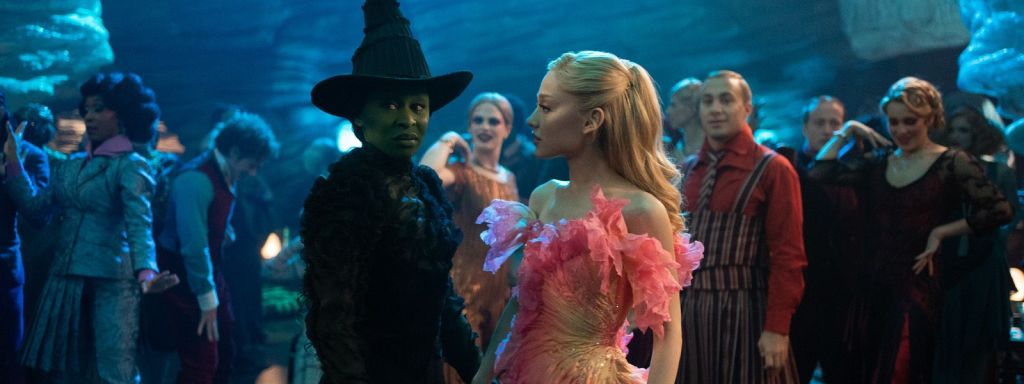
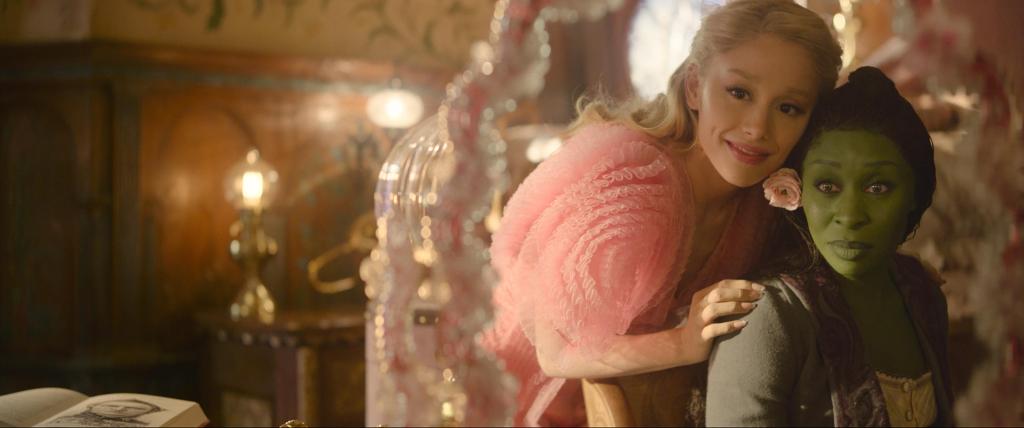
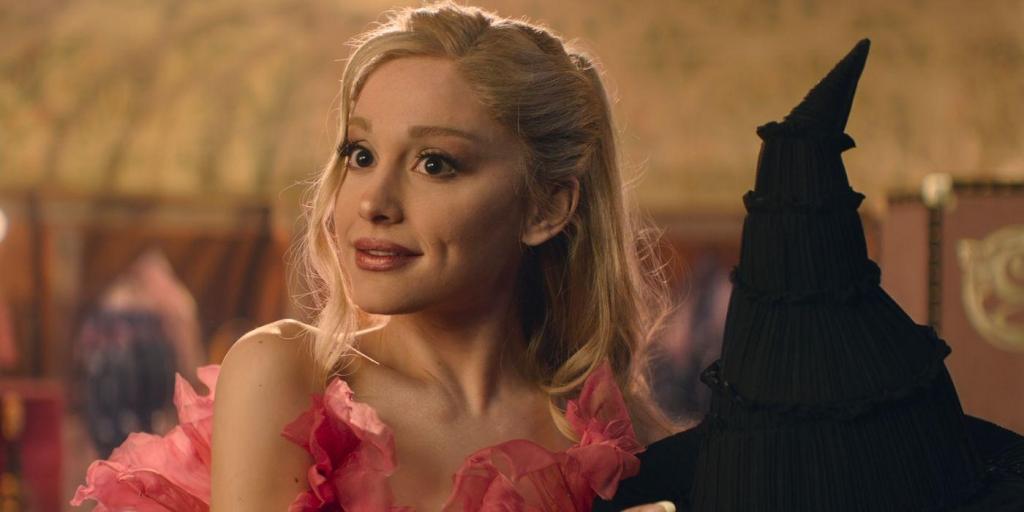
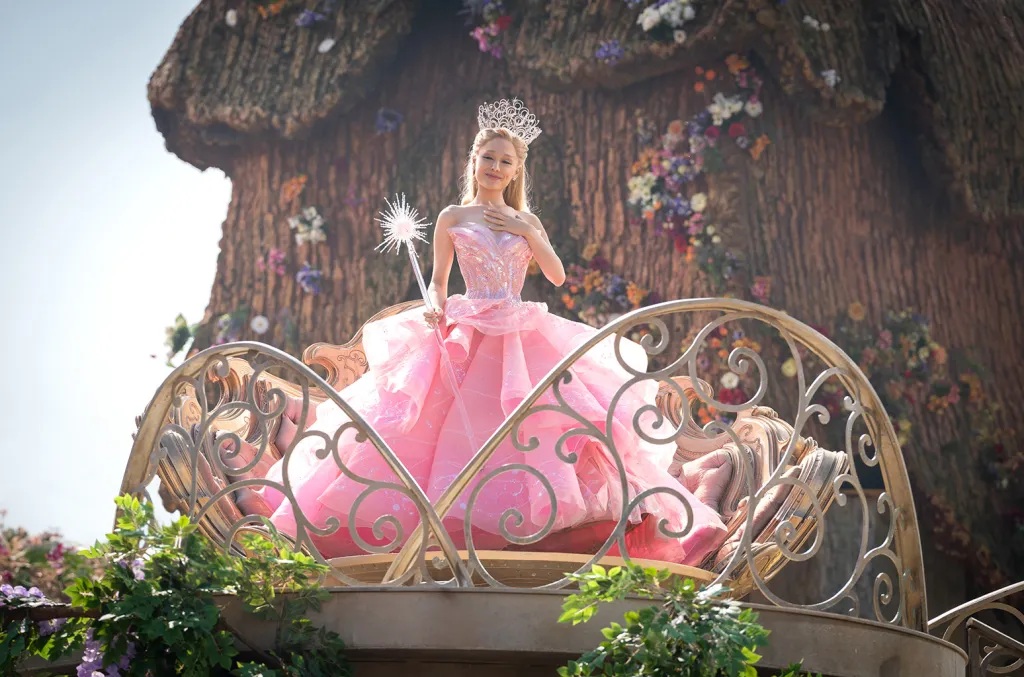
Wicked, at its core, is about the relationship between Elphaba Thropp (Cynthia Erivo), the Wicked Witch of the West, and Glinda Upland (Ariana Grande), formerly known as Galinda throughout much of the film. We begin at the end, and wind back from there, and are treated to the complicated foundation of this unlikely friendship. Their start is rocky, at best, because Galinda is the kind of young woman who needs to not only be liked, but is also used to simply getting her way – and nothing has ever disproved that worldview. In stark contrast, Elphaba has been viewed as the bane of her family’s existence, due to her skin tone, which is an intended thematic equivalent – the black experience in the film versus the Jewish experience (traditionally), on the stage.
Her father’s efforts at preventing a repeat by basically poisoning his wife to keep his second child, Nessarose (Marissa Bode), from turning out green, as well. Governor Thropp (Andy Nyman) is, thankfully, presented as being terrible as a parent not just to Elphaba, but to Nessarose in a very different manner. While the impetus for the story can be directed at Mrs. Thropp (Courtney-Mae Briggs) and her indiscretion with a man, initially unrevealed during Glinda’s recounting, but it is the Wizard (Jeff Goldblum), it is the Governor whose actions are chiefly to blame.

It is often said that the fish rots from the head, and his mistreatment of Elphaba encourages others to abuse and deride her, leading her to become a young woman who has repressed everything about herself. By the time Nessarose is enrolled in Shiz University, Elphaba has spent years hiding the fact that she can use Magic, while doing her best to help protect Nessarose’s independence in spite of her father’s infantilization of her. His inability to allow Nessarose to be independent places Elphaba in a situation where she tries to protect her sister’s independence and ultimately reveals her Magic to one person who can look past her green skin, Madame Morrible (Michelle Yeoh).
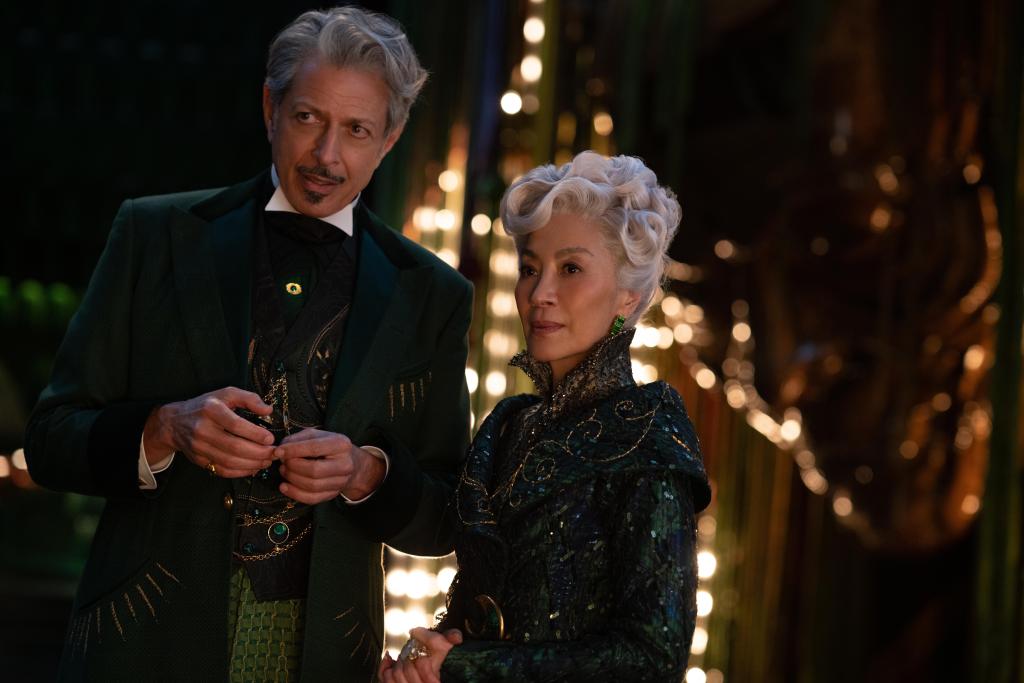

Morrible is the Dean of Sorcery Studies at the University, and she is one of the few people who offers Elphaba the feeling that she is special and wanted. While Elphaba is not enrolled, she uses her position to ensure that Elphaba swiftly is, and ultimately places her in the luxurious suite that Galinda occupies. It is here where their enmity begins and, eventually, morphs into a tight-knit friendship. Elphaba, for the first time in her life, is viewed by somebody not with suspicion or contempt, and that sets her on a path toward opening up. At the same time, Galinda is being denied something that she feels is her due and is certain that it is being handed to the undeserved Elphaba Thropp.
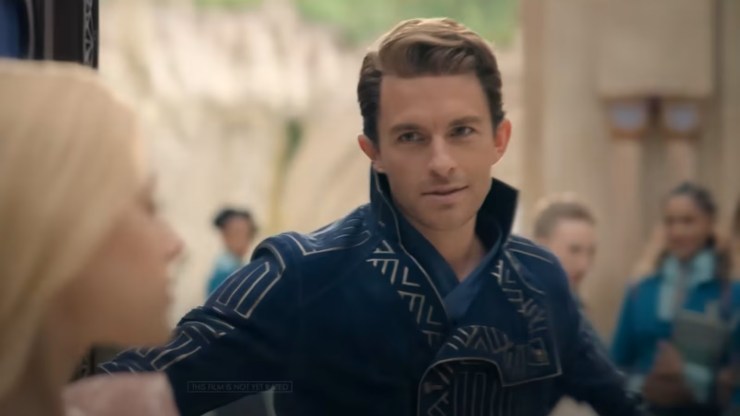
This is a good thing because it means that their rivalry is not centered on Fiyero Tigelaar (Jonathan Bailey), who meets Elphaba first but forms a romantic relationship with Galinda.
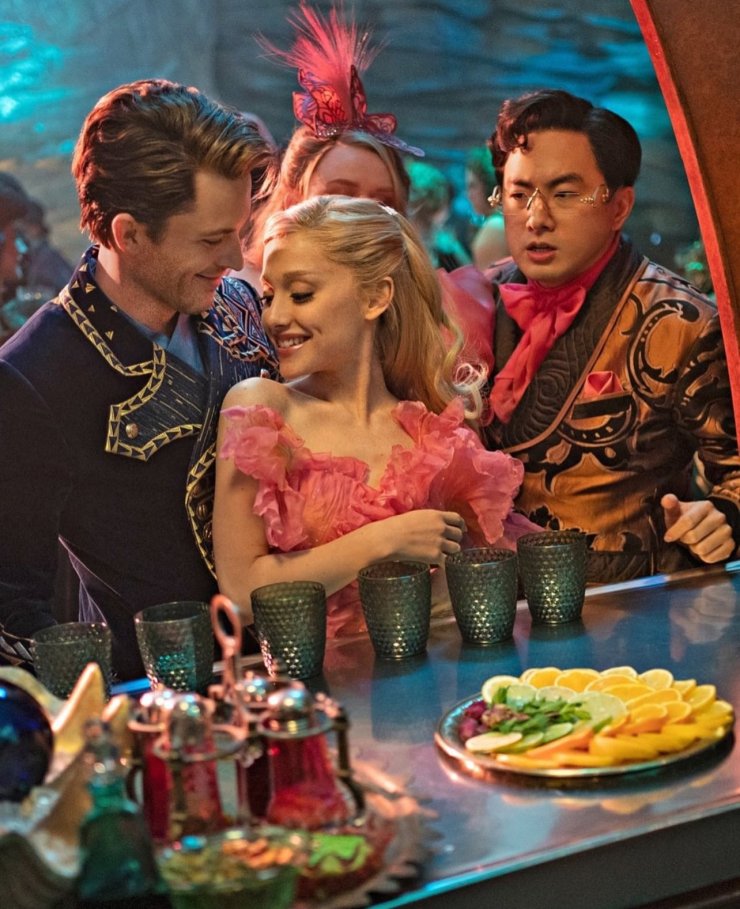
Yet the chemistry and passion between Elphaba and Fiyero are undeniable. One additional member of the main cast includes Boq (Ethan Slater), whose presence expands the messy romantic entanglements in the story. A Munchkin from Munchkinland, Boq, is the focus of Nessarose’s infatuation, while Boq is in love with Galinda. Galinda is in a mutually shared relationship with Fiyero. At the same time, he seems to have unstated feelings that continue to burn for Elphaba. Finally, Elphaba, by the time she realizes her potential feelings for Fiyero, has a deeply forged friendship with Galinda.
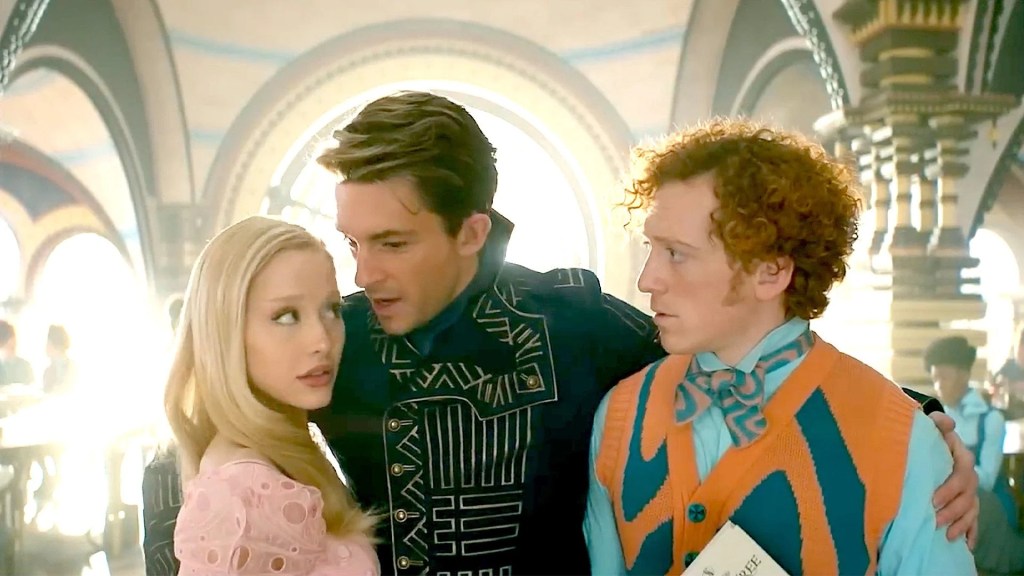
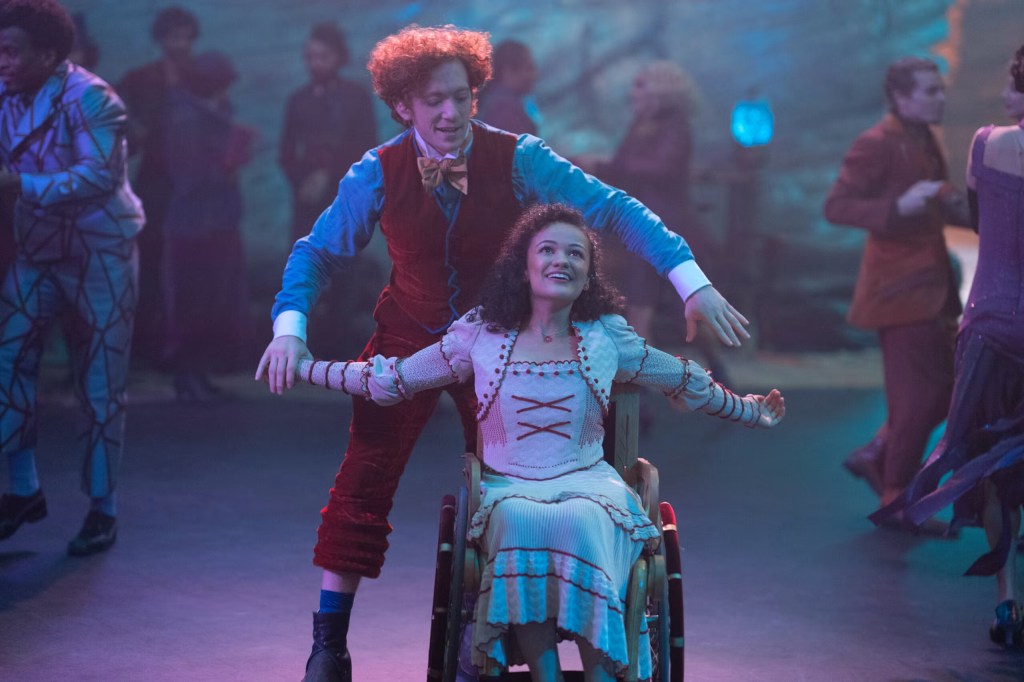
These people are all friends, even if the depth of their relationship is not touched on repeatedly. Enough exists for us to believe that the drama they stir up now can continue on into their adult lives. But beyond that, they are also the archetypal characters from The Wizard of Oz. Wicked’s greatest strength was its ability to reimagine the characters in its story, while leaving breadcrumbs for who would emerge in a specific role later on. The story never hid the fact of who the Wicked Witches or the Good Witch would be. Their appearances are iconic enough that it is impossible to be hidden for long. Still, the Tin Man and the Scarecrow, based on how the book and the musical unfolded, allowed them to toy with the expectations of the audience.
What worked in its favor was the narrative scope. Wicked covers before, during, and after The Wizard of Oz; all of this film unfolds across the period before Dorothy ever arrives. The sequel would account for the rest. As such, Wicked took its time in this adaptation to delve more deeply into the relationships between Galinda and Elphaba.
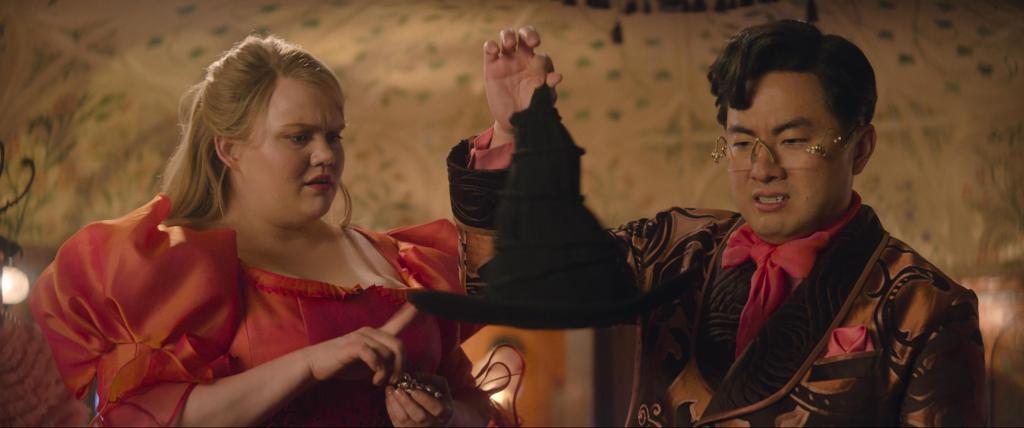

The rest of the major characters include Dr. Dillamond (Peter Dinklage), a talking goat who is also the history professor at Shiz. His role is devoted to exploring how Oz scapegoats talking animals as the source of its problems, subtly reinforcing the gilded era of the world in which the story takes place. Miss Coddle (Keala Settle) is the Headmistress, whose efforts at “helping” Nessarose directly lead to Elphaba’s “tantrum” use of Magic, which results in her being noticed by Morrible in the first place. Galinda comes with two friends packed in, Pfannee (Bowen Yang) and ShenShen (Bronwyn James), ensuring that she is not just a Mean Girl on her own. Dulsibear (Sharon D. Clarke), the Thropp’s nanny, provides another glimpse into how interwoven talking animals are in this world.
The musical is two acts, with the first one entirely covered by Wicked, while the latter would be held back for the sequel, Wicked: For Good. The musical’s runtime is two hours and forty-five minutes, split between a ninety-minute first act and an hour-long second act, plus a fifteen-minute intermission. However, the films are, respectively, two hours and forty minutes and two hours and seventeen minutes, with a nearly year-long intermission; one can say the musical was timely. Yes, this is a joke that has been made ad nauseam throughout the last year, if not longer.
Wicked was one of the most fun times I have seen a theater audience have in a long time. It was clear, from the get-go, that the actors and the team behind it, including director Jon M. Chu (I’m still waiting on Crazy Rich Asians to continue, FYI), were deeply devoted to doing the story justice. Ariana Grande is a noted Wicked fan who devoted immense time and effort to securing this role.
While some might have believed it was handed to her, she proved, more than once, that she was not merely destined for the part; she was going to earn it. Cynthia Erivo’s portrayal of Elphaba has been viewed in an interesting kaleidoscope. There is no ignoring the fact that Idina Menzel’s place (and that of Stephanie J. Block, who originated the role before it hit the stage) is the foundation. Still, Cynthia owned this role in a way that didn’t simply “make” it hers.
Wicked proved popular enough that there is talk of expanding the universe. If that happens, let us hope that it is done with the same level of care that the films were given.
 Lloydd Marshall Books