
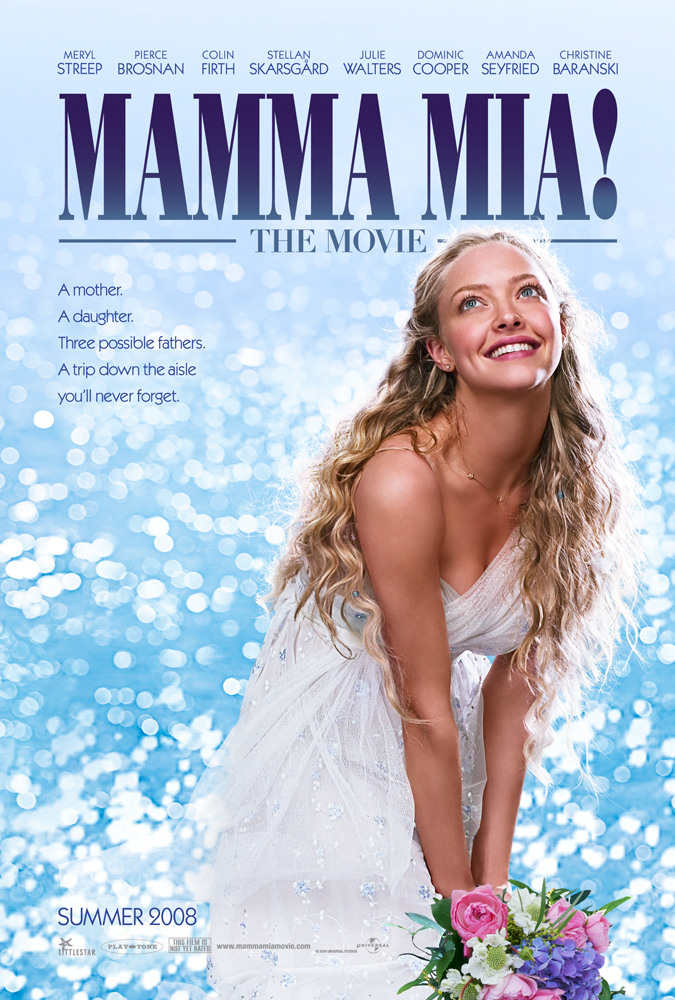
Musicals are entertaining, and I have found that they are generally difficult to mess up. Musicals that are inspired by the catalogue of famous musicians? It’s practically a match made in heaven. When it comes to most music, as we have stepped into modern pop, “stories” that can be consistently told through song seem to be a thing of the past.
That doesn’t mean it is, it probably just means that I need to expand my taste beyond what I can lose myself writing to! Mamma Mia had the entire discography of ABBA to work with, in addition to the 1999 musical of the same name – and it did so splendidly.
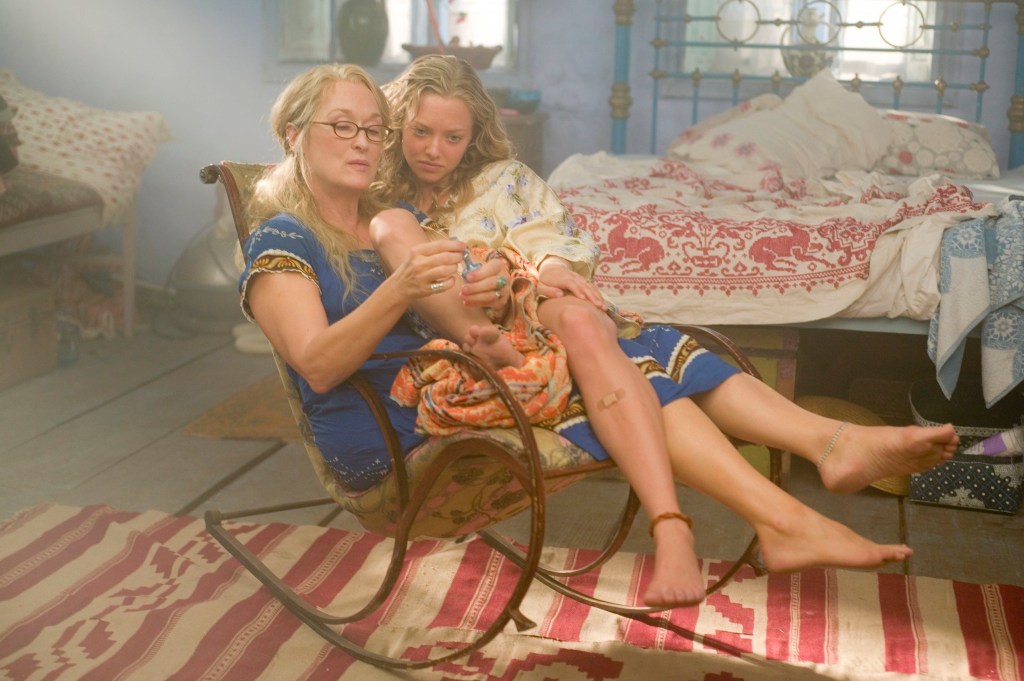
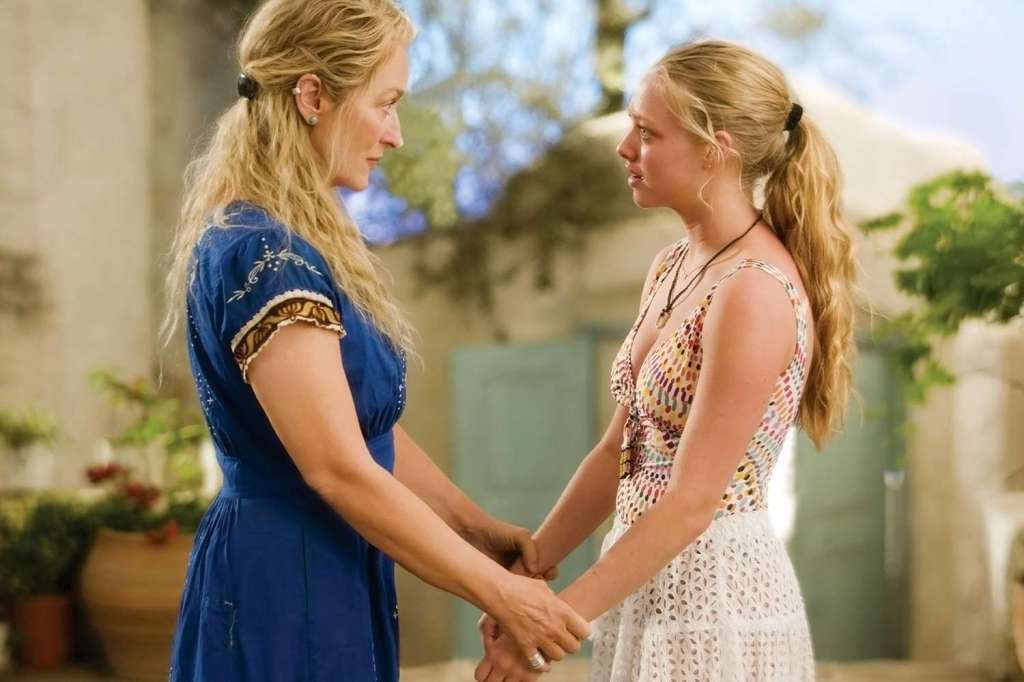
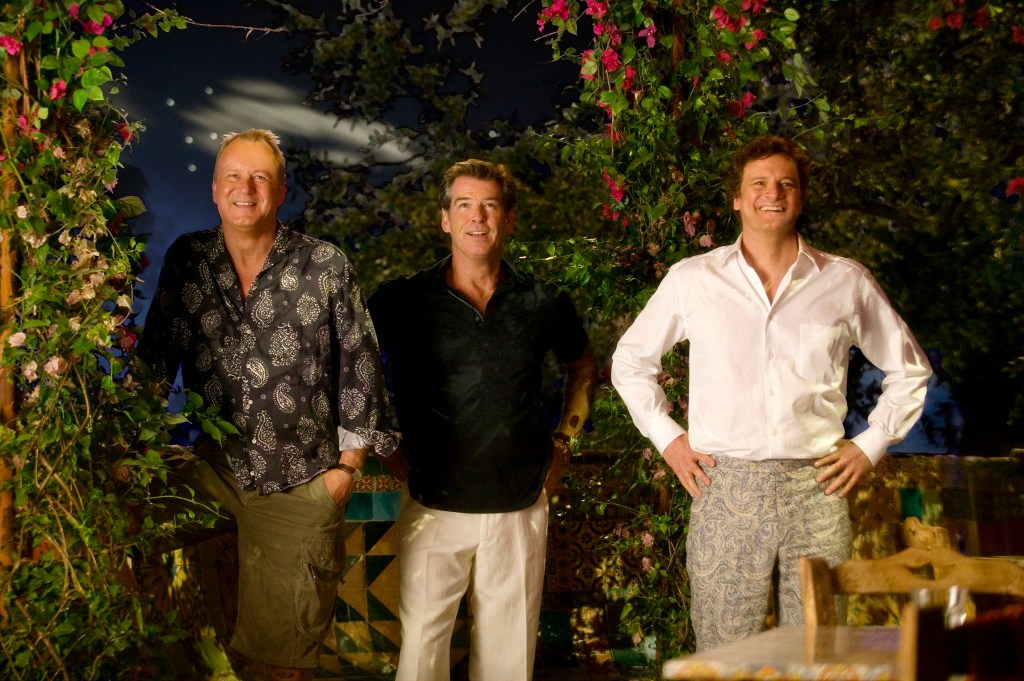
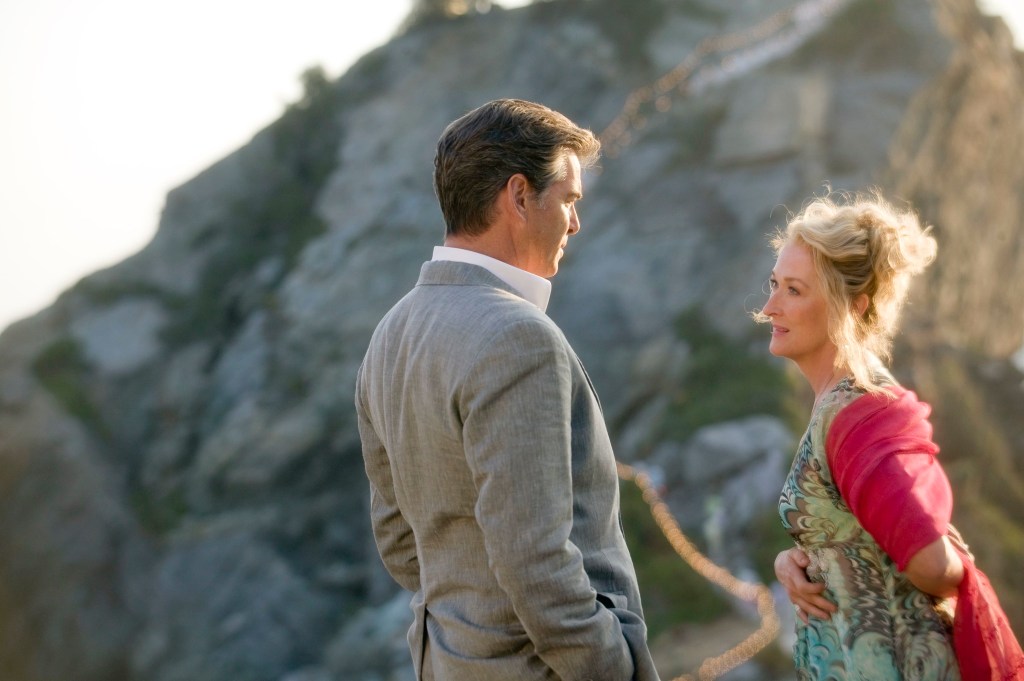
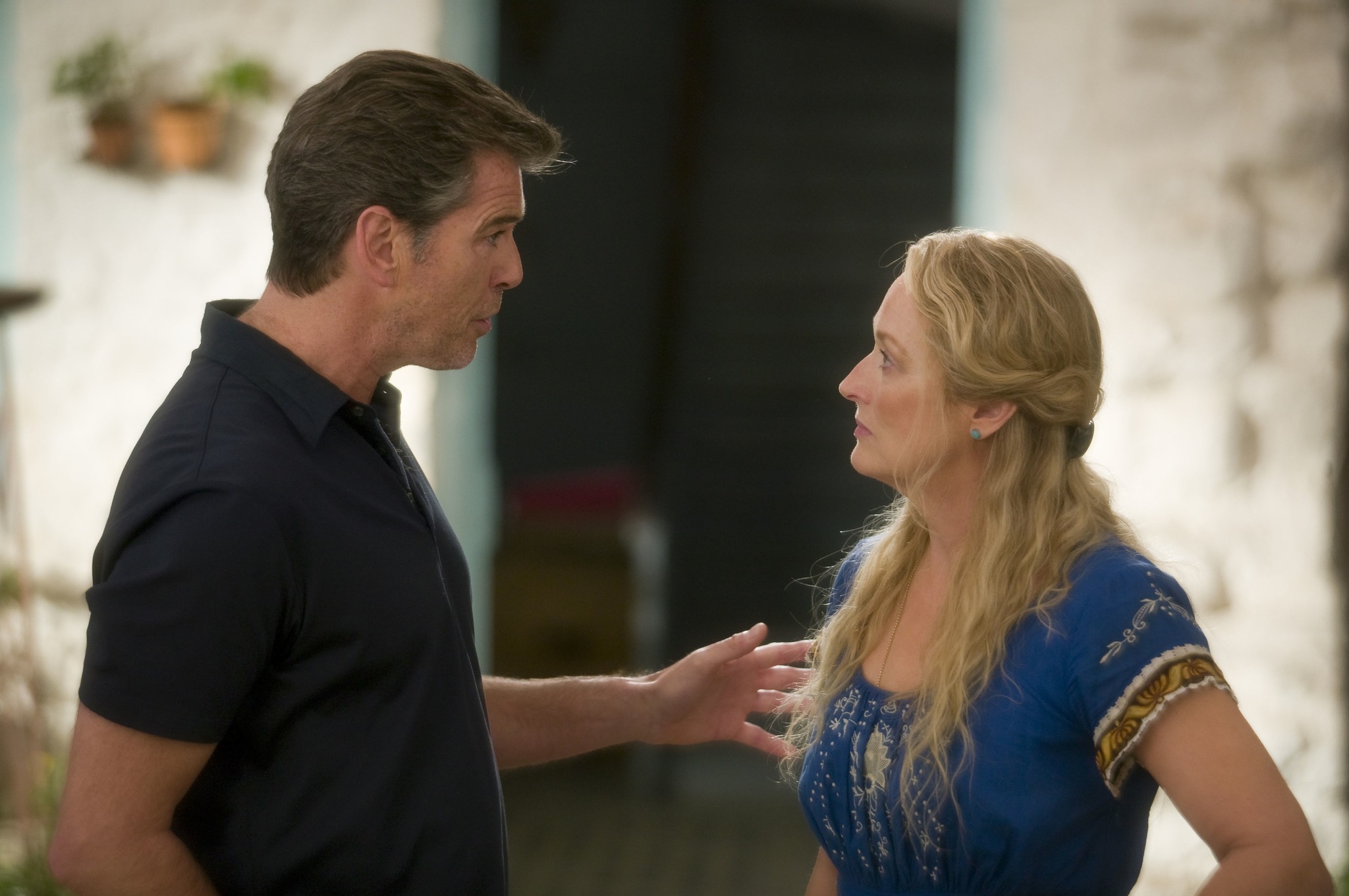
Mamma Mia tells the story of Donna Sheridan (Meryl Streep), the owner of a struggling villa in Greece, who lives with her daughter Sophie (Amanda Seyfried). It is on the occasion of Sophie’s impending wedding to Sky Rymand (Dominic Cooper) that the film orbits, but the true story circles Sophie’s search for her father. A man she has never known, but through whom she has three chief suspects. First is the architect Sam Carmichael (Pierce Brosnan). Second is Harry Bright (Colin Firth), a musician turned businessman. Lastly is Bill Anderson (Stellan Skarsgård), a Swedish sailor and a travel writer. Not long before the film begins, Sophie discovered her mother’s old journal and, over the course of a single summer, Donna had three relationships of varying lengths, and any one of them could be her father. Sophie has secretly invited all of them in the hopes of figuring out who her father is.

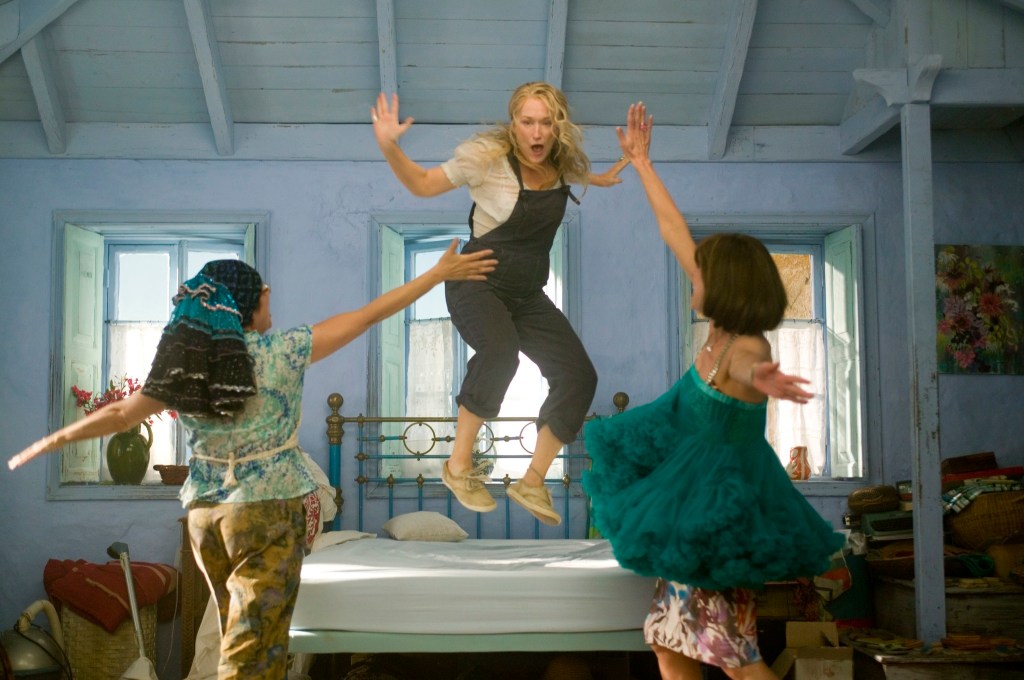
Donna’s two best friends from school, Rosie (Julie Walters) and Tanya (Christine Baranski), have both come for the wedding, not just because they’re close with Donna, but because of their relationship with Sophie. The relationship between the three women is one of the best aspects of the film. Meryl might be playing “the mom role,” here, but Mamma Mia is not interested in clichés. Her role is entirely central to the plot, and her decisions long before Sophie’s invitation set the course of much of the tension, comedy, and drama. Watching the three of them flit around the island to Dancing Queen is, by far, my favorite part of the film. It is clear that it was beloved by all involved, since Mamma Mia: Here We Go Again repeated the process as the grand finale for the sequel.
Despite centering on the wedding, it is, in essence, an excuse plot. Sophie’s attempts to get to know Sam, Harry, and Bill, in addition to Donna reconnecting with her past and forming a stronger connection with Sophie, are the true keystone plot points.
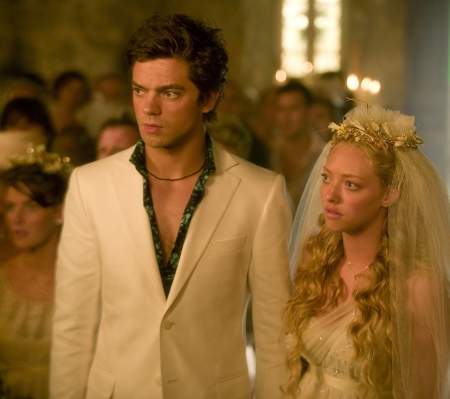
Sky has a somewhat prominent supporting role, enough that we can gauge him as a supportive partner. This is because the film puts more emphasis on Donna and Sophie in general. So it excised several key aspects of the play’s story.

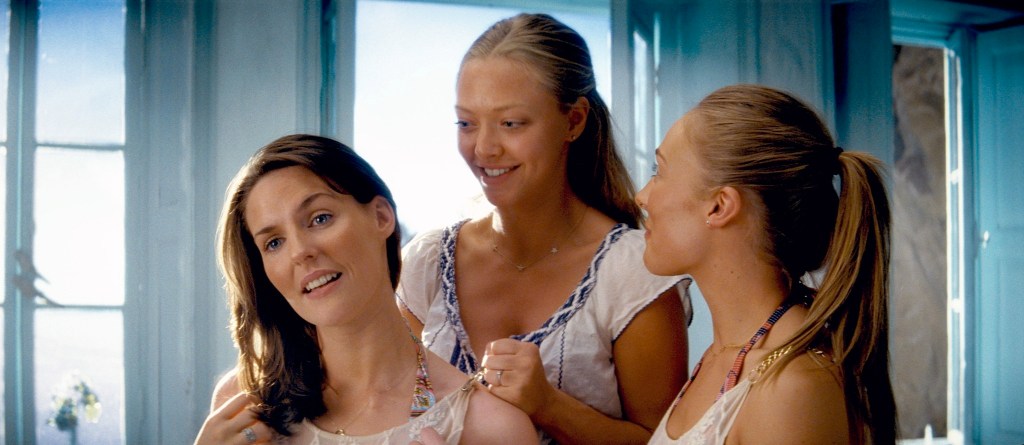
One of these cuts was larger roles for two of Sky’s friends, Pepper (Philip Michael) and Eddie (Chris Jarvis). Both of them are in the film, and Pepper’s interest in Tanya is retained, but their roles are practically nonexistent. The same is nominally true for Lisa (Rachel McDowall) and Ali (Ashley Lilley), Sophie’s close friends and her bridesmaids. I have not seen the play, so I can’t speak to how much their diminished roles overly impact the story, but characters serve a purpose, and they effectively delivered a reality where Sophie and Sky are not flying solo in their lives. At the end of the day, not every character is the main character, and I, like most theatergoers, came to see Meryl Streep sing. Two members from ABBA, Benny Andersson and Björn Ulvaeus, both have uncredited cameos in the film as a nod to the origin of its existence, acting as a fun nod.

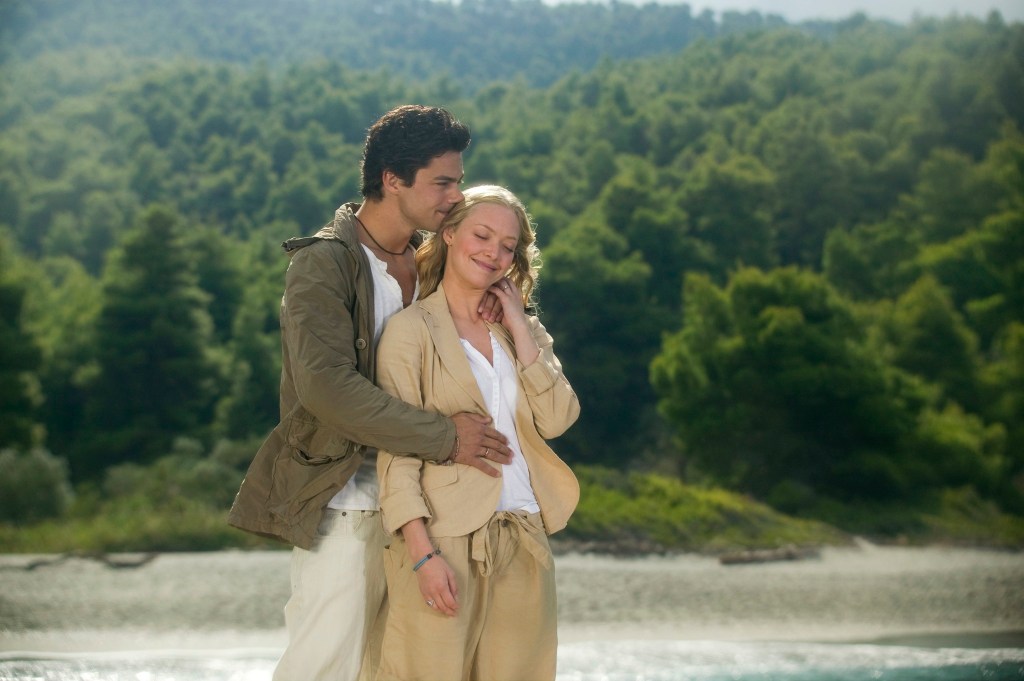
The music is, of course, what the story is built from, and ABBA offers a treasure trove to pull from. It was joked that when word of a sequel came, it might prove difficult, as the most popular pieces from ABBA’s discography had been used for the original story. That they were able to repeat the process and have a relatively similar successful run serves as a reminder that, where there’s a will, there’s a way. In this film, the key songs chosen include the titular Mamma Mia as Donna realizes what is happening. Our Last Summer is used to tell a bit about the men’s history with Donna, taking us to that time when they each spent a brief period with her. Lay All Your Love on Me is a potent power ballad between Sky and Sophie, as they reaffirm their relationship. Even Slipping Through My Fingers, a duet sung between Donna and Sophie, offers depth to their relationship, reminding us that, even as time passes, sometimes the only way to hold on is to let go.

Regarding my point on stories: it is difficult to point to a single artist or group and identify a usable selection of their music to tell a long-form story, at least not without making substantive changes. While a handful of lyrics were changed to some of the songs that would end up being used in Mamma Mia, by and large, their discography was able to fulfill a specific story when set in a particular order. If you were to switch the order in which Money, Money, Money was played with Honey, Honey, then the emotional throughline for the story would feel undercut. Each song’s placement served a purpose – propelling the story and granting insight into who each of the characters is.
Mamma Mia is part of an incredibly successful franchise, with its West End play having been running continuously since its 1999 debut. As I mentioned, a sequel was made and, in recent years, there has been talk of going for a threepeat. All the major actors are on board, and, if there were ever a time to truly consider it, the time of Merry Streep stepping in and doing sequels, such as for The Devil Wears Prada, might just be it.
 Lloydd Marshall Books