
The idea of a woman finally experiencing the joys of life later in her life is not a new story, nor is it one that is far-fetched. Women have been held back in life by the men who surround them, most notably their fathers and husbands, and are then held accountable for decisions regarding their lives that they did not make.
This story is the third adaptation based on Paul Gallico’s book, Mrs. ‘Arris Goes to Paris, which was published in 1958. It also received a stage musical and other various adaptations, in addition to three sequels.
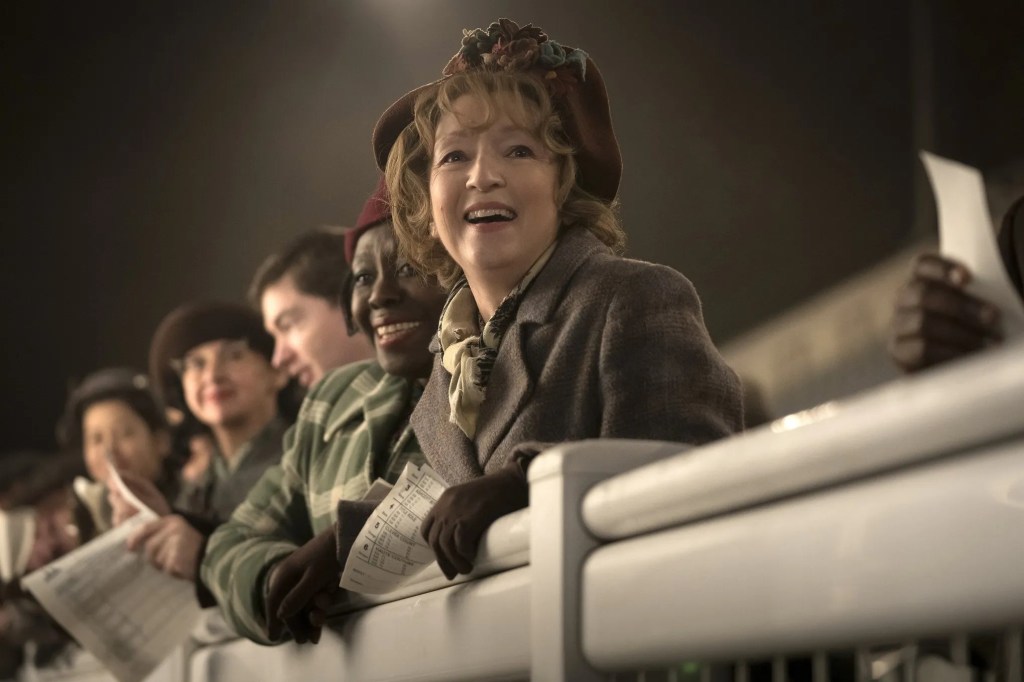
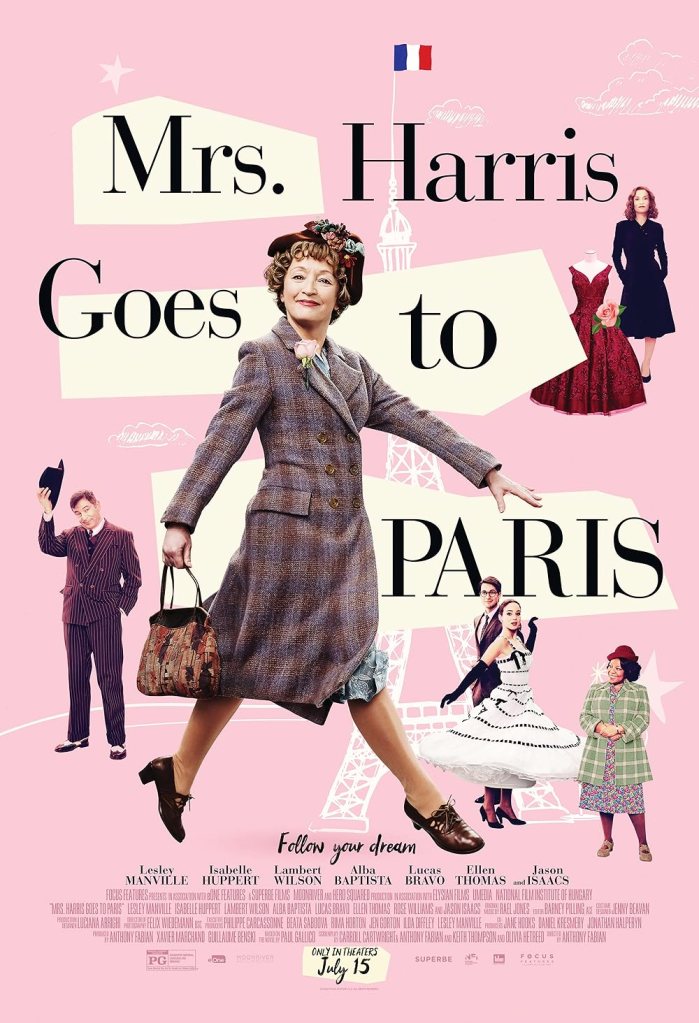
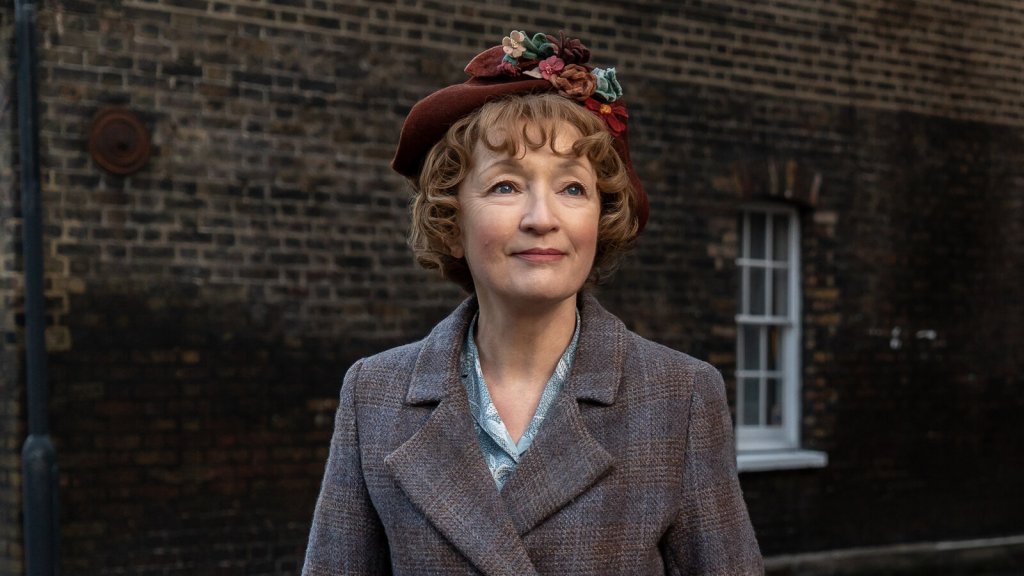
Mrs. Harris Goes to Paris is the 2022 adaptation and, like the others, it is centered on Ada Harris (Lesley Manville), a London charwoman (a cleaning lady) who becomes enamored with the haute couture wardrobe of her employer. Her life is one of dedicated servitude, and the longstanding hope that her husband, who has been missing in action for the past thirteen years, may one day come back to her. While she has essentially put much of her life on hold, that doesn’t change the fact that she still has to care for herself – but her kindness is shown to be… overextended.
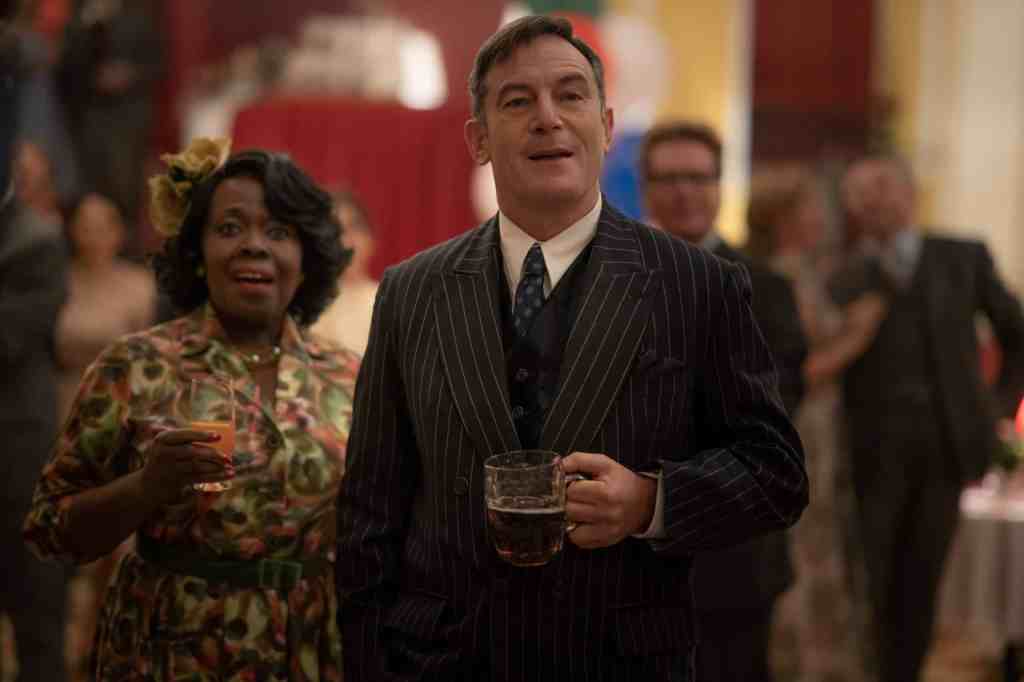
Two major supporting characters in Ada’s world are Violet “Vi” Butterfield (Ellen Thomas), her best friend, and Archie (Jason Isaacs), a man who fancies her but has respected the distance between them while she waits for her husband’s hopeful return. Their place in her life cements the reality that Ada’s world isn’t without support.
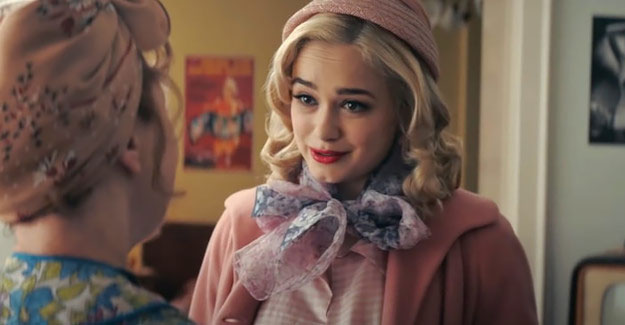
Ada cleans for two upper-class women, Pamela Penrose (Rose Williams) and the client whose wardrobe spurs her interest, Lady Dant (Anna Chancellor). It is made plain that both are dismissive of her in different ways. Pamela is introduced first as a beautiful, flighty young woman prone to making messes of everything around her, from her life to her home – usually right after Ada has cleaned it up. Conversely, Lady Dant is presented in a far worse fashion, as she leaves passive-aggressive notes as directives, and hasn’t paid her bill in some time. Lady Dant interrupts and evades all talk of paying her bill, and Ada has so little backbone on the outset of the film that she allows them to walk all over her.
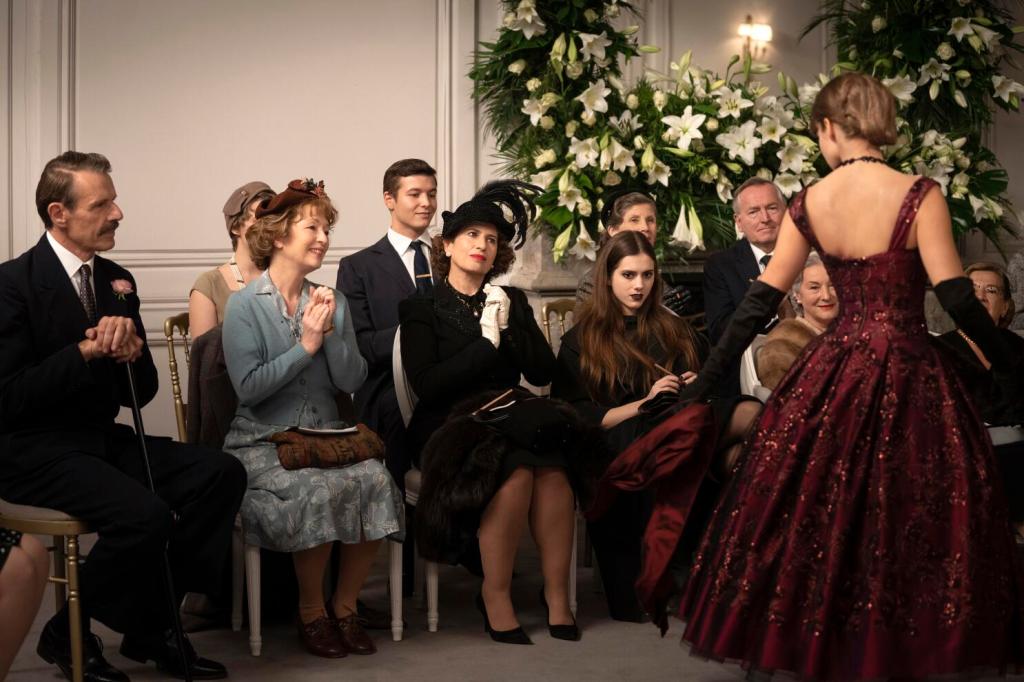
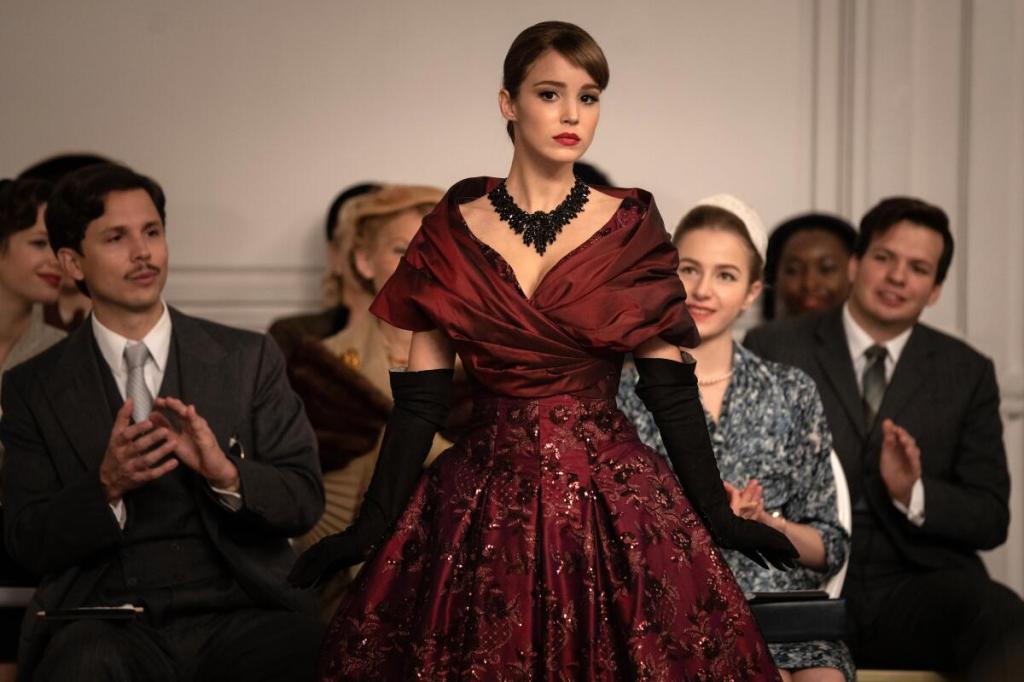
For Pamela, it’s because Ada seems to view her irreverence as a result of her youth. Having no child of her own, she takes on a more maternal role at first. When it comes to Lady Dant, their stations are such that Ada doesn’t overtly question the woman to her face, despite being in the right. Seeing the Dior dress in Lady Dant’s bedroom is what sets her on the path toward not only getting a dress of her own, but a backbone that will alter the remainder of her life. The price is a nominal £500, and, around the time the film was released, that price is equivalent to nearly $13,000, which helps to put Ada’s reaction into historical perspective. It isn’t so much the cost of the dress, or even how it looks, but how it (and the dress she ultimately ends up with) makes her feel. She doesn’t want a Dior dress for “Dior’s sake,” and that sets her apart from most of the cast as she runs into them over the course of the film.
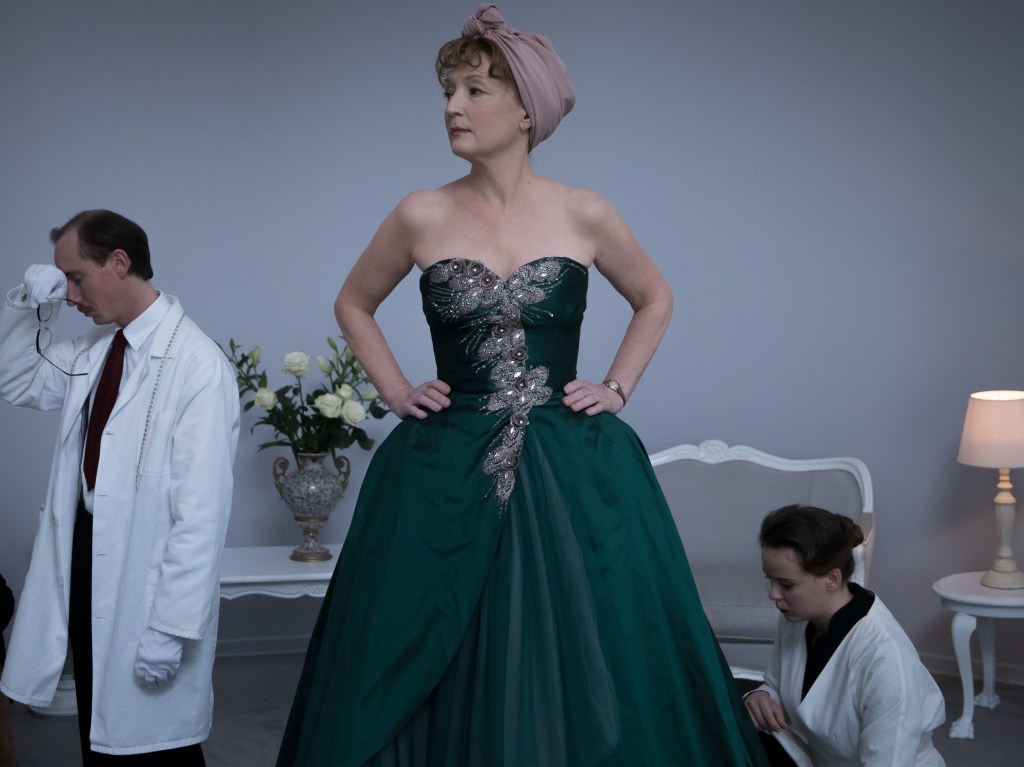
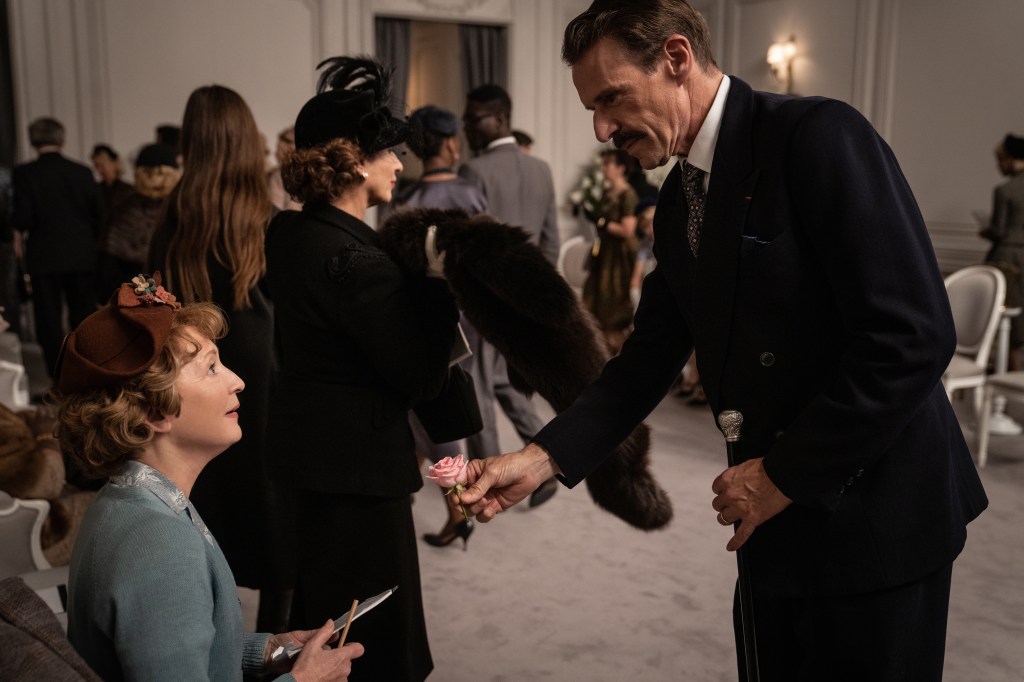
While the various versions of this story offer an array of explanations for how Ada Harris suddenly has the disposable income to afford a Dior dress, this film chose a simple one. Her husband’s death is finally confirmed, and she is given thirteen years’ back pay of her Widow’s Pension. With that money, Ada is able to afford traveling to Paris and the dress, but not much else. Because the process of acquiring a Dior gown is utterly foreign to the world in which Ada lives, we are treated to the entire process through her eyes – from the private fashion show where the gowns are displayed on models, to the fittings required to have the gown essentially custom made for the customers, to the glorious feeling of finally getting one’s hands on it. This is made more emotional because it unfolds in the wake of the showing of Dior’s 10th-anniversary collection.

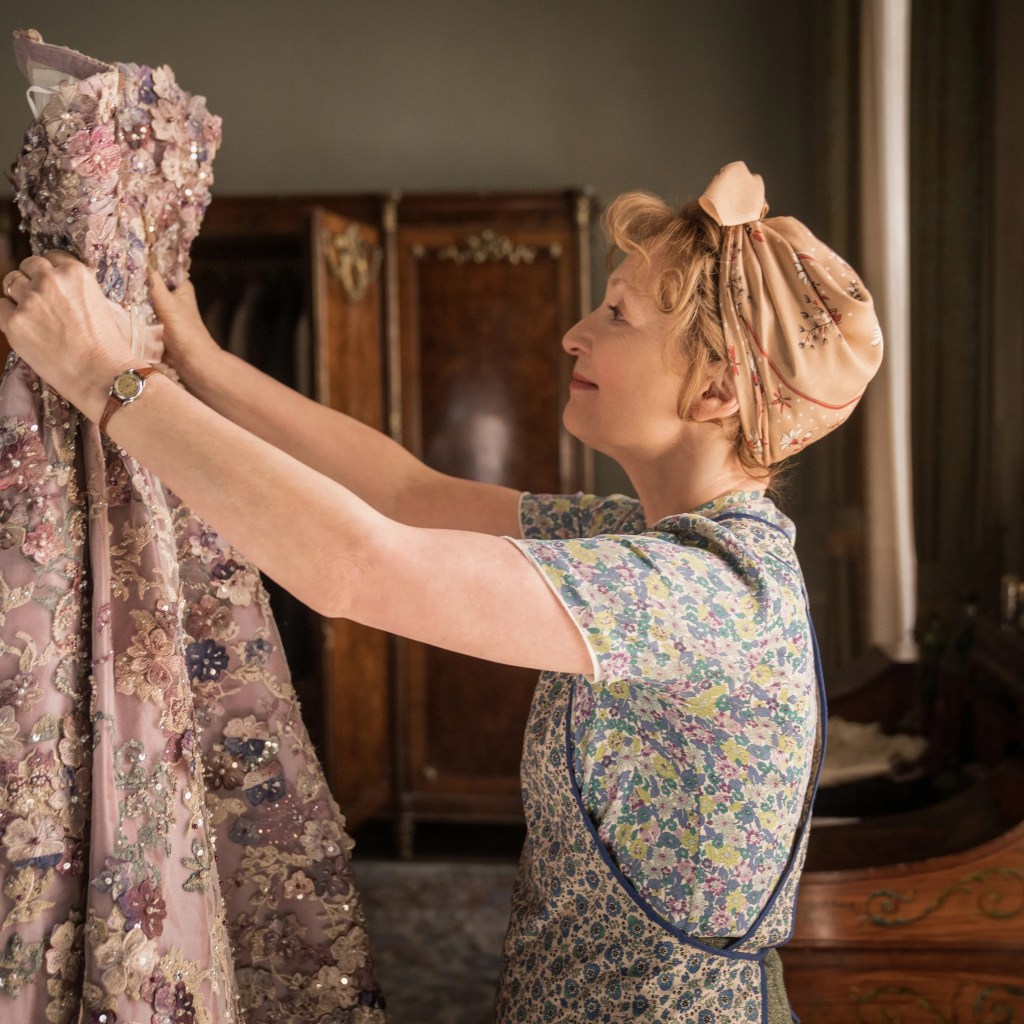
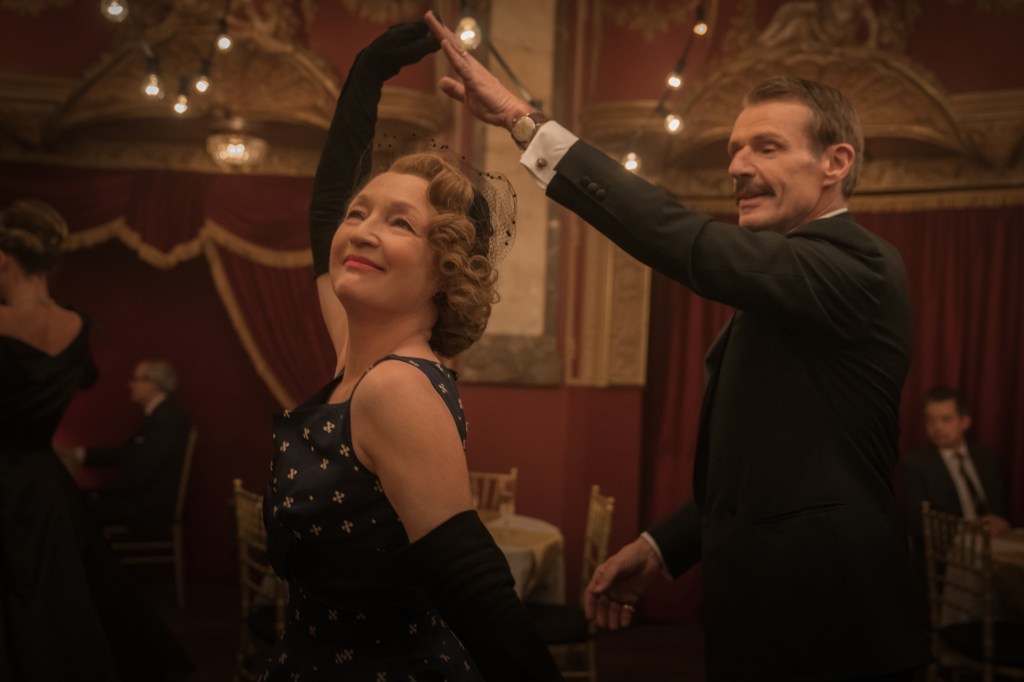
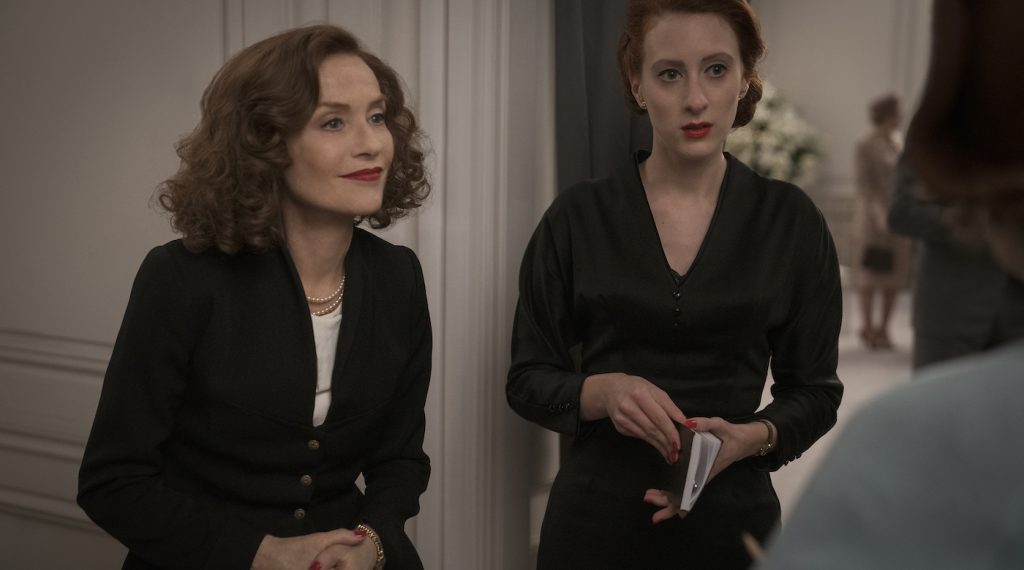
It is through this process that Ada meets the ensemble cast who work within the House of Dior, including Christian Dior himself (Philippe Bertin). Among them is Claudine Colbert (Isabelle Huppert), the Dior director, who views Ada’s presence as anathema to everything that haute couture stands for. While Ada accidentally stumbles into the show, which results in her getting a dress, throughout this time, she becomes friends with André Fauvel (Lucas Bravo), Dior’s accountant, and one of its models, Natasha (Alba Baptista), both of whom have a flirtatious relationship with one another. For a brief moment, Ada even believes she’s found the affections of Marquis de Chassagne (Lambert Wilson). However, she quickly discovers his fascination with her is because she reminds him of an old cleaning lady his family once had who was kind to him.
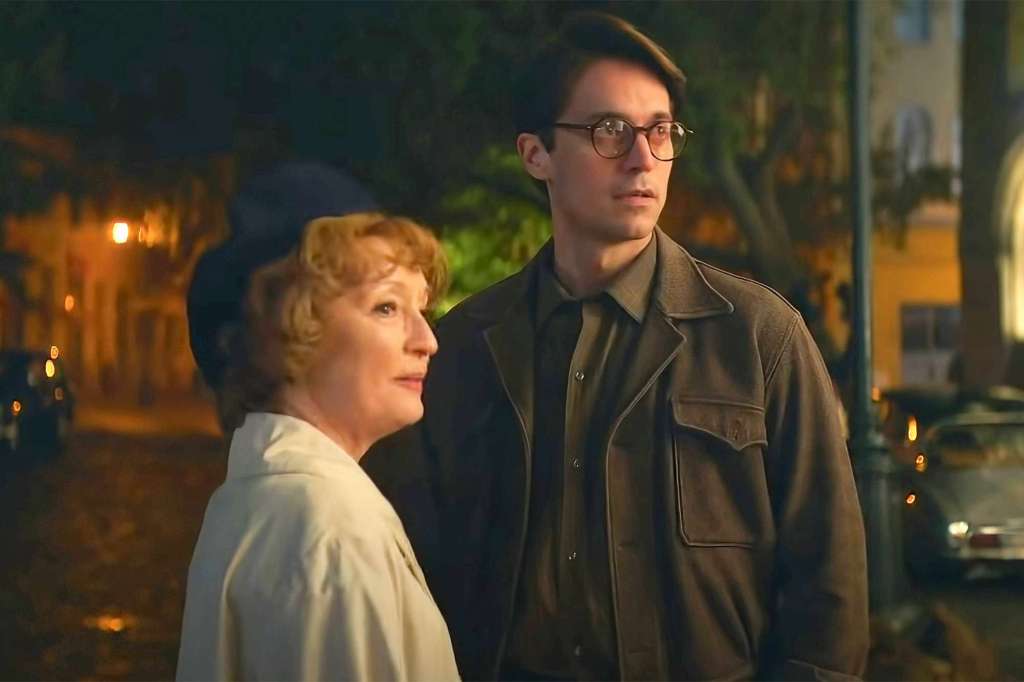
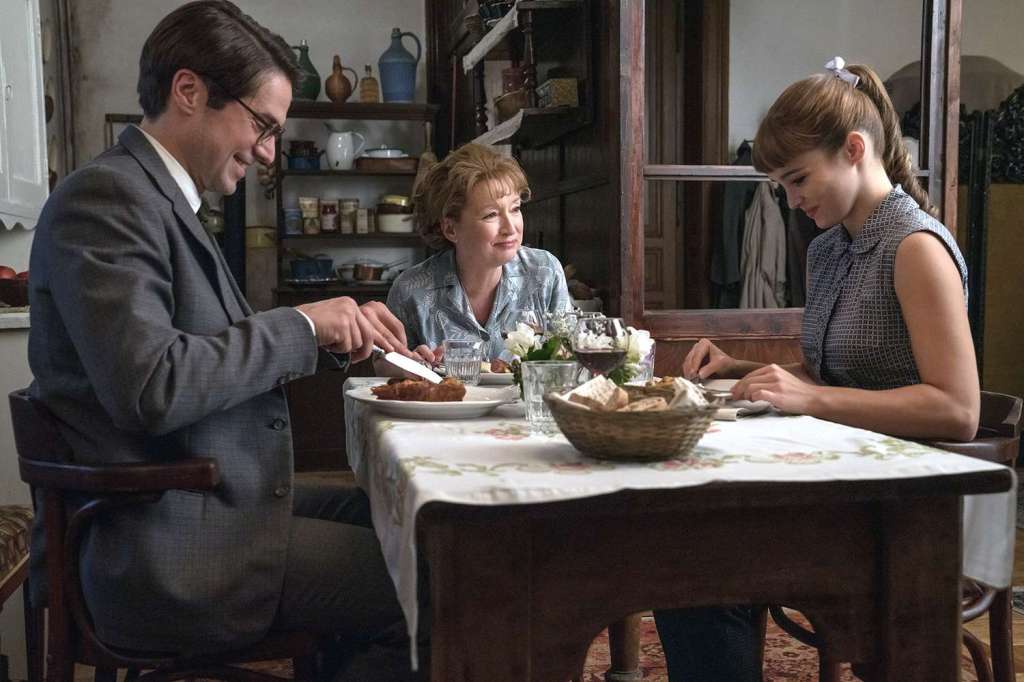
Yet, Ada finds her backbone among these people, even if she doesn’t want to remain in the world. Because her backbone is not in the same vein as the dismissiveness that she has received from people of this class. Ada is blunt, but she doesn’t set aside her kindness. Ada has no need to truly shed who she is, and it allows her to win them all over in her way, and they repay her kindness in kind before the film ends.
This is one of those genres that is not as niche as I am about to present it. Still, it evokes a specific emotional response in me, much in the same vein as “a pretty, poor girl commits light crime (identity theft) and ends up in a relationship with a handsome, wealthy man who wants to do nothing more than love her!” This particular genre is “an older, world-weary woman reminds the upper class of the beauty of their lives by allowing them to view it vicariously through her fresher eyes.” Or something along those lines. This and Miss Pettigrew Lives for a Day offer that same experience for me. Perhaps that is why they have stuck with me after all this time, and act as an interesting comfort film.
 Lloydd Marshall Books