

One thing that adaptations that are created years after the original piece was made is that hindsight is no longer just 20/20. Sometimes, it can allow the world in which the story unfolds feel eerily prescient. Miss Pettigrew Lives for a Day is a story that was originally written in the late thirties by Winifred Watson, and while the greater world was teetering on the edge of war, practically nobody alive at the time was aware of that fact.
Its impact on the film cannot be ignored, since the film rights were sold not long after the book was published, but the outset of World War II upended it by seventy years.
Set over the course of about a day, as the title outright promises, Miss Guinevere Pettigrew (Frances McDormand) is a middle-aged governess who is struggling to hold onto work after being dismissed from her fourth job without her wages. The blame is put squarely on her child-rearing tactics. After abandoning her suitcase when she ran into a man freshly released from prison, she is left destitute. The placement agency refuses to find her more work, while struggling with a particular position for a woman that Miss Pettigrew mistakes for a mother. After stealing the placement card and making her way to the home of Delysia Lafosse (Amy Adams), Miss Pettigrew soon learns that the woman was not seeking a governess but a social secretary.
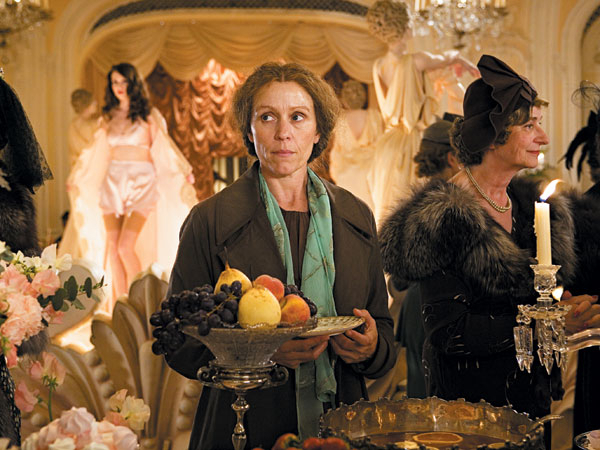
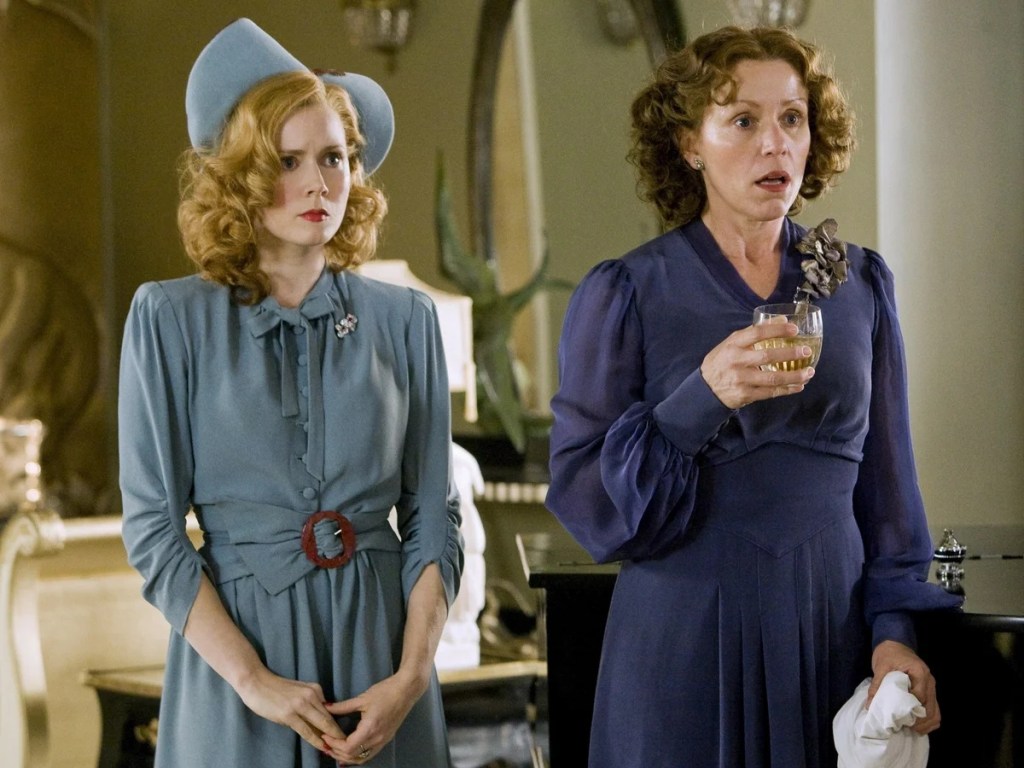
The film is a romantic comedy of sorts, but it feels far more in the realm of a drama with romcom elements woven into it. While Miss Pettigrew is the title character, Delysia is the one whose life she has come to learn from, and help improve – but, in an interesting turn, Pettigrew is not merely changing Delysia’s life for the better, but her own. Pettigrew learns quite quickly that the job is not what she had been expecting when she is sent to wake up the boy in Delysia’s bedroom. Phil Goldman (Tom Payne), a man, decidedly not a boy, is the one she finds upstairs in the nude. He is a theater producer with whom Delysia is sleeping with in a bid to secure a role in one of his upcoming productions. We soon learn that Phil is merely one of the men with whom Delysia is involved.
Delysia’s other paramours include Michael Pardue (Lee Pace), a penniless pianist, and Nick (Mark Strong), a club owner and a man whose darker, forceful nature is presented as an allure. Michael is presented as the only option of Delysia’s that she has genuine feelings for, and the one whom Guinevere is openly rooting for from the moment she meets him. I say this because of how Delysia presents herself to the world when set against how Michael is presented. Of the three, he is the only one who offers nothing in the way of status or power, things Delysia states multiple times in so many words are necessary for the life that she envisions for herself.
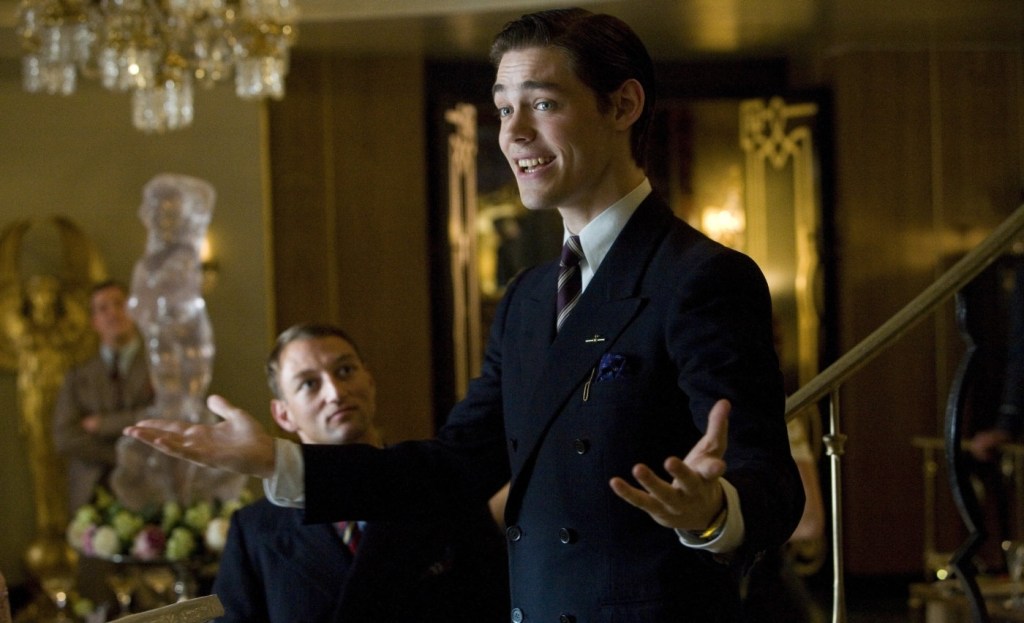

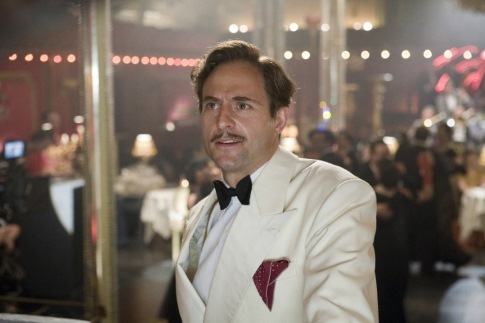
The film takes care to distinguish each man and what they offer to Delysia, in addition to the world in which they inhabit. Nick’s cold ambition versus Phil’s youthful naïveté as a presumed, nouveau riche figure stand in stark contrast to Michael’s more grounded, gritty, and realistic understanding of the world. Of them, Nick is the only one who is treated as an outright villain, especially when he feels that Delysia should remain his lover after marrying Phil – a choice she roundly refuses, on both counts.
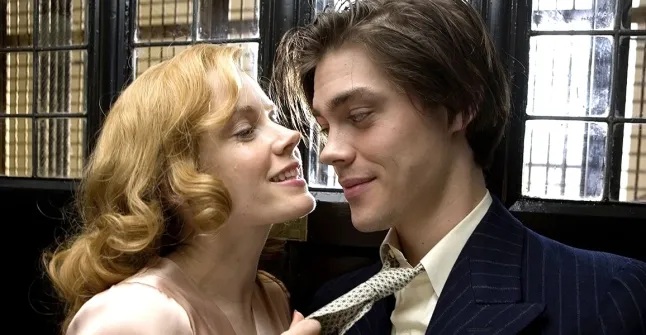
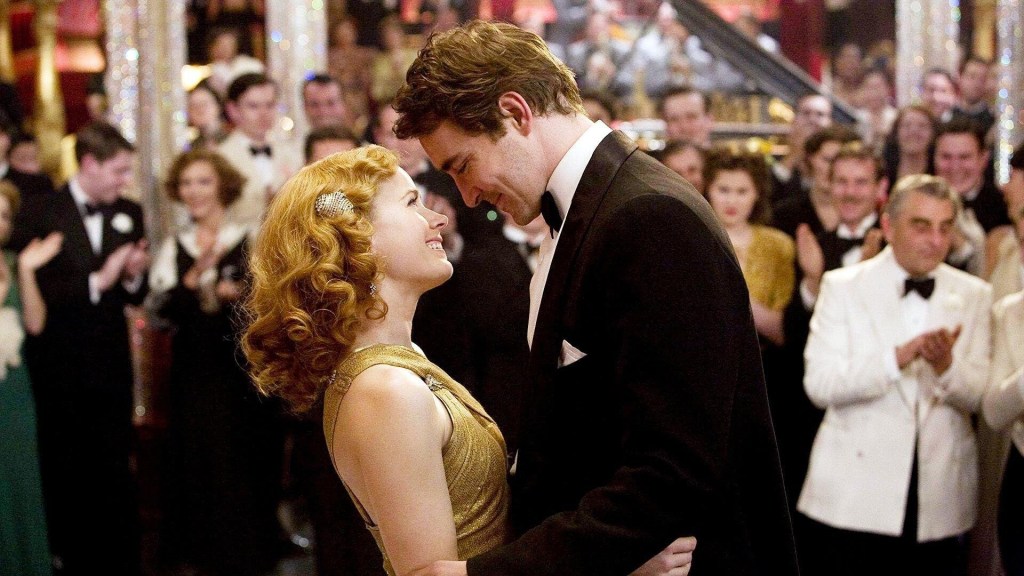
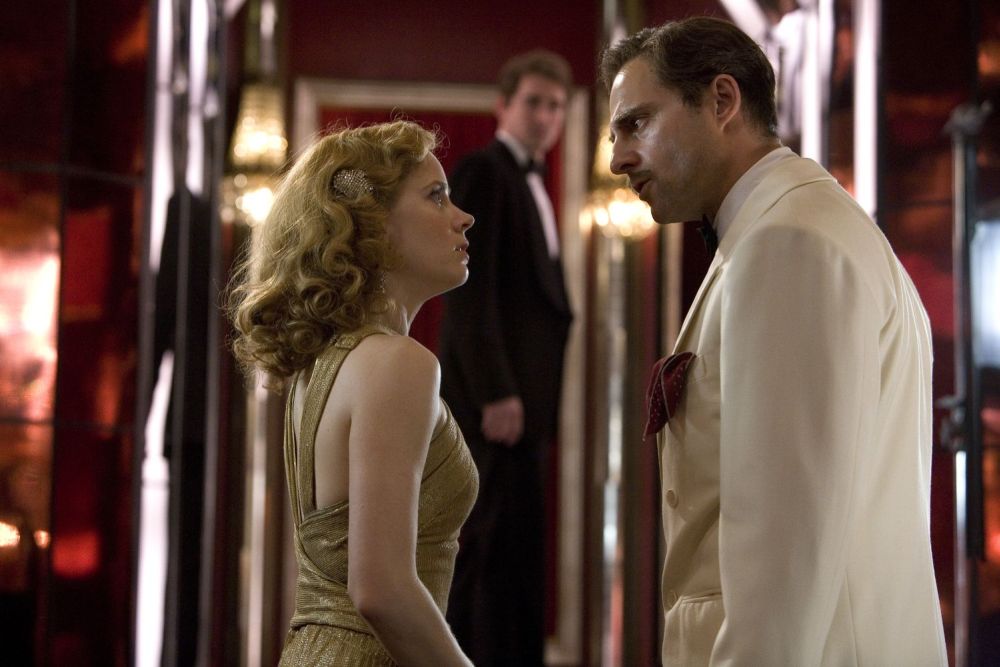
What makes this interesting is that Delysia has three options before her. Still, the film doesn’t shy away from the consequences of her flightiness or indecisiveness when it comes to which man she wants. Phil has another potential choice in Charlotte Warren (Christina Cole) to lead his upcoming play, and Delysia’s efforts stymie Charlotte’s potential at several turns. Additionally, we are treated to another potential complicated romance when Guinevere meets Joe Bomfield (Ciarán Hinds), a lingerie designer who is engaged to another woman, who, well before her fortune seems to turn, Guinevere sees said woman, later revealed to be Edythe Dubarry (Shirley Henderson), kissing a man, Gerry (Matt Ryan), in an alleyway.


The main relationship that the film takes its time to cultivate is the one between Guinevere and Delysia. While they juggle other aspects, such as romance and their futures, this single day provides the foundation for a friendship that will fuel those changes. The impetus for that change comes from one another rather than the men around them. While Guinevere and Delysia are rewarded with a love interest, it is treated more like a happy coincidence because of the journey they took, rather than the intended destination.

Edythe’s efforts at keeping her relationship with Joe on track are entirely tied to the fact that they are both upper-class, and she becomes a major obstacle to Miss Pettigrew’s burgeoning feelings for Joe. Realizing who Guinevere is, Edythe attempts to blackmail the woman into helping her to reconcile with Joe.
This is something that proves quite difficult because Guinevere has already begun to develop feelings for him. Throughout this single day, Guinevere Pettigrew experiences an entirely other world from the one that she has lived in her entire life.
One where money, power, fashion, and sex comingle with such intimacy that they might as well be indistinguishable.
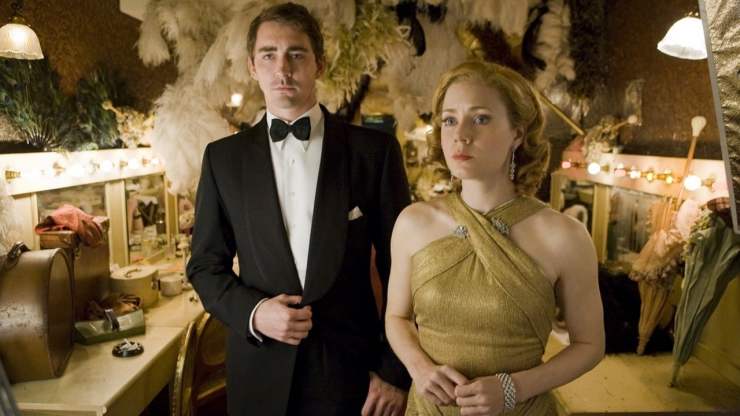
Through Guinevere’s eyes, we are able to get a glimpse of what it is like because of her connection with Delysia, who has dithered on the precipice for years.
Michael, who has been in prison for the past thirty days because he got into a drunken altercation after Delysia failed to show up for a grand romantic gesture that he really couldn’t afford, finally got out. He wants her to choose. What is fun about his backstory is that we, as the audience, are treated to its tail end at the beginning of the film. By the time they meet again, Miss Pettigrew is in a vastly different mental space and begins to grasp the true extent of Delysia’s situation. Perhaps, if not for Miss Pettigrew appearing in her life when she did, the events might have unfolded differently.
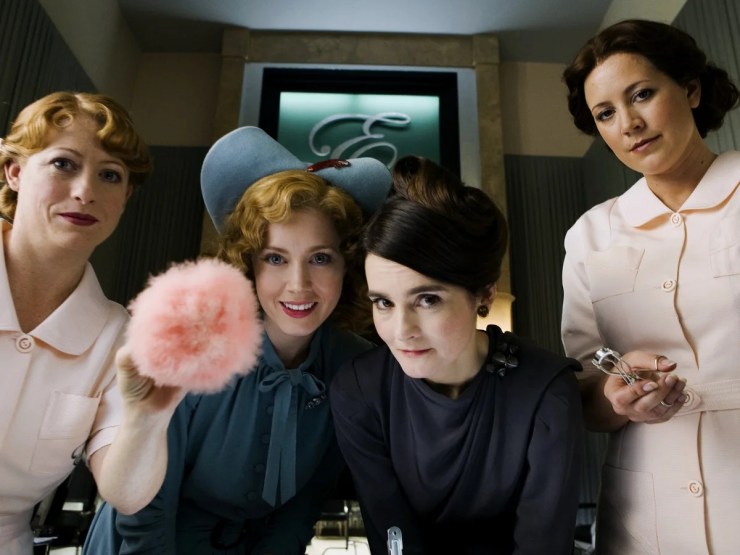
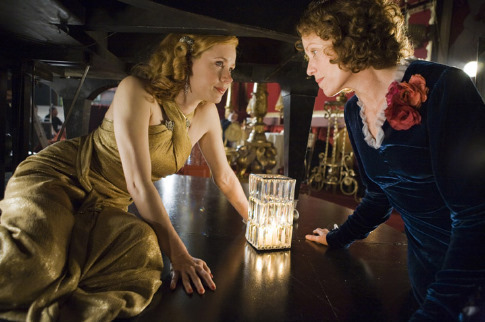
What makes Miss Pettigrew Lives for a Day one of the more entertaining slice-of-life films is that it refuses to sacrifice pacing for its story. Many films spanning ninety minutes to two hours find it difficult to effectively cover any span of time without letting something slip. For me, I have always felt that this movie strikes the right balance in how and when it introduces the elements of its plot without handholding us. Michael and Edythe’s initial introductions might as well be “blink, and you’ll miss it,” but they provide the basis for two of the developments for the plot when the movie comes to an end. Storytelling at its finest.
 Lloydd Marshall Books