
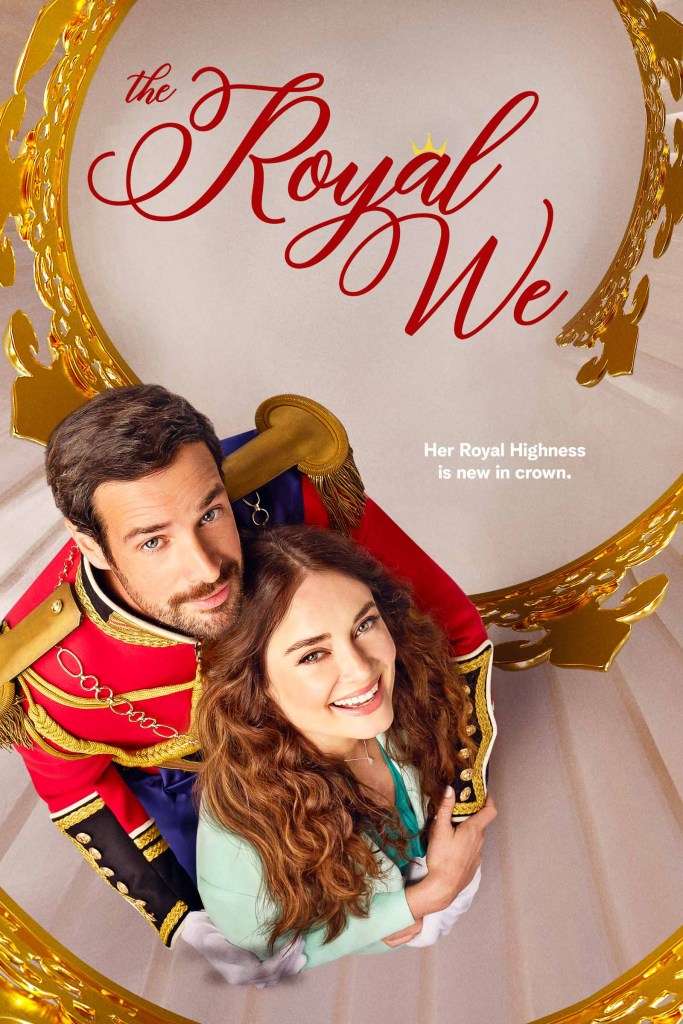
Hallmark has been in the business of making movies about love for practically forever. In the last decade alone, they have made at least twenty, if not more, movies dedicated to the concept of a Prince (or in the rare case, a Princess) meeting and falling in love with a commoner who owns some kitschy small business in the middle of Smalltown America.
They’re not alone in that endeavor; Netflix and other cable television networks have done the same. What makes The Royal We stand out from the trend is that it sets aside the “actual” commoner aspect in favor of using both tools the royal character tends to use. A known figure and the one incognito.
The Royal We takes its name from the fact that, throughout history, royalty would speak for themselves and the State/Crown in simultaneity. “I” am not issuing the royal decree; “We” are, in essence. As such, we are treated to two royal leads from rival kingdoms who have been in a land dispute for generations that was intended to be solved by the union of the Crown Prince and Crown Princess – Desmond (Charlie Carrick) and Coraline (Nicola Posener). Sadly, Princess Coraline elopes with a plumber, Cody (Adam Woodward), shortly after the official engagement photos have been taken and released publicly, damaging the efforts immensely. Desmond and his chief aide, Edwin Thewit Moorland (Simon Kunz), come up with a solution. Since Coraline had to dispense with her position to marry a commoner, Bea (Mallory Jansen), her younger sister, is now the Crown Princess. She thus fulfills all the aspects that make the solution workable.
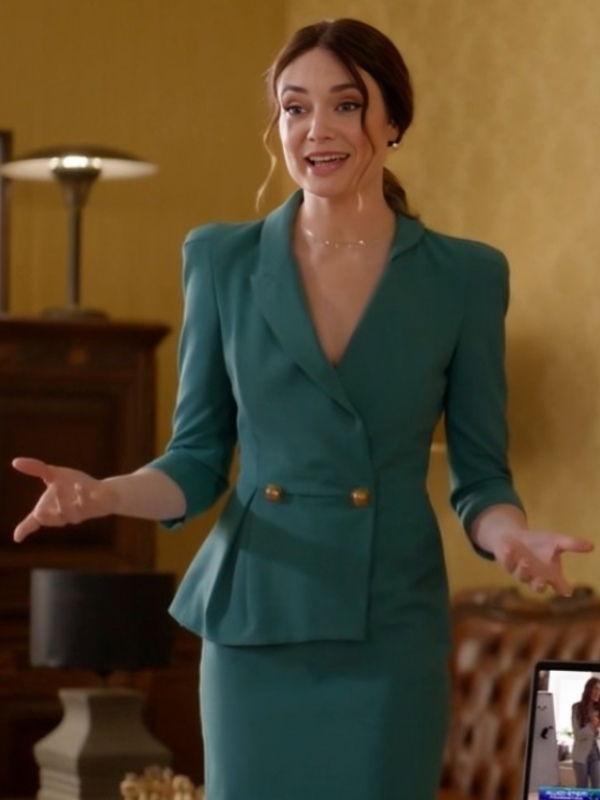
Bea is introduced after the trouble has already unfolded, having recently been dumped by her boyfriend over text and having spent the entire weekend avoiding the real world, up to and including her phone. Unknowingly, Bea has been dodging the calls from the Kingdom of Androvia, who have been working to reach her so that they might address the issue with an aggressive fervor that the film does not have the budget to formally back up through additional footage.
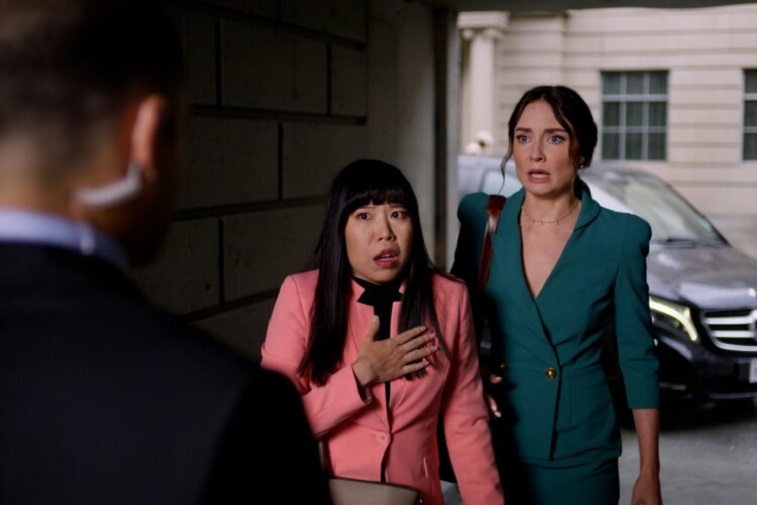
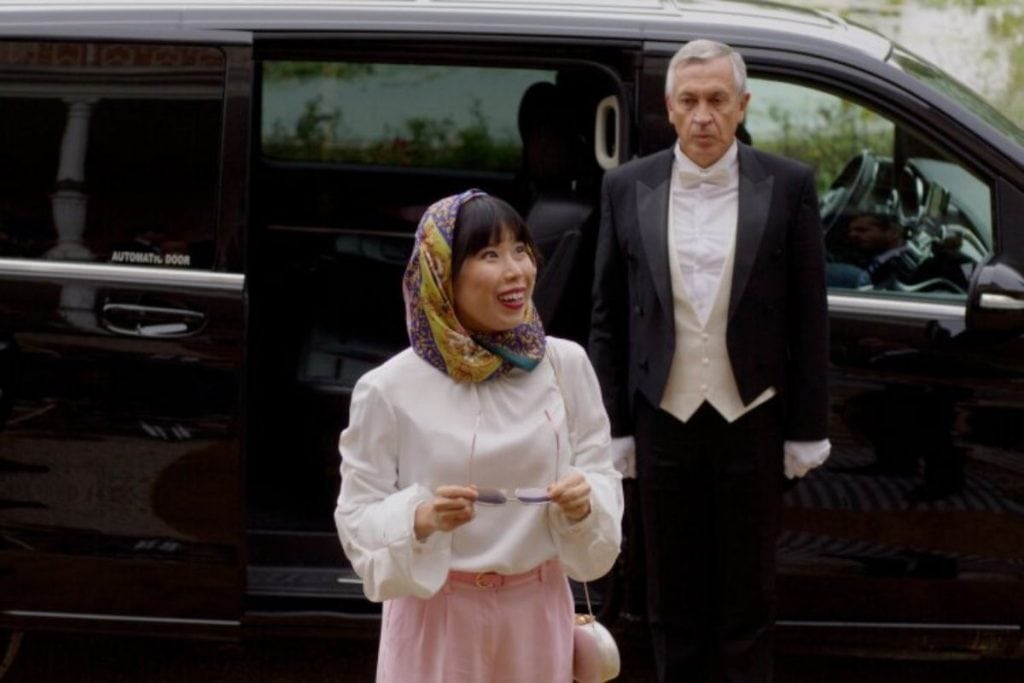
Her best friend, Chloe Hargraves (Rae Lim), works with her at their company, where they teach conflict resolution and leadership skills, and have been seeking additional funding from a reputable endowment that seems less than keen to assist them at first. Her relationship with Coraline is not tossed under the bus at any point, with Bea understanding long before meeting Cody why Coraline might want to set aside the pressures and expectations of being a royal in favor of a genuine connection.
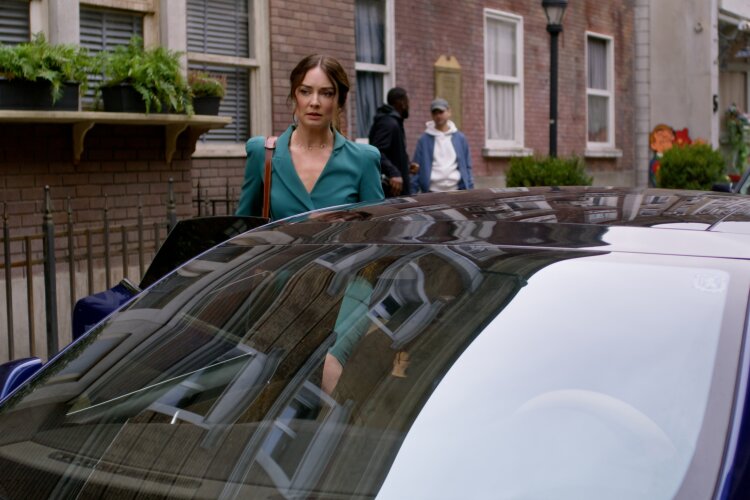
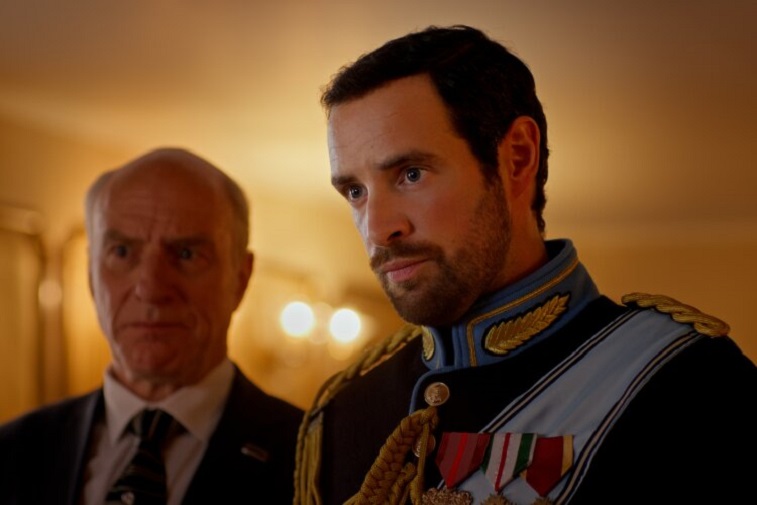
Bea has spent decades hiding out in Boston after an incident involving an unflattering photograph, happy with having left it all behind. Despite this, she has kept up with what is going on and never once stunted her royal education, putting her on par with Desmond on official matters while woefully unprepared to deal with the fact that, as they deal with the former, their feelings begin to develop. What makes this vastly interesting is that neither Bea nor Desmond openly acknowledges their feelings because they are both completely certain that the other is only going forward with the planned engagement to finally bring their kingdoms to the table and solve a centuries-old crisis that has, as far as they’re concerned, become untenable for reasons that no longer make sense.
The romance is obviously the primary point of the film. Still, my favorite relationship in this movie is between Bea and Chloe. While Chloe’s story, like all supporting characters in a film about a romantic couple, revolves around Bea, Rae Lim delivers a funny, energetic performance as Chloe. She is supportive but not sycophantic, and her initial reaction to the fact that Bea is a princess is exactly what one would expect. But, watching the two sit down at a restaurant and discuss how “Bea” is one person and “Beatrix Ileana Halston Von Lindbergh Eugard of Vostierrie” is another, but that who she is has always been the same comes within the first twenty minutes and truly sets the bar for how these two women have operated in one another’s worlds for two decades or more. Chloe is stunned but understanding, and never loses that comedic edge that one should expect from the best friend archetype in a romcom.
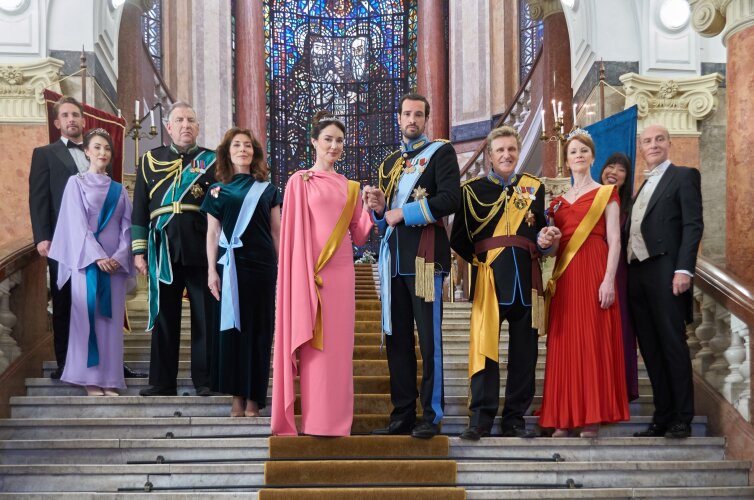
Vostierrie and Androvia have been locked in a formal dispute over the Alsinian Province and the Castle Elora for three hundred years, but because the film is dedicated to the budding connection between Bea and Desmond, much of what we learn is through how King Richmond of Androvia (Michael Howe) and King Winston of Vostierrie (Simon Shackleton) treat one another. Their wives, Queen Leupina (Carlyon Backhouse) and Queen Marguerite (Jacinta Mulcahy), respectively, seem to have a far more cordial relationship despite limited screen time together. Yet, in the background, the dialogue choices that the film uses offer us tidbits. Bea and Desmond both joke about how their education laid their respective kingdoms out as the hero or the villain in their histories. While neither of them overtly takes the propaganda seriously, it is all too likely that the lower down in society one goes, the more ardent one might be.
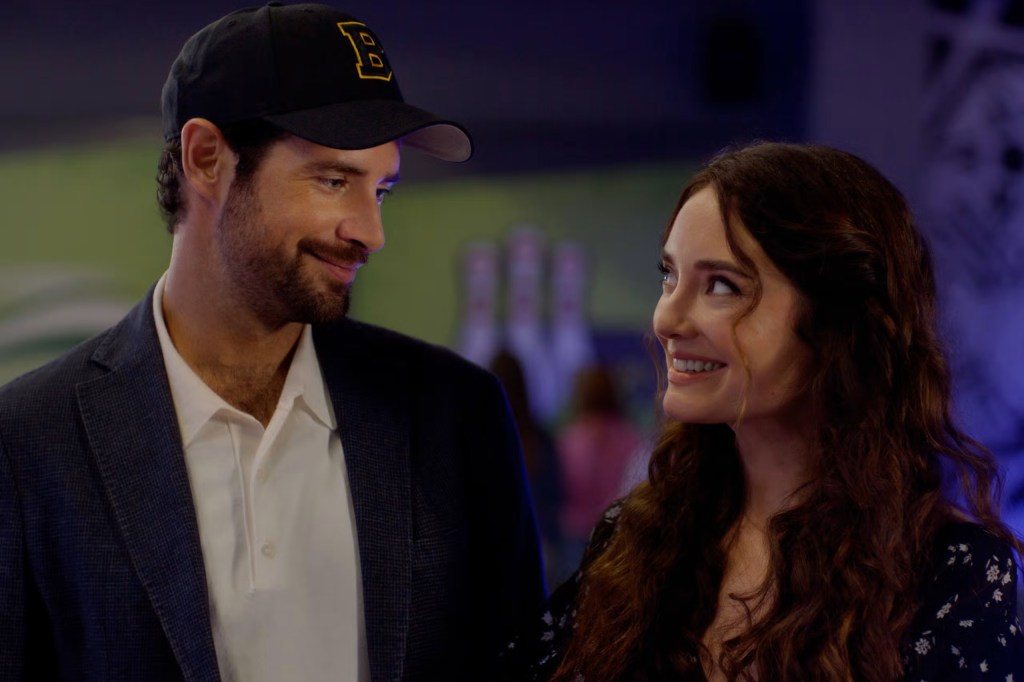
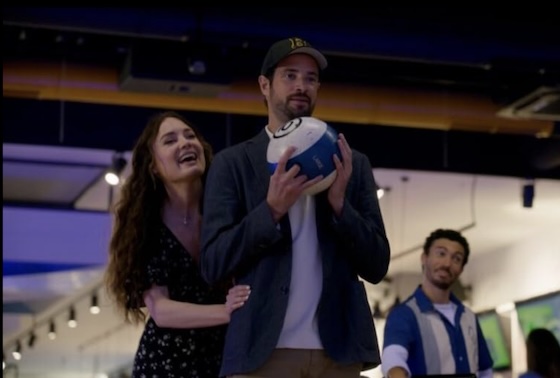
At the end of the day, this is a romcom, and the true center of gravity is the relationship between Bea and Desmond. We are treated to a fully staffed Crown Prince and a woman now having to step back into an identity that she left behind as a child. It cannot be overstated that royal protocol is never designed for one’s individual comfort when the needs of the state are on the other side of the scale. Desmond and Bea continue to grow closer in spite of those protocols. The first instance comes when, during a formal dinner after having accepted, but before formally taking the ring, Bea convinces Desmond to sneak off with her to actually see the life she’s leaving behind at a time when they might still have that luxury. Finding those peaceful moments between just the two of them allows a genuine connection to form, even if, by the time they are both willing to admit their feelings to one another, the crisis between Androvia and Vostierrie is no longer an issue.
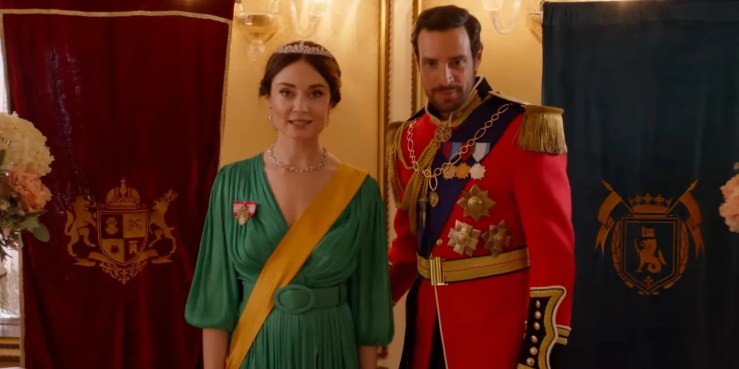
The Royal We was not trying to be at the level of a high-cost Disney film, and yet I was truly ecstatic to see that they did not take the easy road and simply shortchange the life that not one but two royals should be living. Even if they’re from small European kingdoms, the palace, the clothes, even the hairstyles and food are treated in such a way that you could easily forget that they aren’t genuinely royalty. Countless films in this genre like to cheat at that aspect – using a “double deluxe” hotel room rather than a room that could pass for a genuine penthouse or clothing choices that look as if they belong in a Prom catalog rather than a genuine Princess, being top examples.
The Royal We is a fun film and, if any of these types of movies deserved a sequel, I would honestly say that this one fits the bill cleanly.
 Lloydd Marshall Books