
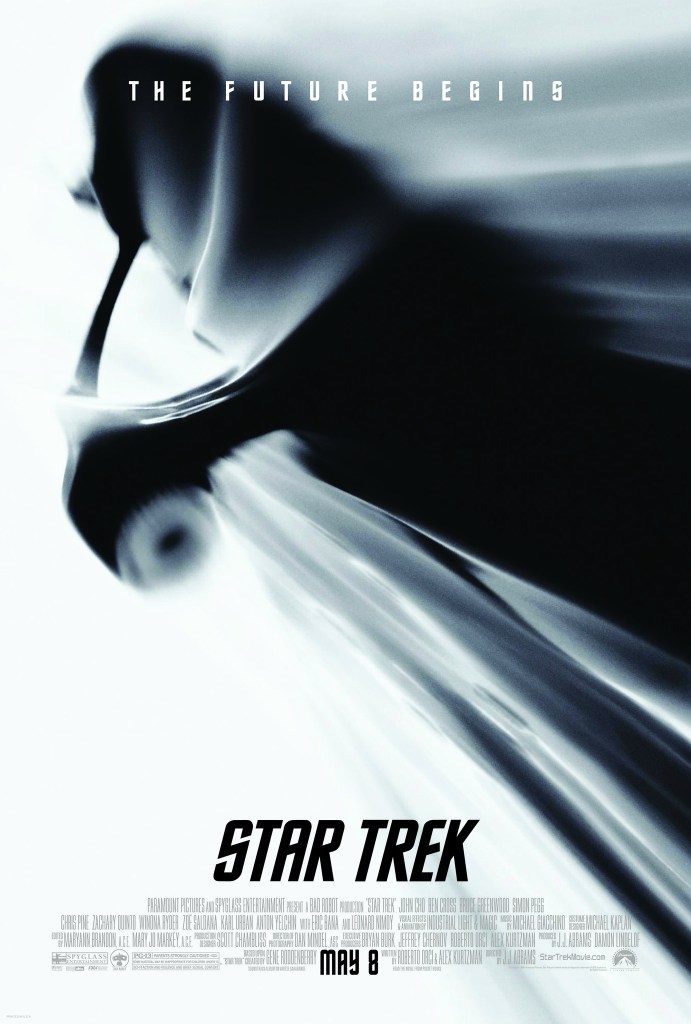
Star Trek is a long-running franchise that owes its continued existence to the first instance of a fan-run salvation campaign. The original work, a short-running show in the 60s, was wildly popular – just not by the demographic that executives would have liked. Today, it’s impossible to imagine a world without Star Trek, let alone its myriad spinoffs.
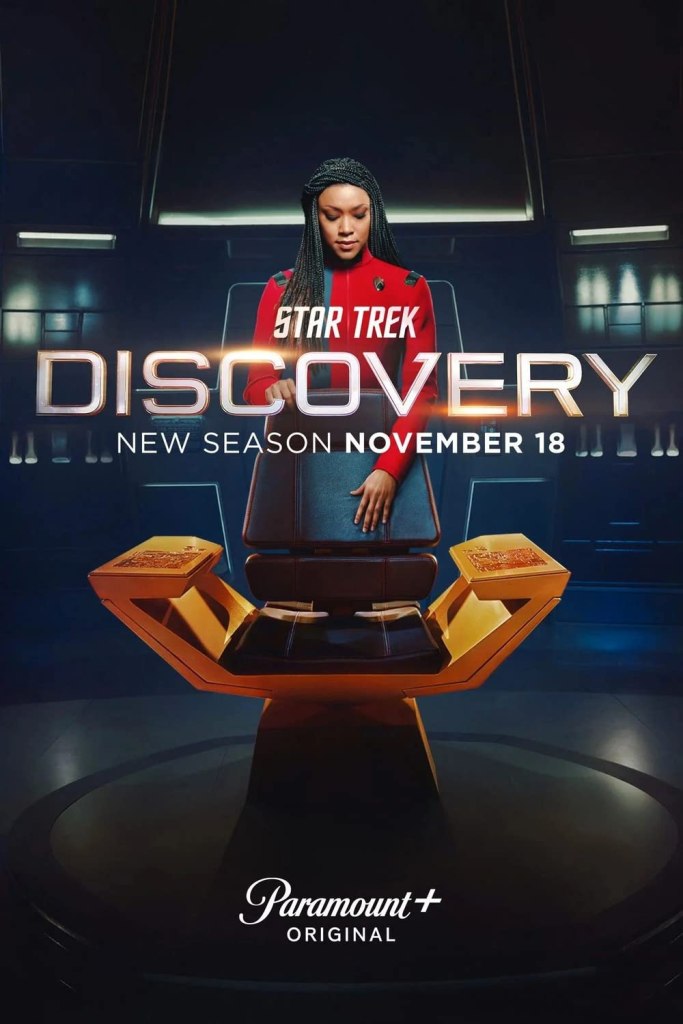
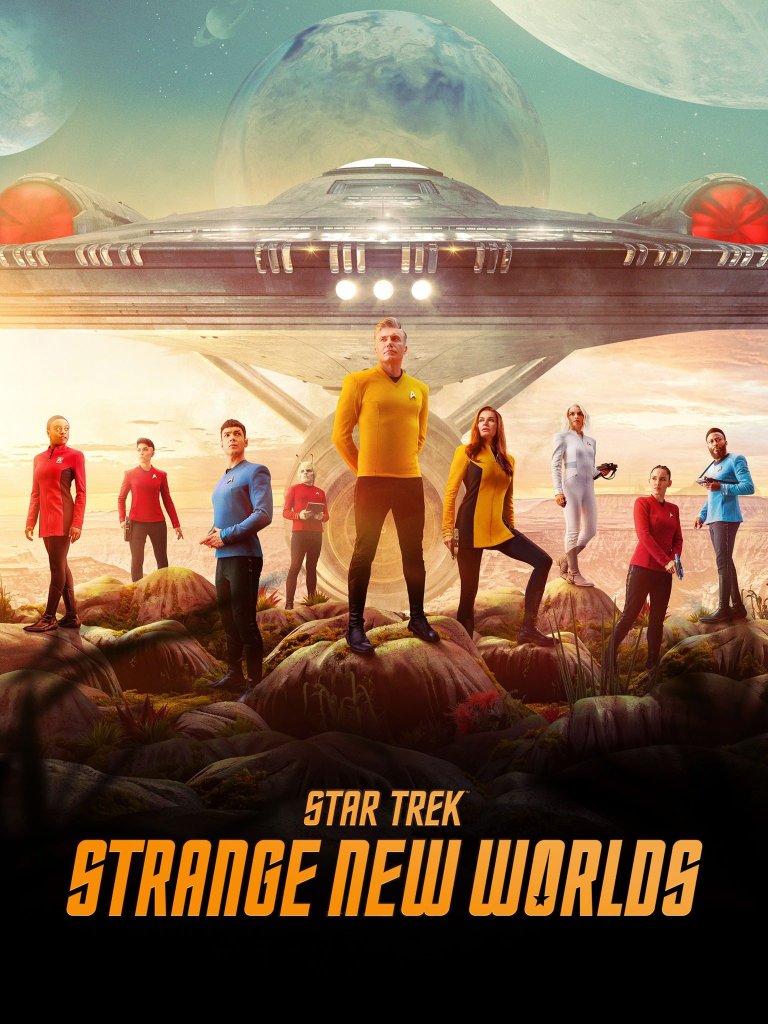
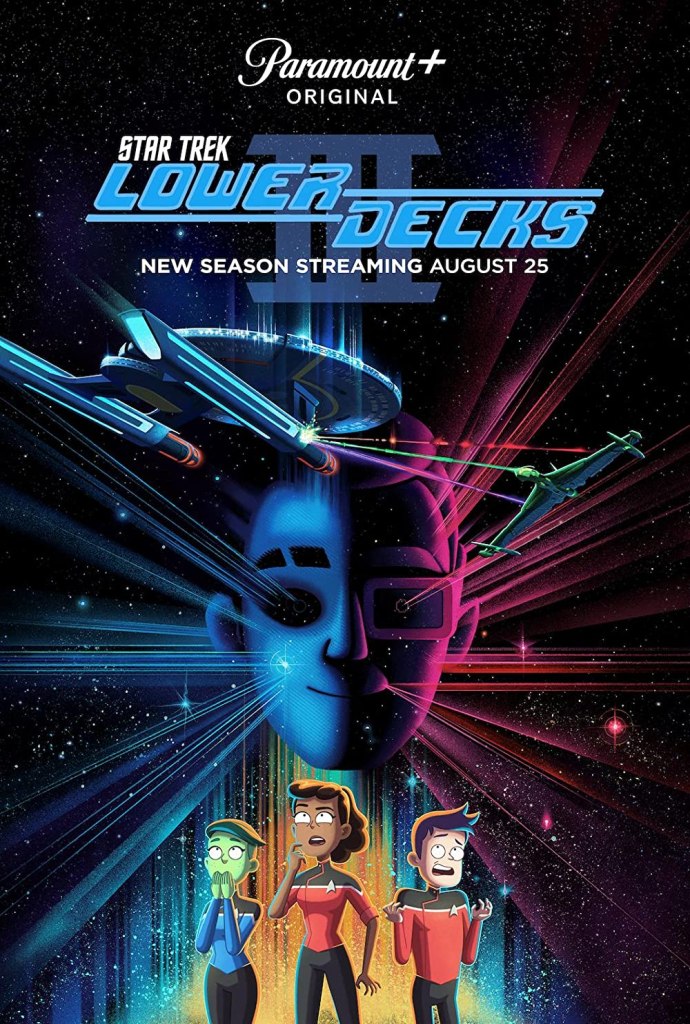
Still, as of the 2020s, we are in a renaissance for the Star Trek franchise, with revitalizations of beloved characters in Picard, reboots in Discovery and Strange New Worlds, and additional forays into animation in Lower Decks. But after 2005, there was a drought of material. It wasn’t until 2009, with the release of J.J. Abrams’ Star Trek, that we finally got something new. In the era of reboots and remakes, we were given a cross between the two in the form of a splinter universe. It wasn’t the first time and certainly wasn’t the last, but it was a new, refreshing, big-screen take on the Star Wars franchise with a slew of A-list stars.
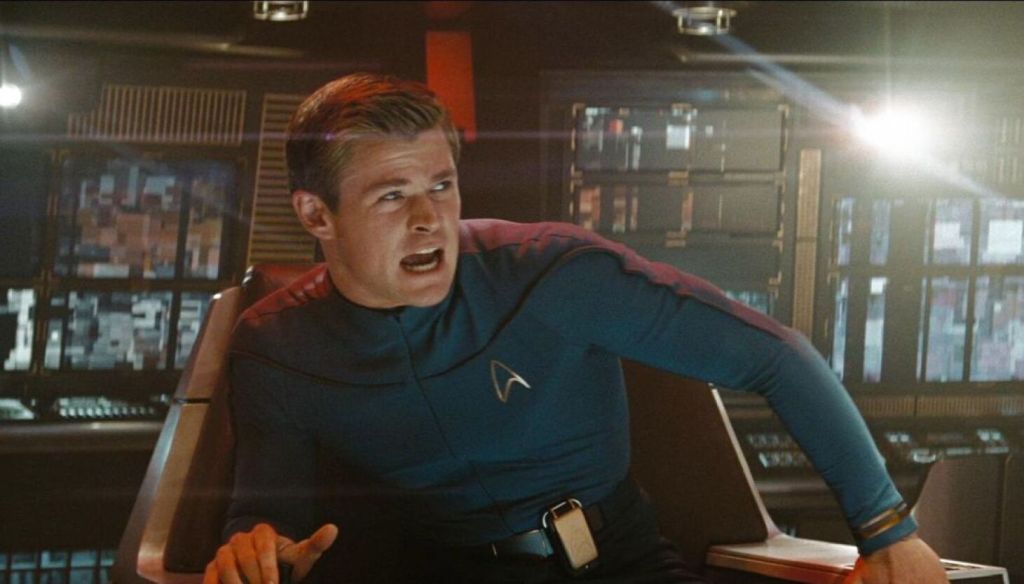
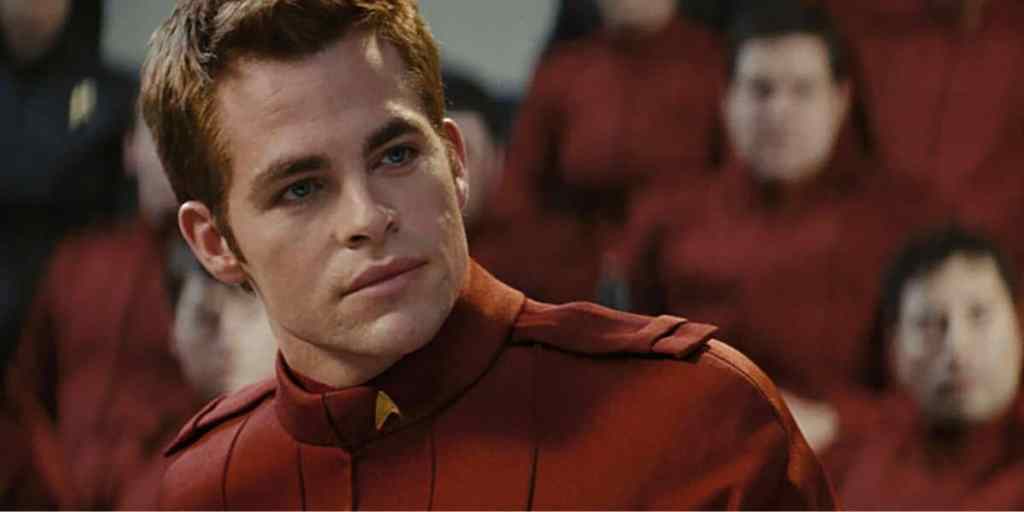
Led by Chris Pine, who, for reasons I still cannot appreciate, is the only major Hollywood Chris that is not a lead in an MCU project, this iteration splintered off from the main universe with the untimely demise of James Tiberius Kirk’s father, George Kirk (played briefly by a pre-famous Chris Hemsworth) on the day of James’ birth. His mother, Winona (Jennifer Morrison), is in the process of giving birth while being evacuated along with as many nonessential personnel members as can possibly escape the unexpected arrival of a Romulan ship. The chaos of the situation, especially in a time of utter peace, has taken them all by surprise, but George Kirk sets the standard for his display of calm and competence in a time of chaotic disaster. It is a standard that seems so high that nobody could live up to it. His absence provides a different life for Kirk, one in which he is brasher and far more impulsive than his original incarnation.
By the year 2009, the cast of Star Trek is so well-known that their personalities and characteristics are tropes in and of themselves. Thus, the differences are more pronounced when they appear – and provide for some dramatic changes to traditional expectations of how a character might react in a situation.
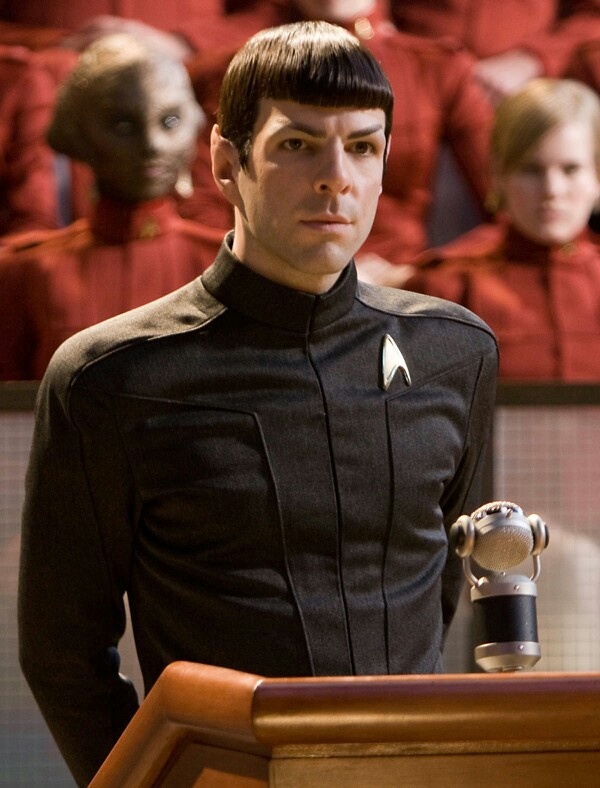
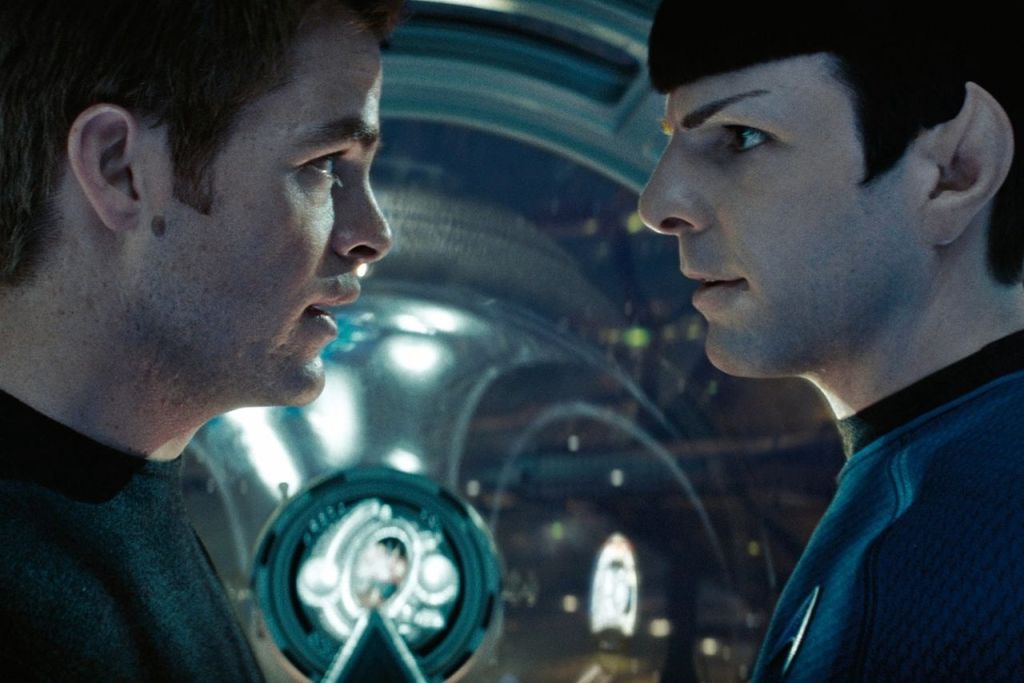
The cool, dispassionate intellect of Spock (Zachary Quinto), who is not as in control of his emotions as he tries to present himself, disquiets him to no end. As the executive officer, he is second in command of Captain Christopher Pike (played by Bruce Greenwood). Spock’s experience creates a powerful dissonance with Kirk’s rash impulsivity, but they truly are two halves of the same coin.
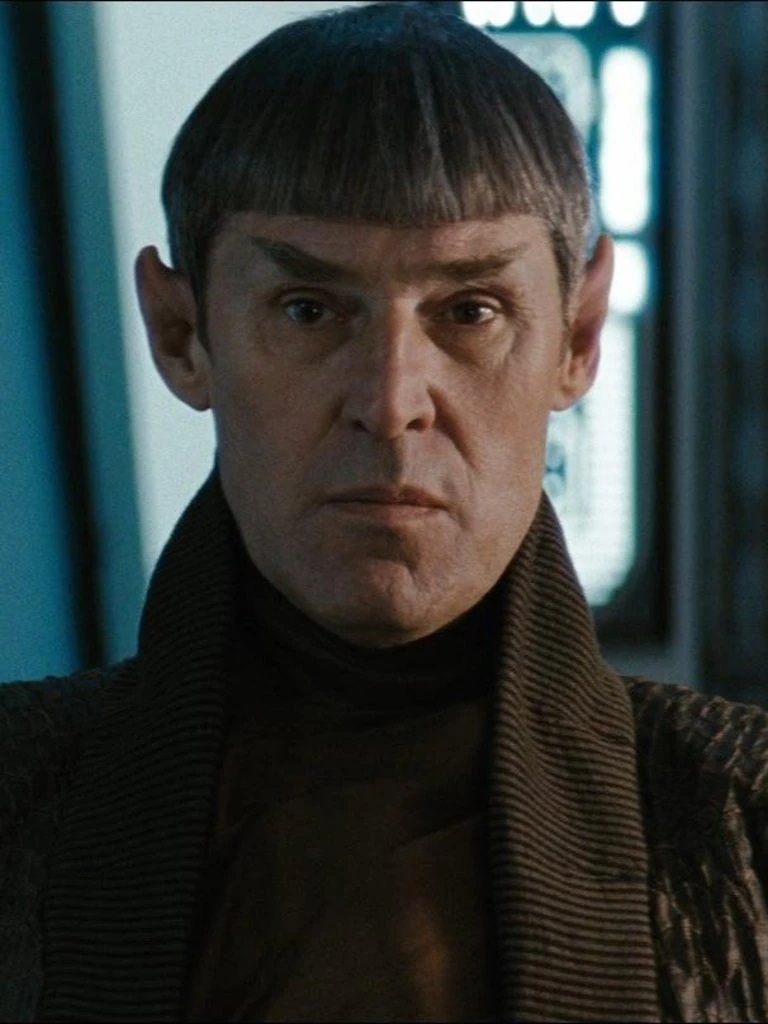
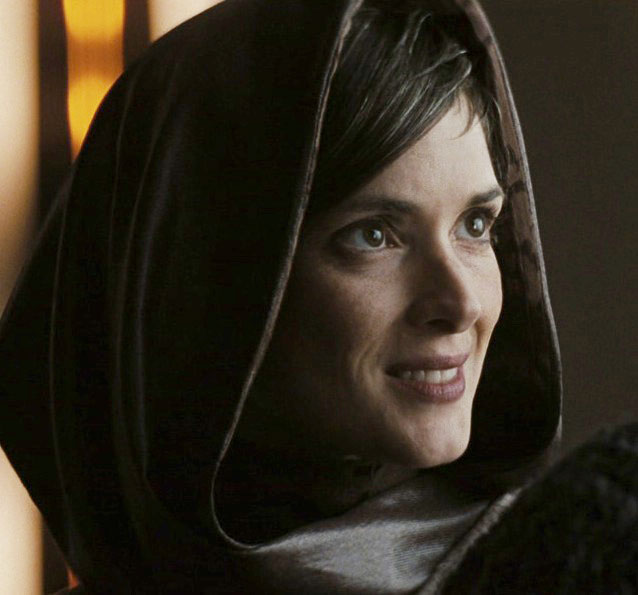
Spock’s relationship with his parents is integral to his development. Star Trek 2009 is clearly centered on Kirk and Spock’s characters, and how they orbit one another. With his mother, Amanda Grayson (Winona Ryder), playing a major supporting role, we are able to see her offer sage advice to her son until the bitter end. His father, Sarek, played by Ben Cross, picks up Amanda’s torch, proving that his love for Amanda, and Spock, were very real.
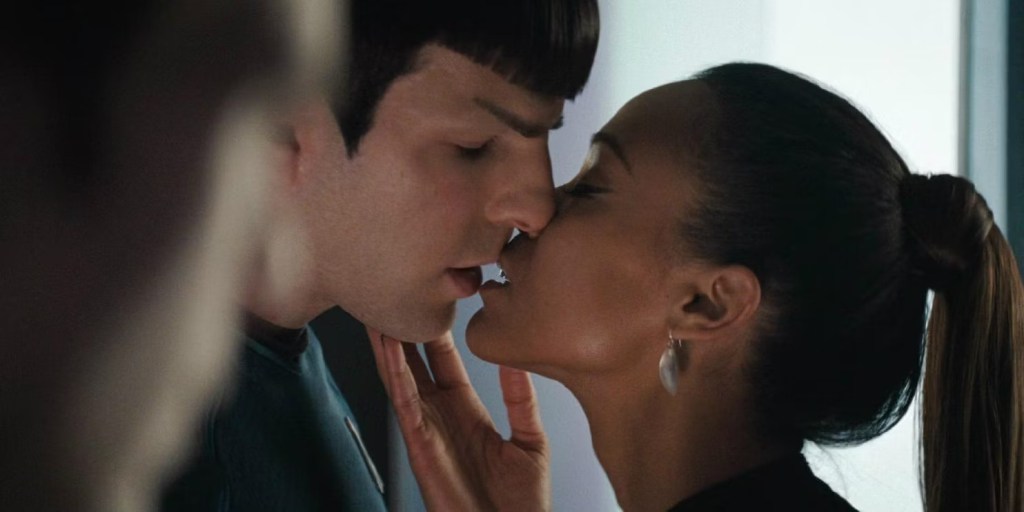
The composed, eloquent Uhura (Zoe Saldaña) is depicted in much the same way but is also given the benefit of a modern lens on how women can and should, be portrayed on screen. She is the definition of an intellectual warrior whose keen insight, intellect, and effective combat skills give her an edge over opponents – whether they underestimate her or not.
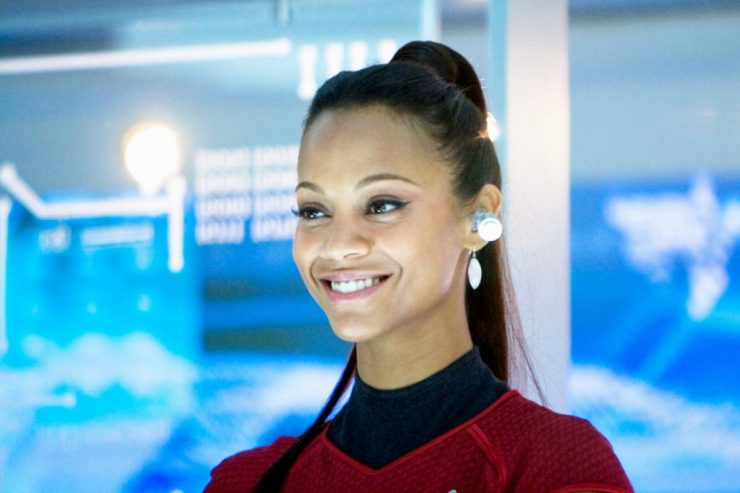
Her knowledge of languages and her communications expertise mark her as a vast improvement to the current person in the job, and she is quickly promoted to the bridge for this reason. In this iteration, Spock and Uhura are in a full-blown relationship, which they keep under wraps for a portion of the film – regulations and all.
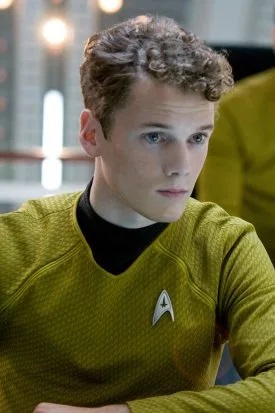
Pavel Chekov (Anton Yelchin), the tactical and security officer, is the youngest member of the bridge crew at 17, but he is no less competent at his job than the rest of the group. However, His youth and inexperience have nothing to do with his skill or technical expertise – and he is noted as a child prodigy. Chekov is also one of those characters who, due to the passage of time, it’s shocking to discover wasn’t part of the initial calculus of the show, as he was only introduced in season two of the original show.
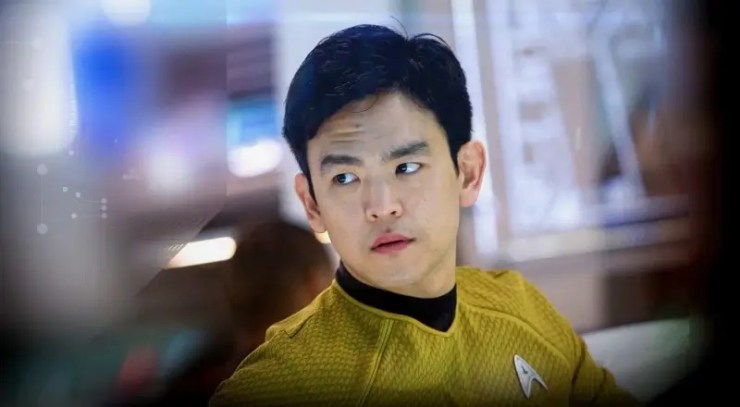
Hikaru Sulu (John Cho) is standing in for the pilot, who came down with lungworms and is the sole reason that he and his entire crew survives the ambush that the entire navy was flying into.
The villain’s plan would have been an unmitigated success if not for the parking breaks.
Leonard McCoy (Karl Urban), the ship’s doctor and the best friend of Kirk, who has lost everything but his “bones” to his now ex-wife, is his hilarious self. He is Kirk’s confidant, and because of him, the film can unravel to a successful outcome.
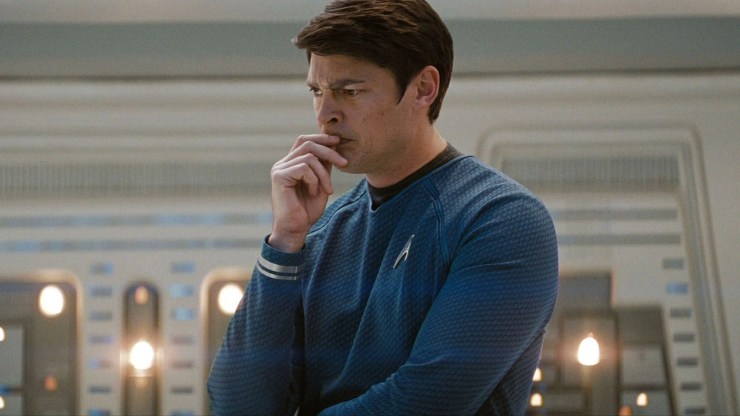
Keep in mind, they managed to find a natural way to keep his famous nickname, the reference for which is no longer applicable in modern-day society. The nickname of Bones referred to doctors and surgeons. It makes the show Bones, starring Emily Deschanel and David Boreanaz, another meaning.
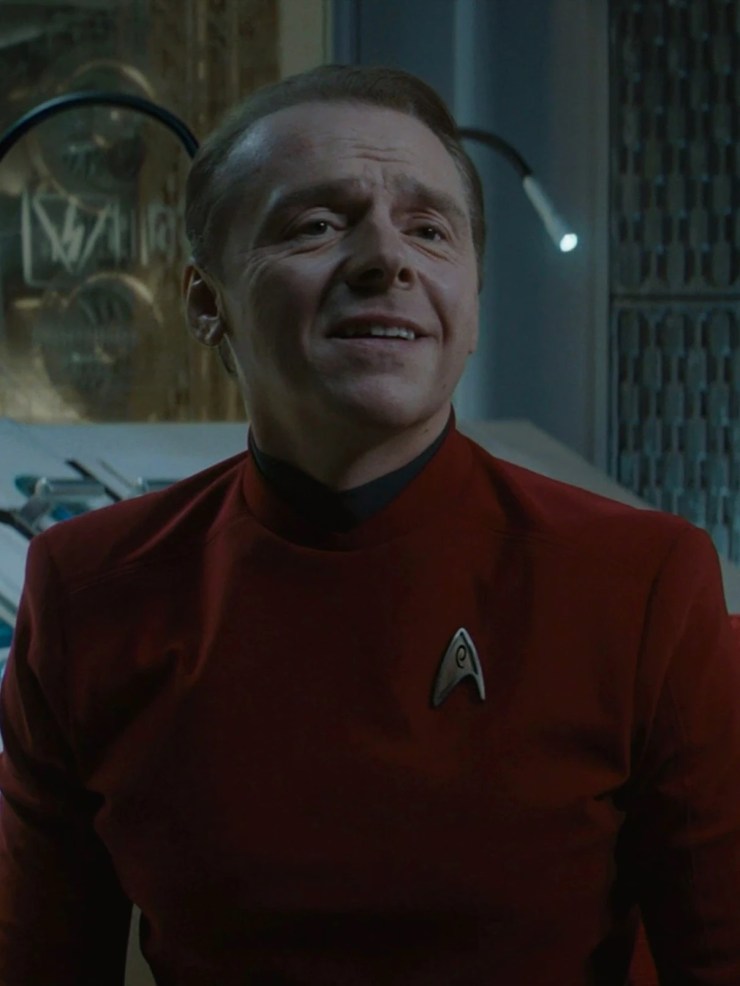
Montgomery “Scotty” Scott (Simon Pegg) is the final of the main players who are introduced in this film. He is the ship’s expert trans-warp physicist and engineer, at least he is when he is introduced partway through the film. He may show up halfway through the film, but he makes up for it by leaps and bounds.
This universe, referred to as the Kelvin Universe due to the inciting incident that caused the timeline to splinter off from its main, traditional pathway, still molds itself to that original identity. It seems that, in some fashion, certain events are bound to recur no matter how much interference is introduced to them. The core team still gathers, and their friendship allows them to transcend all manner of odds and threats. Despite the differences that have come about as a result of the manipulation of their timeline, the character’s true selves are buried within them, and they shine through when they are needed to help guide them down the right path to survival.
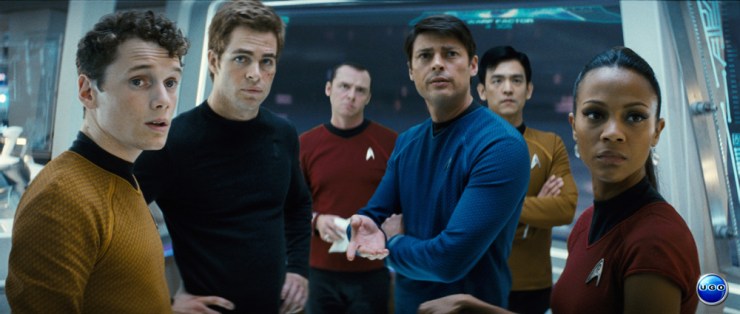
Star Trek is not just about exploring worlds unknown and species hitherto unmet but the development of the varying relationships between the main characters. The found family trope is at the heart of any Star Wars story. Only by coming together can they become an unstoppable force for good. This theme is explored throughout each entry of this film trilogy, just as it is explored in each television show that has come before and since. It’s practically baked into the DNA at this point.
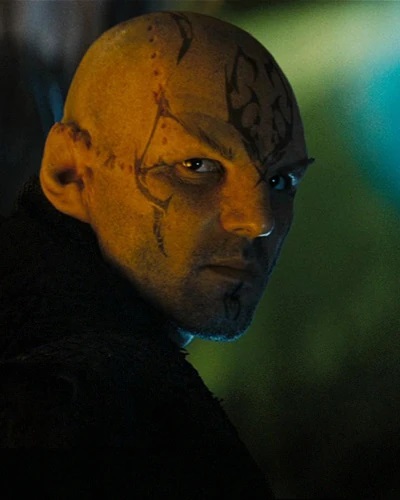
Nero (Eric Bana) is the main antagonist, a Romulan from a time when his home world was destroyed, and for which he blames Spock. His efforts to destroy Spock’s life result in most of the massive changes that the timeline experiences – from the death of George Kirk to the untimely destruction of the entire planet of Vulcan. Star Trek (2009) was not afraid to take massive leaps in directions that many might question regarding the accepted canon of the world. Yet, those same leaps are what make this iteration an interesting story.
The diversions allow this world to grow organically because it is not locked down by the trappings of what has come before. It can make massive changes that have no impact on something like Strange New Worlds, a show established as taking place in the same universe as The Original Series. Yet, it also allows for later iterations, which do take place in that prime universe, to play around with certain details and plot points. All without tearing apart the accepted canon – this is how we got something like Discovery – which many might say reinvigorated interest in the Star Wars franchise as a whole.
This trilogy certainly led to the mass production of new material.
One of the strongest points in Star Trek’s favor is the relationships between its various characters. Like any ensemble, there are those characters, and thus interactions, which are left by the wayside because of time constraints. What can be done throughout three seasons and dozens of episodes simply cannot be replicated across even a three-hour film. At least not well. Generally, this is because quantity provides its own quality eventually. Yet, the big relationships are there. Kirk has integral moments with each of the main characters, and the sequels allowed for further development. Between the other characters, they had their moments with those they were closely associated with. Most notably, the romantic relationship between Uhura and Spock, the friendship between McCoy and Kirk, and the rivalry turned friendship between Spock and Kirk.
Star Trek is something that, for better or worse, has entered into the collective consciousness of the world as we know it to this day. In the 60s, during a time of immense strife and division, Gene Roddenberry took the time and care to look past everything that separated us in his era and turned to the future and what could be. Even despite the limitations of his time, he was able to push forward with massive advancements that were unheard of.
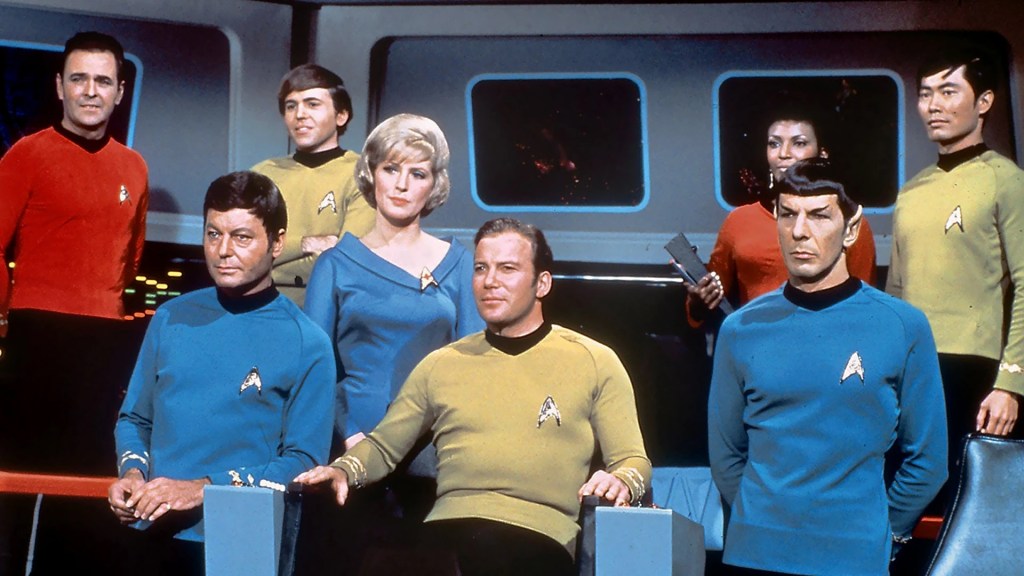
During the cold war, he had a Russian main character. During a time of intense racial division, he had a black woman in a prominent position. In the aftermath of WWII, he had a character of Asiatic descent in a prominent role. As stories of the Holocaust were still making the rounds, he had a man of Ukrainian-Jewish heritage in a leading role. Roddenberry imagined a world where men and women were equal, where racial discrimination was a thing of the past, and peace and prosperity could be achieved to such a degree that the planet had unified and was exploring the vast unknown that was space. This was a time when none of that was necessarily possible, yet it could be envisioned. It could be attained.
And it has not stopped being the dream of Trekkies everywhere.

