
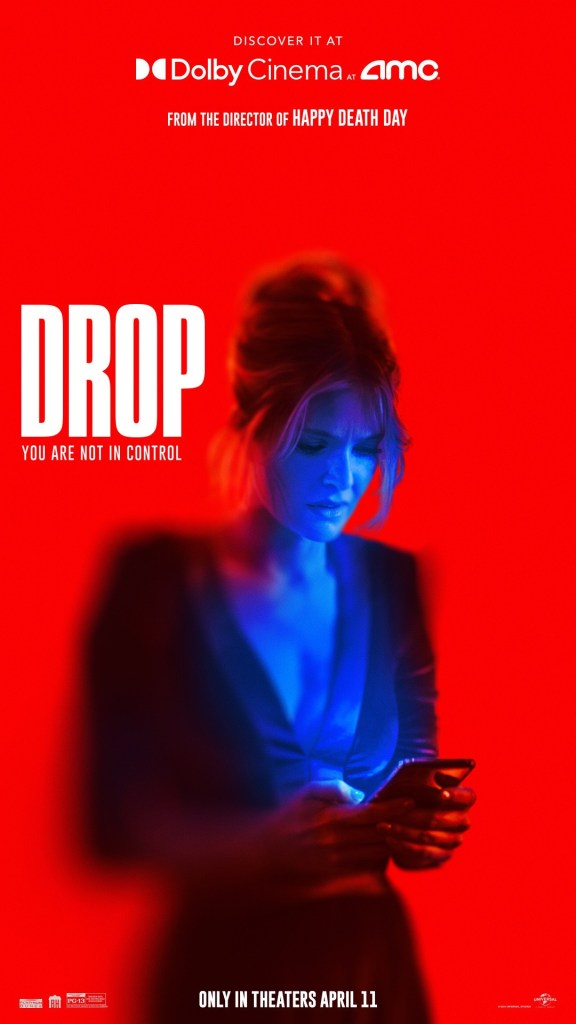
Where I can find issues with slasher films that are rated PG-13, thrillers have never entertained the same internal criticism from me. Whether this is because the bar is lower and the expectations are not as stringent is something that I’ve never truly chosen to interrogate. Drop is the kind of film that I legitimately feel would have been burdened by an R-rating. It was designed to build up its tension, as any good thriller does, and execute it in around ninety minutes.
Drop follows Violet (Meghann Fahy), a widowed mother and therapist who has been hedging on going out on a first date for the first time in years. Not long after arriving at an upscale restaurant, Palate, set in the rotating roof of a skyscraper, Violet begins receiving Digi-Drops, a film-friendly fictionalized version of AirDrops. At first, they’re innocuous, rather vague Memes that leave Violet more confused than anything else. Shortly after her date, Henry (Brandon Sklenar), arrives, they become more overt and threatening. Whoever has been sending her these anonymous messages wants her to rob and ultimately kill her date.
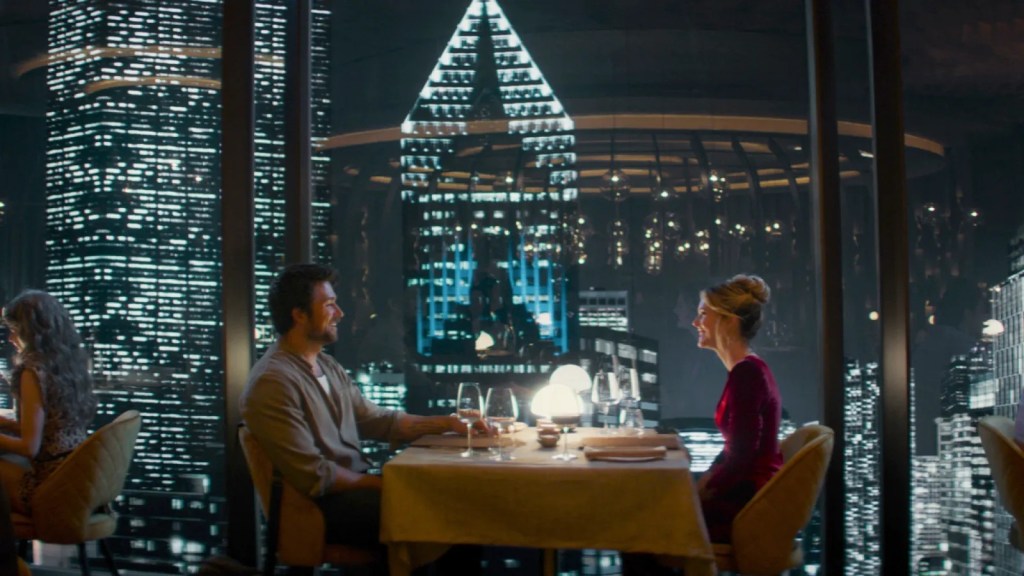
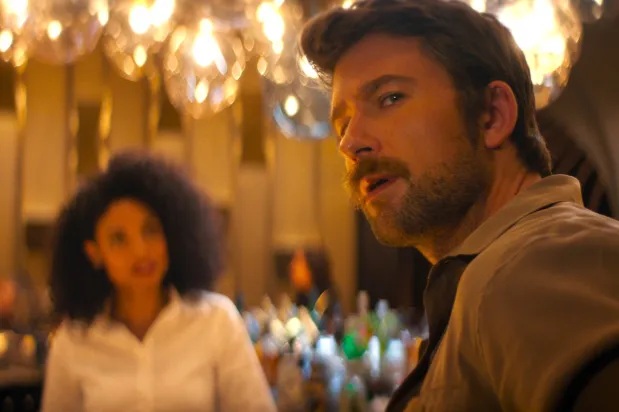
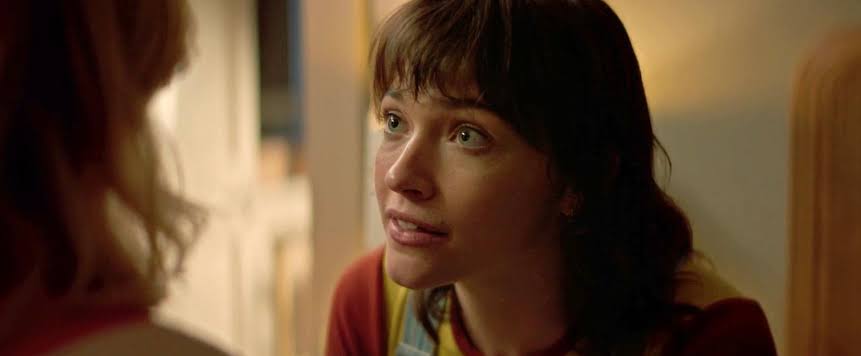
Violet’s nerves are carefully handled without preventing the film from reaching its primary set piece. Before the first ten minutes are even over, we’re introduced to Toby (Jacob Robinson), her son, and Jen (Violett Beane), her sister who has agreed to babysit on this night. The usual things that go into an anxious evening that somebody A) does not want to go on and B) actually would very much want to go on are woven into those opening minutes. The first dress that Violet picks out is nixed by Jen, who encourages Violet to wear something more adventurous and actually enjoy herself.
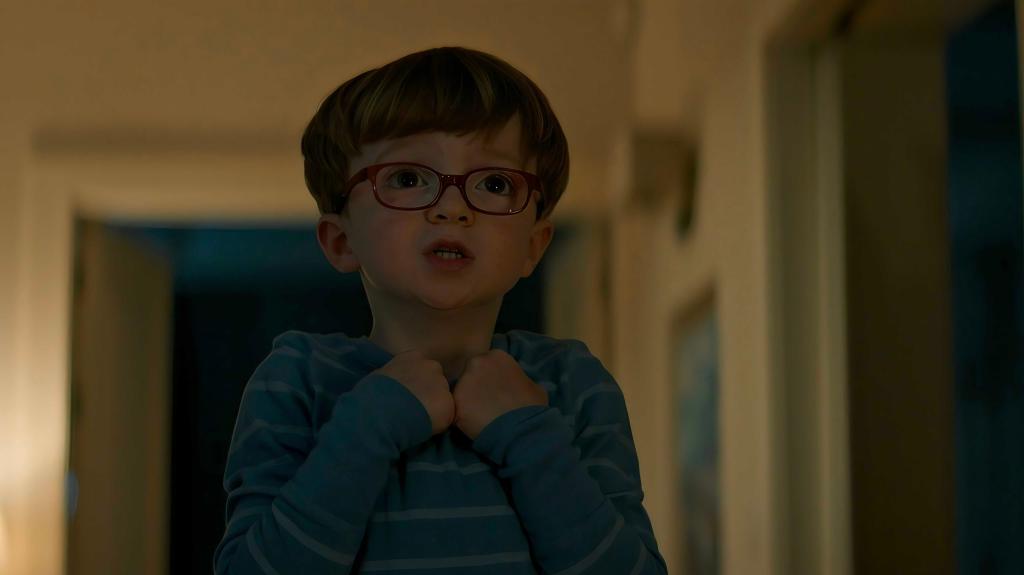
Violet and Henry have spent a while talking back and forth on the app, and every time that Violet has seriously considered going on one, a reason has come up that has allowed her to safely back out. Henry, who has been exceedingly patient and isn’t in the business of pressuring her into actually going out with him, handles the situation like a gentleman… Even as the night continues to become weirder for him as it goes on.
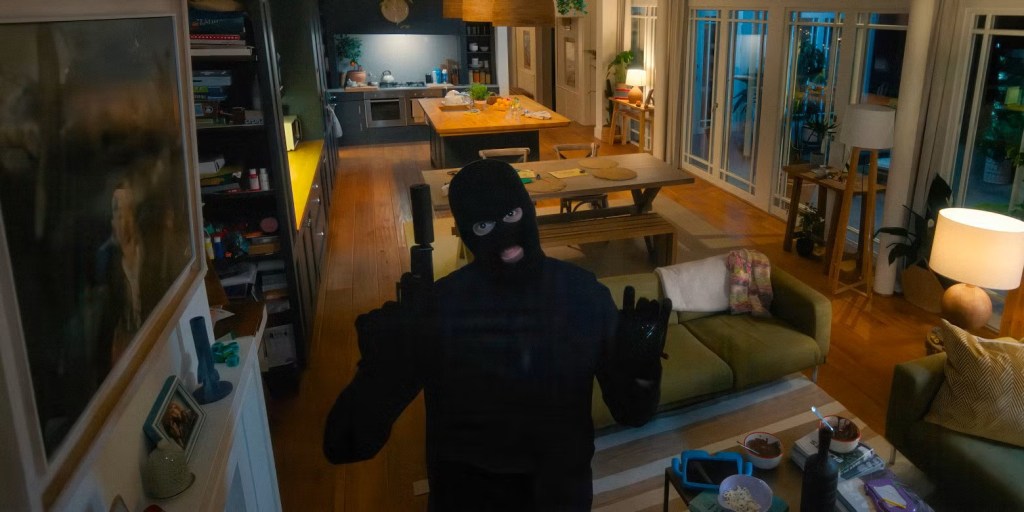
Drop’s greatest strength was its acceptance of what it wanted to be: a high-octane thriller set almost entirely in a single, crowded location. That is where the tension and, in essence, the horror, enter. Violet is trapped inside a restaurant several stories from any possible person who could help her and quite far from Jen and Toby, who are, for a good portion of the movie, completely oblivious to the intruder there to act as insurance. Every threat that Violet receives comes with a request that she cannot easily refuse or sidestep because somebody is inside the restaurant watching her and in her home. She has to figure out who the former is before the latter can be activated and Jen and Tony’s lives are put in danger.
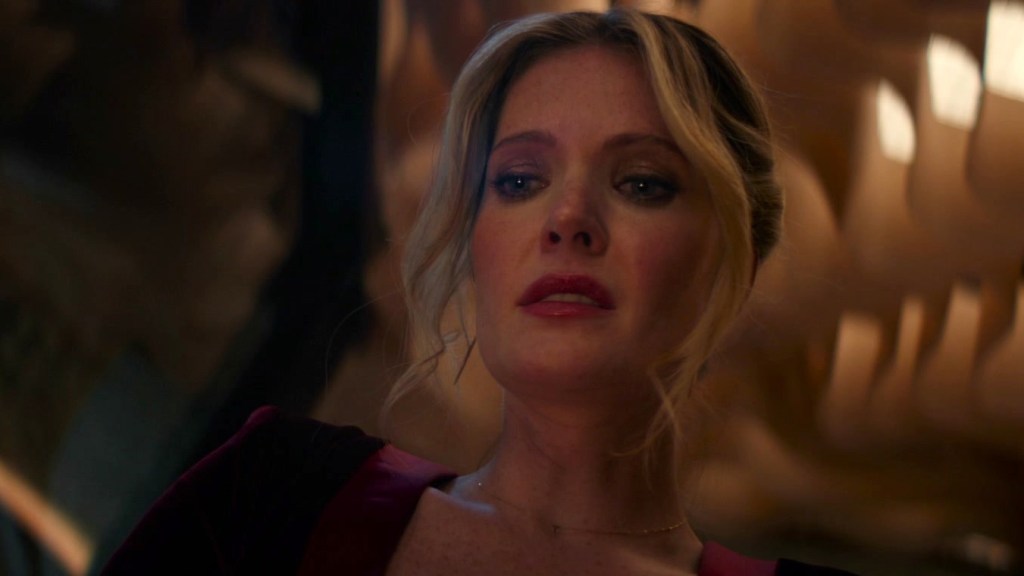
While anybody inside of Palate could reasonably be a suspect, the film was not overly interested in committing to thirty to eighty different suspects. If, for example, this were an eight-hour mini-series that could dedicate twenty to thirty minutes of each episode to exploring all the diners inside Palate, it could have expanded the suspect pool. With a ninety-minute runtime, economies had to be made. The suspects fill out a portion of the ensemble, while the logistical realities of Digi-Drops limit the scope. The person sending the drops has to be within a certain radius of Violet’s phone, or they cannot send drops to her. That alone cuts out the need to focus on one entire half of the restaurant.
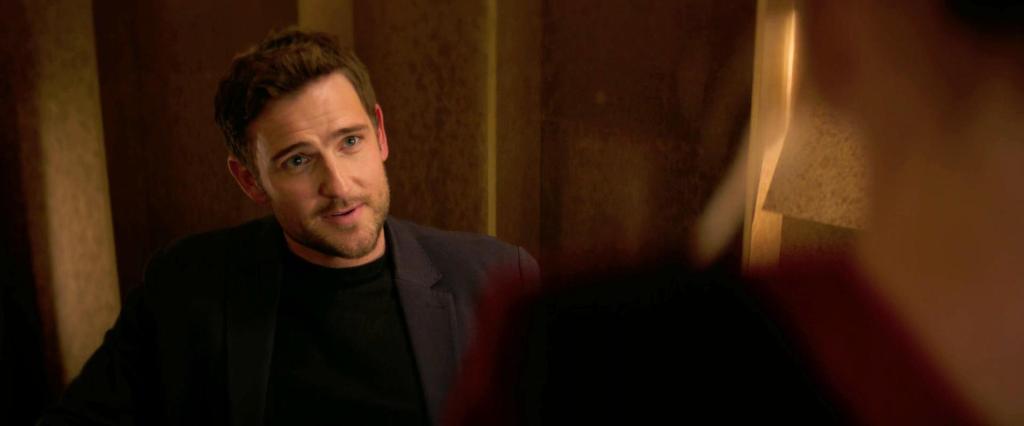
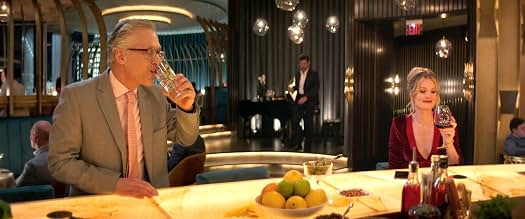
One of the first people that we’re introduced to is Connor (Travis Nelson), another diner, who bumps into Violet practically the second that she enters Palate. Another diner, Richard (Reed Diamond), chats Violet up when he mistakenly hopes that she is the blind date he has been waiting for. Cara (Gabrielle Ryan) is a friendly bartender who helps ease Violet into the evening. Phil (Ed Weeks) is the in-house pianist who spends much of the film drowning himself in one cocktail after another. By the time Violet and Henry finally sit down, one of the last people we’re introduced to is Matt (Jeffery Self), their waiter for the evening, who is there working his first shift.
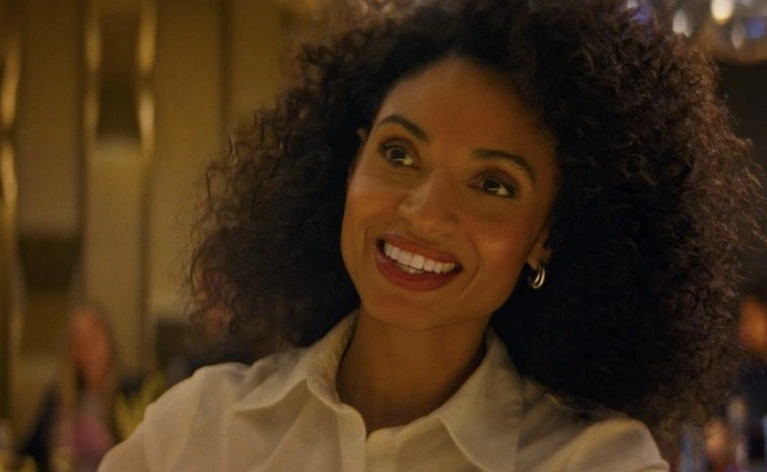
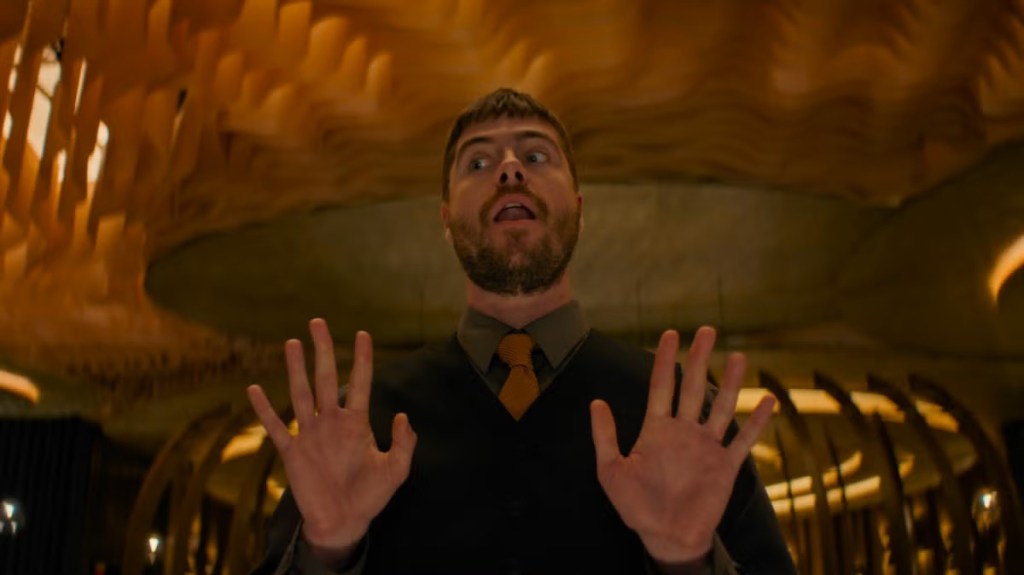
Every single one of them, including Henry, offers a tantalizing suspect, and I say this despite the fact that the genre is obsessed with red herrings. A good mystery can allow for multiple suspects being eliminated over the course of the story, with enough room for doubt that Violet—and us as the audience—can never be fully convinced that somebody is innocent. Like stage magic, a good thriller relies on misdirection, and Drop plays that card exceedingly well. The masked intruder in Violet’s home offers enough of a blatant threat that it would be easy to forget that the other person involved in the scheme does not need to approach the situation from quite the same angle. They could enter through seduction, friendship, or even by chance.
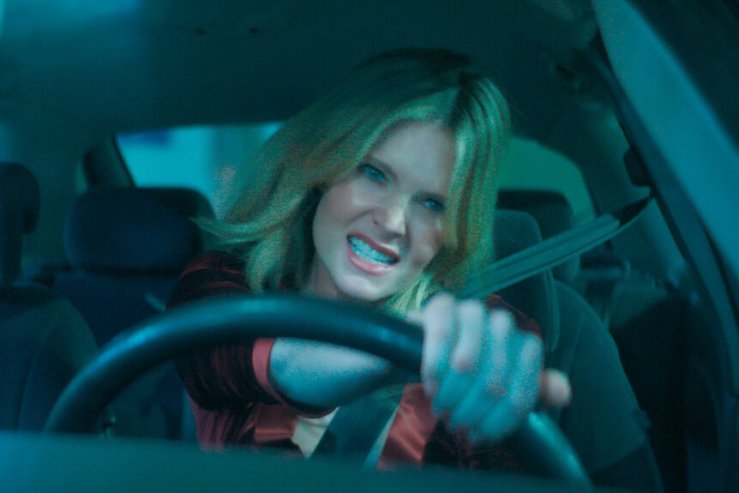
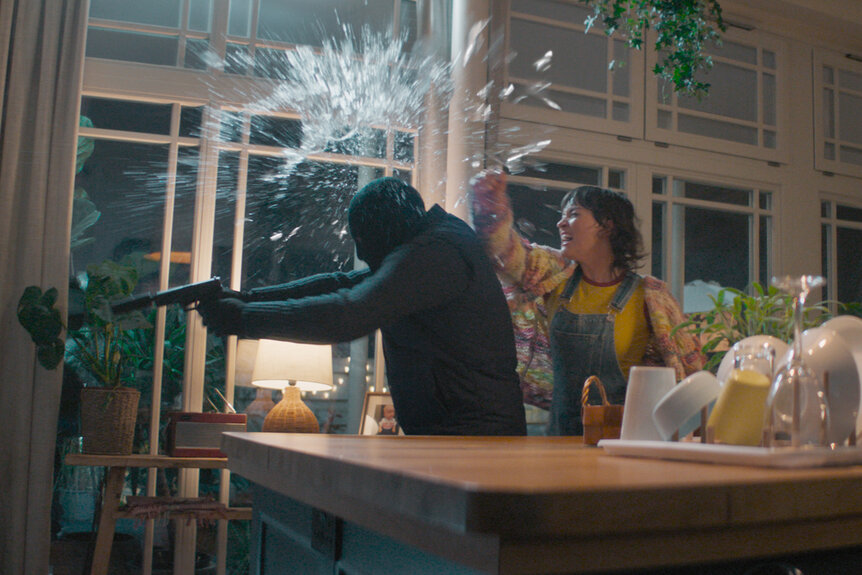
Much of Violet’s backstory is doled out in flashbacks that very carefully frame the situation, allowing us to feel her own doubts before we fully grasp the situation. The hints are there well before the film fully confirms them. Blake (Michael Shea), Violet’s late husband and Toby’s father, was abusive, and she may or may not have been responsible for his death. Drop was incredibly careful with the details surrounding her “guilt,” because it is central to why she’s been chosen.
The perpetrator thinks that they have, in Violet, a perfect patsy. If she has murdered somebody before, under circumstances that are so chaotic that the truth almost doesn’t matter, then what is one more murder? Whether this was part of why Violet’s day job as a therapist was chosen is up for debate. I tend to think that few things about a character, especially the main character, are left to chance.
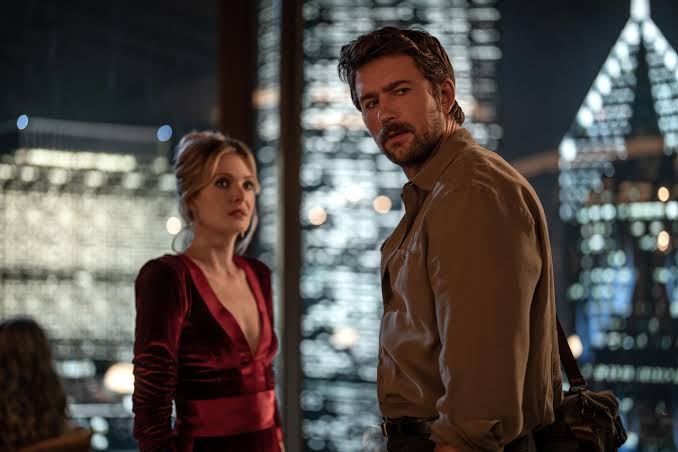
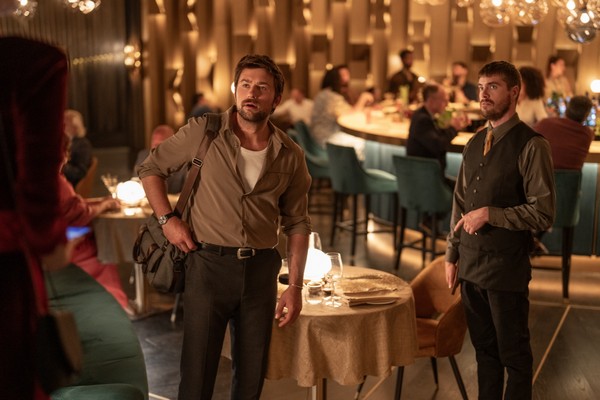
Violet’s ability to read people is put under direct pressure across the evening, but it’s more than that. Without ever needing to say that Blake fooled her with a mask, the implication is blatant. Violet is a woman whose job is treating people is capable of reading them in order to discern what kind of help they need. Yet she couldn’t see Blake for who he truly was. When the time comes to unmask the person sending her the drops, Violet has every reason to question her intuition and second-guess herself. It prolongs the terror and the perpetrator’s ability to exert their authority over her.
By the time Drop commits to its final act and sets aside tension for violence, it would be surprising if you weren’t rooting for her to beat back her oppressors. That’s where the idle fantasy comes in very clearly. However, before we get there, Violet and Henry’s date goes from good to bad to worse, and the entire evolution unspools in front of us. We are very aware of the reasons why Violet becomes frenetic, evasive, and deceitful at times. Henry is left practically scratching his head while offering every off-ramp to the evening, only to be met with Violet’s refusal to leave.
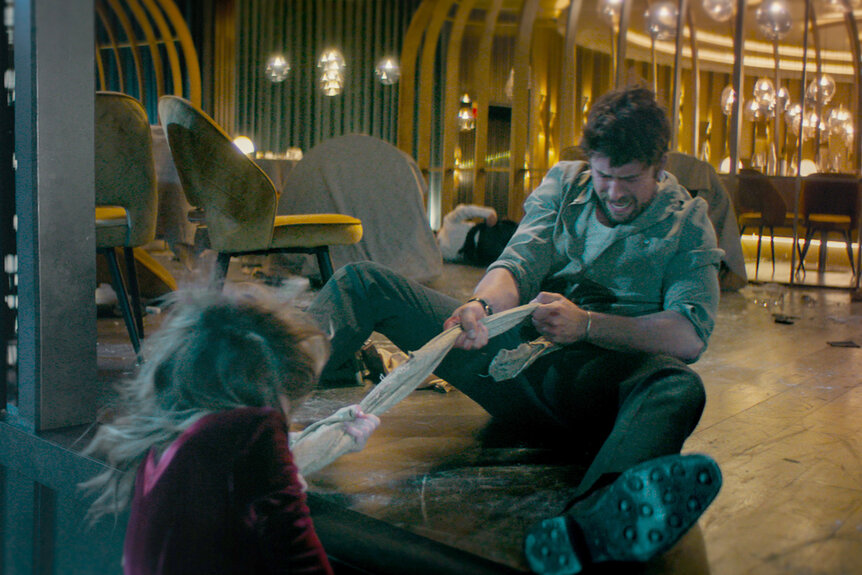
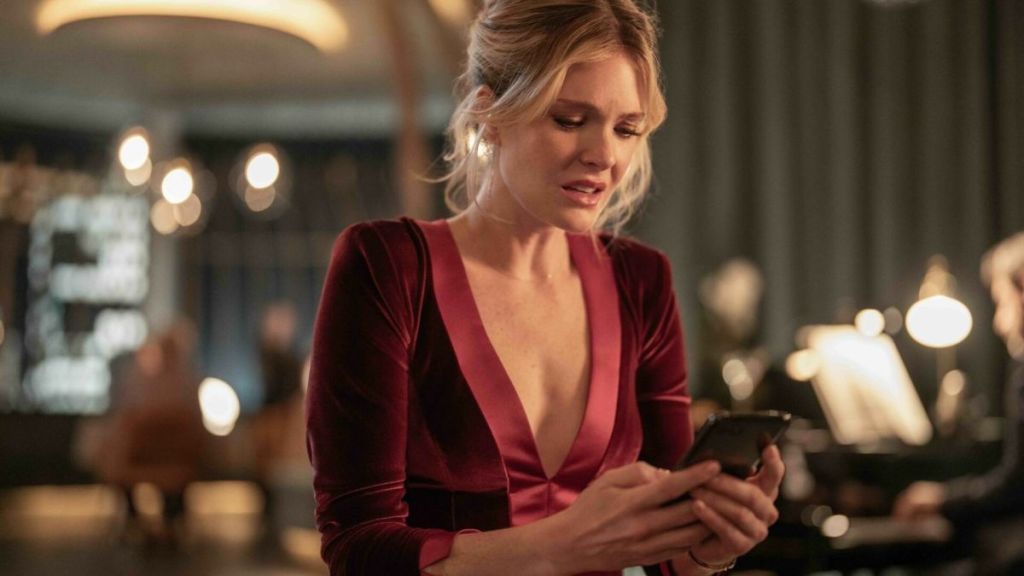
The relationship between them is one of the best parts of Drop. Violet and Henry’s evening really does start off well, with her initial wariness due entirely to her legitimate concerns about how Toby is handling the first big night that she is away from home for an extended period. By the time the drops begin in earnest, Henry’s concern only grows. Even when he begins to think that Violet is acting the way that she is because she wants the evening to end but can’t convince herself to just say it, he trusts what she says. By the time it becomes obvious that something is actually wrong, Henry could have abandoned her, but he chooses not to.
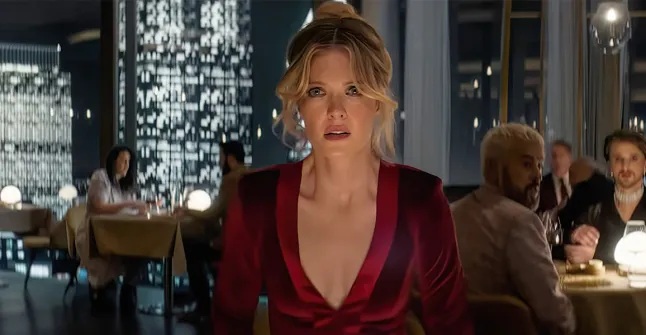
I’ll also be frank. One of the dumbest advances in technological innovation is the ability for complete strangers to send somebody a message without their permission or consent. It’s bad enough that we have robocalls and spam emails, but Drop focuses on the realistically terrifying side of this. Nothing was going to stop the people who took Toby and Jen hostage and attempted to use Violet as a weapon. It cannot be ignored that Digi-Dropping made it that much easier for them to be horrifyingly effective in their ambitions.
Drop is one of the first major film roles that Meghann Fahy took after her turn on The White Lotus. For me, the role that truly introduced me to her was The Bold Type. For Brandon Sklenar, I think it is probably safe to say that his next film—The Housemaid—eclipsed this role for him. As a thriller, it wasn’t going to make waves, but I really feel like Drop offered something intriguing to the genre. It wasn’t trying to be an erotic thriller, a subgenre that has been making a comeback in the 2010s and 2020s. It used its narrative to explore modern dating and technology’s place in it.
That, by itself, is a good enough reason to watch it in my book.

