
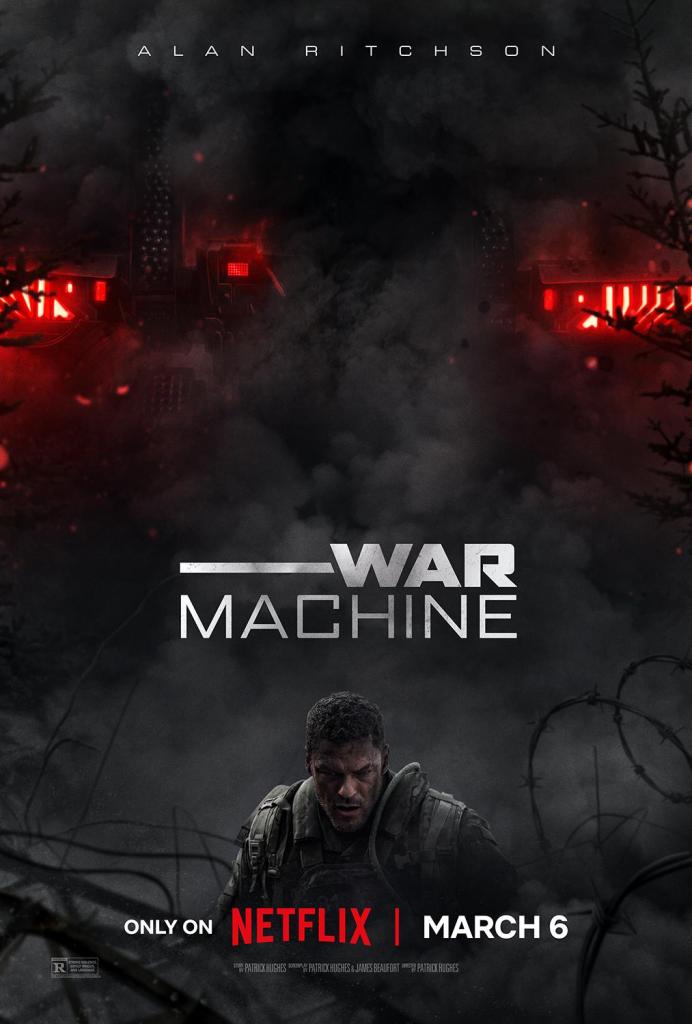
I have always enjoyed it when films have the same name but offer a completely different story while focusing on a similar structure. War Machine, directed by Patrick Hughes and starring Alan Ritchson, was released by Netflix in 2026, nearly a decade after Netflix released War Machine, directed by David Michôd and starring Brad Pitt. We’ll be looking at the former today, even if the latter was an interesting comedic escapade.
War Machine is centered on an unnamed soldier, who is referred to throughout the film as 81 (Alan Ritchson), seeking to get through the U.S. Army Ranger selection program to honor his brother who died during the Afghanistan War. The film eschews names for almost every character across the film, including 81’s brother (Jai Courtney). Borrowing the phrase, “what’s in a name, that which we call a rose by any other name would smell as sweet,” a character’s name is not necessarily what an audience needs to identify with, let alone sympathize with, them.
Stories, for as long as they have existed, have set aside names when they are not the point of the tale. In this particular film, it is a reminder that the U.S. Army sees countless men who meet the threshold but will never pass it. They have to keep doing so every selection cycle. High-ranking military figures such as Torres (Esai Morales) and Sheridan (Dennis Quaid) are building up people they hope won’t die but must be prepared for that outcome, countless times over. The film itself acknowledges part of this when 81 makes it to the end, and the men he’s placed with ask if anybody even caught his real name.
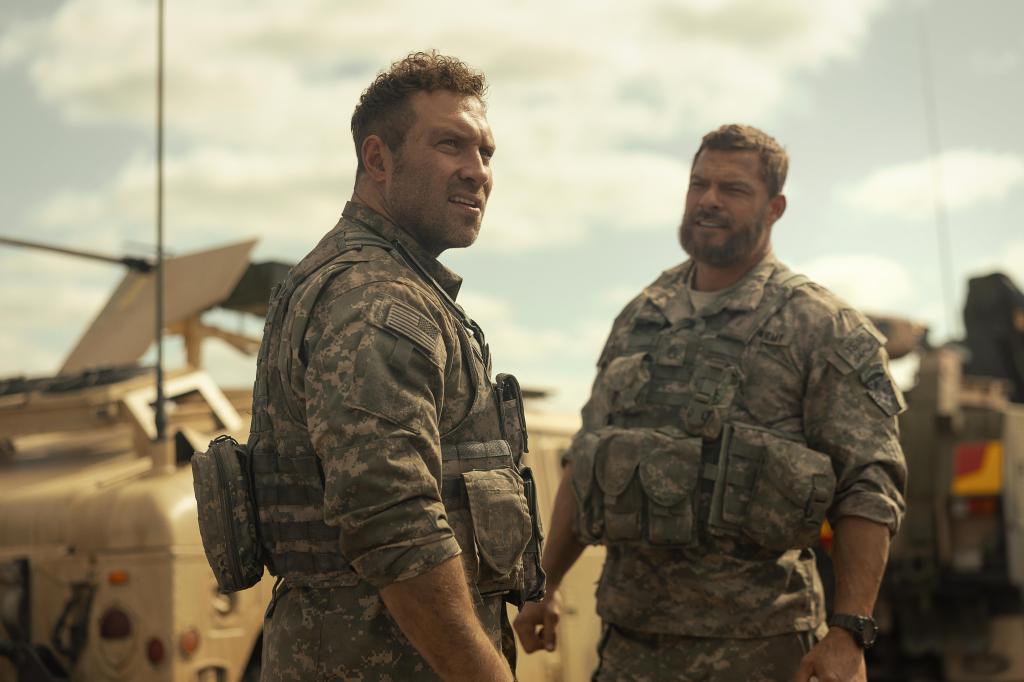
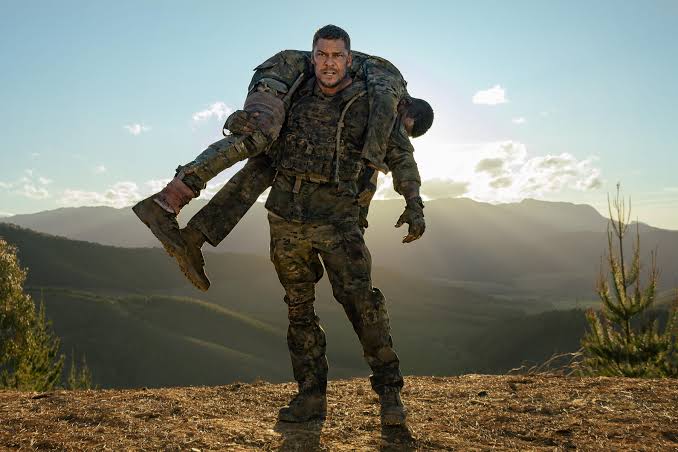
And yet, by the time the Ranger recruits are whittled down to the core group it spent its first half actually characterizing, the deaths begin to hit harder. That doesn’t stop them from coming.
The prologue centers on the incident that led to 81’s brother dying. The next forty minutes of the movie are then devoted to exploring his efforts to fulfill the promise that they had made to one another but had never quite attempted: becoming Army Rangers. In the years since his brother’s death, 81 has attempted the selection process a number of times and has reached his final chance—if he fails this time, he’ll have aged out. The film spends quite a bit of its runtime refusing to clarify whether his brother died or not, making the moment when we are treated to how his efforts actually failed an emotional time bomb waiting to go off.
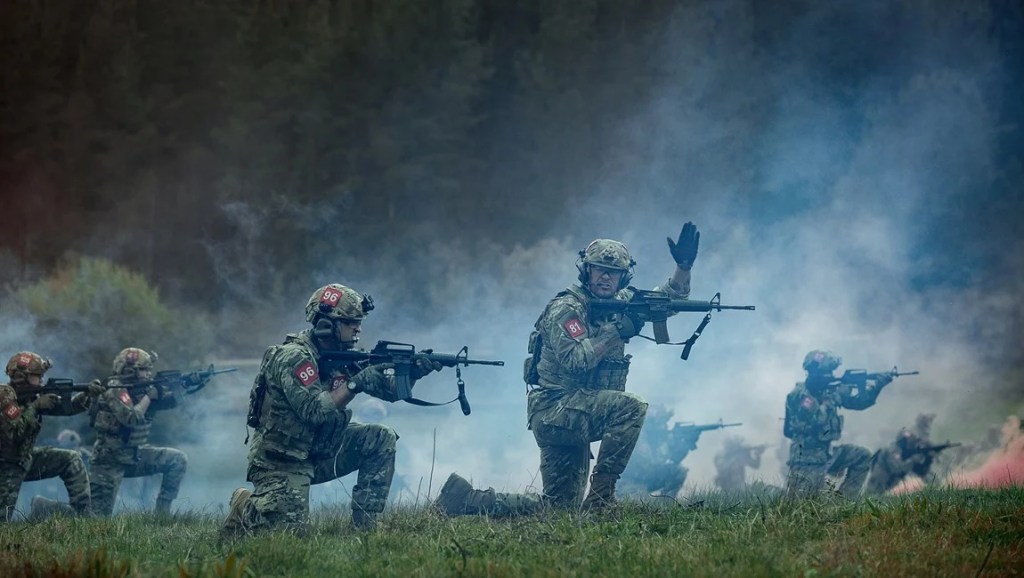
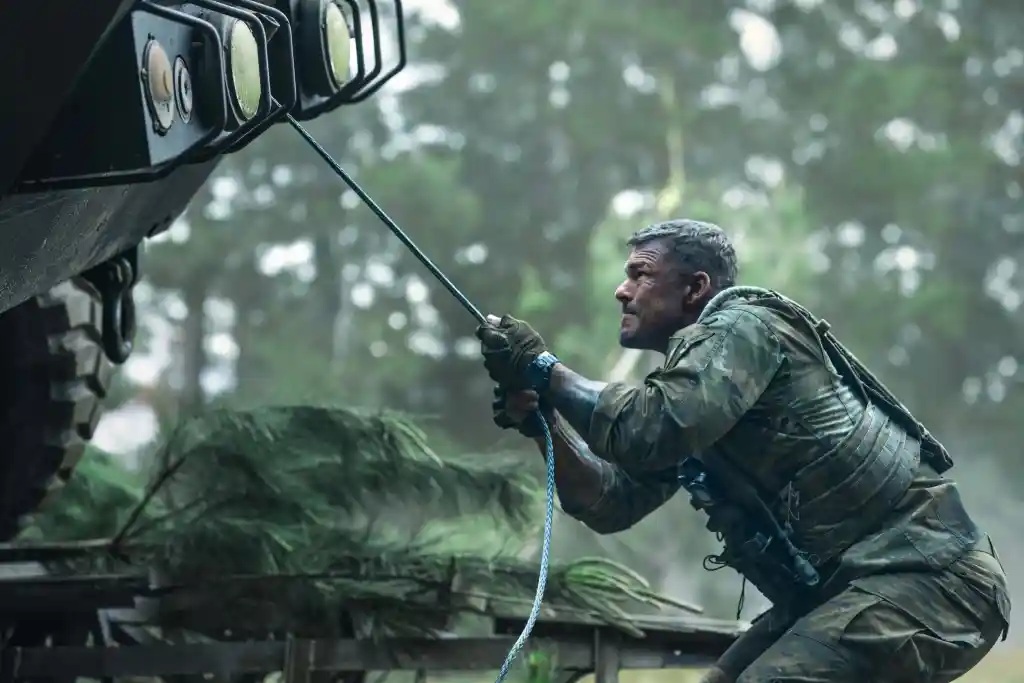
The selection process occupies a fair portion of the film, and dozens of men and women who hit the bar to make the attempt are not selected to continue. 81’s efforts to push through to the end are hampered by one thing. 81 has a deep unwillingness to actually connect with his fellow recruits. He doesn’t talk to them. He excels past their efforts or nearly kills himself trying. Any effort to actually befriend him only makes him work that much harder to distance himself from them. 81 has internalized his fear and anger at failing to save his brother into possibly failing to save the men and women around him…
This is where 81’s ambitions are crushed by the reality of the story it’s telling. Not everybody can be saved during a war, but 81 does not give up in his efforts to bring back his brother in arms, 7 (Stephan James).
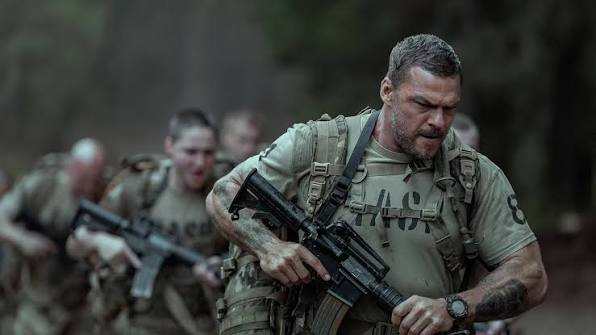
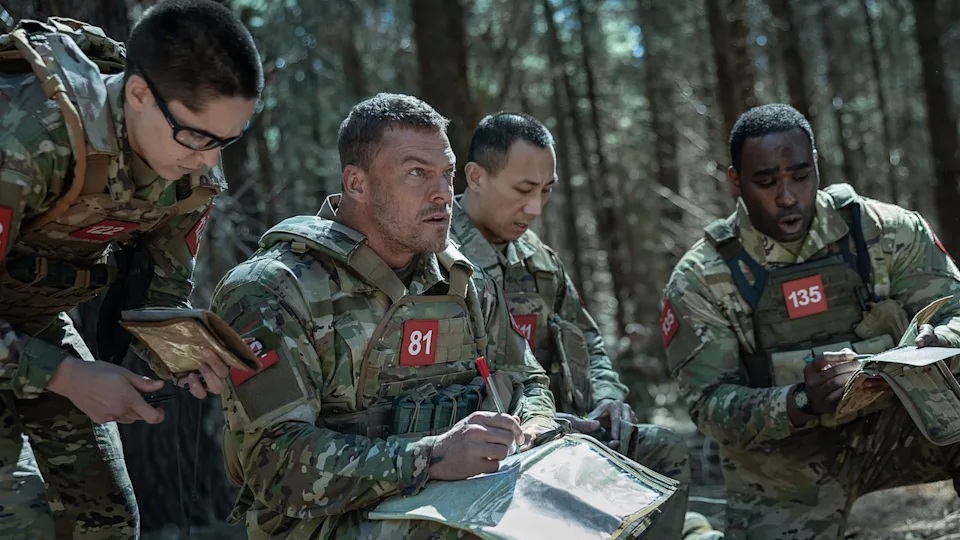
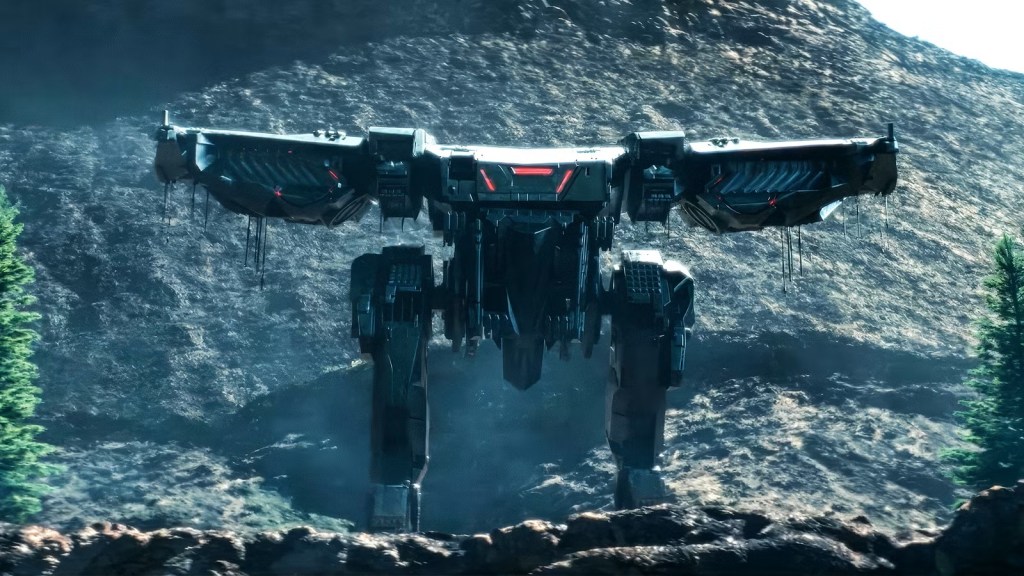
In war, people die. In fiction, people die. Death is what gives life meaning. Across the film, we watch as the recruits are wiped out by the true threat, which emerges near the halfway point and proves to be a near-unstoppable machine of death and destruction. War Machine goes out of its way to drive home the point that it did not matter if the recruits drew the robot’s ire. Their mission had been catastrophically ruined without their knowledge when the robot crash-landed on planet Earth and tore through the rendezvous point, killing everybody in the process or hunting them down afterward.
After this, the robot targets them relentlessly and 81’s greatest fear becomes reality. There are very few actual survivors, and 81 is almost laughably incapable of keeping them alive even after he works through his failings as a leader and rises to the occasion. It’s a realistic execution of a war story, and it follows the formulaic trend of science fiction action films, such as Predator, which executed the same genre shift in 1987.
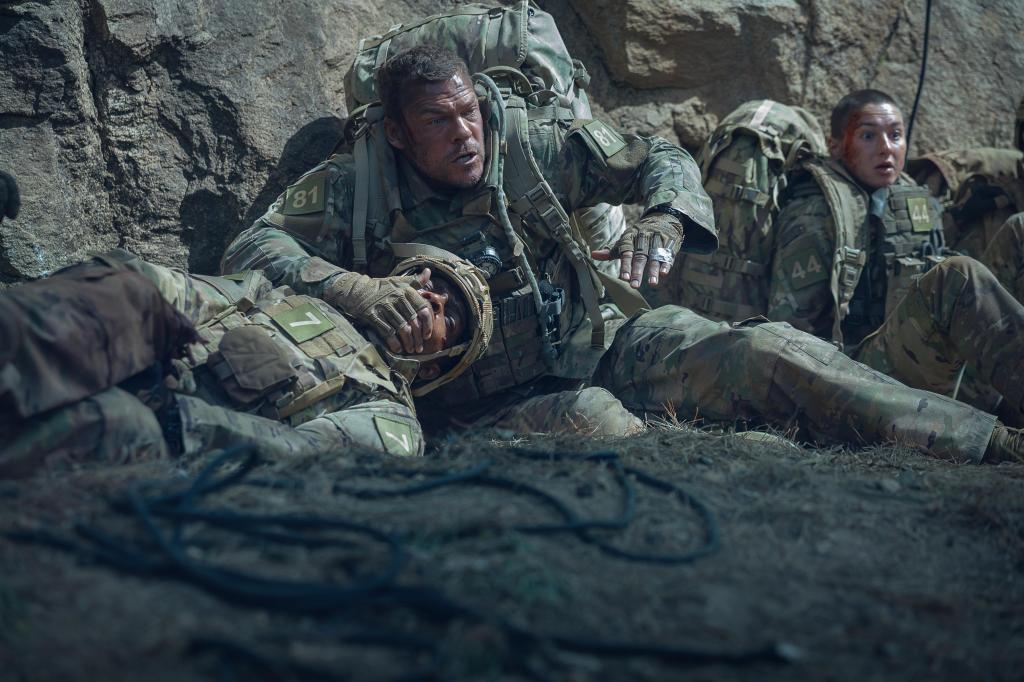
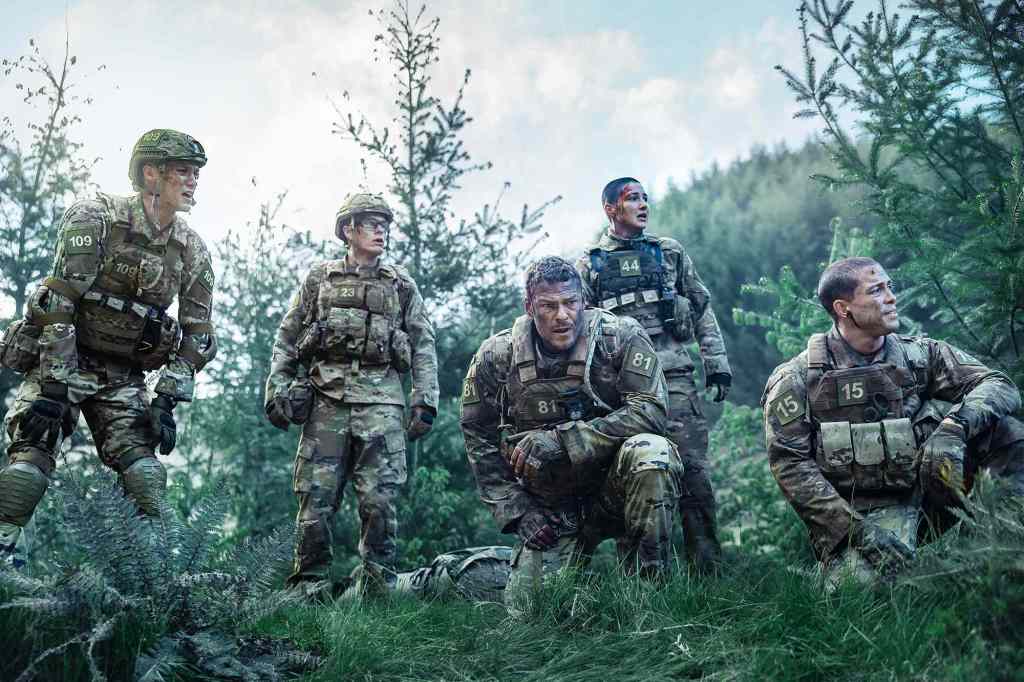
The recruits that make it past the initial massacre are few. 44 (Alex King), the sole woman to make it to the final training mission, refuses to be left in the dust as she works to stand out from the crowd. 60 (Keiynan Lonsdale), who is believed to have been killed during the initial attack, is later revealed to have survived. 15 (Blake Richardson), who theorizes that the robot is a manmade experiment gone rogue and has the most openly contentious relationship with 81 before learning the truth about the Silver Star. 23 (James Beaufort), who proves his bravery during a pivotal moment. Finally, there is 109 (Jack Patten), who hangs on until the last possible moment while 81 gets it together to lead them.
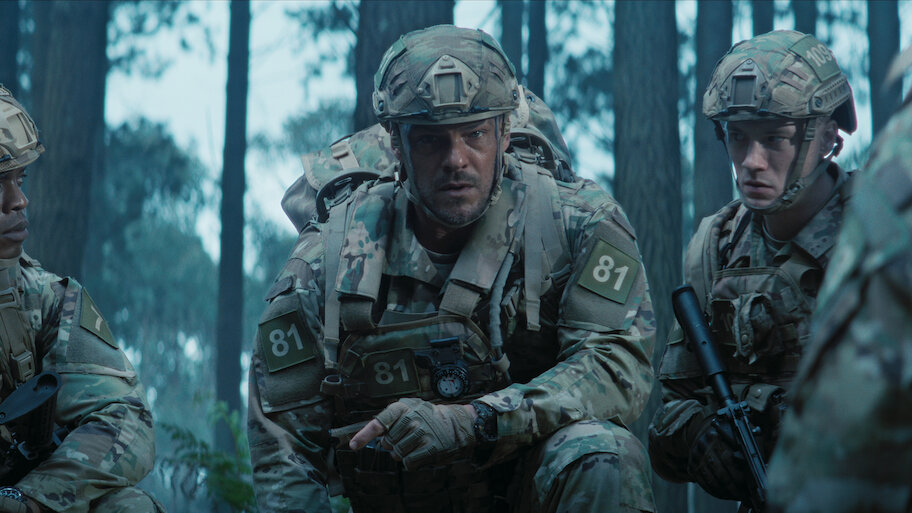
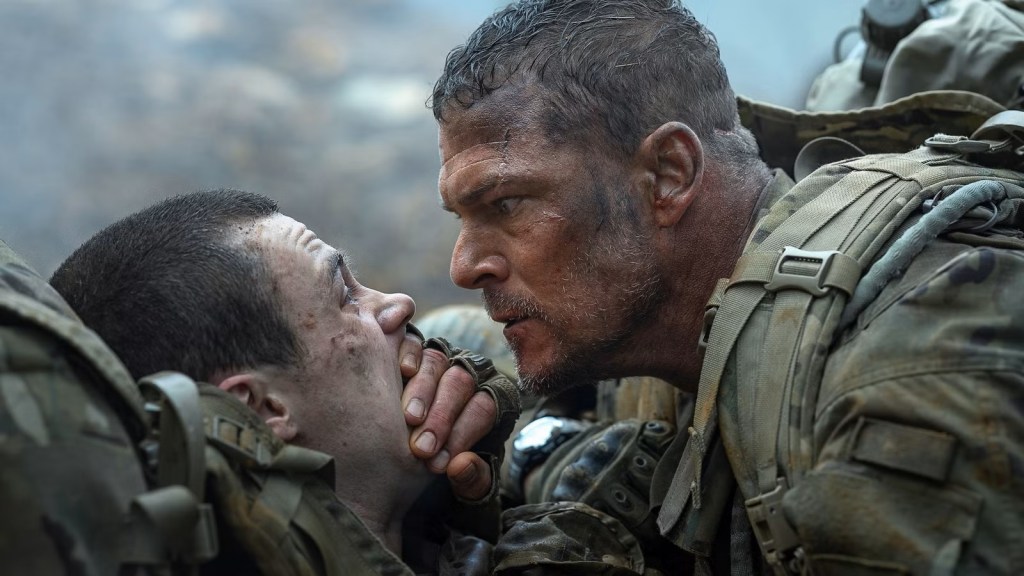
Action films and slasher films have a major narrative element in common, especially ones like War Machine. An unstoppable, terrifying monster is killing them one by one in increasingly gruesome ways. The bonus points come when those methods are unique, and the robot does not disappoint in its efforts to prove how creative it is with the weapons at its disposal. What I have always found interesting is that some people can watch one genre while loathing the other, when usually the main difference is the age and life experiences of the characters involved. Compare any slasher film to War Machine, and the recruits are no different from camp counselors in Friday the 13th. It is highly doubtful that the recruits would survive an encounter with Jason Voorhees any more than they did with the robot.
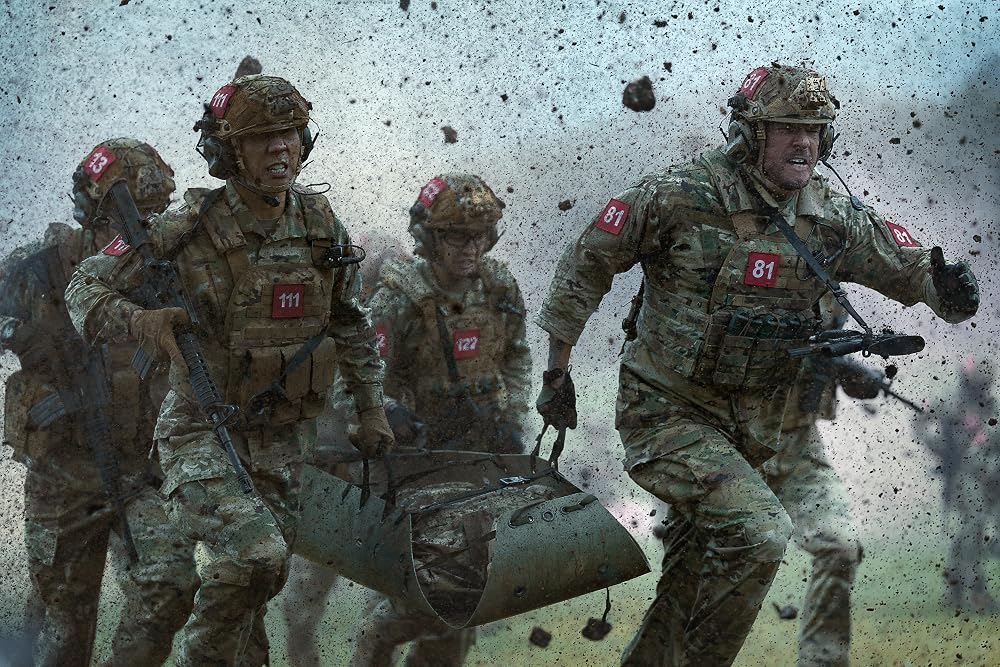
War Machine might not have billed itself as a popcorn film, but it also wasn’t gunning for Best Picture, and the primary reason that I watched it was that Alan Ritchson was the lead. He’s an actor who I’ve watched since I was a kid, and he was popping in randomly every other season on Smallville as Arthur Curry. Now, as he tackles the role of Jack Reacher in Reacher, his career is finally getting its due.
If 90s and 2000s filmgoers would trek their way to the theaters just to see Julia Roberts, Jennifer Lopez, or Sandra Bullock in a romcom or Tom Cruise, Bruce Willis, and Arnold Schwarzenegger in an action film—or vice versa, some of them were incredibly versatile—then you can bet that I will have no issues sitting down every year or so for a film like this.

