
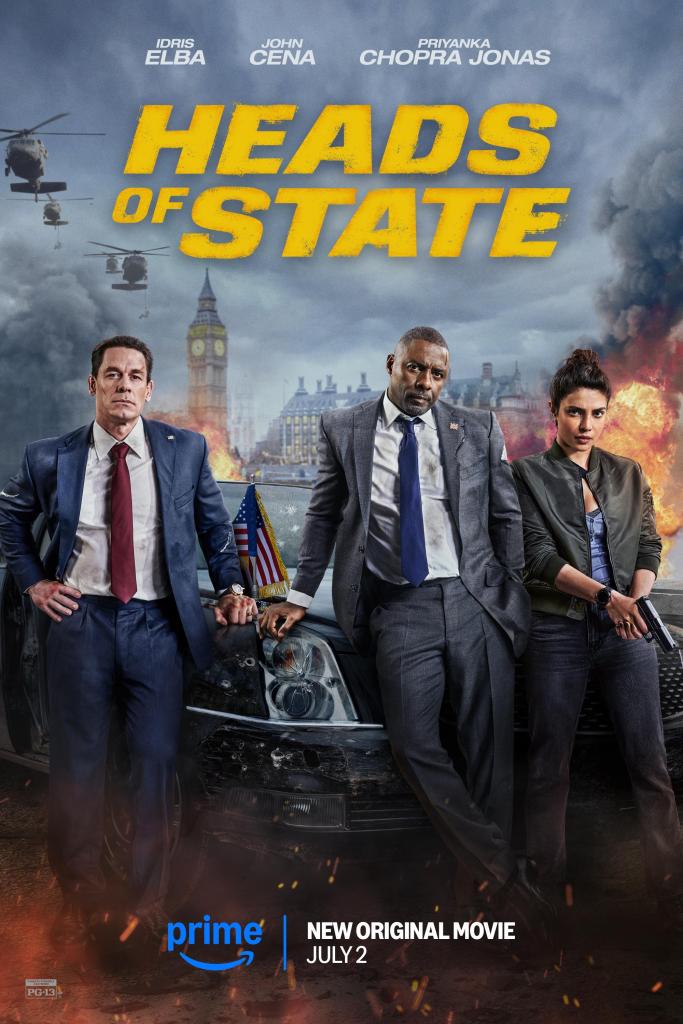
What happens when the President of the United States and the British Prime Minister are aboard Air Force One, and it is then shot out of the sky? The answer to that, surprisingly, depends on who is playing those particular statesmen. Harrison Ford afforded a rather dramatic take on Air Force One being taken hostage. Gerard Butler spent three films in increasingly egregious situations protecting the President, bouncing back and forth on how seriously it should be taken. Heads of State somehow sought to cut down the middle with John Cena and Idris Elba.
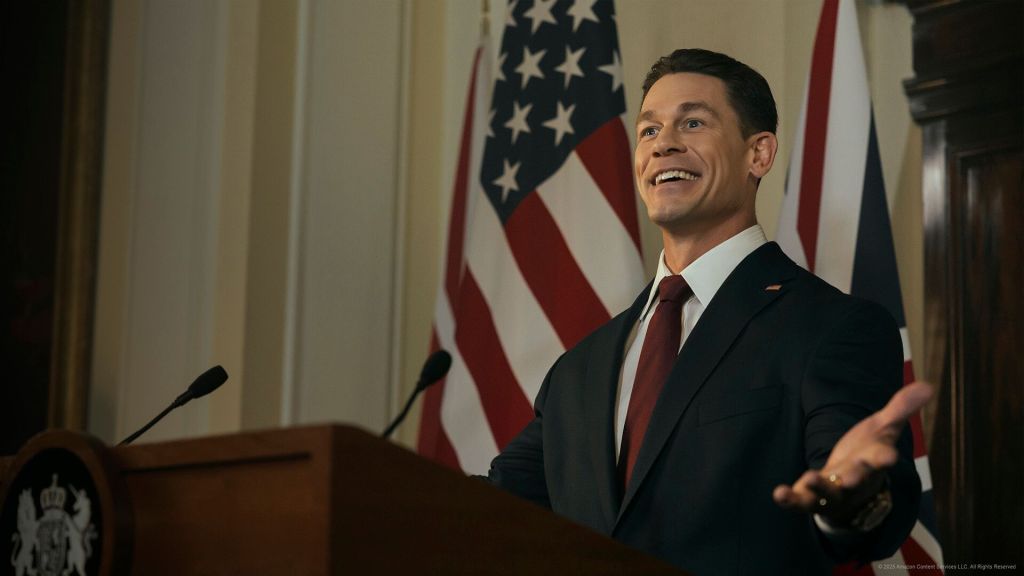
Heads of State centers on the contentious relationship between President Will Derringer (John Cena) and Prime Minister of the United Kingdom Sam Clarke (Idris Elba). Among them are a series of actors whose credits and abilities run the gamut, but these two in particular can be considered polar opposites. It is believable, as far as I am concerned, that Will Derringer would be the kind of President who was elected because of an acting career.
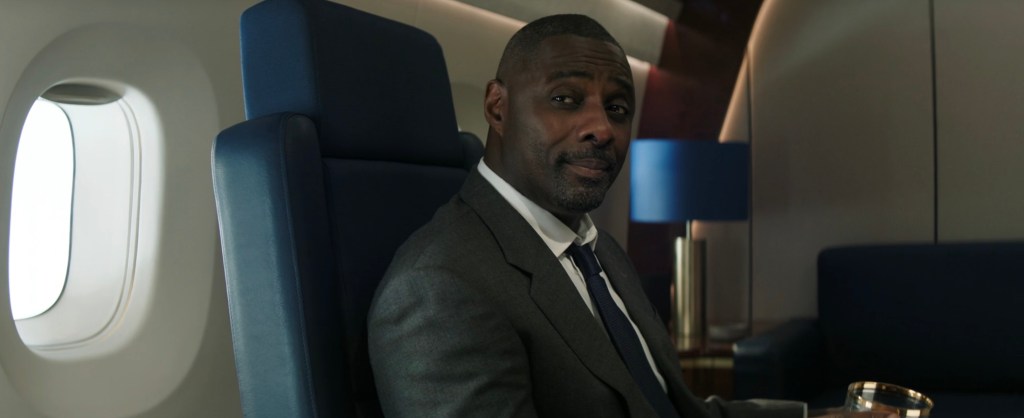
On the other hand, Sam Clarke’s history in the British Army and sober presentation provide a convincing enough counter that we can briefly mistake his stoicism for the entirety of his personality. He is revealed to be a fan of Derringer’s films, referring to them as “classics.” The fact that he can admit this, regardless of the circumstances, shows that he is not just the presentation. There is, in fact, a person under the tailored suits and unsmiling façade.
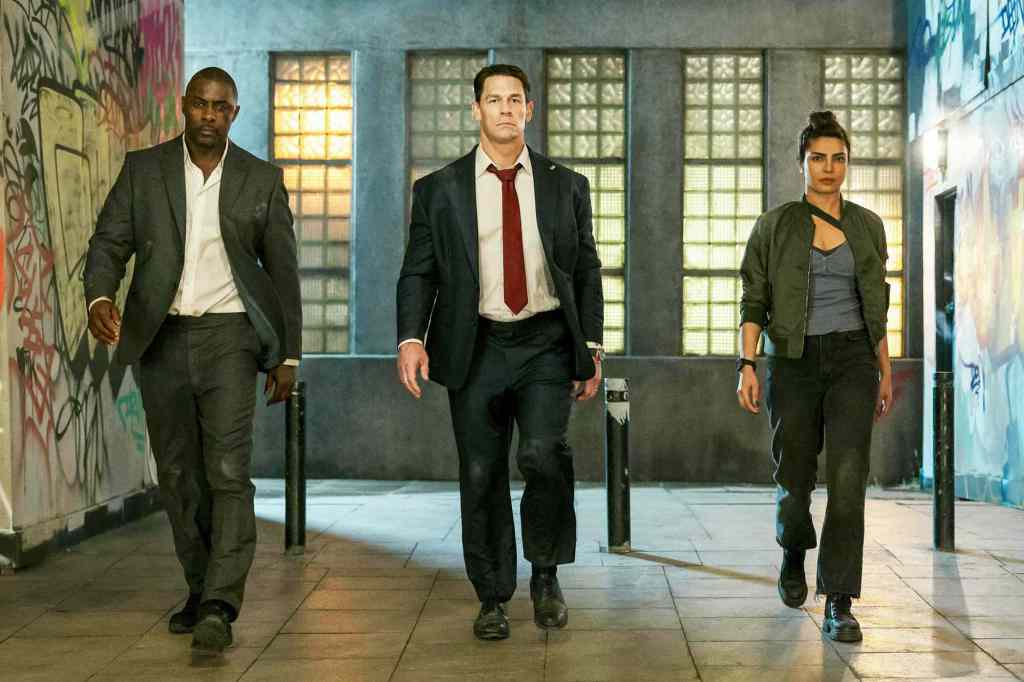
After the film’s dramatic opening, which introduces us to Noel Bisset (Priyanka Chopra), an MI6 agent whose team is gunned down in Spain while attempting to prevent access to a fictional covert surveillance program, we shift focus to Derringer’s state visit to the United Kingdom. Noel acts as the third lead in this film, putting her life on the line to save the two when the villain’s plan begins to unfold. This technology, ECHELON, will prove central to the film’s story. Its ability to intercept and analyze civilian and military communications worldwide essentially hijacks the globe and makes it nearly impossible for Derringer and Clarke to hide.
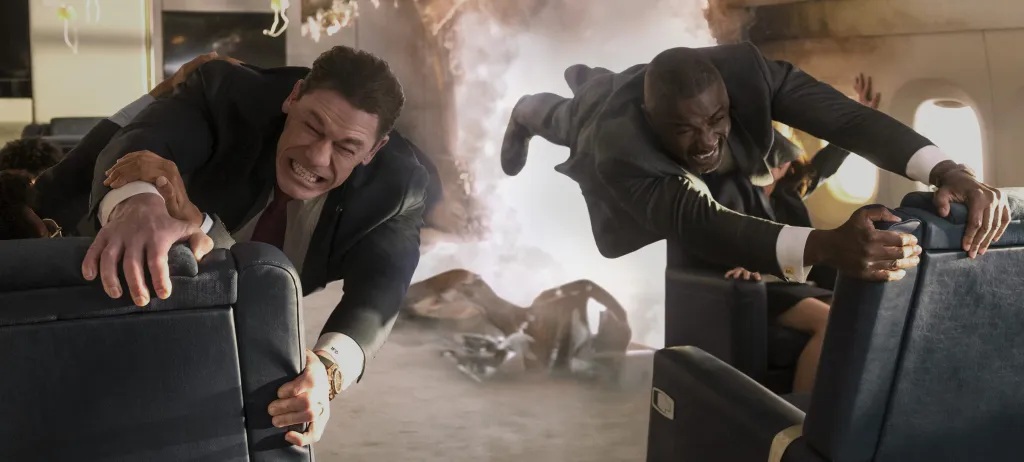
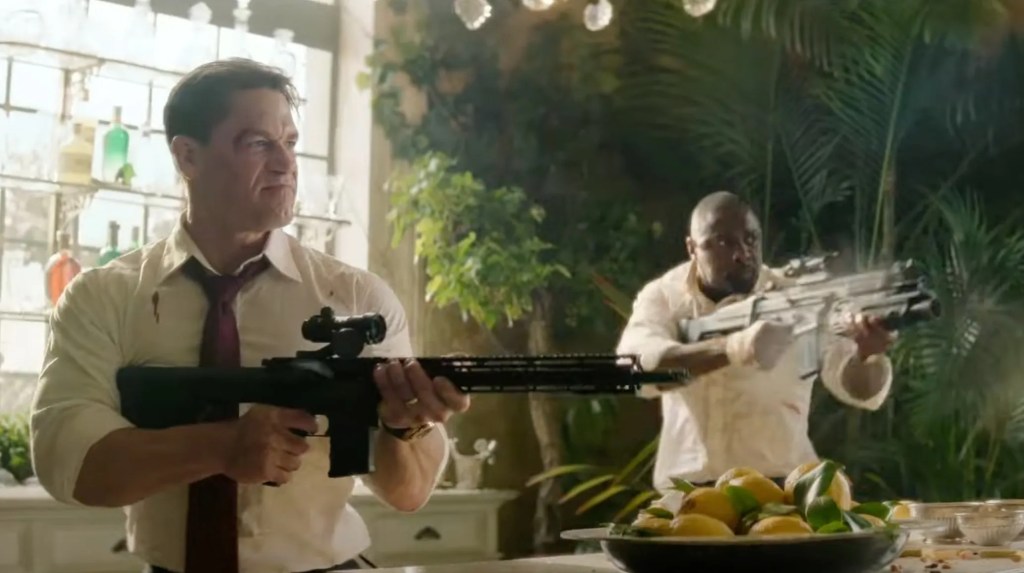
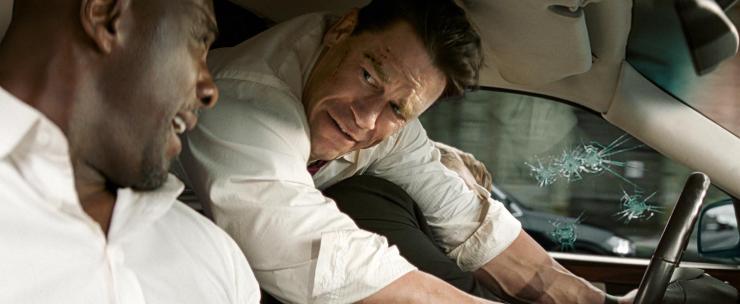
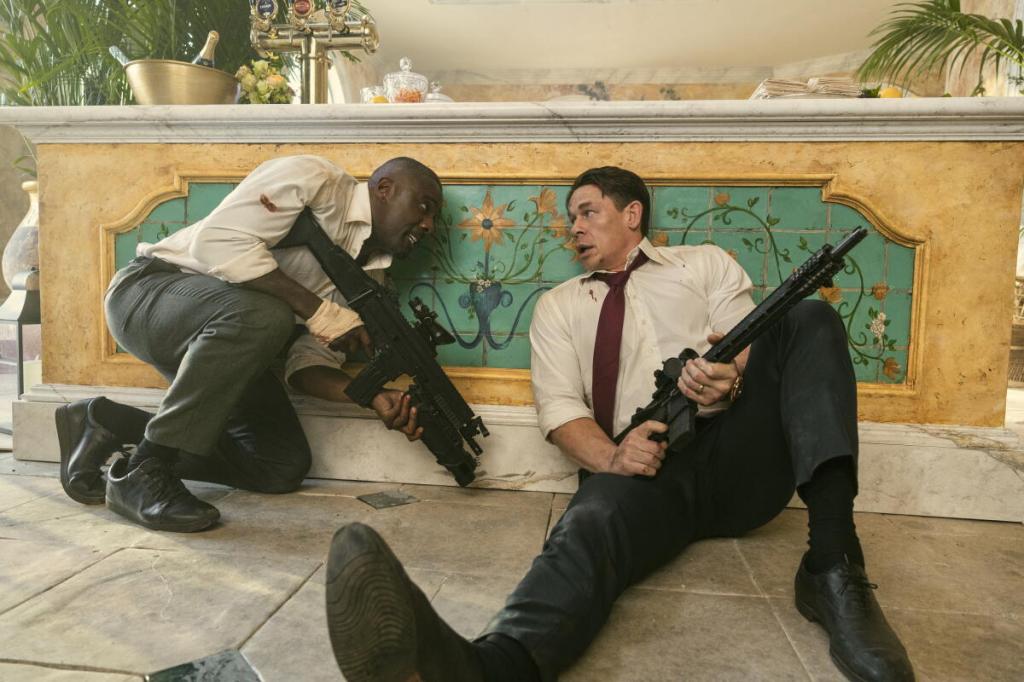
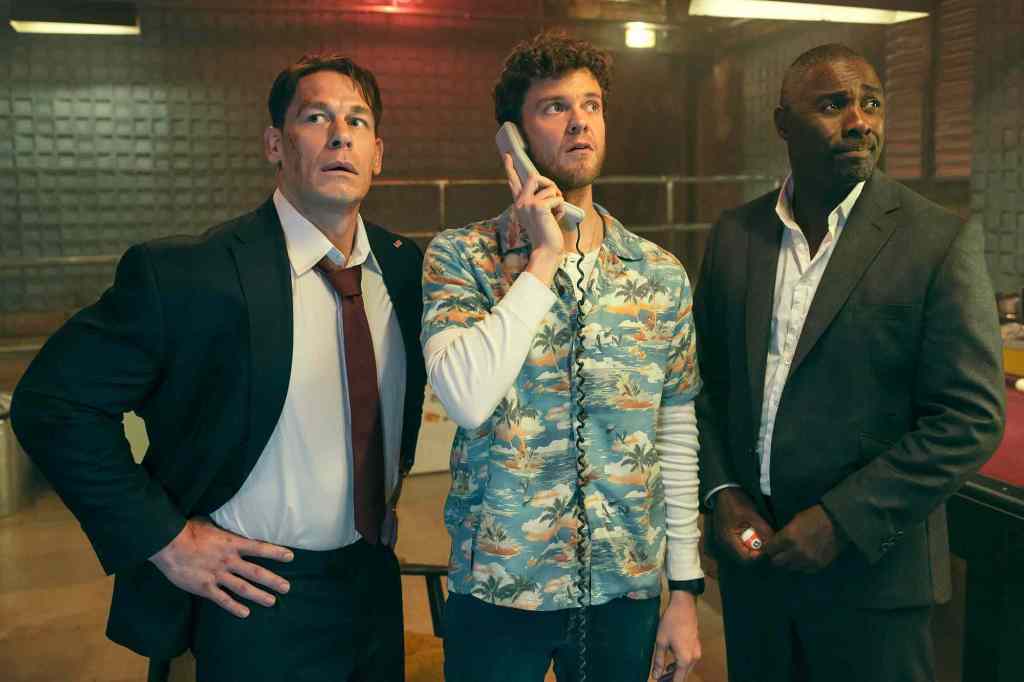
The core relationship in this film is between Derringer and Clarke. While the two seem prone to snipe at one another from the word “go,” it becomes rather clear, as circumstances force them to work together, that there is very little actual distance between them. Derringer’s past before his Presidency is a mixture of Governor Arnold Schwarzenegger’s and President Ronald Reagan’s. His time as an actor mixed with his genuine charm scored him the job. Compare that to Clarke, and it’s clear why the Prime Minister would view the President as a joke. However, it doesn’t take long for the audience to see how well the two play off one another, making it rather believable that they could like each other as people and as friends.
Bisset is, at no point in the film, presented as a weak link to their survival efforts. She is responsible for saving them when it looks like they might die after making it into the Beast. Though, since this is a comedy, the movie takes time to show us how she made it from the opening to the middle of the film to rescue them, and it is suitably hilarious. She gives the pair somebody else to play off of and, thankfully, at no point is she presented as a somebody that the two fight over. Noel and Sam have a preexisting relationship that broke down before the film began, and over the course of its runtime the intensity of the situation hints that they might get back together.

Stories that center on high-level politicians are, invariably, more interesting than their actual lives and duties are. In this day and age—and we keep our fingers crossed—attempts to shoot down Air Force One are near zero, and successful attempts at assassinating them have been far and few between. But even House of Cards, a show renowned for its grittier take on the mechanics of Washington, D.C., managed to fit in an assassination attempt on its President. If the story is not dedicated to the political aspect, it puts them in the background in favor of a sensational story: Air Force One is infiltrated by hijackers and shot down with two world leaders on board.
Few plot points are more sensational than that. What made Air Force One entertaining was seeing Harrison Ford fight off the terrorists.
The same is true for each film that chooses to foreground what, in reality, would be a devastating nightmare to any country as an action-packed, joke-infused story. We can laugh because it isn’t true.
House of Cards has the kind of time and desire to explore the nuance of its politicians’ politics. A film like Heads of State does not have that luxury. It is not presenting itself as The American President—itself a story centered on a widower President finding romance—which explores a specific political issue throughout its runtime. Derringer’s policies and agenda are window dressing. We know that they exist, but there is little time, or inclination, to spend three precious minutes of running time on whether to explore Derringer’s position on virtually any domestic policy issue after the plane has hit the ground.
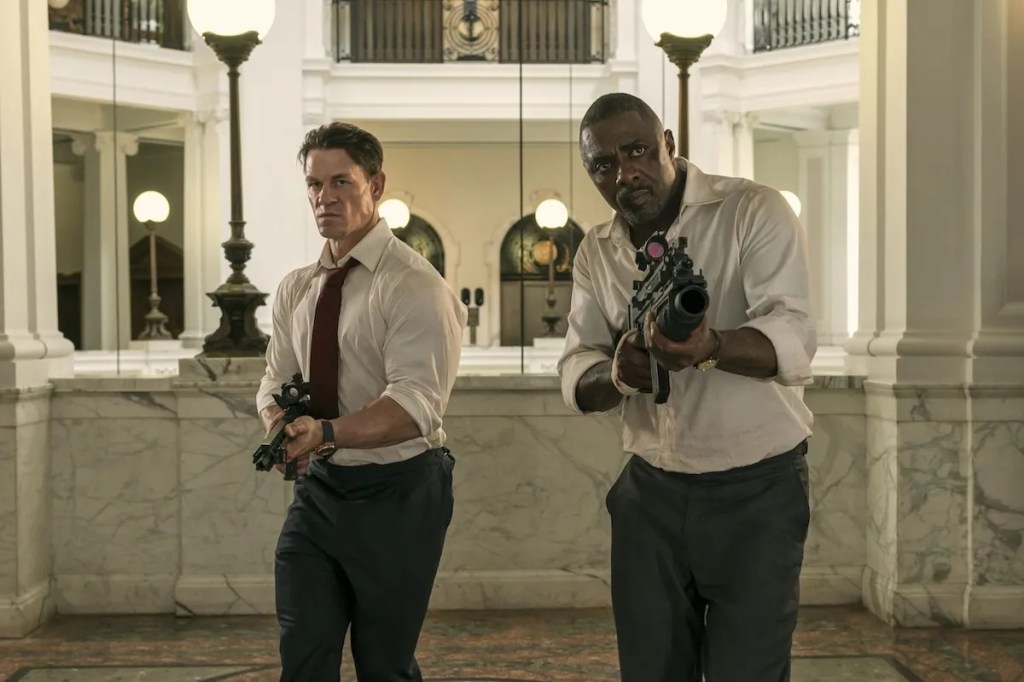
The substance of Clarke’s policies is the same, but they are presented to us in a different way. After his exasperation with Derringer is introduced, he’s shown running before the sun rises while being updated by his aides on the economic minister, refugees in Poland, and his early morning briefings are being set aside for an urgent intelligence briefing. The difference allows us to infer that Clarke takes his duties as Prime Minister seriously, so it is easier—before we actually see Derringer in action—to believe his opinion of the President is sound.
UK citizens are literally cheering in the streets with his movie posters and tattoos of the President… they don’t care about his economic policy, and the film isn’t asking us to. It is, however, interested in reminding us at every turn why Derringer is President with these shows of affection.
Comedies are time capsules. Perhaps more so than any other genre of film. While social values and mores are prone to change over generations, what can land as a joke one day can become cringe-inducing within a handful of months. Whether that is a strength or a weakness ultimately comes down to the impact of a film upon its release. Heads of State was released in 2025, and part of the charm of this particular subgenre is a likable President. John Cena intriguingly hits that note. But this is not a film that is solely about John Cena. Idris Elba is also a head of government, which draws on part of the joke—he is emphatically not a head of state, making the title a hilarious misnomer.
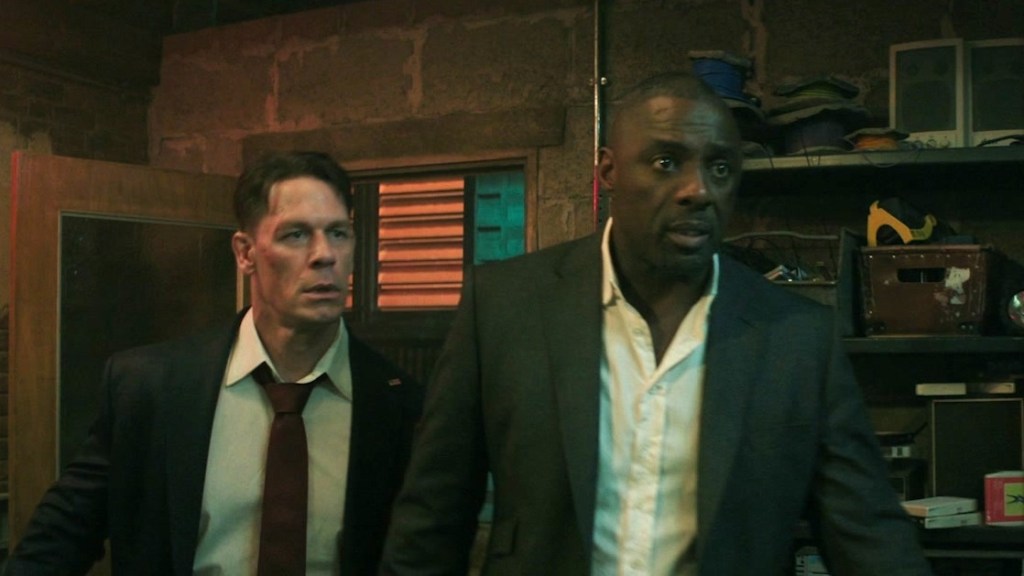
After surviving the initial attack and landing in Belarus, President Derringer and Prime Minister Clarke have no idea who they can trust in their respective administrations. Armed assassins are constantly tracking them across Europe. Their initial goal is to reach Trieste, Italy, where a NATO summit is being held. The obvious initial suspects are Quincy Harrington (Richard Coyle), the Downing Street chief of staff, and Simone Bradshaw, the White House chief of staff, who convinced Clarke and Derringer to board Air Force One together before the attack. Of course, they’re obviously suspects. However, I have a rule when it comes to stories like this, and it has only ever been proven the exception a handful of times. If the Vice President is present, they’re my chief suspect. Every time.
Elizabeth Kirk (Carla Gugino) is the Vice President of the United States and is put into a difficult position because there is no guarantee that Derringer is dead, and NATO seems to be the primary target of the antagonists. A scene that one can always expect in films like this is the swearing-in of the Vice President, but this is treated as a background detail. Instead, the film devotes its time to ECHELON, the very technology that was stolen in the film’s opening moments. Kirk’s first moments are in the wake of its complete theft.
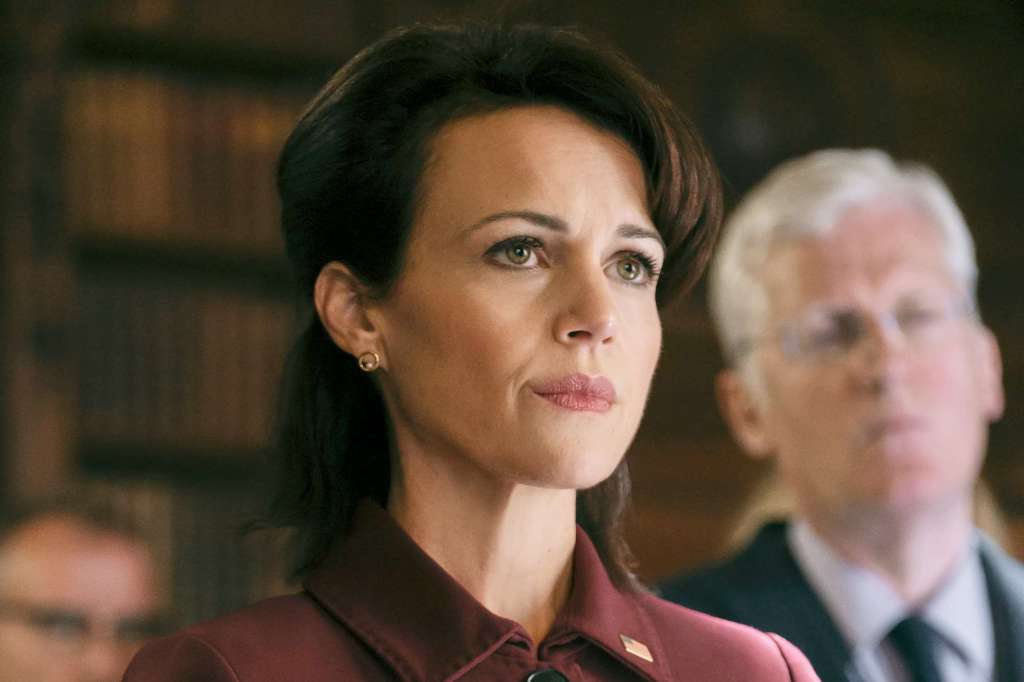
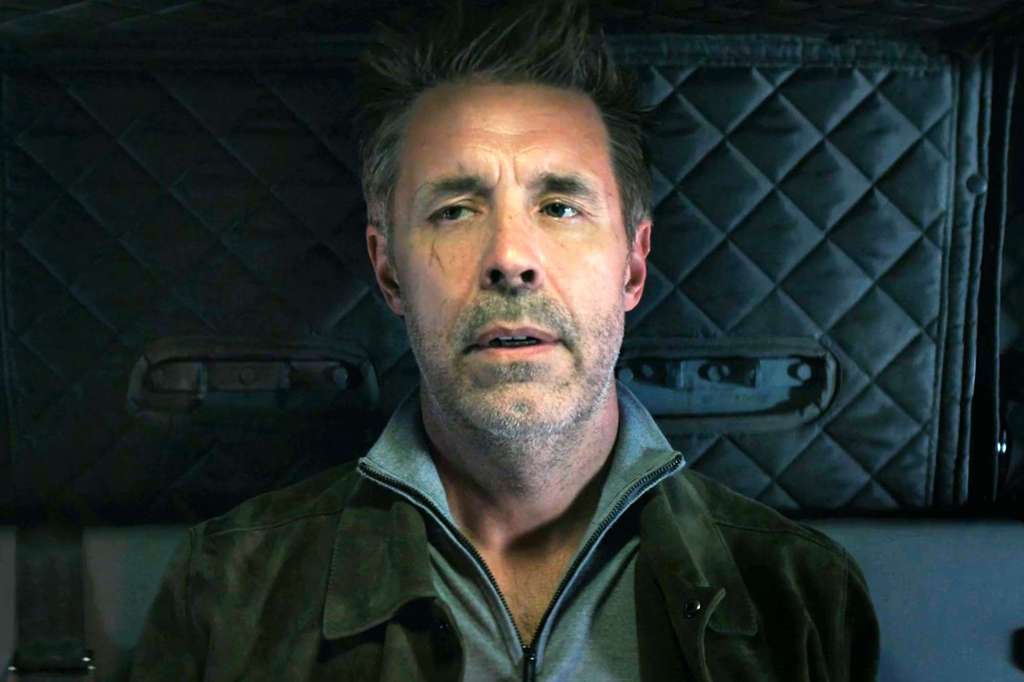
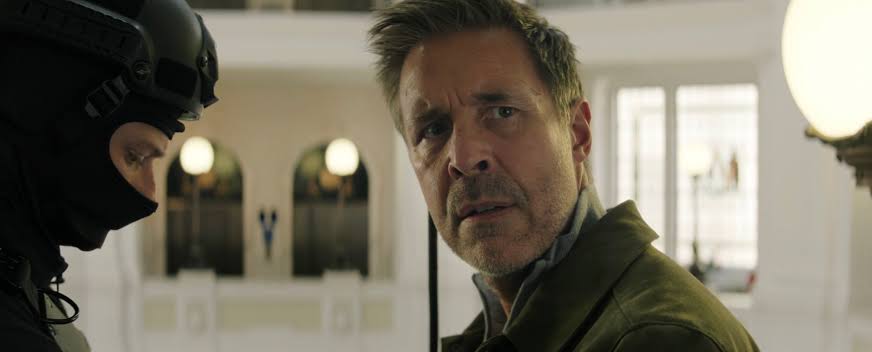
Kirk is calm, capable, and savvy, yet in the scene after she is introduced, one of the first things that we even learn about her is that she ran her primaries on “America First.” In today’s age—or, at least, when the film was filmed—that has a rather specific connotation. Considering the fact that the other main antagonist is Viktor Gradov (Paddy Considine), a Russian arms dealer, it would have been surprising if there was more depth and nuance to this particular storytelling technique.
What is appreciable is the amount of effort that the film spent building up its two main red herrings. Conversely, quite a bit less time was used fleshing out Gradov. While his motive exists (the death of his son), very little is used for this. Granted, sympathetic villains would render a simplified story focused on complex geopolitics ill-advised. When people can question the motives of the villains and the heroes too closely, the lines tend to get blurred. This is why the main pursuers, Olga (Katrina Durden) and Sasha (Aleksandr Kuznetsov), are in the film. There need not be anything more complex about them other than the fact that they are killers for hire.
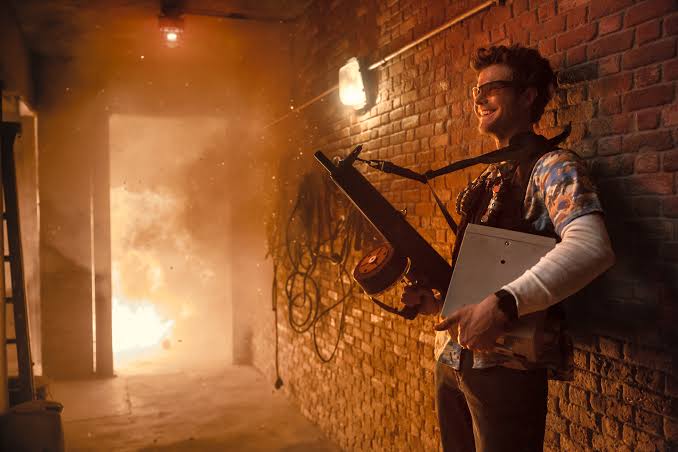
One final person had an extended cameo in the film that was utterly enjoyable. Marty Comer (Jack Quaid) shows up in one long scene at a CIA safe house in Warsaw and is one of the few people on their side who knows Derringer and Clarke is still alive before the finale puts them across from their pursuers. Though Marty is goofy and excitable, he proves to be deadly efficient in protecting Derringer, Clarke, and Bisset’s escape from his safe house to continue on their journey to Trieste.
Whether this is the kind of film that could be made today is up for debate. Its mid-2025 release belies the fact that it was filmed in 2023 and 2024, well before the current administration returned to power. Yet, the film’s post-credit scene offers the possibility of a sequel. What’s more important, since this is not the first time they’ve worked together, is the reality that Idris Elba and John Cena have great chemistry. A sequel would not be a hard sell for me.

